
Non-profits are stretched thin, here’s how one Cowichan Valley organization is succeeding
With a business-minded attitude and volunteer support, the Cowichan Station Area Association is carving a path forward despite a grim outlook for non-profits in B.C.

Nestled in a small corner of the Cowichan Valley, The HUB at Cowichan Station is bustling with activity. It’s a Friday, which means the HUB Cafe is open and serving coffee, sandwiches and baked goods in a small space attached to the community centre. So many people are eating that the adjoining gymnasium has been opened for additional seating to accommodate the lunch rush.
Aside from one paid chef, the cafe is completely run by volunteers. The original idea of having a cafe was to encourage people to come to The HUB at Cowichan Station, according to Melanie Watson, a director for the Cowichan Station Area Association.
Now, the cafe is just one part of a thriving non-profit that serves residents from all over the Valley, offering them a place to learn a new skill, host an event and connect with community-minded people.
The HUB at Cowichan Station is a community centre operated by the Cowichan Station Area Association. It occupies the former grounds of Cowichan Station Elementary School and now houses a community workshop, pottery studio, gymnasium and multi-purpose rooms.
However, running this non-profit community space is not without its challenges.
Read more: Totem pole at the HUB stands as a symbol of community
A recent report by Vantage Point surveyed more than 500 chief executive officers, executive directors and leaders from non-profits across B.C. It found organizations are facing a shrinking donor base, increased demands for services, lack of government funding and dwindling volunteers.
While the outlook might be grim for some non-profits, the Cowichan Station Area Association appears to be in a better place. Revenue from rentals is up and successful programs run by the organization, such as The HUB Cafe, are making enough money to help bridge the gap left by often-unreliable grant funding.
“We wouldn’t be here if everyone wasn’t invested in making something nice and welcoming for the community. We would have no purpose,” association director Melanie Watson said in an interview with The Discourse.
Stretched to the breaking point
Approximately nine out of 10 organizations surveyed by Vantage Point reported that community needs for programs and services exceed their capacity to deliver.
“Not only are more people and issues requiring non-profits’ response, but the needs and issues themselves are becoming increasingly complex and severe,” the report says.
While the cost of administering those services and paying staff has increased due to inflation and the rising cost of living, 20 per cent of non-profits reported that revenue has remained flat and 36 per cent have reported decreases in revenue.
The survey also found that nearly one in three non-profits in the province are considered financially vulnerable beyond the next 12 months.
“Government funding comes and goes. There’s often no explanation why you got ‘X’ number of dollars one year and half that the next year,” said Erin Flegg, operations manager of The HUB. Flegg oversees the day-to-day running of the community centre, and is one of three part-time employees paid by the Cowichan Station Area Association.
Flegg told The Discourse that even when funding is secured, it often only covers a portion of the actual cost of a project, leaving the association on the hook for the rest.
Since 2016, the Cowichan Station Area Association has been working to find funding for a much needed upgrade to its septic system, but it’s been a challenge to find the money, according to board director Sarah Davies-Long, who prefers to go by D.L. as her last name.
“Nobody is interested in funding it,” D.L. said, adding that infrastructure funding is often hard to come by for non-government organizations.
Finding volunteers a constant struggle
A Statistics Canada report on volunteering and charitable giving from June 2025 found that formal volunteer hours at non-profits have decreased by 28 per cent between 2018 and 2023.
“Covid really decimated everyone’s volunteer pools,” Flegg said. “Trying to facilitate that return to in-person things has been difficult and for lots of good reasons, you know, Covid is still around. There are still extra risks.”
Flegg added that many of the organization’s volunteers are seniors and some are weighing health risks when deciding to work with large groups.
That same Statistics Canada report also notes that one of the largest declines in volunteer rates between 2018 and 2023 took place amongst young adults aged 25 to 35, with their volunteer hours dropping by 42 per cent between.
The report points to impacts from the COVID-19 pandemic, including an increase in demand for services, as well as inflation and labour shortages as pressure points on the non-profit sector.
“It’s always a constant struggle to find volunteers. And I think that [puts] a bit of stress on running an organization that needs volunteers,” D.L. said. She added that the association’s board often doesn’t have enough candidates to turn over board positions, which would typically happen annually at non-profits
In an ideal situation, Watson and D.L. said they would like to see a full-time coordinator hired to recruit new volunteers. At present, that responsibility is shared amongst all board members.
Despite these challenges, D.L. believes that people of all skill types and backgrounds can contribute meaningfully to the organization if they want to.
“In these scary times when everybody’s wondering what they can do to be more sustainable and more connected with community and have more of a local net of resources, that’s why the CSAA and The Hub is here,” D.L. said.
What sets the HUB apart from other nonprofits
The Cowichan Station Area Association (CSAA) oversees the everyday operations of the community centre, while separate, smaller non-profit organizations, such as the Clay Hub Collective and Cowichan Community Workshop Co-op, run programs inside The HUB.
Flegg said having marketable products, such as room rentals or The HUB Cafe, is essential to keeping the organization financially stable.
When asked what sets the association apart from other non-profits, D.L. and Watson pointed to its broad mandate, which is focused on serving the entire community.
“Our mission statement is to build a place for people to come together and create connections and get work done together,” D.L. said. “It can be anything that the community decides.”
”The ideal [scenario] is that people will come along with a really good idea and we can make a space for it and it will benefit the CSAA or The HUB or the community,” Watson said.

Most of The HUB’s revenue comes from regular renters of the building’s multipurpose rooms and gymnasium. Rental rates are deliberately set at what the association considers affordable, in order to keep the space accessible to the public and to other organizations.
For example, the Clay Hub Collective doesn’t pay rent, but operates under a revenue share agreement with The HUB.
“It’s always a balance because we have to make money to keep the doors open and keep the things available. But it’s so nice to have things that are free or very affordable whenever possible,” Flegg said.
From surviving to thriving
The outlook for The HUB and the Cowichan Station Area Association hasn’t always been so bright, according to Flegg and Watson. The organization was in a tough spot during the COVID-19 pandemic, facing rising costs for a renovation that had begun before the pandemic and a sharp drop in rental revenue as social distancing rules came into place.
“Our business model in that scenario was not really sustainable because people weren’t obviously coming and renting and we couldn’t host events,” Watson said.
To alleviate some of the pressure, the board opted to restructure the Cowichan Station Area Association to cut costs and rely on existing members to devote more time and take on more responsibilities.
“Even though it’s a non-profit, you need to run it like a business so it’s successful,” D.L. said.
And last year ended up being a successful one for The HUB. Flegg said rental revenues have increased year-over-year, which she attributed to a return to normal after pandemic-related restrictions were lifted and the association made a move to an online booking system for rentals.
A move towards The Heart
Long-term, the Cowichan Station Area Association is working to open a new building not far from The HUB. Dubbed “The Heart,” it would occupy the former St. Andrews Church building down the road and will serve as a secular space for the community to gather.
The project, which has been in the works for the past four years, is still in the early stages as association members are working to find grant funding for much-needed renovations and repairs to the interior.
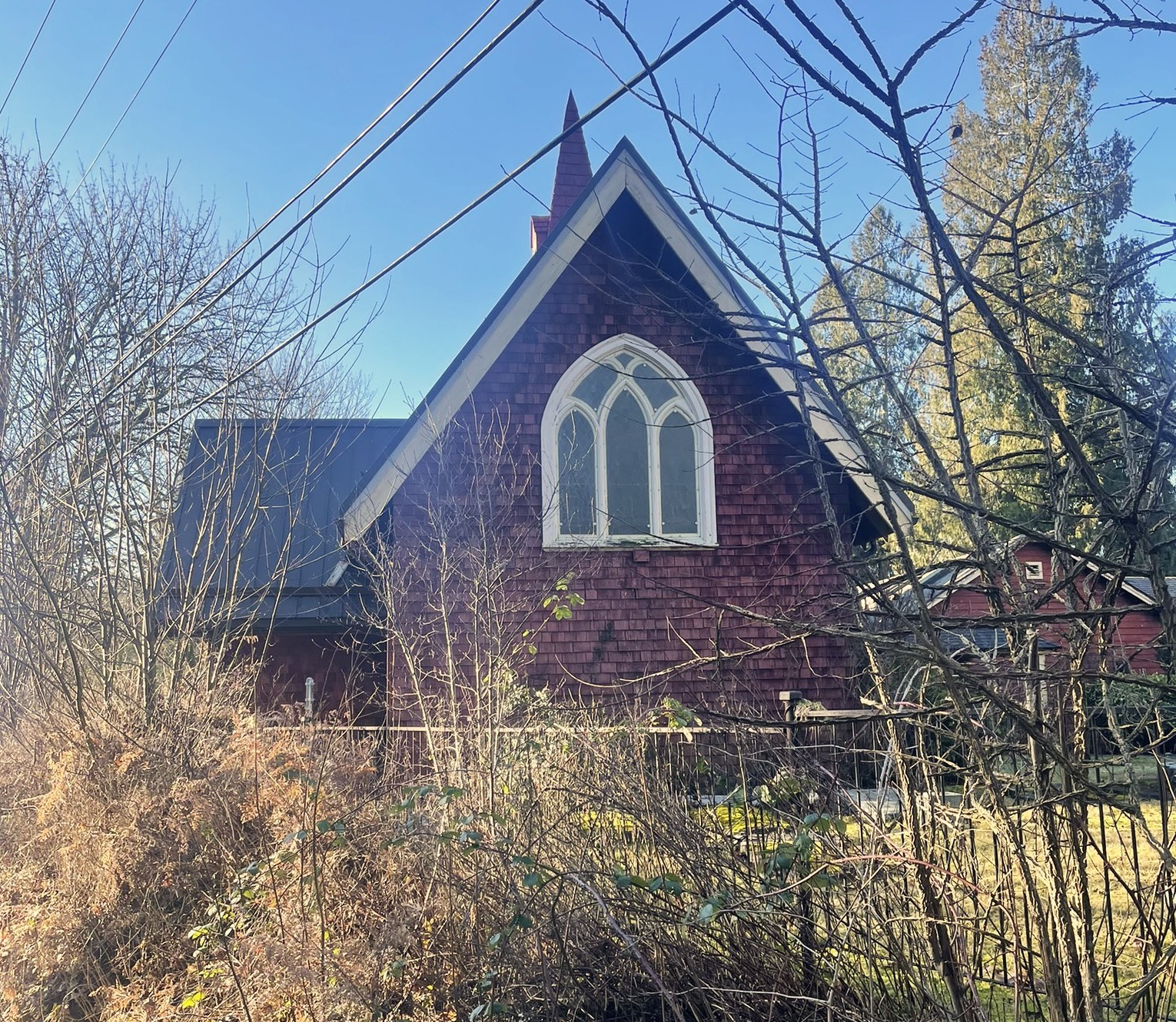
While Watson and D.L. are excited about the project’s next chapter, they acknowledged concerns about funding the new space. Because the Cowichan Station Area Association oversees both sites, The Heart and The Hub would compete for the same grant funding and the building still requires significant renovations to make it usable.
However Watson remains optimistic. The church’s 125th anniversary in 2031 is an opportunity for the association to apply for a heritage grant, which would not compete with the funding typically sought to run The HUB.
If the grant application is successful, Watson said she hopes the church and its adjoining graveyard will be “resurrected” for the entire community to use once again.
Editor’s note, Jan. 26, 2026: This story previously said the three employees of the Cowichan Station Area Association are full time workers. This is incorrect. The employees work part-time for the association. The story has been updated with this correction
What did you think of this story?
Your feedback after we publish a story helps ensure we're always improving our reporting to better serve you
Author

Related Articles
What to do and who to call when juvenile salmon are in danger
Officials say Cowichan Valley residents should call experts to move salmon in isolated pools because of risks associated with relocation.
How is The Discourse’s journalism funded?
And what does it cost to produce The Discourse’s in-depth, independent journalism?
Behind the backlash to the Cowichan Valley’s comprehensive zoning bylaw
The campaign against Bylaw 4710 was fuelled, in part, by misinformation and an organized group of advocates. What could this mean for the future of local politics?