
Comox Valley Pride welcomes community and looks to future
‘I didn’t get this type of visibility when I was younger,’ said Damian Stevenson at Comox Valley Pride.
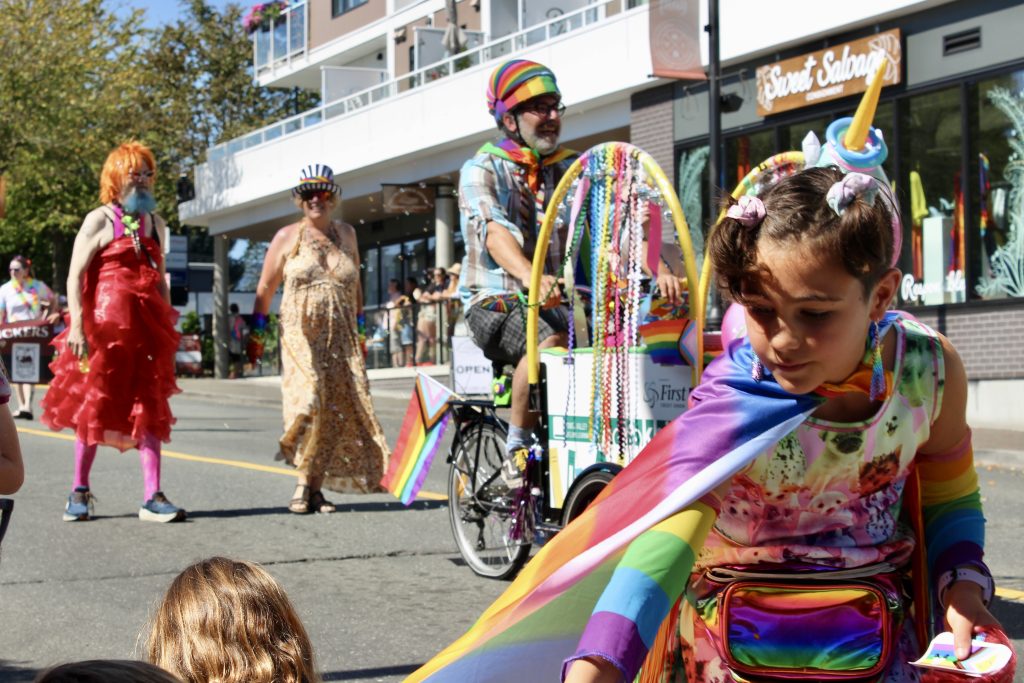
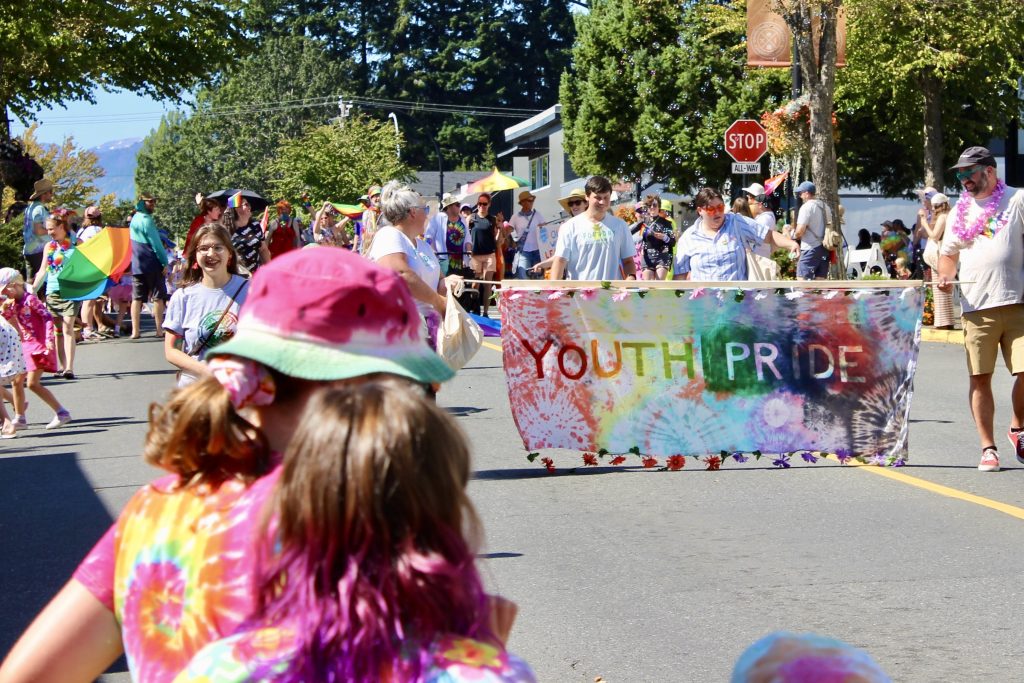
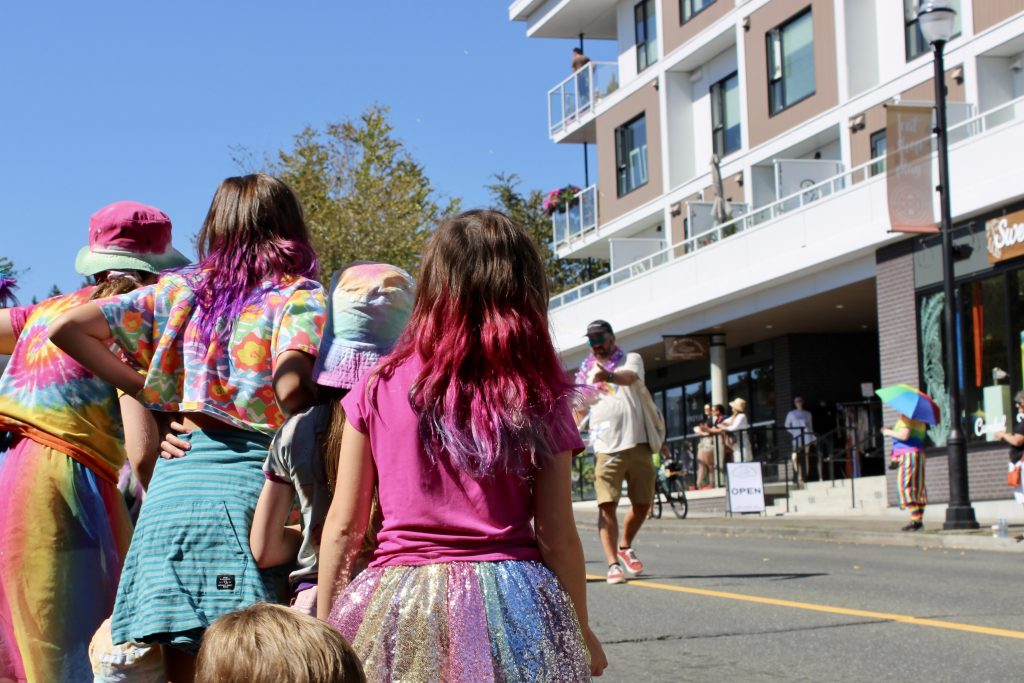
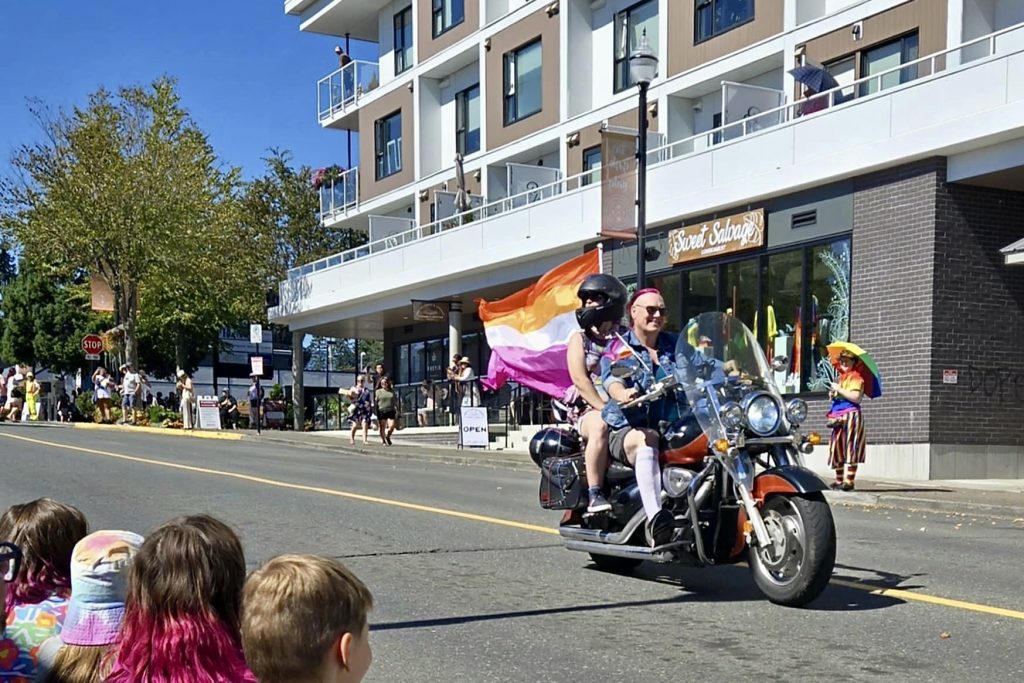
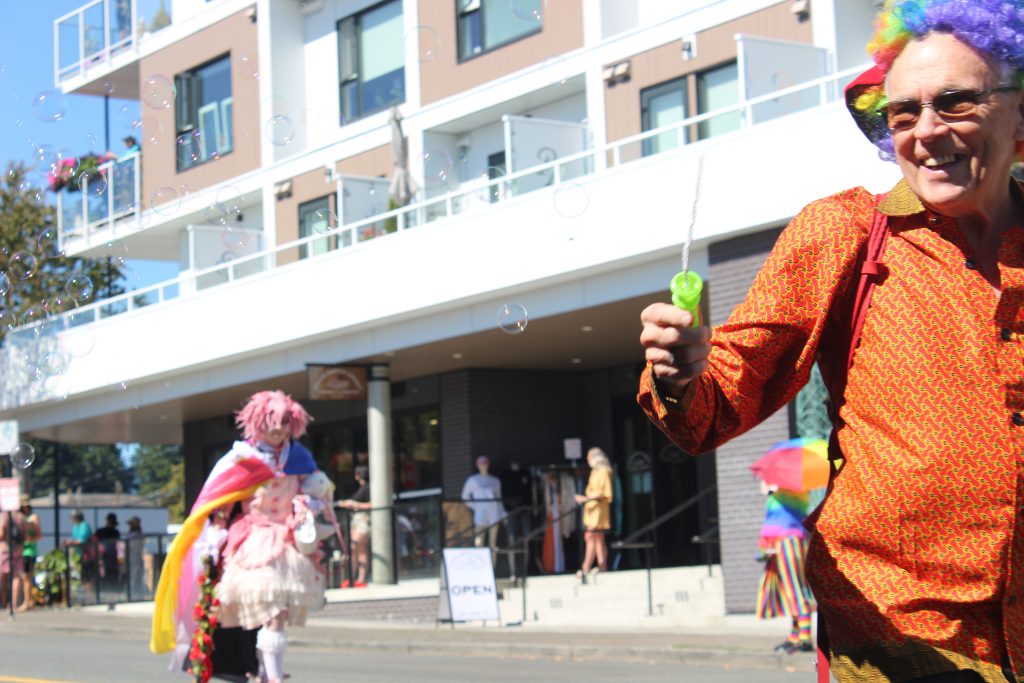
A bright array of colours painted 5th Street on Saturday, Aug. 23 as the 2SLGBTQ+ community and allies celebrated at Comox Valley’s third annual Pride Parade.
Paraders walked, danced, rode or wheeled themselves from the intersection of Fitzgerald Avenue and 5th Street to Lewis Park, where a larger Pride festival was waiting for community members to partake in.
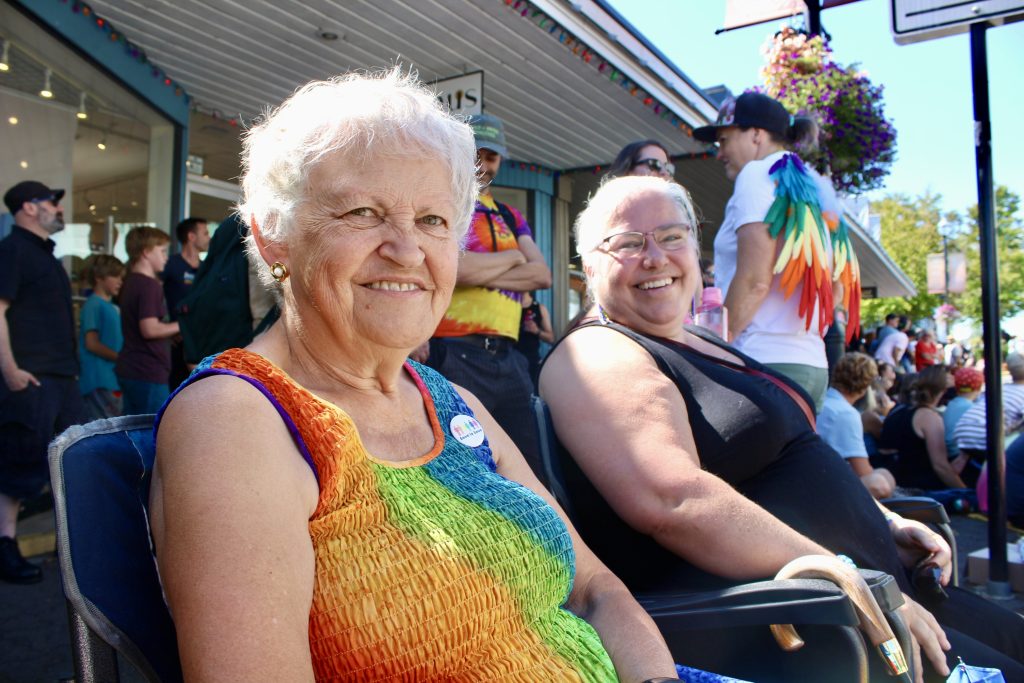
Attendees such as Heather Flint (left) and her daughter Jenna Flint sat or stood along the sidewalk to watch the parade, happily talking and pointing out the many different floats and flags passing by. Community groups, organizations and local businesses were among those parading through the street.
Those watching the floats go by were also invited to join in at the tail end of the parade to Lewis Park where vendors, food trucks, family-friendly activities and more took place for the afternoon.
The Pride Parade was hosted by Queer Centre and Weird Church and Pride in the Park was hosted by Pride Society of the Comox Valley.
In previous years, the post-parade events were held in Simms Park, across the street, but organizers needed a bigger location this year.
The temperature on Saturday reached 31 °C but Damian Stevenson, a member of Comox Valley Pride Society, said he thought the turnout was great, despite the heat.
“I think Lewis Park will be our location going forward,” he said.
Janine Scheffler, facilitator for Comox Valley Pride Society, agreed that the larger space for Pride in the Park was a good idea, especially with more food vendors and a larger crowd this year.
Scheffler told The Discourse the exact number of attendees is hard to capture, but that it was around 400. The event also had 46 vendors, six more than 2024.
Most importantly, Scheffler, Stevenson and other Pride attendees told The Discourse that having a Pride event in the Comox Valley helps foster spaces within the community where queer people can safely and comfortably exist, as well as learn from and connect with others.
Stevenson said that for generations, members of the 2SLGBTQ+ community have had to contend with people and organizations who don’t want them to speak out or exist.
“That’s why we’re here, because it’s still a problem,” Stevenson said. “We still need those connections. We still need to find a way to build ourselves up so that we can fight against these people who really mean us harm.”
Comox Valley growing to be more accepting
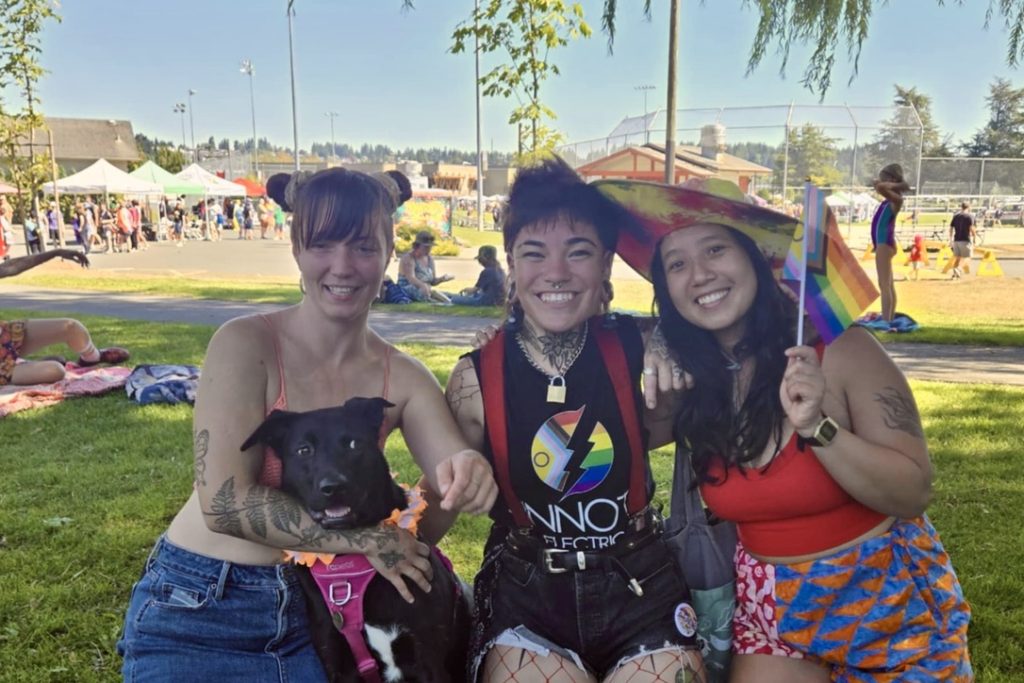
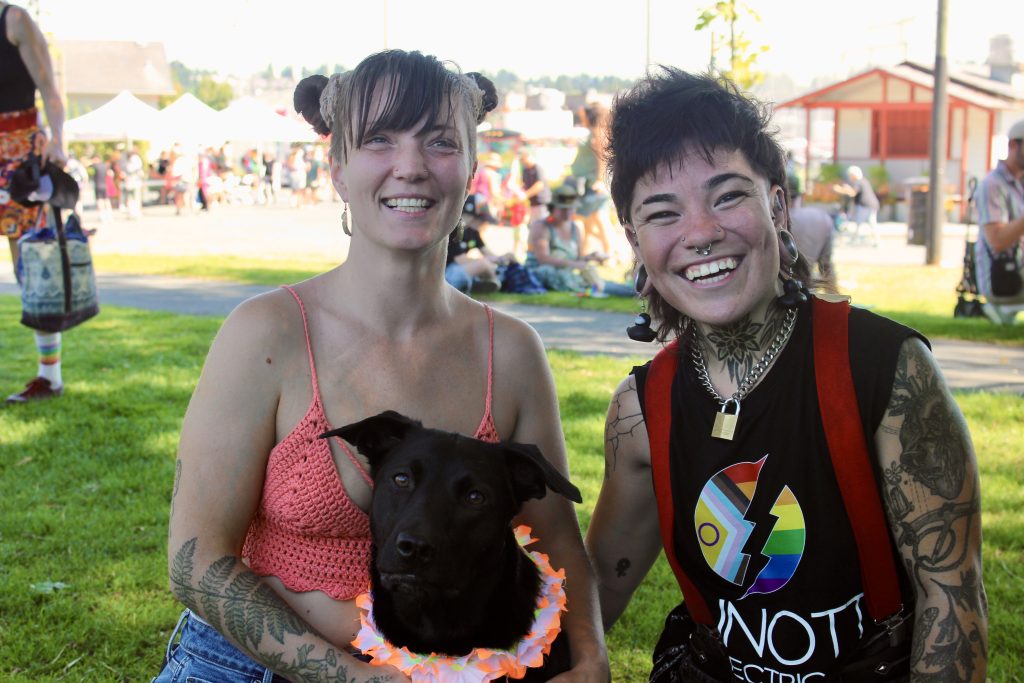
Bee Stratton (left) said that as a cisgender, queer person, she thinks it’s important to show up for her friends who have experienced discrimination for their gender and sexuality and also show up in support of the rights that were fought for that she gets to benefit from today.
Her favourite part of the parade?
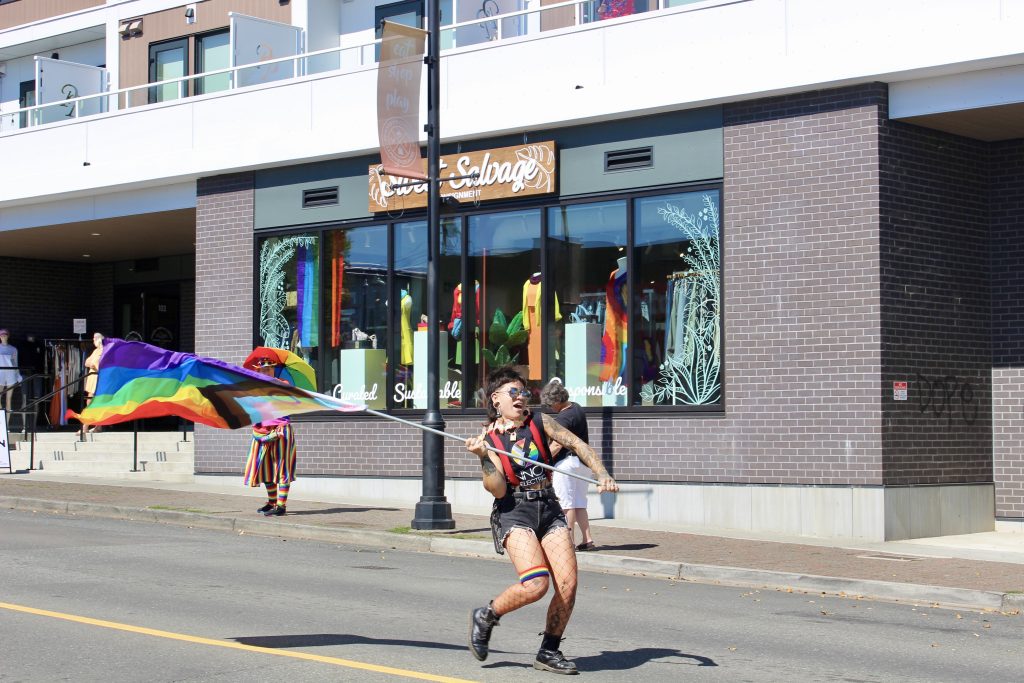
“Probably Ashleigh supporting Sinnatt Electric,” she chuckled, referring to her friend Ashleigh (above) who danced through the street waving a large Pride flag followed by fellow members of local business, Sinnatt Electric.
Stevenson said he thinks the Comox Valley has come a long way towards queer acceptance.
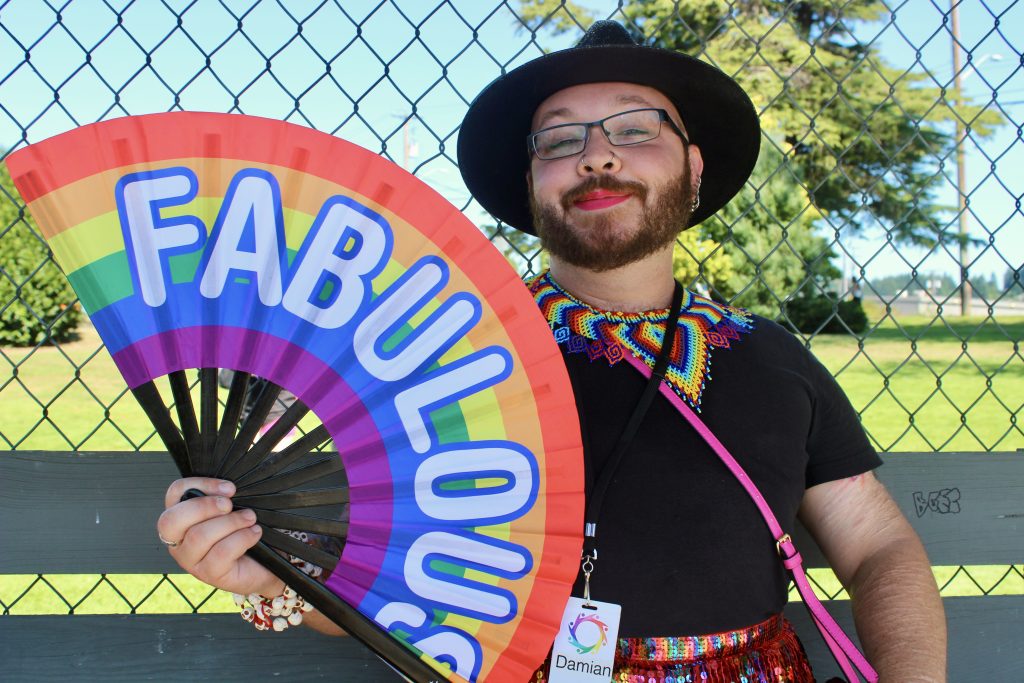
“Growing up, there were very few of us who were out,” he said, noting that he grew up in the Comox Valley.
The people who were out of the closet, he explained, were silent about it.
“However, within the past five years, I would say things have become a lot safer. There are less people who will throw slurs at you. There’s definitely less people vandalizing queer things,” Stevenson said.
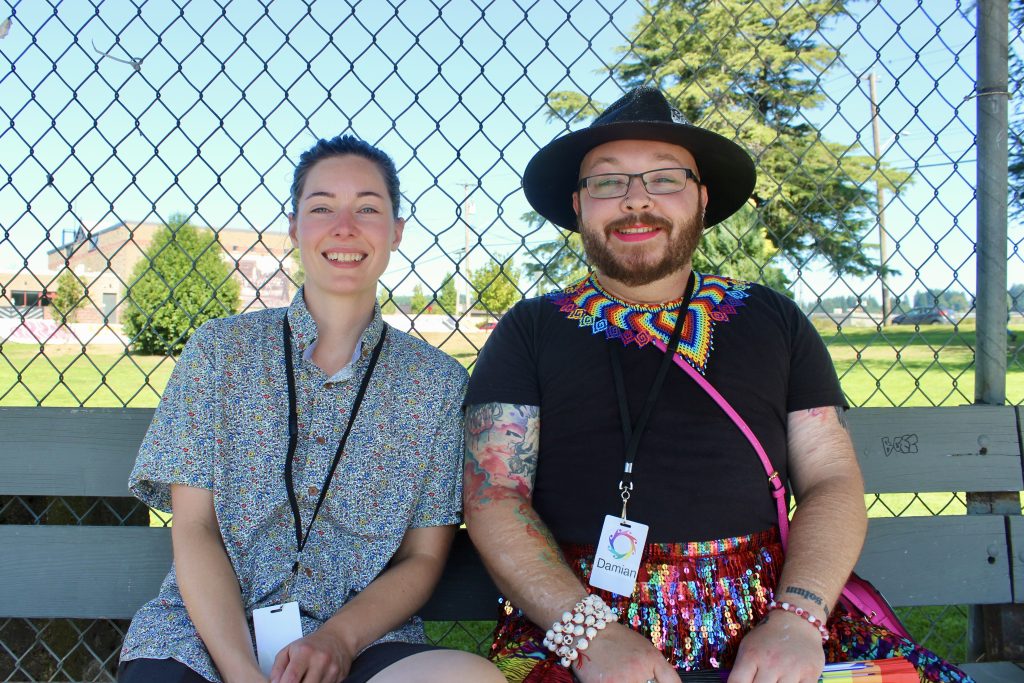
Scheffler (left), said it is her third year living in the Comox Valley, but she had similar experiences of hiding her identity while growing up in Kamloops.
“I didn’t know what gay was or queer was, but I remember crushing on, you know, not boys, and I remember silencing that.”
She said in her community and family, it wasn’t safe for her to come out and be open about who she is. She didn’t come out until 2021 when she was in her early 30’s.
Even as a child, Scheffler said she remembers holding another girl’s hand and already knowing she’d experience pushback from adults about it.
“If an adult saw, I ripped my hand away, but I [was allowed to] hold boys’ hands at that age,” she said.

Scheffler said she also didn’t have any queer support groups at her school, and noted that the visibility of Pride is important for people who may be questioning or not out of the closet yet, especially for those who may still be figuring out their identity.
She said she loves the diversity of different genders and sexualities on the Pride Society board as well.
“You don’t have to figure it out [right away]. It can and you can change and and I think within the queer community, that’s one of our strengths, is there’s so much fluidity,” she said.
“Yeah, you’re not locked in,” Stevenson added. “That’s something that’s so beautiful about the rainbow is that it is a continuum. There is no end, there’s no beginning. It just is. And that’s totally okay if you feel like you identify as gay now and then you age a little bit and you suddenly find somebody that you vibe with, or you find that your gender is maybe a little bit differently aligned than you thought, that’s great.”
‘There is still a lot of work to be done’
Scheffler said that even though she was eventually able to come out, for many people, it is still not safe in their families.
She said it was particularly difficult to see the anti-SOGI protests happen one month after Comox Valley’s pride festival in 2023.

SOGI 123 is an optional resource that provides schools and educators with grade-level appropriate materials on gender and sexuality that help create safe, inclusive learning environments for all students.
Results from the second national climate survey on homophobia, biphobia and transphobia in Canadian schools found that 2SLGBTQ+ students experience a disproportionate amount of harassment and bullying, negatively impacting their sense of safety and ability to thrive in schools. It also leads to an increase in emotional distress and social isolation.
But the survey also found that positive outcomes for 2SLGBTQ+ students can be supported through school policies, offering support to students and respecting, including and validating them — something SOGI 123 aims to do.
Scheffler said she has noticed the anti-SOGI work dwindling, but the continued protests against the resource show there is still a need for advocacy.

“Events like this are awesome. We really don’t tend to get much hate out here, but as we’ve seen from issues in the broader community, there is still a lot of work to be done, especially in the school systems,” Scheffler said.
Learning from the past and looking to the future
Scheffler said the Pride Society is working on hosting future intersectionality and queer history workshops to help people learn more and combat misinformation and polarization that can be seen online. She said she thinks the society needs to continue working on the intersectionality piece.
According to Kimberlé Crenshaw, law professor and American civil rights activist, intersectionality refers to how overlapping social identities such as disability, ethnicity, age, sexual orientation, gender, race, religion and/or class can overlap to create more complex identities.
For example, someone who is queer and disabled would experience a different type of oppression than someone who is heterosexual and disabled, despite both of them being disabled.
Scheffler said the Pride Society of the Comox Valley is hoping to include more queer people who are from different racial backgrounds.
“We’re still pretty white-centric, and we need to be mindful of queers who are refugees or immigrants, Black and Indigenous, and we need to show that representation more, and then have those voices heard as well,” Scheffler said.
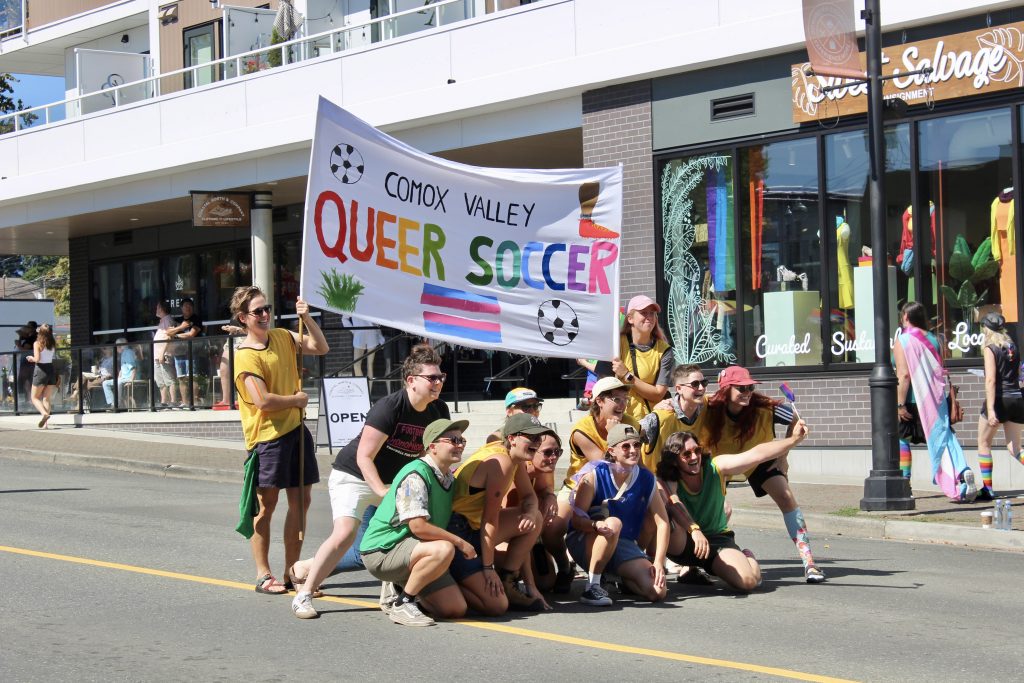
Scheffler and Stevenson said connecting with queer seniors and queer youth are also big priorities for them.
People who don’t fit in are often bullied, and Stevenson said the Pride Society is trying to figure out how to make spaces safer for youth. He noted that the lived experiences of queer youth growing up in the community can come with a lot of trauma, especially if they don’t have access to spaces where they can be themselves.
“So if we can stop that from happening, we can really help those kids as they transition into adulthood because they don’t have to deal with that kind of baggage that we had to [deal with] growing up and the generations before us who had it even worse,” Stevenson said.
Scheffler said there is also a lot of knowledge and support that can be learned from queer seniors.
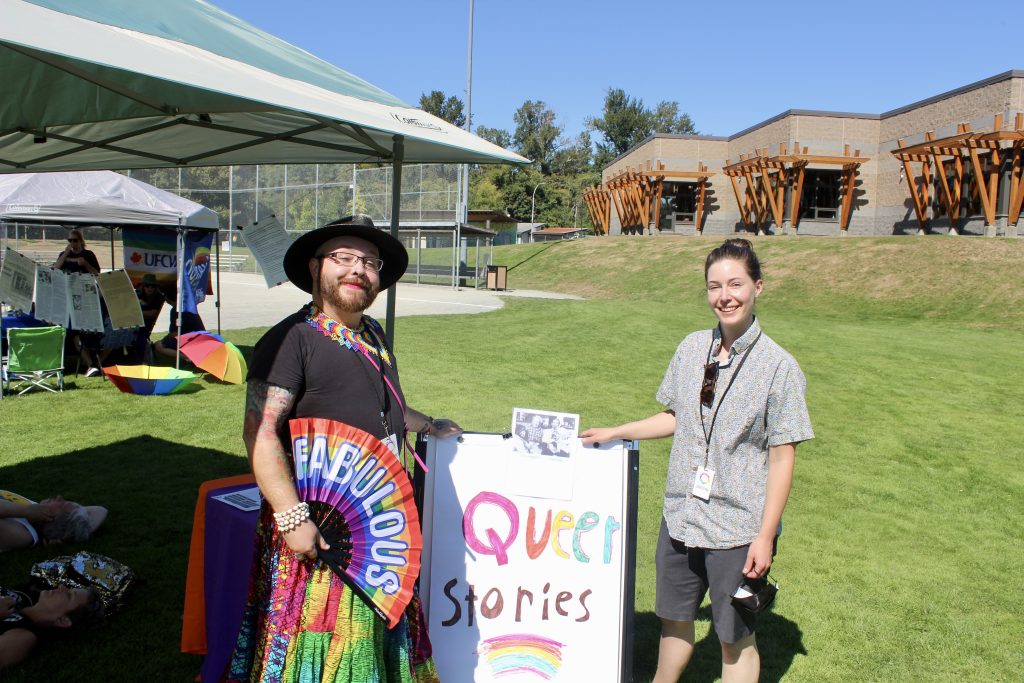
She pointed to the display tent the Pride Society set up at Pride in the Park which had printouts of stories from queer seniors. She said a lot of those people have great advice for other queer people to learn from and that when she was reading those stories, she was getting chills and crying.
“They’ve done it before, and we can learn from them,” Scheffler said,
Stevenson added that he made a documentary in 2024 interviewing queer seniors, which is available online.
He said it’s so important to have Pride, especially with the rise of fascism and anti-trans and anti-queer legislation coming up from the United States. He said he’s learned from queer ancestors who have dealt with this kind of hate before and that those learnings also reminded him that queer people have always existed and will prevail.
“We’re unique, we’re different, we’re part of the social fabric. We always have been, and we always will be. So that’s why we’re here,” Stevenson said.
What did you think of this story?
Your feedback after we publish a story helps ensure we're always improving our reporting to better serve you
Author

Related Articles
What to do and where to go during extreme heat events in Nanaimo, the Comox Valley and the Cowichan Valley
A guide to prepare for extreme heat events on Vancouver Island
Residents upset with Aspen Road development in Comox
Comox councillor says housing development should be balanced with community compassion
Q&A: Palestinian chef brings traditional cooking and food history to Vancouver Island
Izzeldin Bukhari speaks on the origin of falafel, Gaza’s rummaniyeh and why he sees food as a way to hold on to a culture under threat.