
Courtenay Repair Café a ‘vibrant place’ for young and old
The annual community event, hosted by Lake Trail Community Education Society, fosters a do-it-yourself attitude.
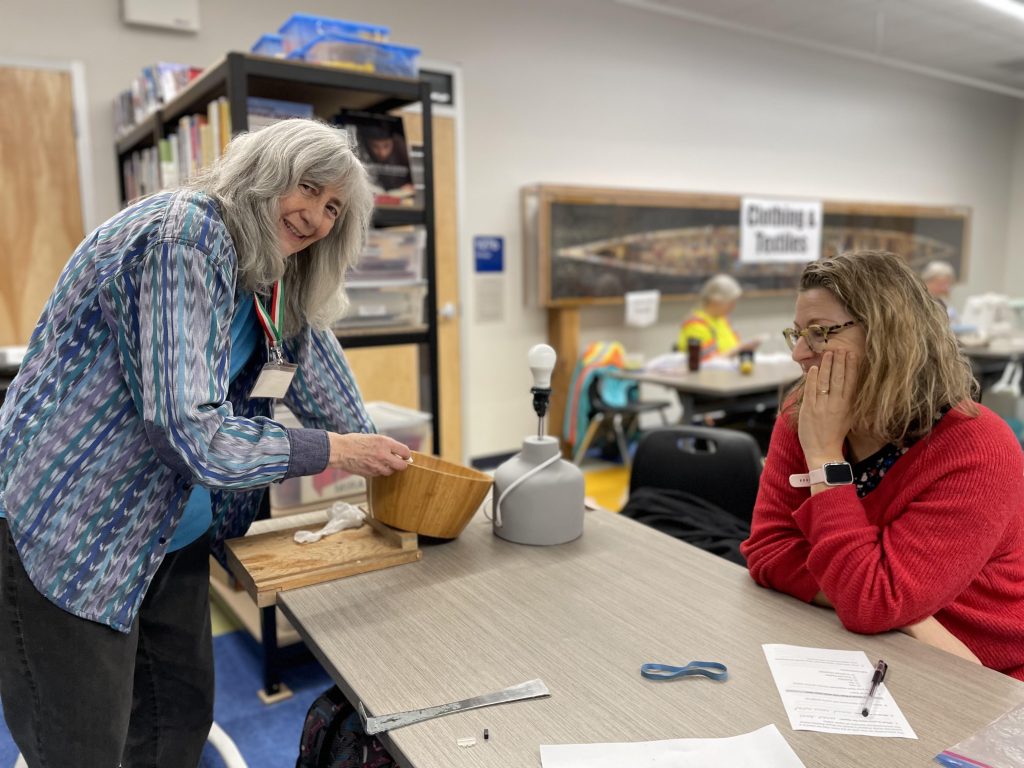
When the fabric-wrapped cord on her grandmother’s old griddle became frayed, Caila Holbrook worried the 70-year-old appliance might start a fire.
As with many things in our homes, the griddle was too sentimental to throw away. Baked into its cast iron plates were memories of her late grandmother and the traditional Scottish scones she would make whenever Holbrook visited.
One day last year, Holbrook received a notice about a repair café in the Lake Trail Community School Newsletter.
Repair cafés are free community meeting places where folks get together to repair things with expert volunteers called fixers.
Fixers have a knack for troubleshooting broken small appliances, electronics, clothes, ceramics or almost any household item we cherish or find useful.
The idea of repair cafés is simple: repair items that would have otherwise met the landfill.
On Saturday, Nov. 15, Lake Trail Community Education Society in Courtenay is hosting another community event from 11 a.m. to 3 p.m. featuring a free clothing swap, community garage sale and repair café with volunteer experts on hand to help repair items and teach attendees new skills.
Passing down skills and reducing waste

The first repair café began in Amsterdam in 2009 and, since then, the movement has spread globally, according to the Repair Café International Foundation website.
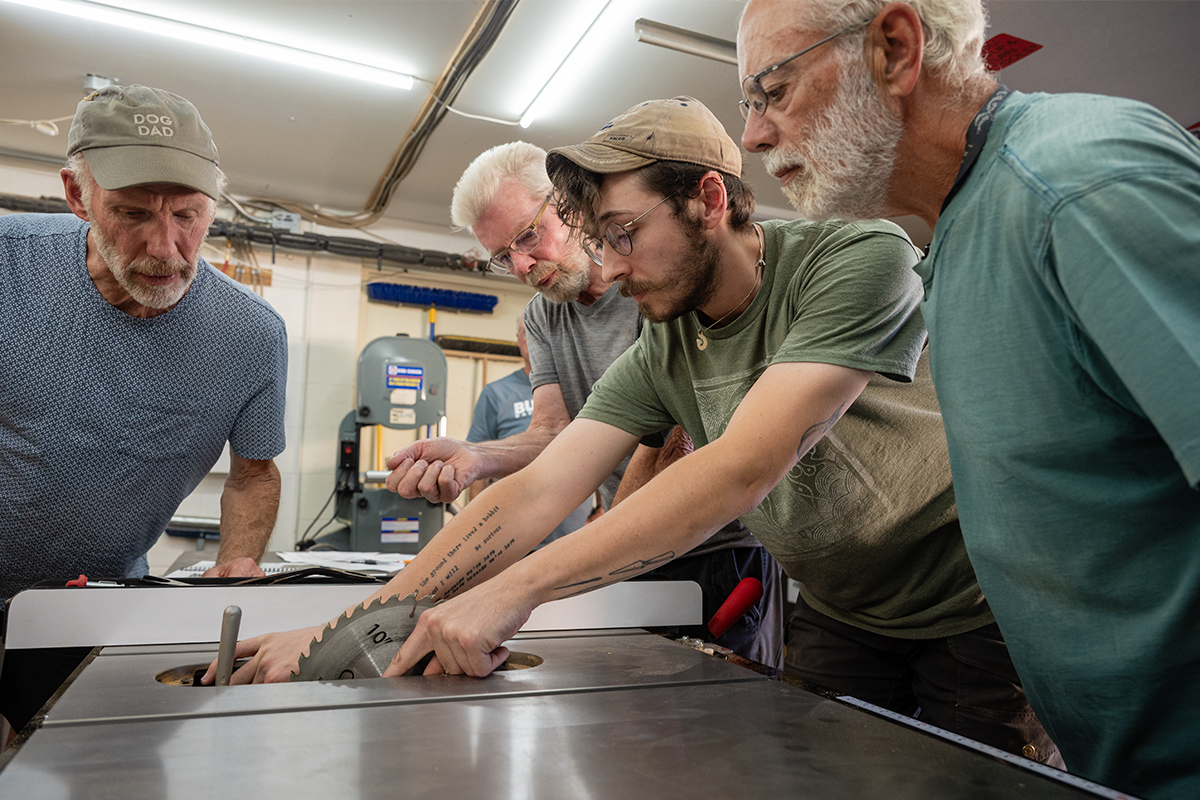
A key component of repair cafés is the passage of knowledge from fixers to younger people who may not know how to repair their items. They may not even realize that fixing broken items is an option, according to the Repair Café International Foundation.
“Knowing how to make repairs is a skill quickly lost. This is a threat to a sustainable future and to the circular economy, in which raw materials can be reused again and again,” the Repair Café International Foundation website says. “That’s why there’s a Repair Café! People with repair skills get the appreciation they deserve. Invaluable practical skills are passed on. Things are being used for longer and don’t have to be thrown away.”
Last year, in the gymnasium of Lake Trail Community School, Holbrook plunked her grandmother’s old griddle in front of an older gentleman who began pulling it apart.
He gave the diagnosis to Holbrook: Grandmother’s griddle had corrosion on its electrical terminals. They’ll need to be replaced, along with the cord.
In 2024, fixers repaired 70 electronics and small appliances at the Lake Trail Repair Café.
The success rate is “about 65 per cent when you include the partial fixes,” says Lindsay Eason, a Repair Café organizer and community educator for Comox Strathcona Waste Management.
Clothing and textiles — the second-most common items brought in — are much easier to repair. They have a fix rate of 90 per cent.
But some items are more complicated. Eason recalls a woman who brought five broken ceramics in boxes. “She couldn’t throw them away. They were so precious to her.”
Eason guided her to the glue and tape station, where, with the help of a fixer, they began to mend a ceramic rabbit, which had been a valued gift.
The event aligns with Comox Strathcona Waste Management’s mandate, Eason says, which “is to reduce waste and send less stuff to the landfill.”
And while the amount of trash diverted from landfills is relatively small for now, the Lake Trail Repair Café provides community members a way to repair more than shattered pottery.
More than a place to repair items
Since 2022, Comox Strathcona Waste Management has collaborated with the Lake Trail Community Education Society for this annual Repair Café in November.
After Covid lockdowns, the society was looking for ways to build community connections again, says executive director Anna Rambow.
Part of the society’s focus is life-long learning and skill sharing, which matches with the Repair Café philosophy.
“Lots of retirees in the community are volunteers,” Rambow says. “They love coming and connecting with the youth and being in a place that’s so vibrant.”
And there are few free spaces for community use in West Courtenay, she adds.
Each year, the society makes improvements to the flow of the event, Eason says. While folks are waiting for a repair, they can peruse a free store, garage sale, clothing swap or dig into a bowl of chili at the Repair Café Café.
They’ve also added a tinker station with “a whole table of electronics and tools to keep kids busy,” Eason says. “They can take things apart and ask questions.”
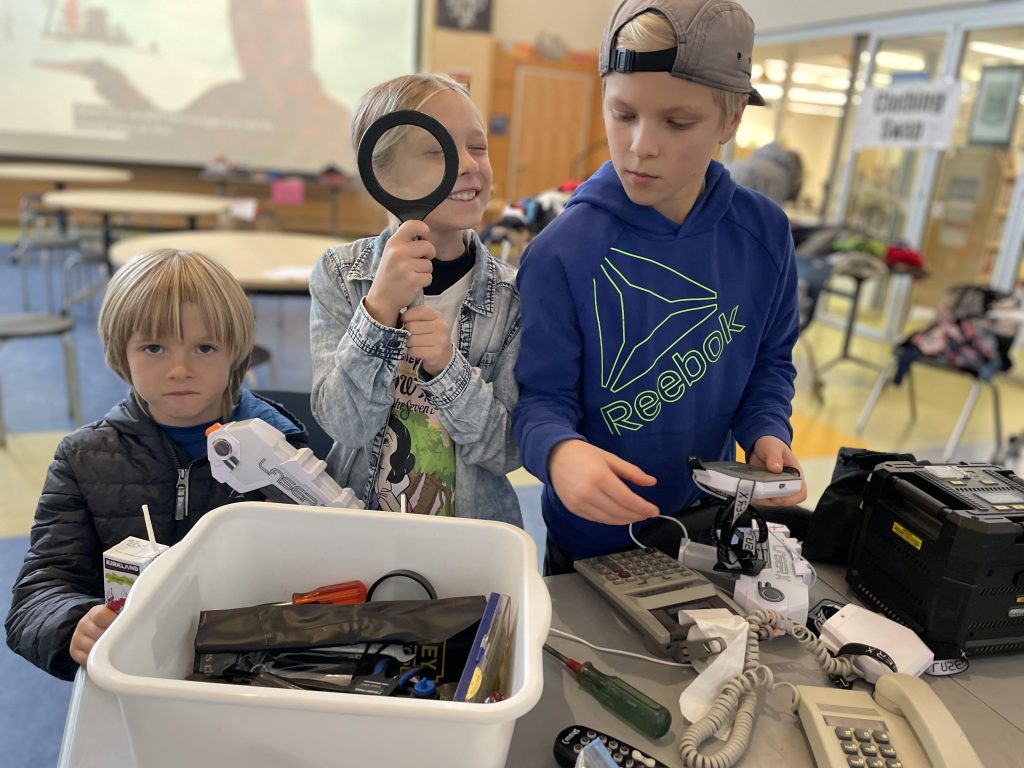
One volunteer brings stuffing to help children mend their ripped stuffies in a teddy repair station.
“We are really trying to empower the do-it-yourself attitude and build that interest from a young age,” Eason adds.
That’s an idea shared by Repair Café International, which provides free repair guides on its website for everything from battery replacements in phones to torn pants.
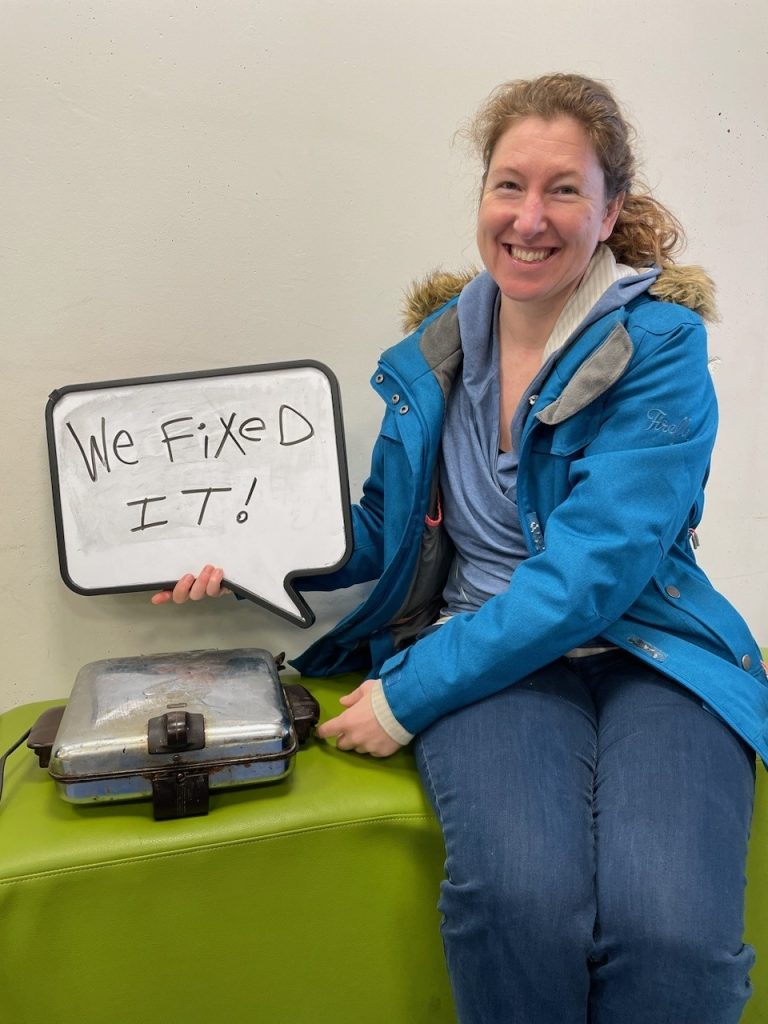
Last year, Holbrook watched as the fixer at the repair café finished replacing the terminal bolts and the cord on grandmother’s griddle. Holbrook says she is happy to have this meaningful appliance back in their life.
Now, when she cooks pancakes with her children and plugs in the old griddle, the appliance warms without worry, ready to make new memories into its 8th decade.
What did you think of this story?
Your feedback after we publish a story helps ensure we're always improving our reporting to better serve you
Related Articles

Comox Valley, Nanaimo land trusts raising funds to support Deep Bay land conservation purchase
In a partnership with the Comox Valley and Nanaimo Area land trusts, BC Parks Foundation is fundraising to protect 50 hectares of pristine shoreline in Deep Bay and make it accessible to the public.

Community collaboration gives second chance to beloved dinghy in Comox
In a race against time to bring a public flower installation to life, Emily Yewchuk leans on support from Comox Valley’s Project Inclusion to make it a reality.

How is The Discourse’s journalism funded?
And what does it cost to produce The Discourse’s in-depth, independent journalism?