
In photos: Art and celebration at K’ómoks Festival 2024
K’ómoks Festival celebrates National Indigenous Peoples Day with vendors, artists and more.

Photos by Madeline Dunnett/The Discourse
Cedar hat weaving, carving, language learning activities, estuary tours and storytelling were just some of the activities that took place on Friday, June 21 at K’ómoks Festival 2024. The event also featured an archaeology walk, an estuary tour and the historic grand opening of Queneesh House, named after the famous glacier with the same name.
Read also: Magic mountain, melting snow: Climate uncertainty in the Comox Valley
After turning right past the cedar hat weaving workshop, visitors walking through the festival visited the variety of businesses and artisans lined up in booths along the grass field.
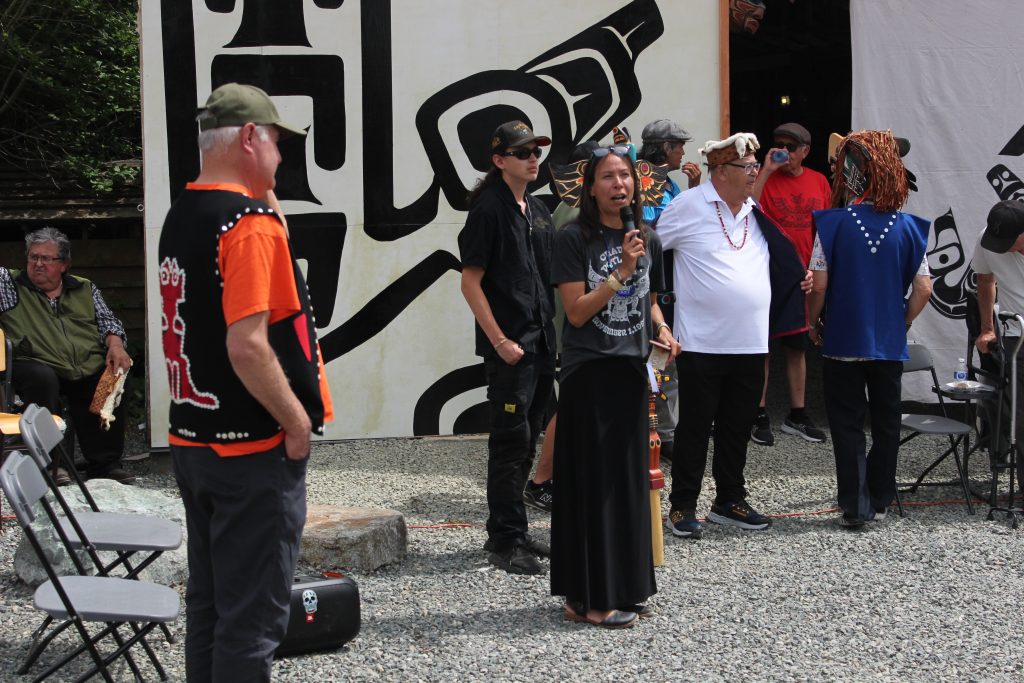
The festival was one of the two events that took place on the traditional, unceded territory of K’ómoks First Nation to honour National Indigenous Peoples Day. The nation-wide celebration honours the heritage, traditions and knowledge of First Nations, Inuit and Métis Peoples. It takes place annually around the time of the summer solstice and during Indigenous History Month.
The other celebration at the Comox Valley Exhibition Grounds was also put on by K’ómoks First Nation, alongside MIKI’SIW Métis Association, Wachiay Friendship Centre, Kumugwe Cultural Society and Upper Island Women Of Native Ancestry Society.

Ceremonies took place under the Norman Frank Memorial Pole, raised in 2022 and carved by Tlingit Kwaguʼł Master Carver, Tommy Hunt Jr. (Waławidi).
Read also: Totem pole at the HUB stands as a symbol of community
After turning right past the cedar hat weaving workshop, visitors walking through the festival visited the variety of businesses and artisans lined up in booths along the grass field.

From the Tlowitsis Tribe, Kwakwa̱ka̱ʼwakw Elder and acclaimed carver Charles Joseph took up carving with the support of his family after returning to his home village. Prior to that, he was in a residential “school” as a child and then spent years living on the streets of Vancouver. He managed to find his way back to his hometown village called Kalugwis on Turnour Island, an Island east of Alert Bay.
“As I walked up into the reserve, there’s this big shop and all my uncles and my grandfather and his brothers, they’re all sitting there carving. It was a really powerful feeling because I had never been around it for so many years,” Joseph said.

“It made me nervous for a while,” he said in reference to him returning home and to carving. Now living in Courtenay, he’s passing on art to the younger generations in his family.
“At the same time I was really excited to be amongst my people again — my father, my grandfather, my grandmother … The patience they had to teach every little thing, what they mean to us and why they mean that.”

James Joseph, Charles Joseph’s son, has been weaving for as long as he remembers. “Years ago, I remember my mom and her aunt and my auntie telling me about weaving spruce roots. And they taught me how to harvest them and how to clean them and how to prepare them to be woven.”

“When I do … my art, it makes me feel like I have a reason in this world,” James Joseph said.
“I like to carve, I like to weave. But weaving is definitely something that I’ve been called to.”
Read also: Opinion: Indigenous Peoples Day should be a reminder of Indigenous-led resistances
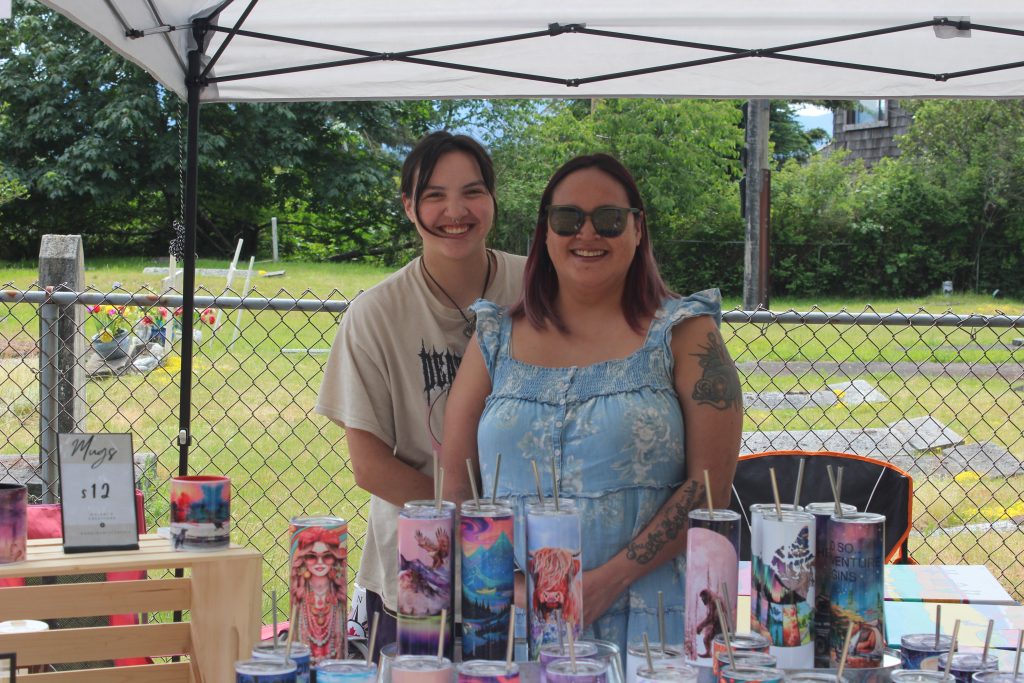
Continuing along the vendor booths, festival goers could also find Oolani’s Creations, selling a variety of decorated to-go water bottles and thermoses.

4 Sacred Skincare & Salve offered a workshop on how to make necklaces and jewelry out of devil’s club — a spiky plant that also contains medicinal properties.
4 Sacred Skincare & Salve also prepare a devil’s club salve, adding on its website that devil’s club is considered sacred and none of the plant goes to waste. Rachel Jannati, creator and operator of 4 Sacred Skincare and Salve, says on the website that the outer bark is traditionally used as a fire starter and the inner green bark is soaked traditionally in bear grease for one year.
“I use extra virgin olive oil organic to release all the powerful anti-inflammatory properties. After the green inner bark is stripped down then you are left with the devils club bone. We use the bone for our talking sticks or carve them into devil’s club beads to use in ceremony as part of our regalia as a good omen and spiritual protection,” the website reads.

Tam’s Crocheting Creations booth featured a variety of sea creatures. Tammi Knox, who crafted all of the crochet sea creatures, told The Discourse that many had sold throughout the day. By early afternoon, there were far fewer critters left than what Knox started with.

“A big thank you from Hereditary Chief Kerry Frank, Queneesh Indigenous Community Society and Comox Rocks for coming together to celebrate National Indigenous Peoples Day, the historic opening of Queneesh House, naming ceremonies for our youth and so much more,” K’ómoks Festival organizers said in a Facebook post on June 24, 2024.
“What an absolutely amazing day of sharing culture, community and laughter! Take a bow. Enjoy some rest! Gilakas’la from our hearts to yours!”

Earlier on, a guided midden and fish weir tour took place along the foreshore. At the end of the event, many took to the beach to play and explore. This beach is usually closed to the public but was open as part of the festival.
To learn more about K’ómoks Festival and keep your eyes out for future events, visit https://komoksfestival.com/.
What did you think of this story?
Your feedback after we publish a story helps ensure we're always improving our reporting to better serve you
Author

Related Articles
Courtenay mayoral candidates on water conservation strategies amid worsening drought conditions
For the second time this year, Courtenay residents see Level 3 water restrictions, days before the Oct. 17 municipal election.
Comox Valley local candidates on housing affordability
Candidates in Courtenay, Comox and Cumberland share how they’d support housing affordability and increase the supply of affordable housing.
Comox Valley candidates on supportive housing, second-stage housing and warming centres
Candidates in Courtenay, Comox and Cumberland share how they’d support adding supportive housing beds, second-stage housing and warming centres.