
In photos: Comox Valley Spirit Walk
The Comox Valley’s Spirit Walk took place to mark the National Day for Truth and Reconciliation.
Photos by Madeline Dunnett/ The Discourse.
Content warning: This story discusses past and ongoing harms caused by residential “schools” and colonialism. Please read with care. Support is available at The KUU-US Crisis Line Society, 1-800-588-8717; The Indian Residential School Survivors Society (IRSSS), 1-800-721-0066; The National Indian Residential School Crisis Line, 1-866-925-4419 and the Métis Nation of B.C. Crisis crisis line, 1-833-638-4722.
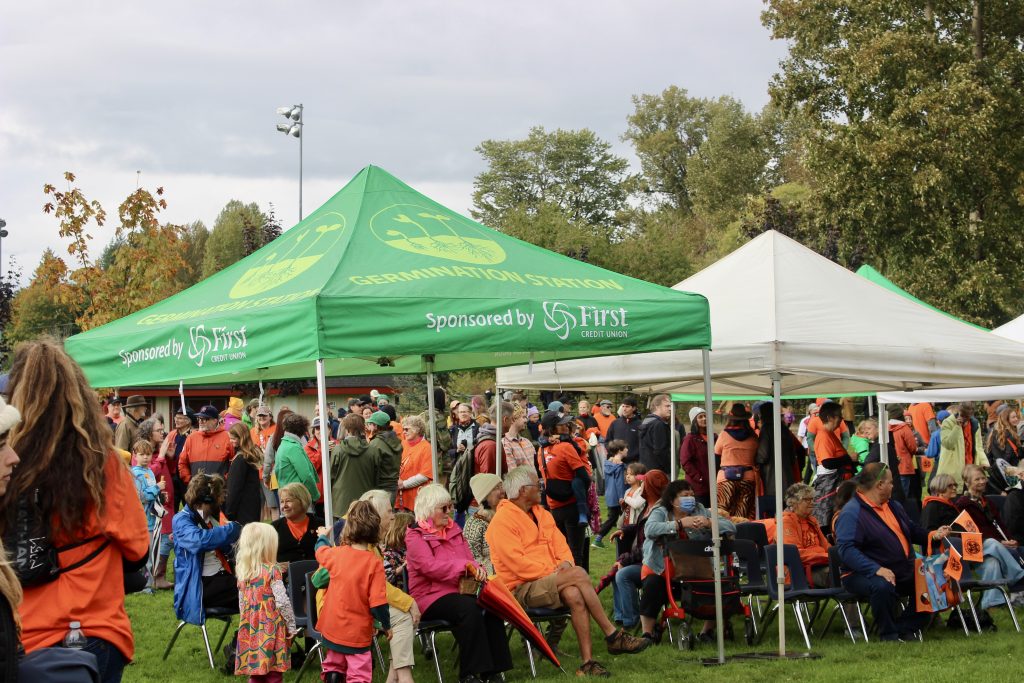
The Comox Valley community came together wearing orange shirts on a cloudy Tuesday to participate in a Spirit Walk and mark the National Day for Truth and Reconciliation and the ongoing harms of residential “schools” and colonization on Indigenous Peoples.
Tuesday, Sept. 30 was also Orange Shirt Day, a day to raise awareness of the intergenerational impacts of residential “schools” and affirm the message that “every child matters.”
This year’s event was organized by Comox Valley MIKI’SIW Métis Association, Indigenous Women’s Sharing Society, Wachiay Friendship Center and Upper Island Women of Native Ancestry.
“In orange shirts and ribbon skirts, moccasins and a feather, we embrace the spirit of our ancestors, and we all walk together,” stated the organizers in the event poster. “Everyone is welcome.”
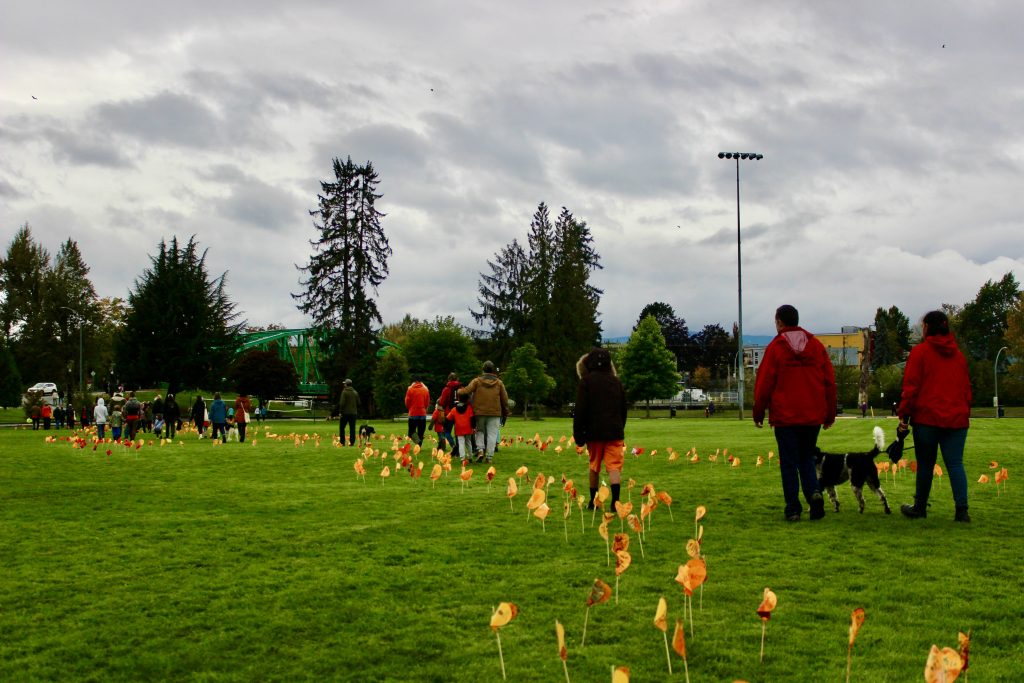
The Spirit Walk began at Harmston Park in Courtenay, where attendees walked down 5th Street towards Lewis Park.
During the event, Vice president of MI’KISEW Métis Association Chrys Sample thanked attendees for joining and encouraged them to ask themselves what else they can do to support residential school survivors.
“This is our fifth Spirit Walk,” Sample said, explaining that in the past, the walk was self-guided. This year, organizers decided to invite attendees to walk together.
In an interview with CHLY, Sample said the best thing the Comox Valley community can do to support is simply to show up for the walk. Sample also encouraged attendees to check out Comox Valley Art Gallery’s current exhibition which honours and profiles the celebrated and beloved contemporary nêhiyaw (Cree) artist, George Littlechild.
Both downtown Courtenay and Lewis Park across the bridge have been stewarded for thousands of years by ancestors of the K’ómoks First Nation — descendants of the Sathloot, Sasitla, Ieeksen, Xa’xe and Pentlatch.
K’ómoks Elder Ramona Johnson also spoke at the event and welcomed attendees.
“We stand together. The orange shirt is more than just a shirt,” Johnson said. “It symbolizes the harm and the lasting trauma caused by Canada’s residential “school” system. Harm to our people, harm to our children. It is a reminder of what was taken: our culture, our identity, our childhoods.”
Johnson said Orange Shirt Day stands as a promise “that every child matters. We promise that we will not forget. We promise that we will walk forward together.”
“To every residential “school” survivor here today, we honour you. We love you. We support you,” she said.
Honouring and protecting culture
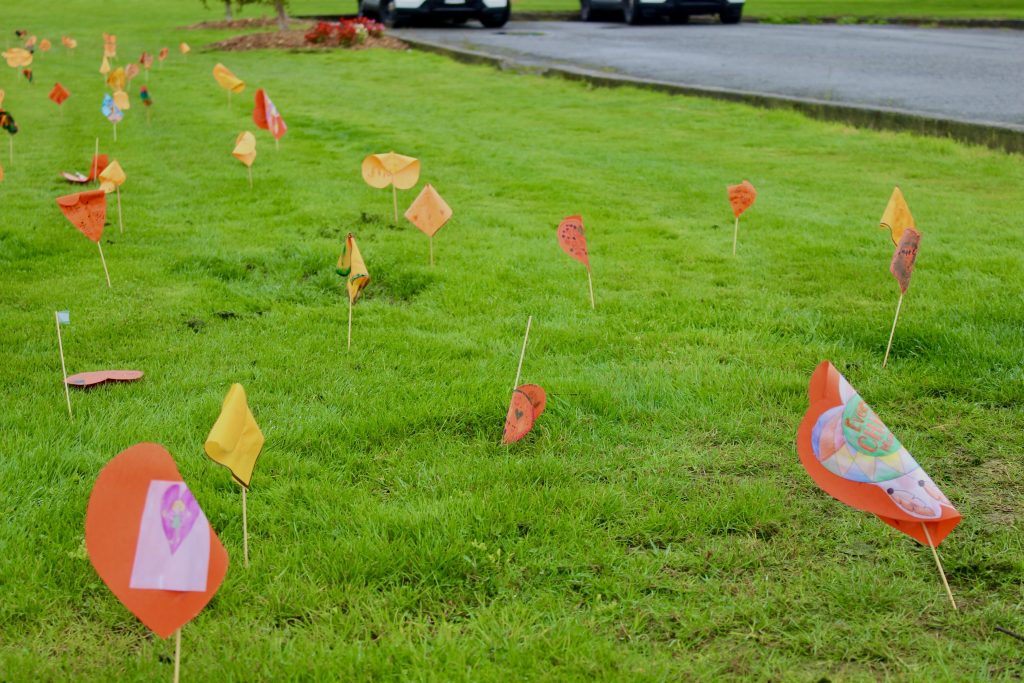
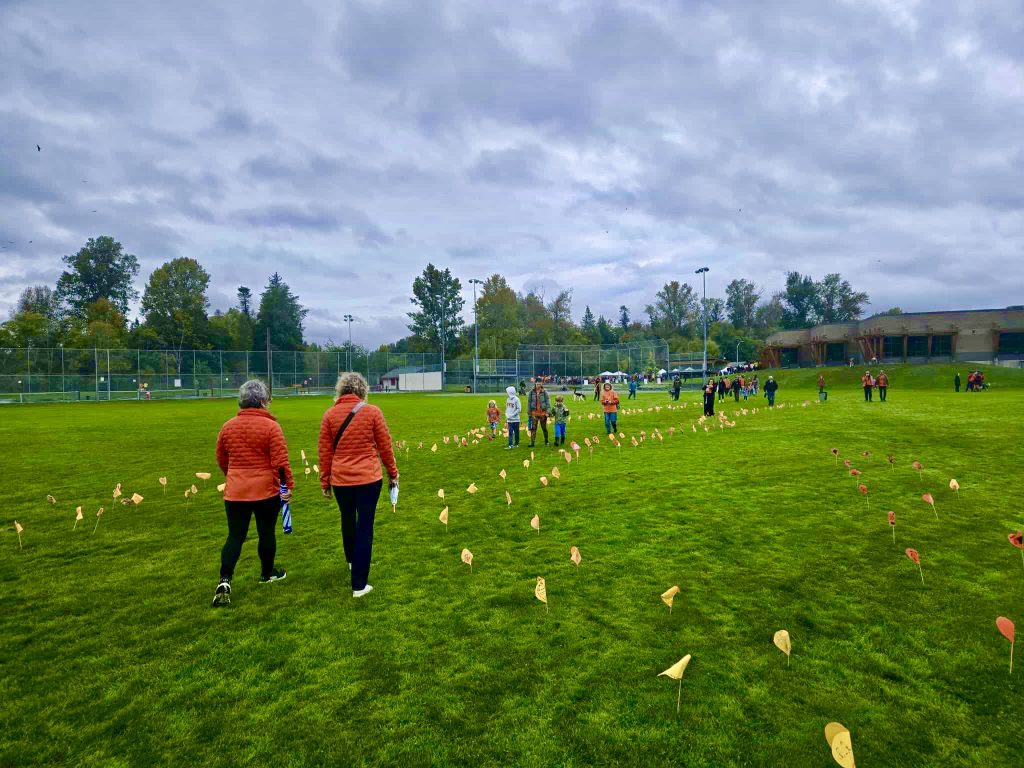
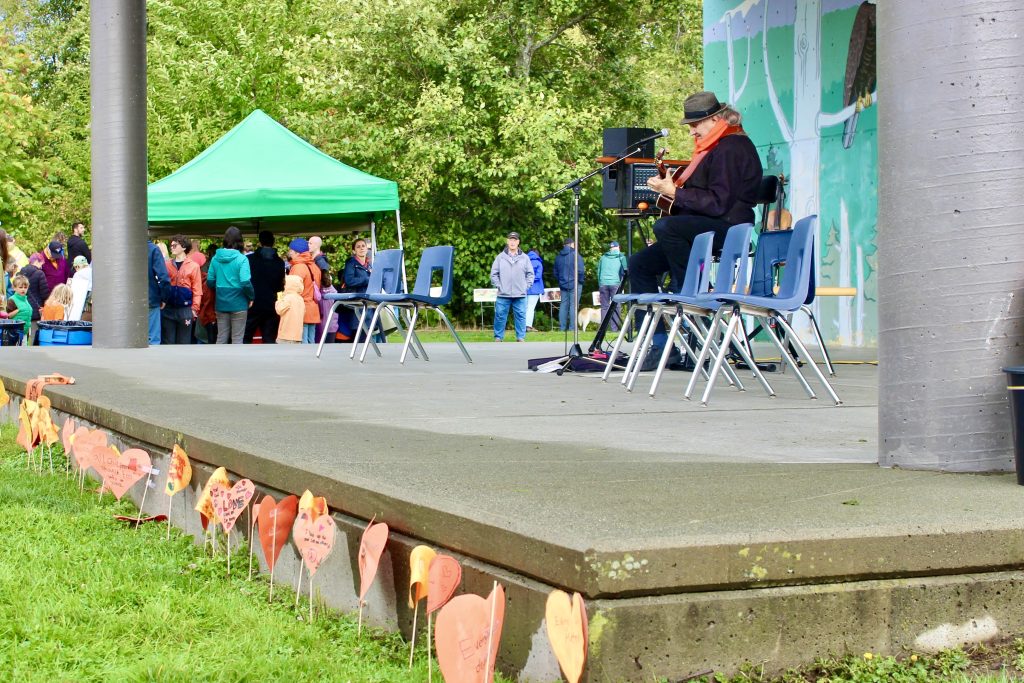
After the walk, participants were met with a path of orange hearts leading them to a gathering of different volunteer booths and performances in Lewis Park. Musician, songwriter and storyteller Ed Peekeekoot from Ahtahkakoop Cree First Nation provided music.
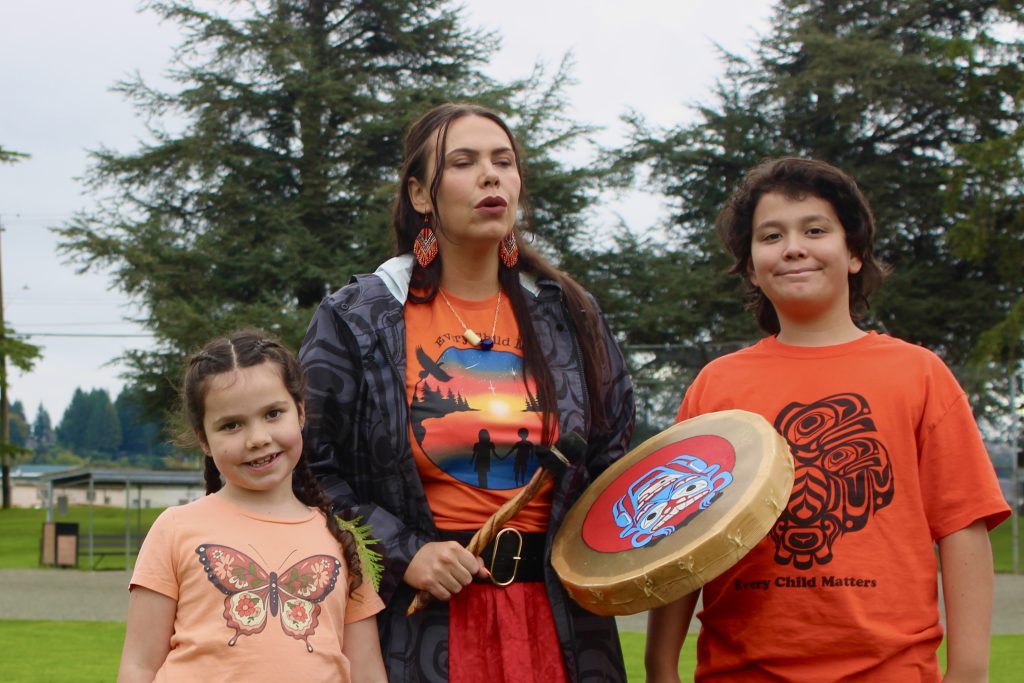
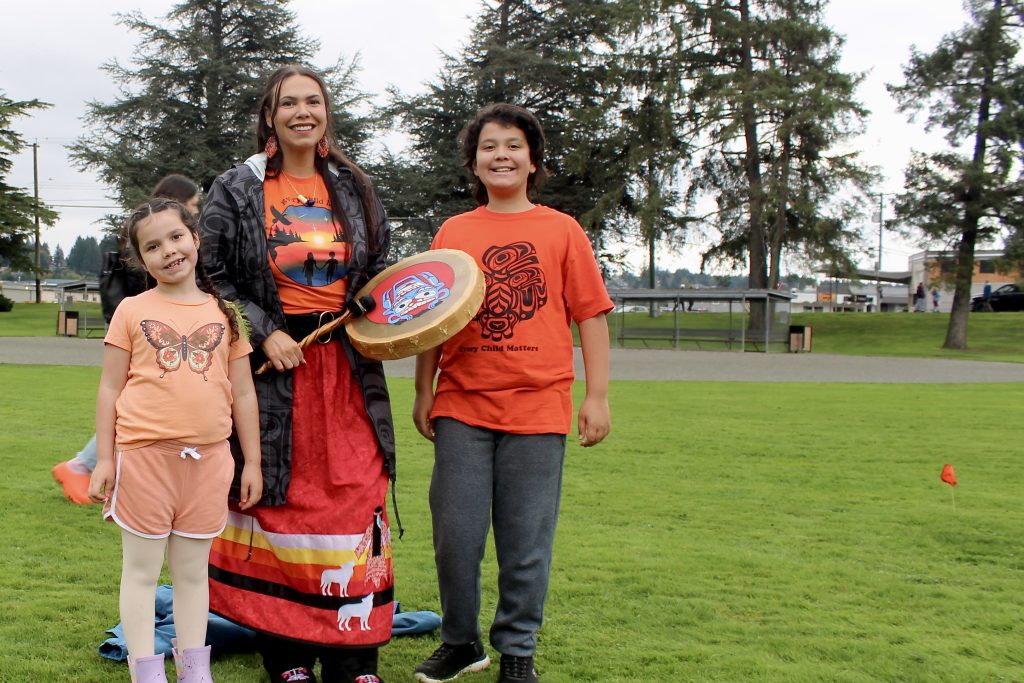
In attendance for the spirit walk was Rachel Jannati, owner and founder of 4 Sacred Skincare. Jannati is Coast Salish from Sḵwx̱wú7mesh Úxwumixw (the Squamish Nation), living and working on K’ómoks First Nation territory. She was joined by her two children, Arya and Katierose Jannati.
Jannati’s father attended residential “school” and was taken from his community at the age of four.
“He didn’t get to learn his culture,” she said. “It was stripped away.”
She said he also experienced starvation at the residential “school.”
“He would eat a little bit of toothpaste, he told me. And some toilet paper in his stomach, just to keep his stomach full because they starved him,” she said.
Jannati said it’s important to share his story.
“We never actually had a chance to really talk about all the horrific things that happened to them being in [residential “school”] for so long because he passed away before there was any reconciliation,” she said.
Jannati said she’s happy she gets to share her culture with her own children, especially since her own father passed away.
“I’m happy to stop here today and pass it to my children and preserve a little bit of our culture and protect it.”
Orange Shirt Day raises awareness, supports reconciliation
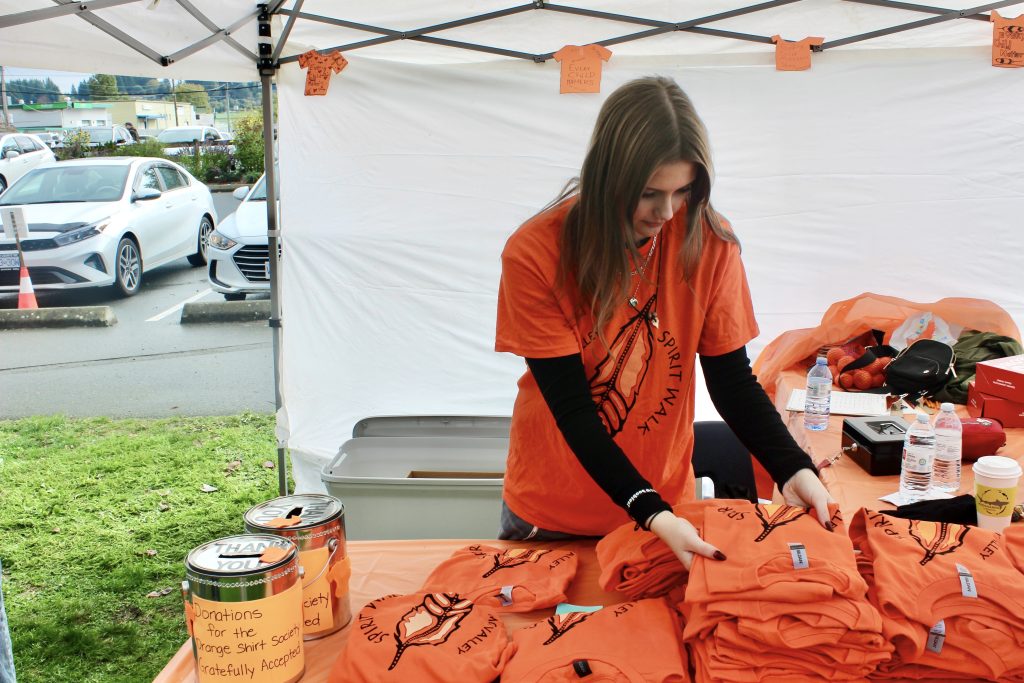
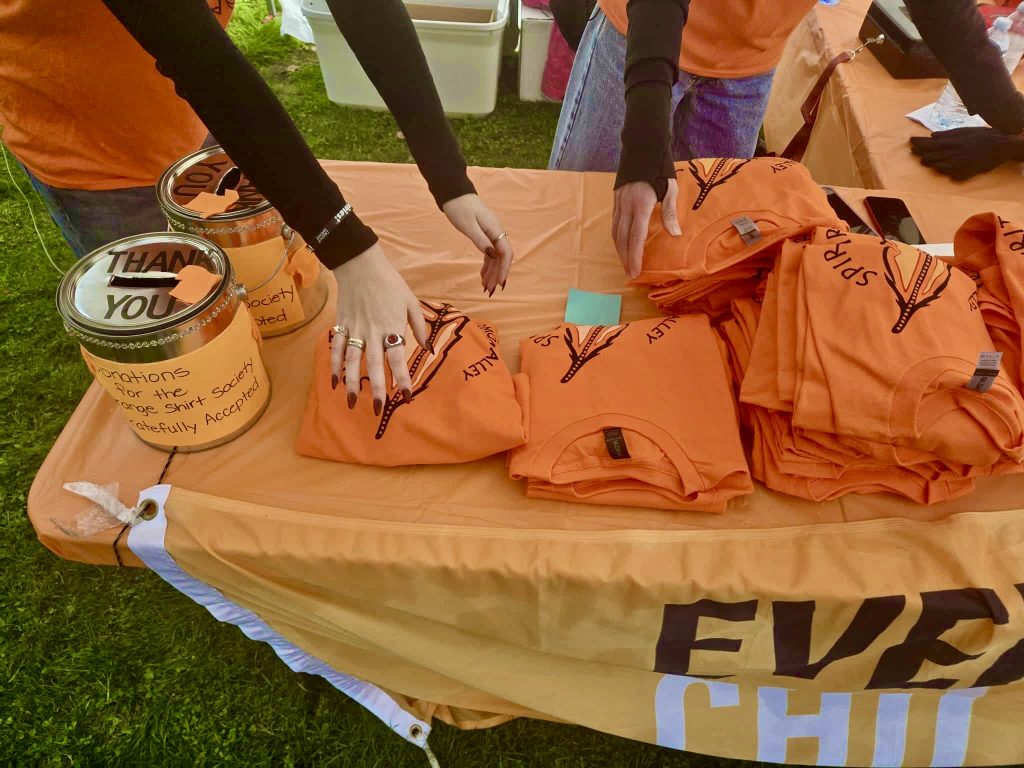
Anaka Wile spent the day volunteering to fundraise for Orange Shirt Society — the organization that started Orange Shirt Day a decade ago and continues to run it across the country. She said Orange Shirt Day is important for her as a Métis person.
“I really enjoy volunteering,” she said, adding that they “had a great number of people show up.”
Orange Shirt Day was founded by Phyllis (Jack) Webstad, who is Northern Secwpemc (Shuswap) from Stswecem’c Xgat’tem First Nation (Canoe Creek Indian Band). Webstad tells the story on the Orange Shirt Day website of how her granny managed to purchase her a new shiny orange shirt for her first day of school, despite not having a lot of money.
“It had string laced up in front, and was so bright and exciting – just like I felt to be going to school!” she says in the story.
But when she got to St. Joseph’s Mission residential “school” near Williams Lake, she was stripped of her clothes, including the orange shirt.
“I didn’t understand why they wouldn’t give it back to me, it was mine!”
“The color orange has always reminded me of that and how my feelings didn’t matter, how no one cared and how I felt like I was worth nothing. All of us little children were crying and no one cared,” the story says.
Webstad says she attended a treatment centre at the age of 27 and has been on a healing journey since then. She says those feelings of worthlessness and insignificance were ingrained in her since her first day at the residential “school.”
“I am honored to be able to tell my story so that others may benefit and understand, and maybe other survivors will feel comfortable enough to share their stories,” she says in her story.
Webstad began Orange Shirt Day in Williams Lake in 2013 and in 2015, the Orange Shirt Society officially formed “to create awareness of the individual, family and community intergenerational impacts of Indian Residential Schools with the purpose of supporting Indian Residential School reconciliation and promoting the truth that every child matters.,” the Orange Shirt Society website says.
Between 2008 and 2015, the Truth and Reconciliation Commission in Canada heard testimonies from thousands of Indigenous people across the country to document the history of the residential “school” system and the harms it has caused and continues to cause to this day. The result was a final report from the commission detailing its findings and 94 Calls to Action for Canada to work towards reconciliation.
In 2021, the Canadian government recognized Sept. 30 as the National Day for Truth and Reconciliation — a response to one of the Truth and Reconciliation Commission’s Calls to Action.
The memorial day urges everyone to take some moments to reflect, learn and understand the colonial history of what we now call Canada — and the dark legacy it has left behind.
To read more about Orange Shirt Day and its origins, check out Phyllis (Jack) Webstad’s story. For more education and resources on the National Day for Truth and Reconciliation, read The Discourse’s recent newsletter.
What did you think of this story?
Your feedback after we publish a story helps ensure we're always improving our reporting to better serve you
Author

Related Articles
Comox Valley, Nanaimo land trusts raising funds to support Deep Bay land conservation purchase
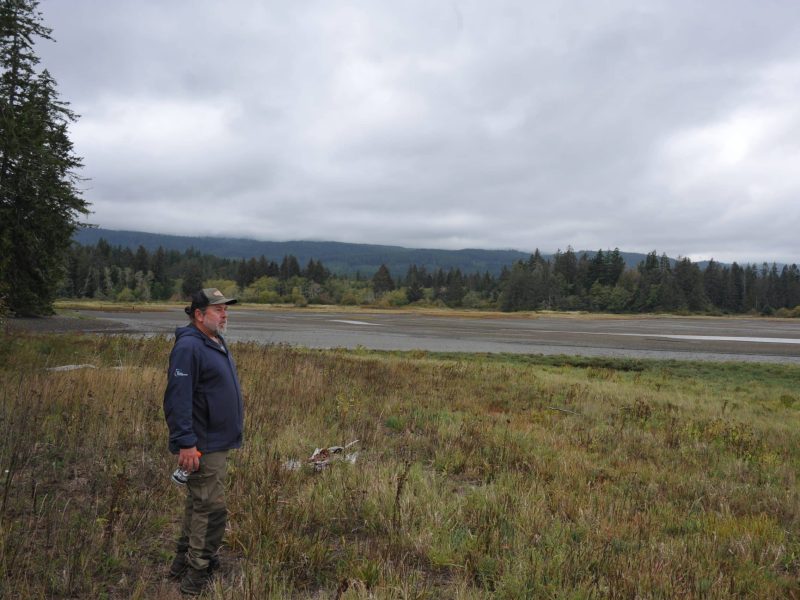
In a partnership with the Comox Valley and Nanaimo Area land trusts, BC Parks Foundation is fundraising to protect 50 hectares of pristine shoreline in Deep Bay and make it accessible to the public.
Community collaboration gives second chance to beloved dinghy in Comox
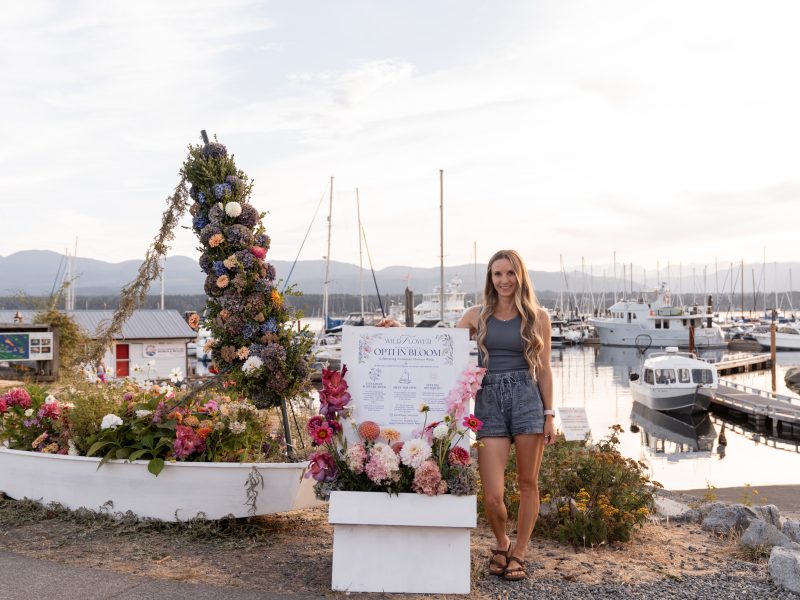
In a race against time to bring a public flower installation to life, Emily Yewchuk leans on support from Comox Valley’s Project Inclusion to make it a reality.
How is The Discourse’s journalism funded?
And what does it cost to produce The Discourse’s in-depth, independent journalism?