
To bee or not to bee: Comox’s path to pollinator protection
The town has recently been designated as a Bee City, with plans to make more space for pollinators.

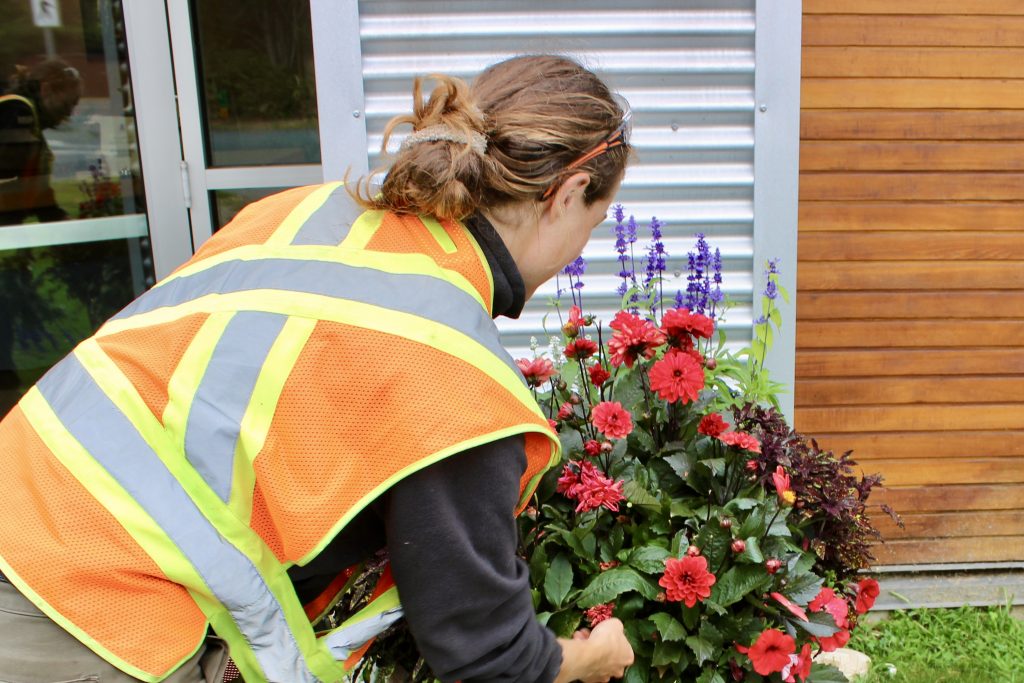
The Town of Comox is making a commitment to bees, butterflies and other pollinators after receiving an official Bee City designation earlier this month.
The designation, assigned by Bee City Canada, means municipalities will commit to what the organization calls the three pillars of the program: Creating a healthy and biodiverse pollinator habitat, educating and celebrating.
Jordan Phelps, a coordinator for Bee City Canada who is employed by Pollinator Partnership Canada, said he was impressed with The Town of Comox’s application.
“It was a really well laid-out plan,” he said.
Comox Mayor Nicole Minions told The Discourse that the town was already on its way to welcome more bees with its pollinator gardens, so the designation was a natural next step.
With a fee of a few hundred dollars, Minions explained that Bee City Canada offers assistance on community education and programs to make sure the Bee City communities follow its pillars.
“We realized having these designations doesn’t cost a lot of money at all, it’s things our departments are already doing, just making some small tweaks,” Minions said.
How did the program come to ‘bee’?
Phelps has been involved with Bee City Canada since 2020. He lives in Ontario and said the first Bee City was in Toronto. The program later spread throughout the Greater Toronto Area and parts of Ontario and eventually made its way to other parts of Canada.
As of Aug. 20, 2025, there are 91 bee cities in Canada.
The idea, Phelps said, is that cities make commitments to protect pollinators across a few main categories.
He said the first of the commitments is creating food, shelter and habitat for the bees. The second is educating residents about pollinators and the third is celebrating Pollinator Week, which is the third week of June.
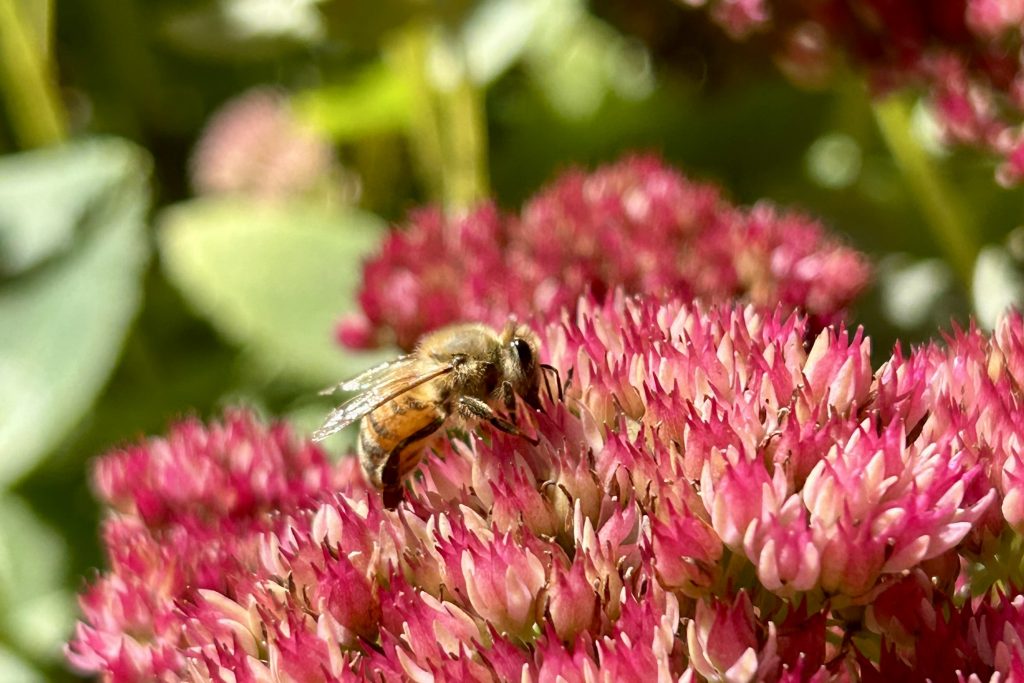
He said a big part is also acknowledging what the needs of different pollinators actually are.
“There’s quite a bit of misinformation or confusion around that,” he said.
Honey bees often get all the attention — and they are important for agriculture — but honey bees were introduced to Canada by European settlers, and Phelps said it is important to learn about the local bee species.
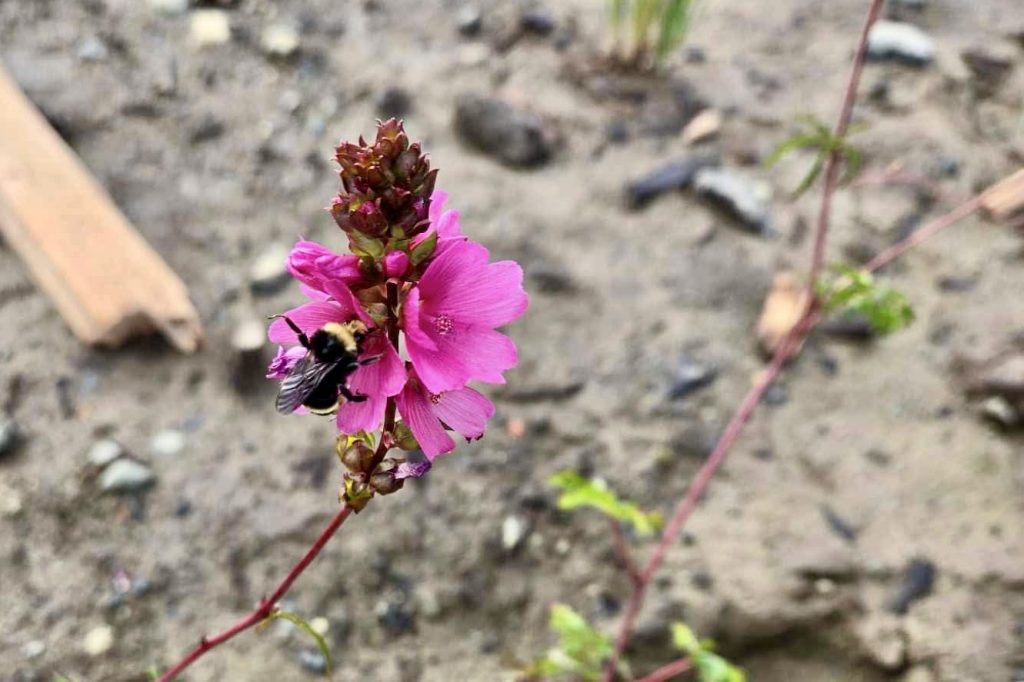
Phelps said there are hundreds of native bee species across the country and B.C. is home to the greatest diversity of native bees in Canada.
According to the Native Bee Society of British Columbia, there are approximately 600 different native bee species in the province. Some native bees and other native pollinators have specialist relationships, such as native willow trees and some types of mining bees, or gumweed and carder bees.
A specialist species refers to a type of species that eats a smaller or more unusual variety of food to support itself, and often feeds off very specific native species to support it.
According to an article written for the University of British Columbia’s botanical garden by community ecologist and pollinator expert Terrell Roulston, native plant species have evolved for millennia alongside native bee species.
Though not a native Vancouver Island species, Phelps said one example of a specialist relationship is the monarch butterfly and milkweed.
“They lay their eggs on the milkweed and then the caterpillar relies on that plant.”
The monarch caterpillar is a specialist species that feeds off the milkweed, but when it grows into a butterfly it becomes a generalist species.
There is no milkweed on Vancouver Island, so while there are occasional sightings of monarchs in the area, they do not breed here. The Town of Comox encourages people to plant native species instead to support butterflies that are native to the area, such as the western tiger swallowtail butterfly.
“With bees, there are a lot of pollen specialist bees that are really dependent on very particular species of plants for the kind of nutrition that the pollen provides,” Phelps said, adding that the whole picture is more complicated than humans have yet been able to learn about.
Phelps said the B.C. Bee Atlas is a good resource for those who want to learn more about native bees. Its resource page has information about the six bee families in B.C., a bee drawing guide and even a bee bingo game.
More than bees
Minions said Comox also became the first certified Bat-Friendly Community on Vancouver Island two years ago. The certification comes from a network of biologists who run the B.C. Community Bat Program to promote bat awareness and stewardship in the province. The Town of Comox has been working to identify bat habitats and locations for bat boxes in parks.
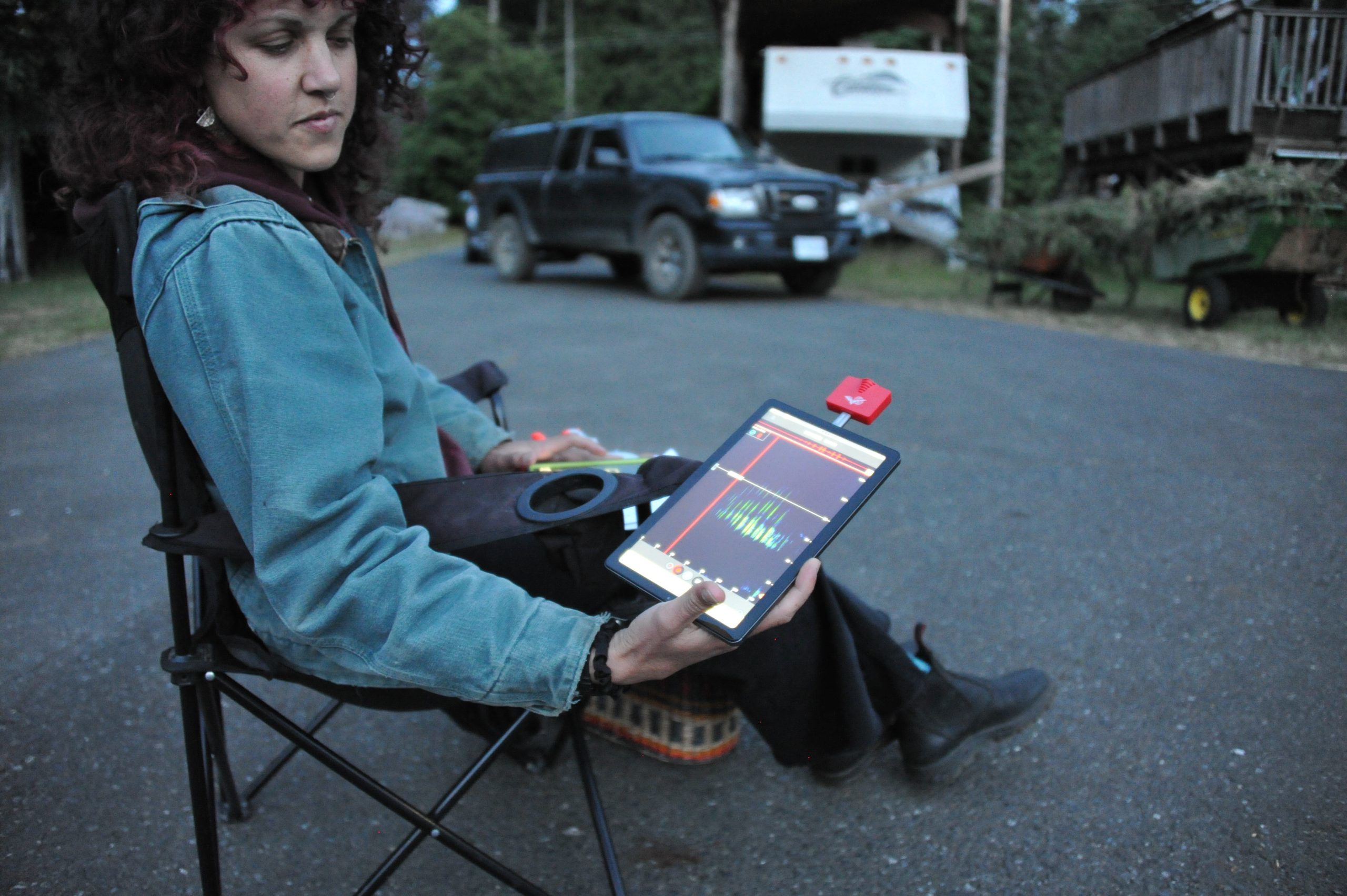
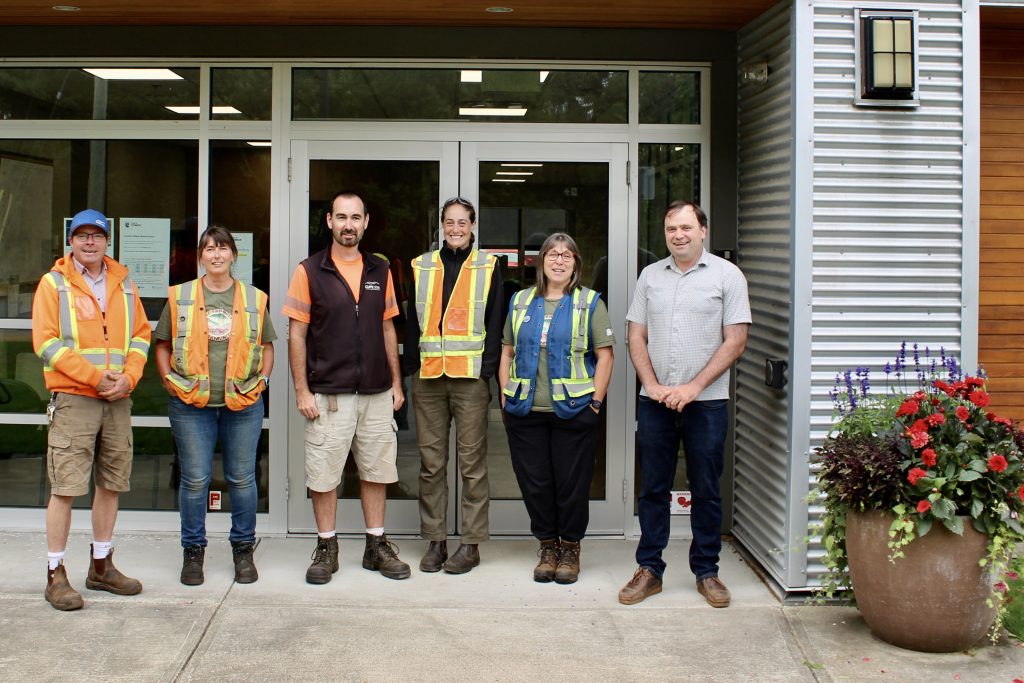
Bats are also pollinators, explained Robbie Nall, parks manager for the Town of Comox. He said it isn’t just bees that are considered in the Bee City Canada program, but also different species that are important pollinators, such as bats and butterflies.
Nall said making plans for pollinators has always been something that he enjoys doing — it brings the team and the community together.
“People are interested in preserving biodiversity [and] improving the environment,” he said. “It’s a great way to do that.”
Want to get involved with the buzz?
Minions and Nall both encourage those who are curious to learn more about pollinators to visit comox.ca/pollinators and check out the brochure on the town’s website that shares six how-to steps for pollination.
Nall said the town is brainstorming some fun pollinator-related activities for the future — and some may even involve poetry.
“We had a great idea from staff to do a ‘pollinator poetry path’ where [people can] submit their poems about pollinators and then stagger them through [a path/trail].”
Overall, Nall said the parks team is excited about the Bee City designation.
“It’s a great opportunity to also reinvigorate some of our garden beds [to] add additional plants [and] renovations of areas that have been sort of overrun by invasive species,” Nall said. “It’s a great opportunity to look at the park system as a whole.”
What did you think of this story?
Your feedback after we publish a story helps ensure we're always improving our reporting to better serve you
Author

Related Articles

Voting in the 2026 Comox Valley local elections? Here’s what you need to know
Where, when and how to cast your ballot in the Comox Valley for the 2026 local elections.
How will Comox Valley local candidates balance growth and environment?
Candidates in Courtenay, Comox and Cumberland share how they’d balance infrastructure, transportation and housing needs with environmental protection.

Comox Valley local election candidates on walking, cycling and active transportation
Candidates in Courtenay, Comox and Cumberland share how they’d support the continued build-out of active transportation.