
Want to branch out in the community? Check out these tree workshops
Comox Valley Nature is offering guided workshops on mother trees, tree structure, and root systems.
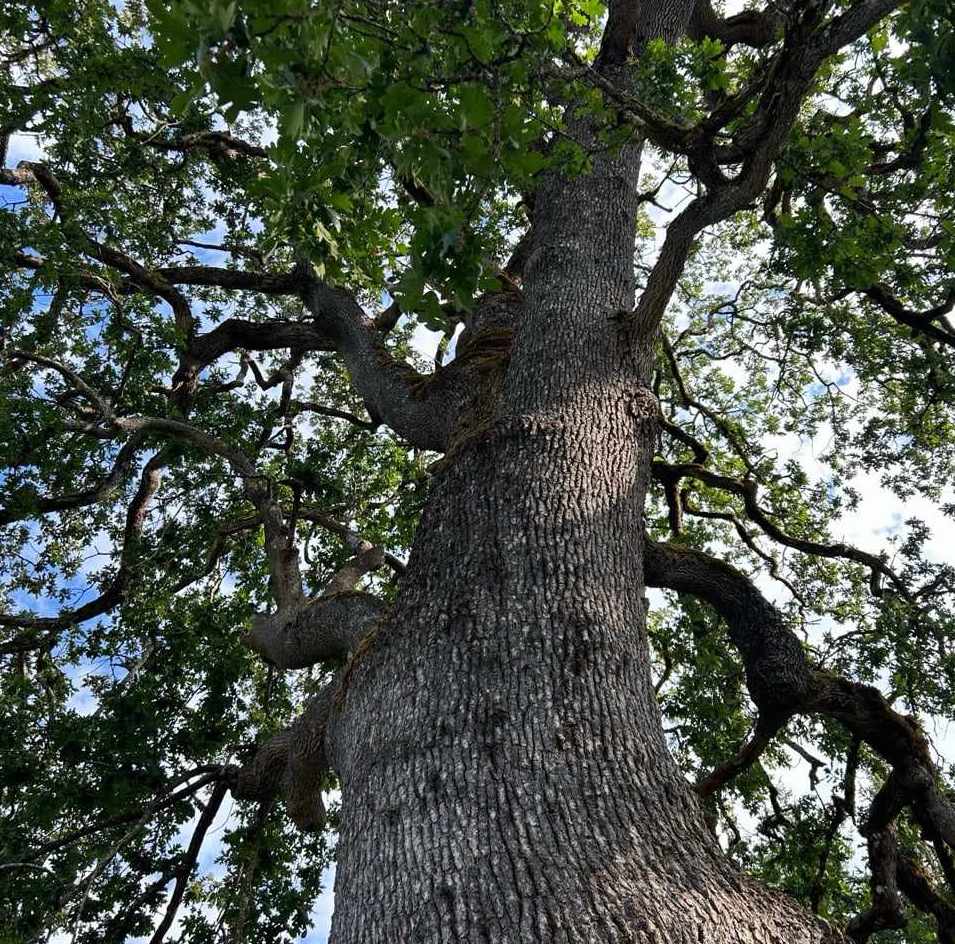
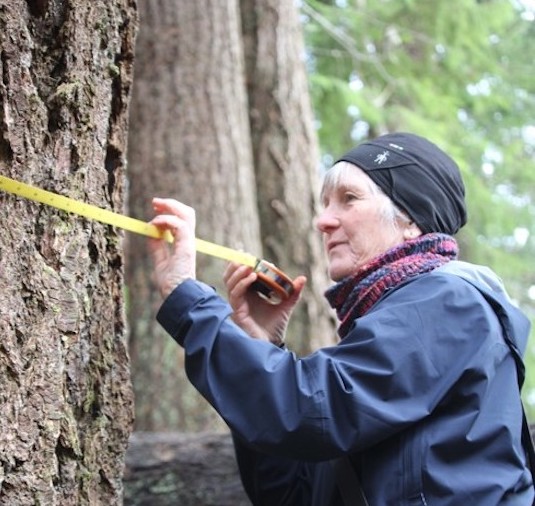
As an arborist, Verna Mumby has spent a lot of time in treetops but she says she’s not sick of trees just yet.
“I’m at the age where I finished climbing at 55, so I’ve been a consultant for about 15 years, and I still do some pruning. I was out pruning this morning. I just can’t seem to stop,” she told The Discourse.
“I have the best office!”
This year, Mumby is also the committee chair for the annual Trees of the Year event in the Comox Valley, and has plans to switch things up.
Since 2018, Comox Valley residents have voted for their favourite trees as part of the Trees of the Year event.
Instead of nominating a tree this year, community members are invited to learn more about the species growing in the Comox Valley. The goal is to highlight the upwards of 120 different trees nominated in past years’ events.
Mumby said she’d done a review of the various similar events held globally. She noticed that some organizations also offer workshops, not just favourite tree nominations.
“This is a good time for us to really honour the trees we have nominated,” she said, “and go back and pay attention to them and be grateful that they’re still here.”
Mumby was inspired to get involved by the late Cathy Storey, who co-founded the event locally with Fred Newhouse, in conjunction with Comox Valley Nature.
Storey died in late 2020, but Comox Valley Nature members wanted to make sure her passion for trees lives on in future events.
“She was a friend of mine, so I decided I could get involved with this group,” Mumby said. “I thought it was important.”
Grow your knowledge of the world of Comox Valley trees
Each of the three Trees of the Year workshops dive into a different topic related to trees, and will run next Saturday, followed by ones on May 3 and June 7.
There are only 15 spots available in each of Comox Valley Nature’s workshops, but Mumby said the group is open to hosting more if there’s a long waiting list.
“If people go there and it’s already full, just put your name down,” she said. “We can run it again.”
All the sessions will be held within K’ómoks First Nation’s traditional territory. The first session takes place in Xwee Xwhya Luq (Seal Bay Nature Park), a popular forest area full of large second-growth trees. The event will explore the concept of the mother tree, popularized by Suzanne Simard in her 2021 book Finding the Mother Tree. Participants will walk through the forest to learn more about the evolution of maturing second- and third-growth forests, and the ecological role of the Western white pine.
“Finding the mother tree in Seal Bay Park will be fun for people to learn about how trees spread and how they have their seeds flying all over the place,” Mumby said.
Those attending may also pick up some knowledge of the aýaĵuθəm language (pronounced EYE-a-jooth-um) — a Coast Salish language shared between the peoples of K’ómoks, Tla’amin, Homalco and Klahoose Nations. The park’s signs were renamed in aýaĵuθəm in 2019.
Xwee Xwhya Luq (pronounced Zway Why Luck), for example, means “a place that has beauty, beauty that is not only seen but also felt.”
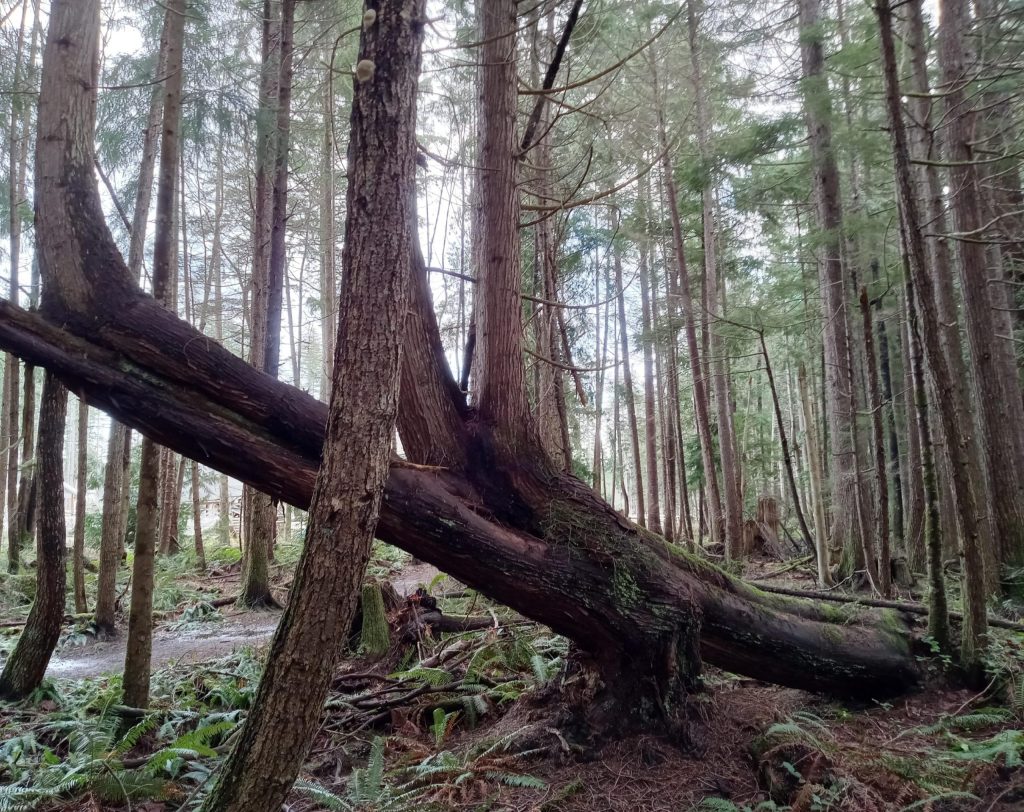
The series’ second workshop will dig into the “biomechanics” of trees. It sounds complex, but the term simply refers to trees’ structures. The session will explore why some trees are more prone to damage, and how they move with the wind, among other things.
“The biomechanics one is one that — as an arborist — I talk a lot about with people,” Mumby said.
Some people can be afraid of big trees, she said. She hopes this workshop can quell such fears — and help people understand the ancient giants better.
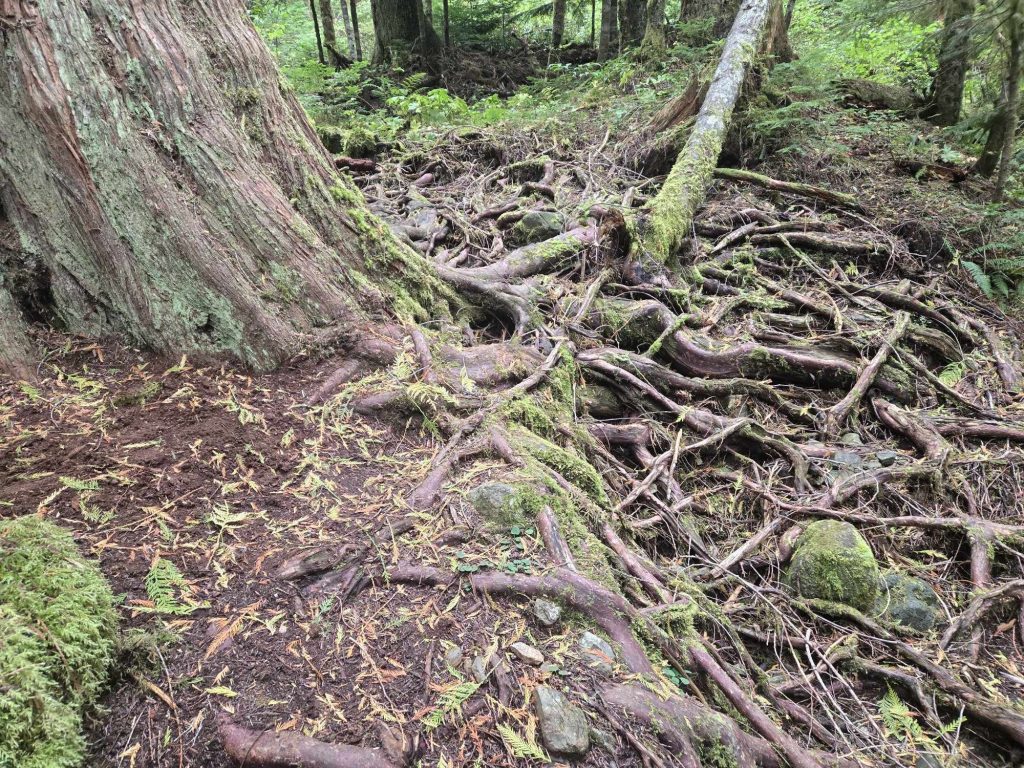
In June, the third workshop will focus on trees’ roots. Mumby said learning about them is important, because people can sometimes forget about what is underground and out of sight. For this event, small roots will be unearthed so participants can examine and learn about trees’ root plates directly.
Trees chosen from earlier years’ events are also documented online, and anyone can see suggested tour routes that incorporate previously nominated trees on Comox Valley Nature’s website.
Surprisingly, Mumby herself doesn’t actually have a favourite tree.
“I really don’t,” she insisted. “Sometimes I’m really taken with the oaks — and the next thing I know, I’m really taken with the lindens — and the next thing I know, I’m really taken with the cypress.
“Every tree is as individual as we are.”
What did you think of this story?
Your feedback after we publish a story helps ensure we're always improving our reporting to better serve you
Author

Related Articles
How is The Discourse’s journalism funded?
And what does it cost to produce The Discourse’s in-depth, independent journalism?
How do Comox Valley governments and public organizations use AI?
The Discourse reached out to Comox Valley governments and organizations to find out how they are handling the use of AI.
What to do and where to go during extreme heat events in Nanaimo, the Comox Valley and the Cowichan Valley
A guide to prepare for extreme heat events on Vancouver Island