
A Cowichan Valley conservation project is giving bluebirds a place to call home
A years-long conservation project to reintroduce bluebirds to the Cowichan Valley celebrates its success in 2024.
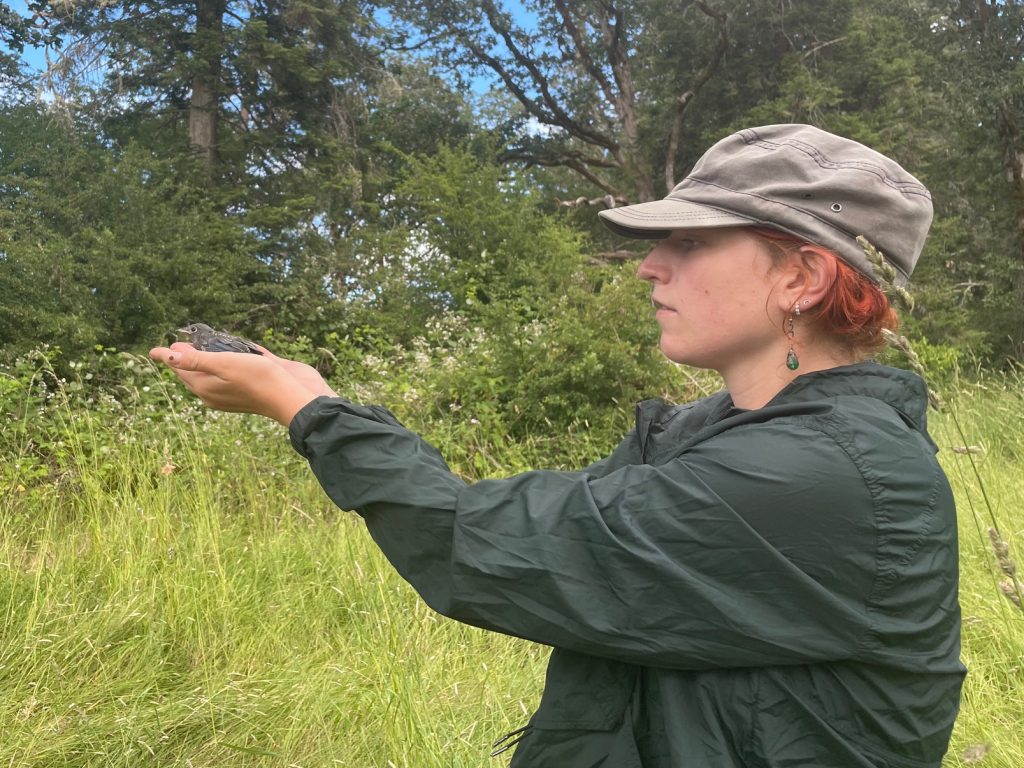
If you asked someone who lived in the Cowichan Valley in the 1950s how they knew spring was here, they would probably say it was because the bluebirds had arrived.
Bluebirds were such a common sight in the Valley and on Salt Spring Island that by the 1990s, naturalist groups were alarmed by the steep decline in their population. It was so bad the bluebird was declared locally extinct.
This local extinction was fueled by destruction of endangered Garry oak ecosystems to make way for housing developments, says Jacquie Taylor, coordinator for the Cowichan Bring Back the Bluebirds Project. As trees were removed, the bluebirds lost their ability to nest in the crevices left by woodpeckers and northern flickers.
Since then, local groups and naturalists have been working to recover Garry oak ecosystems in the Cowichan Valley, as well as bring bluebirds back to the region. Nest boxes have been installed, and healthy bluebird families are brought over to the Island and supported so they can nest and fledge in the area.
In 2017, the British Columbia Conservation Foundation took on the task to bring bluebirds back to the Valley, creating the Cowichan Bring Back The Bluebirds Project in partnership with the Cowichan Valley Naturalists’ Society. Now, the project is celebrating another successful year of reintroducing bluebirds to the Cowichan Valley.
“We’ve doubled the population every year for the last three years, so we’re really excited about the momentum that we’ve got going, and really hope that we can keep it up,” Taylor says.
Bringing bluebirds back to the Cowichan Valley
The Cowichan Valley is a unique position to host returning bluebirds as it still has some of the last remaining stretches of Garry oak habitat on Vancouver Island. It was also the last place bluebirds were seen on the Island before their extirpation.
Taylor says the Cowichan Valley is a focus of the Bring Back the Bluebirds Project right now, but there are plans to move to Salt Spring Island and Victoria next.
There are healthy bluebird populations elsewhere in western North America, and it’s not an endangered bird, but they are still important to the Garry oak ecosystem, Taylor says. Bluebirds are insectivores, which help keep insect populations in check.
“And if you don’t have predators keeping them in check, things can get out of balance,” Taylor says.
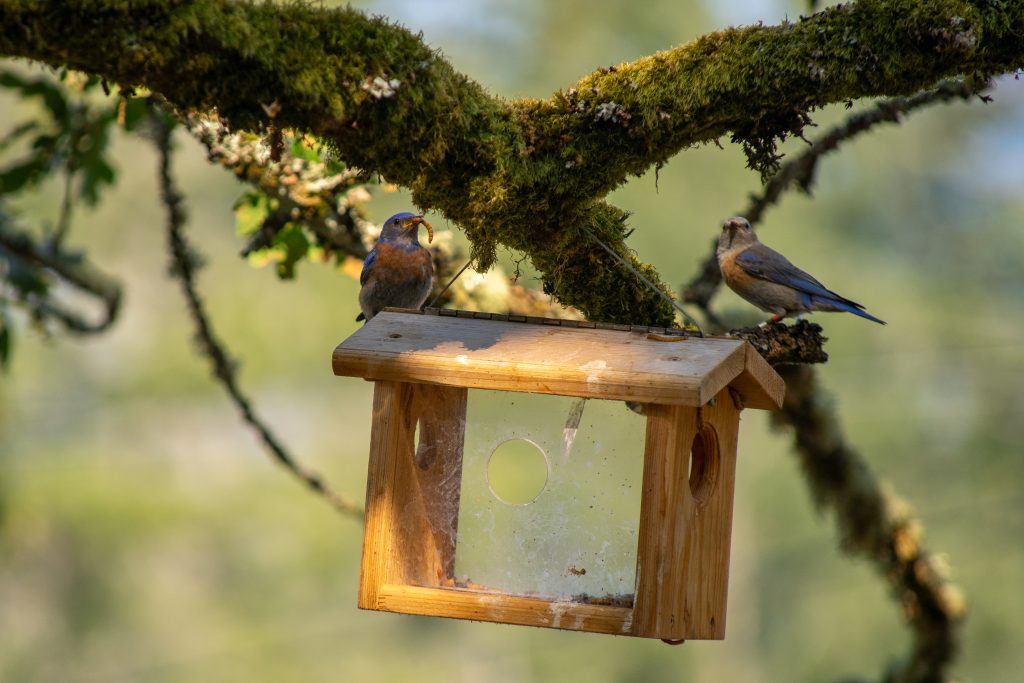
Once naturalists realized that something was happening to the bluebirds, the Garry oak Ecosystem Recovery Team — an organization dedicated to recovering Garry oak and associated ecosystems in Canada — created a program to install nest boxes around Garry oak meadows in the Cowichan Valley.
But the bluebirds needed more than just a place to live.
Bluebirds typically only nest where they fledge (where they’re brought up). Since there weren’t any bluebirds on Vancouver Island after the population crashed, re-introducing them was difficult and labour intensive. It didn’t matter if the habitat was restored, Taylor says, the only way to get the bluebirds back was to physically move them or “translocate” them so they knew where to return to.
“We bring over families from a healthy population, get them set up, provide them with all kinds of nest habitats and then support them for a little bit with mealworms,” Taylor says.
That initial bluebird nest box project was dropped by the Garry Oak Ecosystem Recovery Team and taken over by the Cowichan Valley Naturalists’ Society in 2012, but naturalists determined that a distinct bluebird program with full-time monitoring was needed. That’s when the Cowichan Bring Back the Bluebirds Project was born.
“I was invited to come on because I was interested in the work and I could stick with it year round and provide that sort of backbone,” Taylor says.
A great year for the local bluebird population
Since the launch of the Bring Back the Bluebirds Project, there has been good success in reintroducing bluebirds to the region. In 2024, 61 fledgling bluebirds were added to the Cowichan Valley due to the efforts of project staff and volunteers.
This year has been a busy one for the program, which monitored those 61 fledglings and 18 adult bluebirds through the summer, according to a 2024 summary report from the project. Ten of those adults returned to the Cowichan Valley and consisted of two lone males and four mating pairs.
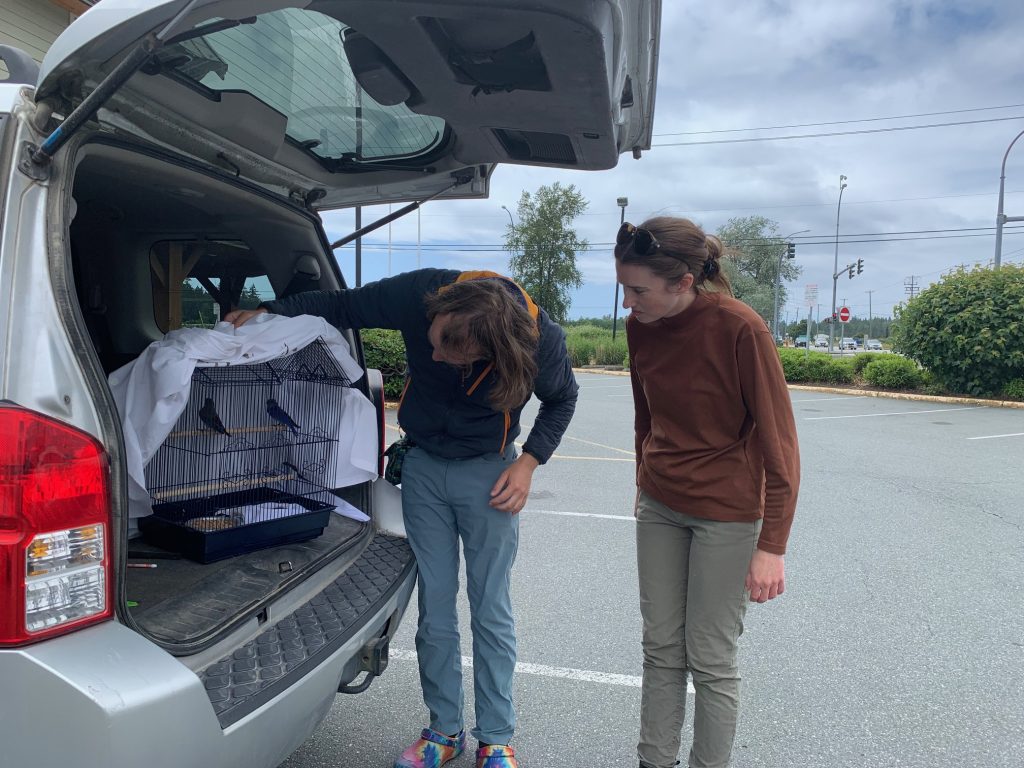
The project’s translocation program was also in full swing, which saw eight adults and 20 nesting bluebirds brought over from Joint Base Lewis-McChord, a military installation in Washington that is more than 358 kilometers away. Those translocated birds added 35 young bluebirds to the Cowichan Valley population, the report says.
Another component of the program is the monitoring of nesting boxes, of which there are 276 across the Valley. Volunteers collected data on bluebirds and other native species like the Bewick’s wren, tree swallows and chestnut-backed chickadees, which were found to be experiencing rises in populations as well. According to the report, that data was submitted to Project NestWatch, a national database of nest monitoring data in Canada.
Even though the bluebird population is growing, they are still under threat from local predators with just one attack having the potential to greatly impact the small colony of bluebirds. Volunteers worked to protect the nesting bluebirds from predators, such as raptors, sparrows, raccoons and cats, that kill and harass bluebirds, the report says.
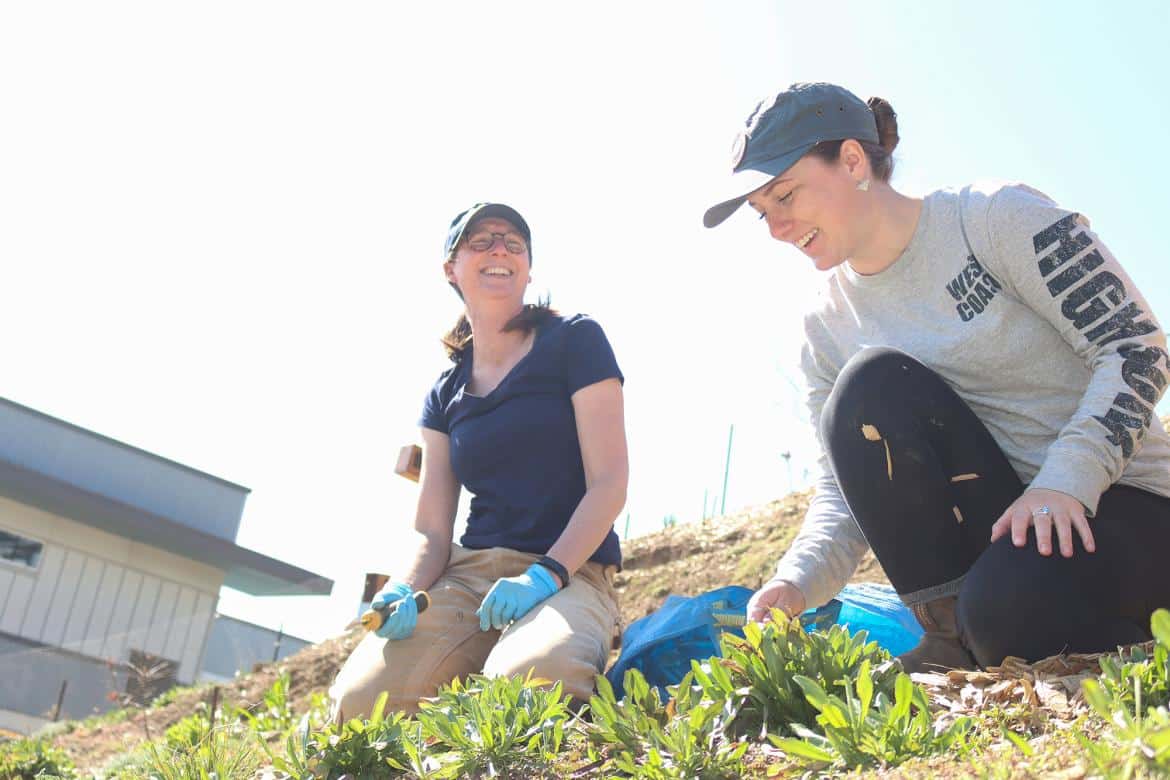
Caring for the bluebirds takes a lot of helping hands and this year, Taylor says volunteers contributed 560 hours to monitoring trails and building aviaries that house the translocated bluebird families.
Taylor stresses that the project would not happen without its partnership with the Cowichan Valley Naturalists’ Society, which is where most of the volunteers come from.
The project also launched a program in 2024 which allows the public to adopt a bluebird family after they are translocated. The project sends updates on that family, an adoption certificate and a bracelet.
“Each family we bring over gets a unique colour band on their legs to help identify the birds without having to recapture them,” Taylor says. The bracelet in the adoption program is matched with the bluebirds that get adopted.
Stories of successful recovery
In 2025, the project hopes to continue growing the bluebird population but there is still “a ways to go before it’s secure enough” for the project to move on to new locations, Taylor says.
“We hope that after a few more years in Cowichan we can start doing translocations to other nearby areas to build a network of populations that can support each other,” Taylor says.
The hope is that the Cowichan project and a sister project on the San Juan Islands will form a collection of populations that can interact with and sustain each other.
The project on the San Juan Islands, and similar nest box projects in the areas around Joint Base Lewis-McChord, have seen massive recovery in bluebird populations. Taylor says it is encouraging to see that this can be done.
The Bring Back the Bluebirds Project also plans to keep the translocation program rolling, and hopes to bring over five pairs of bluebirds from Washington starting in April, Taylor says.
Beyond protecting just the bluebirds, Taylor says the project aims to bring attention to the Garry oak ecosystem. Almost 95 per cent of the ecosystem has been lost on Vancouver Island and the areas around the Strait of Georgia.
The project presented and hosted 15 events in 2024 and plans to keep educating the public on the Garry oak habitat in the Cowichan Valley.
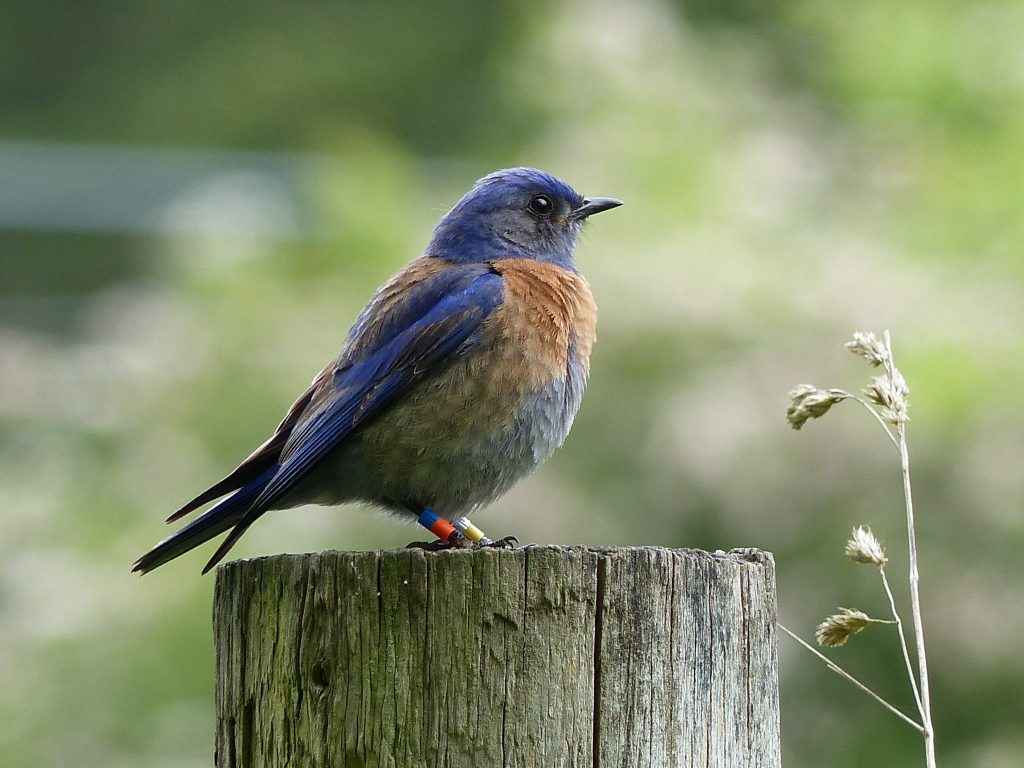
“It’s an incredibly biodiverse habitat, and the bluebirds are one species among a number that are affected by the loss. So we’re hoping that as people gain awareness of the bluebirds, they’ll also look to help protect the remaining Garry oak [ecosystem],” Taylor says.
For those looking to get involved, the Cowichan Bring Back the Bluebirds Project holds a workshop in late March where prospective volunteers can learn what goes into trail monitoring.
“If you’re interested at that point, then we can talk about what trail would be a good fit and we try to match the trails to people’s abilities and comfort level,” says Taylor says. The project is also always looking for support from people who can help build and take down aviaries.
To learn more about the Cowichan Bring Back the Bluebirds Project visit the program website.
What did you think of this story?
Your feedback after we publish a story helps ensure we're always improving our reporting to better serve you
Author

Related Articles
What to do and who to call when juvenile salmon are in danger
Officials say Cowichan Valley residents should call experts to move salmon in isolated pools because of risks associated with relocation.
How is The Discourse’s journalism funded?
And what does it cost to produce The Discourse’s in-depth, independent journalism?
Behind the backlash to the Cowichan Valley’s comprehensive zoning bylaw
The campaign against Bylaw 4710 was fuelled, in part, by misinformation and an organized group of advocates. What could this mean for the future of local politics?