
Black Press is insolvent. What will that mean for community news in B.C.?
Newspapers will keep printing as the company pursues a court-supervised restructuring and sale.
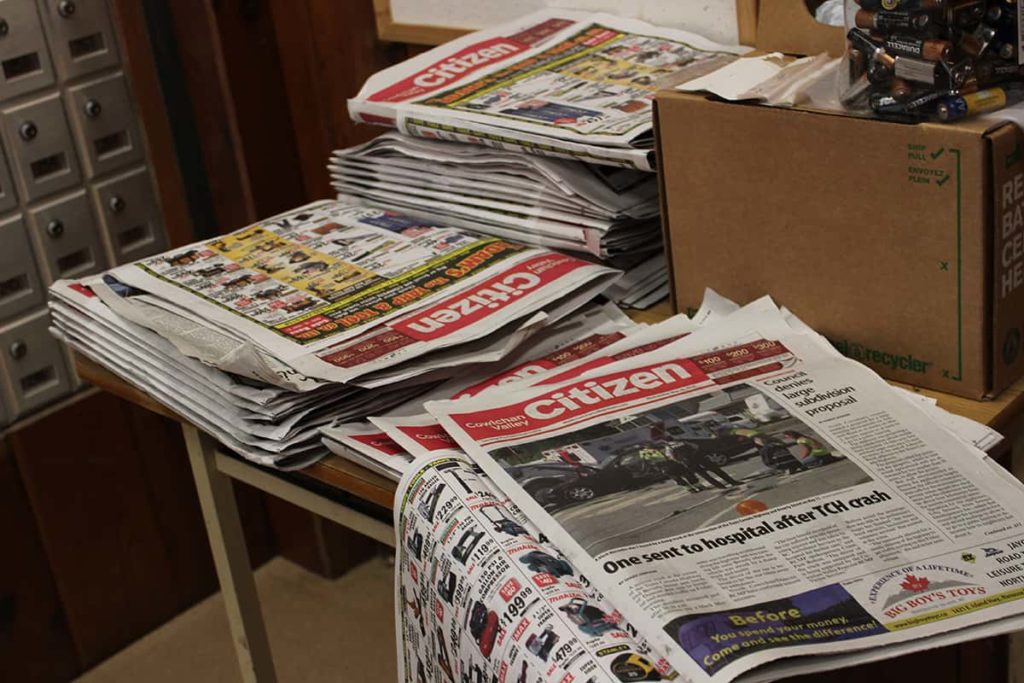
This week, community newspaper giant Black Press Ltd. announced that it has filed for creditor protection in BC Supreme Court. At a hearing in Vancouver next week, the company will ask the court to approve a court-supervised process to sell the business, which can no longer afford to pay its debts.
Black Press owns 94 newspapers in Canada, mostly in B.C. It owns nearly every newspaper on Vancouver Island, including the Cowichan Valley Citizen, the Nanaimo News Bulletin and the Comox Valley Record. It also owns newspapers and media brands in Hawaii, Alaska and Washington State.
Two Canadian investment firms and a U.S. newspaper company have agreed on a deal to purchase Black Press. The partners in the proposal are Canso Investment Counsel Ltd., Deans Knight Capital Management Ltd. and Carpenter Media Group. With the court’s approval, Black Press would go up for auction, with this deal as the opening bid.
“It’s going to be interesting to see what happens,” says Marc Edge, a journalist, researcher and author based in Ladysmith. Edge has written several books about Canada’s media industry.
The Discourse reached out to Black Press for comment on this story, and received an emailed statement in reply, by way of an external corporate communications firm.
“The purchasers and the company are committed to continue providing journalism excellence and outstanding advertising solutions to the many communities that Black Press serves,” according to the statement. “Black Press is still publishing and intends to keep doing so while it moves through the [Companies’ Creditors Arrangement Act] process.”
If the proposed sale goes through, it “will put the company on solid and sustainable financial footing, enabling it to continue to serve its valued readers, customers, employees, and communities over the long term.”
At the same time, the company announced the retirement of its president, David Black, who built this media empire over the last half-century.
According to the court filings, the company sought bids to purchase parts of the company late last year, but the bids weren’t high enough to cover the company’s secured debts.
The now-proposed purchase deal would allow the investment firms to instead turn some of their secured debt into equity, but the plan was blocked by a minority shareholder. Metroland Media Group, a division of the Torstar Corporation, owns just shy of 20 per cent of Black Press. It once had aspirations to take over the company upon Black’s retirement.
This isn’t really about bankruptcy, says Edge. “They’re not going to court for protection from the creditors, they’re going to court to force a sale. They want the court to approve this sale over the objections of Metroland.”
This latest announcement is only the most recent in a long saga of decline in the community newspaper business.
“I read the Ladysmith Chronicle every week,” says Edge. “And every week it has less and less news. I think it’s mostly designed to carry the flyers, which it is loaded with — which I think is a fairly lucrative business.”
More than a thousand pages related to Black Press’s court proceeding are available online. They offer a rare glimpse into the private company’s finances, and how it got itself into trouble with debt.
In addition to the ongoing loss of advertising revenue to digital giants like Facebook and Google, the company made a bad bet on a newspaper in Akron, Ohio in 2006. Black Press bought the Akron Beacon Journal for USD $165 million. The newspaper lost money every year, and Black Press sold it in 2018 for USD $16 million.
Tyler Olsen, a former Black Press employee, reported extensively on the company’s history and the Akron deal in an article published today for the Fraser Valley Current.
If there’s good news in this story, it’s that Black Press’s community newspaper business appears to still be making a profit, if you set aside its debt payments.
“Hopefully things will continue as normal under new ownership,” says Edge.
But that’s far from a guarantee. When Metroland filed for creditor protection last year, it simultaneously ended the print publication of 70 community newspapers in Ontario and laid off 60 per cent of its staff.
As for Black Press, we’ll have to wait to see how it shakes out, says Edge. But, for now, Vancouver Island’s community newspapers do not appear to be imminently threatened.
“They’re making money in these smaller newspapers — not as much as they used to be, and now apparently not enough to pay their loans. But if it didn’t have the loans to worry about, they’d be doing fine. So I don’t think people need to fear too much about their local newspapers folding.”
But the story of local news’s decline is also the story of a death by 1,000 cuts. Canada lost 516 news operations between 2008 and 2023, and many more saw shrinking staff and resources. Tyler Olsen reports that Black Press’s Vernon Morning Star employed 11 journalists in 2008, and now employs only four.
And more cuts to Black Press’s operations are coming, according to the court documents. The company says it will continue to cut costs through 2024. In Canada, that will include consolidating print operations, saving on rent (possibly by closing physical newspaper offices) and layoffs. The company did not respond to The Discourse’s questions about the details of the anticipated cuts.
The state of the industry is bleak, but not necessarily hopeless. For his next book, Edge hopes to propose a plan to save it. “I’m getting tired of writing about all the problems in Canadian news media, and I’d like to write about some possible solutions,” he says.
Various federal initiatives have the potential to bring in billions of dollars that could be used to revive community journalism. The funds should be targeted to support new models, non-profit news and local news, says Edge.
“We don’t need coverage of sports and entertainment. We need local news, investigative journalism, government and business.”
Jacqueline Ronson was employed by Black Press from 2013 to 2015, after it acquired the Yukon News. She left the company on good terms.
Editor’s note, Jan. 18 2024: A previous version of this article misidentified Tyler Olsen. We regret the error.
Editor’s note, Jan. 19, 2024: A previous version of this article said the Vernon Morning Star currently employs three journalists, when in fact it employs four. We’ve updated the article.
What did you think of this story?
Your feedback after we publish a story helps ensure we're always improving our reporting to better serve you
Author

Related Articles

DRIPA debated in B.C. election on Vancouver Island
The Conservative party of B.C. is promising to repeal the Declaration on the Rights of Indigenous Peoples Act (DRIPA), while other parties argue that would set back relations with First Nations and create economic uncertainty.

Where Cowichan region MLA candidates stand on water, old growth and reconciliation
MLA candidates in the three ridings that cover the Cowichan region answered questions from Discourse readers ahead of the Oct. 24 B.C. election.
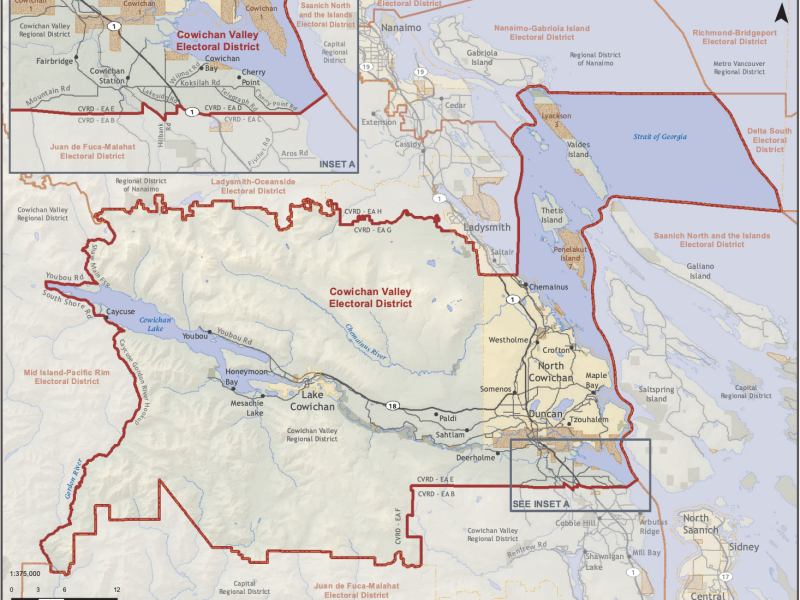
Cowichan Valley’s guide to the 2026 B.C. election
What riding am I in? Who are the candidates? When do I vote? The B.C. election basics for Cowichan Valley residents.