
Every Child Matters march attracts thousands wearing orange on Quw’utsun lands
National Day for Truth and Reconciliation remembers Indigenous children who were sent to Indian Residential “Schools” in Canada
Content warning: This story discusses past and ongoing harms caused by residential “schools” and colonialism. Please read with care. Support is available at The KUU-US Crisis Line Society, 1-800-588-8717; The Indian Residential School Survivors Society (IRSSS), 1-800-721-0066; The National Indian Residential School Crisis Line, 1-866-925-4419 and the Métis Nation of B.C. Crisis crisis line, 1-833-638-4722.
Editor’s note: As a member of Discourse Community Publishing, The Discourse uses quotation marks around the word “school” because the Truth and Reconciliation Commission found residential “schools” were “an education system in name only for much of its existence.”
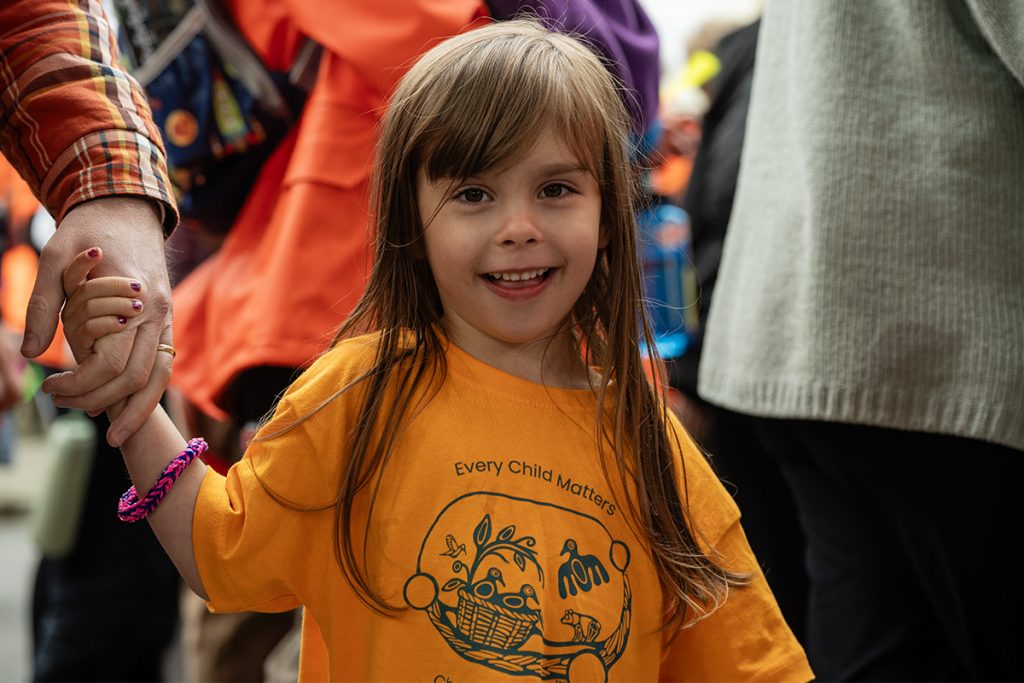
“We’re still here as Indian people, we’re still here still living our culture!” said a man, whose Dakota name translates to Circling Buffalo, to thunderous cheers by thousands of people wearing orange at the Every Child Matters march on Quw’utsun lands on Tuesday, Sept. 30.
The annual event marks the National Day for Truth and Reconciliation and Orange Shirt Day.
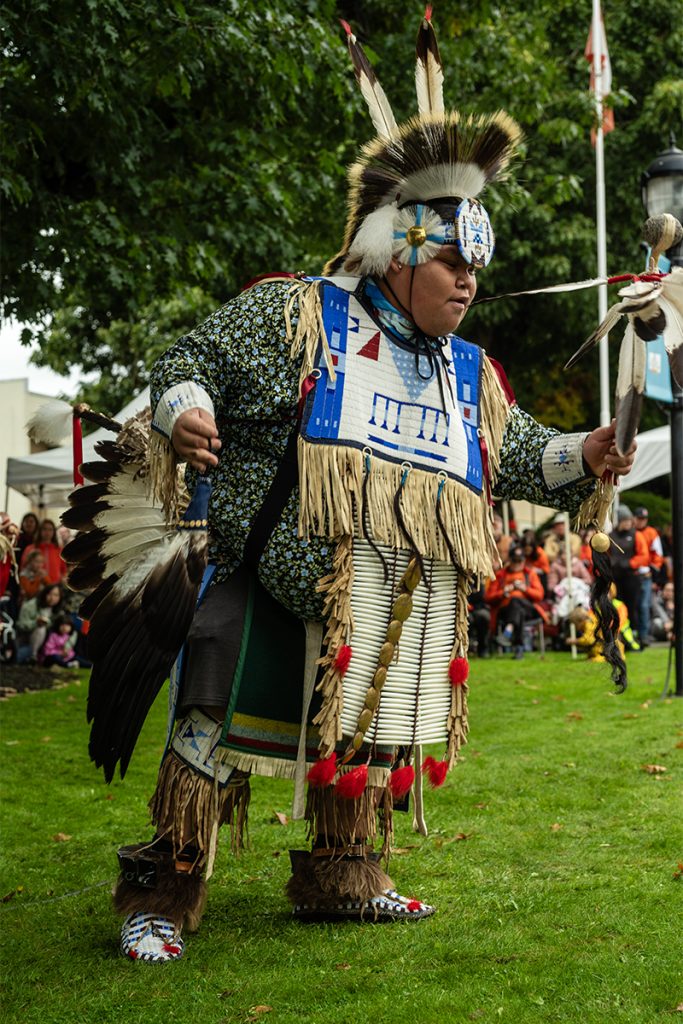
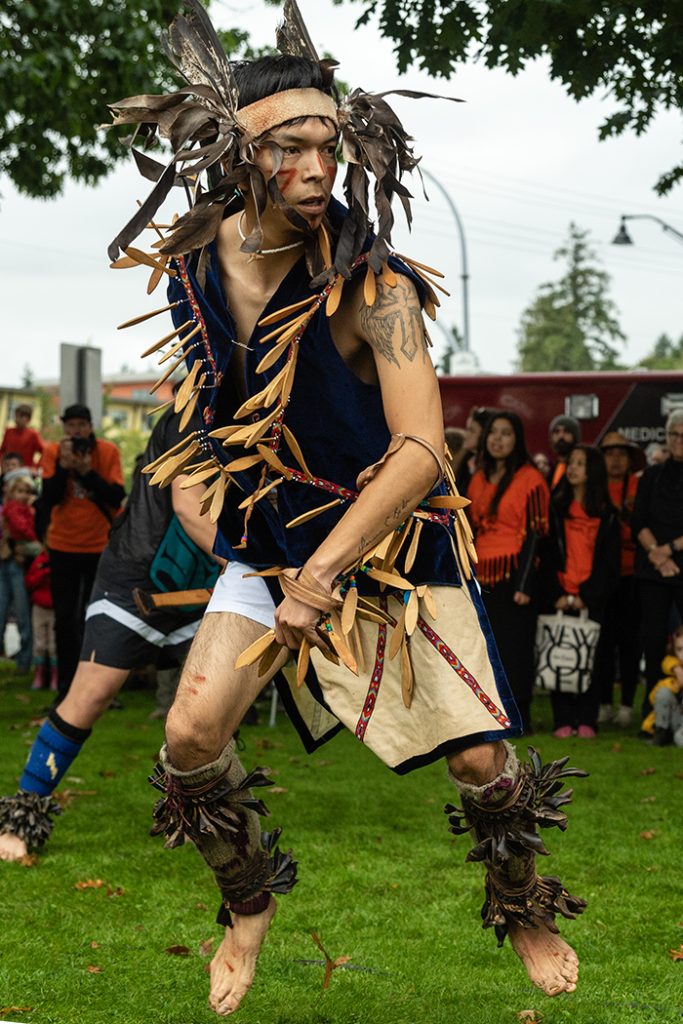
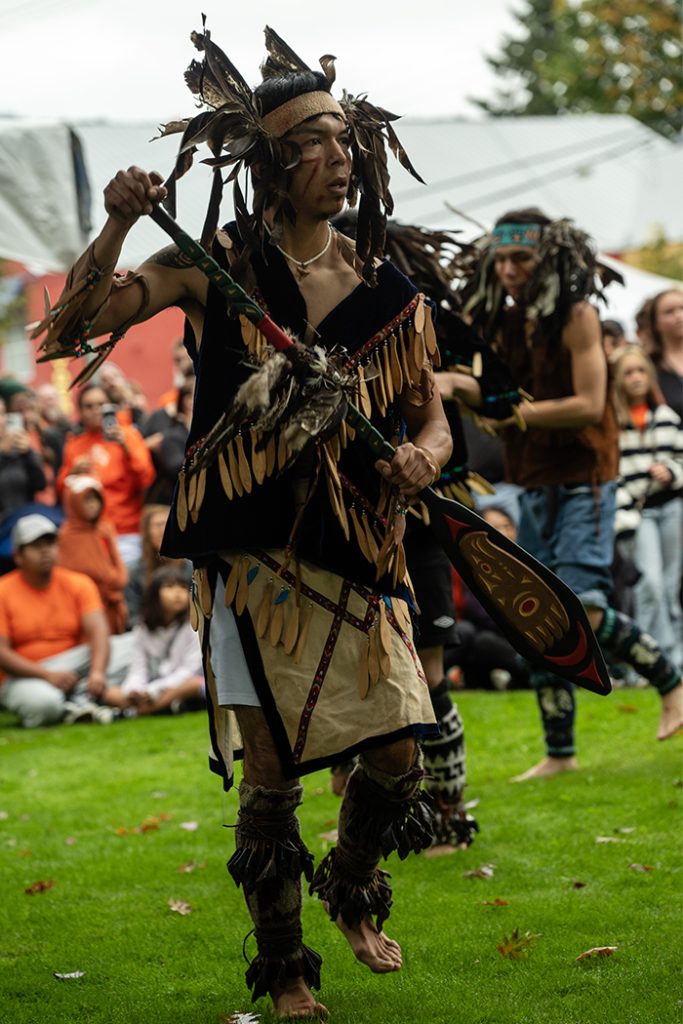
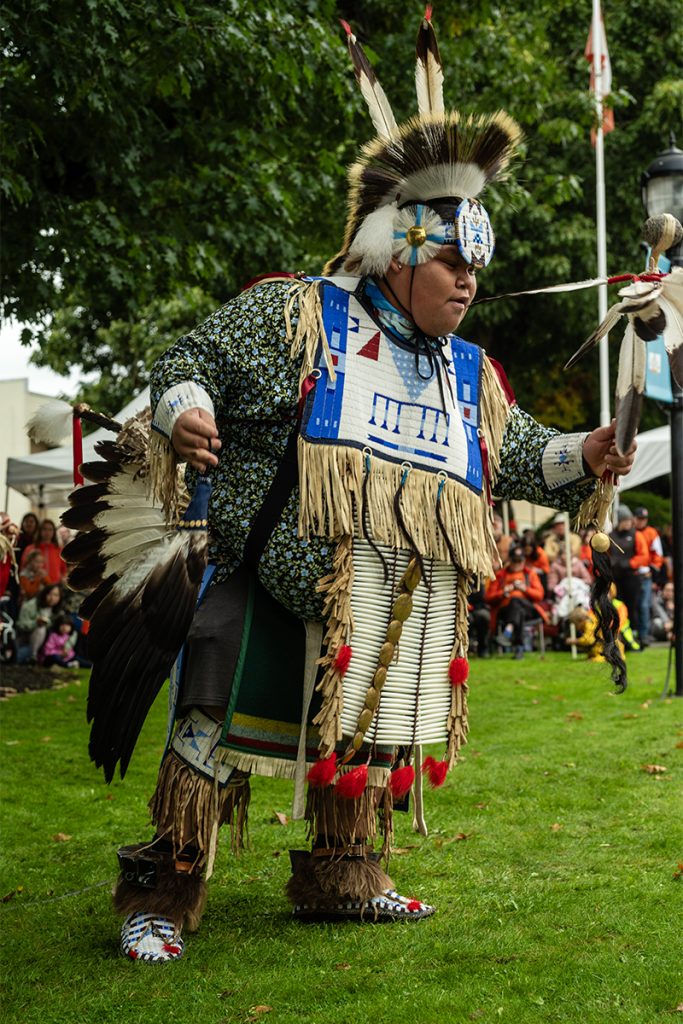
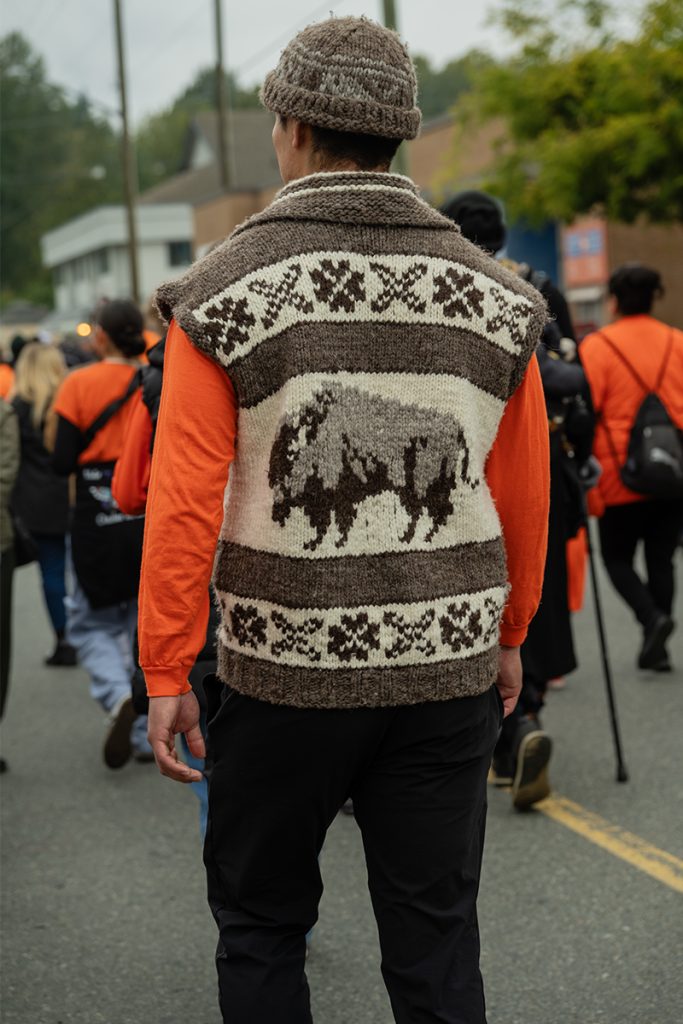
The march started in Charles Hoey Park with speakers, prayers and dances, then took community members through what is now called Downtown Duncan and ended back at the park.
Throughout the day, people took time to learn about, remember and honour survivors of residential “schools” and those who never made it home.
The National Day for Truth and Reconciliation was declared in 2021 and was one of 94 Calls to Action by the Truth and Reconciliation Commission for a federal statutory holiday to mark the experiences of Indigenous children who went to Indian Residential Schools.
Previous to that, the date had been marked as Orange Shirt Day, and still is to this day. It was started in 2013 by Williams Lake resident Phyllis Webstad, a residential “school” survivor whose orange shirt was taken away from her on her first day at St. Joseph’s Mission residential “school.”
Cowichan Tribes Chief Cindy Daniels said she is not the last residential “school” survivor on council, but every councillor is affected by the intergenerational trauma and harms the “schools” have caused.
“The effects of the residential “school” still go on today,” she told the crowd. “It still affects our community and social issues that we deal with, and we’re working really hard to improve the lives of our community and the whole valley, and I think our council is doing a really good job in moving forward.”
March marks five-year anniversary
The Every Child Matters march on Quw’utsun territory was started in 2021 by Audrey George, who is now the deputy chief of the Cowichan Tribes First Nation.
“I was the craziest person ever to start a walk during Covid,” she said. “The Every Child Matters walk is in recognition of the children that did not make it home.”
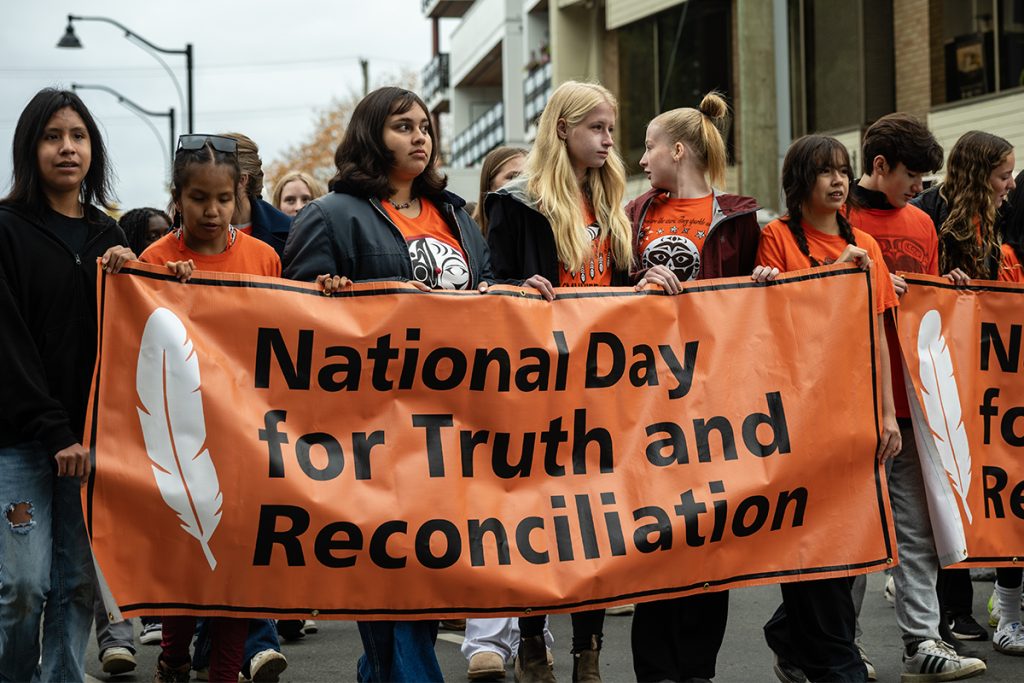
George told the crowd that she has been working to mobilize young people to attend the event. On Tuesday, hundreds of middle-school and high-school students showed up and were given the honour of carrying the banners at the front of the march.
George’s mother Stella Seymour, a residential school survivor, said when she was in high school, teachers would tell her that she was “just a dumb Indian” and discouraged Indigenous people from pursuing academic education.
“One of the teachers in the high school told me I would be nothing but a drunk, that I would be in a ditch somewhere, and then I would probably have 10 kids that I wouldn’t even know who the father was,” Seymour said.
She fought back through education, becoming the first in her family to graduate. She went on to get a degree in First Nations Studies and a Masters in Education and is now looking at pursuing a doctorate.
“They thought they were trying to civilize us, which is really ironic. They don’t understand the cultural and traditional ways that we live and that we practice daily is our strength,” she told The Discourse.

Activist calls out ongoing discrimination against Indigenous Peoples
Duncan Mayor Michelle Staples told the crowd that when people are spreading misinformation about residential “schools” and denying the abuses that took place in them, it is the responsibility of non-Indigenous people to set the record straight.
“When you see that and hear that, you need to stand up to it, and I make a commitment today in front of everyone here to continue to stand up to denialism, to misinformation, to people that don’t want to accept and recognize the history of this country — that is not acceptable.”
After Staples finished her speech, Rebekah LaSala — a Cherokee woman who lives in Sooke and drove up for the march — challenged Staples.
“I get bullied and harassed and discriminated against every day, and nobody does anything,” LaSala said. “You say to stand up, and when I do — because I’m an Indigenous rights activist for 36 years from the states with the American Indian Movement and for Leonard Peltier — all they do is sit there and laugh. So I have a question. What about when we stand up? When I stand up, nobody’s there to defend me. They allow it. I get bullied and abused like 40 times a day. So what do we do then?”
Staples acknowledged that there have been “many incidents of racism in this community, and that’s something that we all need to know and understand.”
She gave an example of when she was discussing one of those incidents with late Cowichan Tribes Chief Squtxulenuhw William “Chip” Seymour.
He said to her, “We’ve done so much work, and yet still these acts of racism happen. I don’t know if I want to do this anymore. I don’t know if it’s worth it to do this anymore.”
“I sat there for a long time, because in a lot of ways, he was right,” Staples told LaSala in front of the crowd.
“I can’t imagine how hard that must be to experience that all the time and to feel alone and to not have people standing there. I looked at him, and I said, ‘Chief, the only thing that I can work towards is that there will be more people standing with you and behind you than there will against you, and that’s what we keep having to work forward to,’” Staples continued. “He said, ‘Well, then I guess we have work to do.’”
George thanked LaSala for attending the event and “asking the hard questions.”
“We do have a lot of work to do,” she said. “It’s taken years and generations and generations to unfold the hurt, the shame, the trauma of residential “schools,” and we are still building those bridges … It takes time to unfold the hurt and the trauma, to speak our truths, to be heard, to use your two ears for listening, to use your voice to speak the truth.”

Cowhican Tribes flag raised at city hall
This year, the march included a stop at Duncan’s City Hall where Daniels and Staples were joined by the Speaker of the Legislative Assembly Raj Chouhan to raise the Cowichan Tribes flag at city hall for the first time.
“It is long overdue, and we never should have had to raise any other flag than a Cowichan flag,” Staples said. “From the beginning of time when people came to this place, this community, this town, this country, people should have respected the rights of Indigenous people. We should have followed but we didn’t.”
Daniels said she was honoured to witness the flag being raised at city hall.
“This is precedent setting,” she said. “You don’t realize how important this moment is today.”
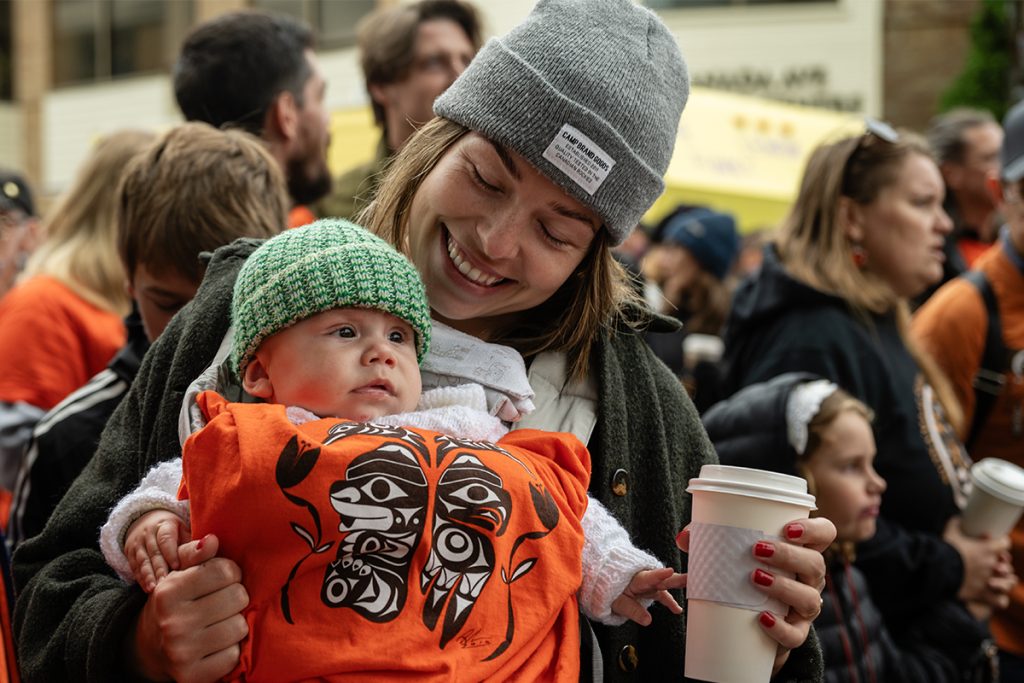
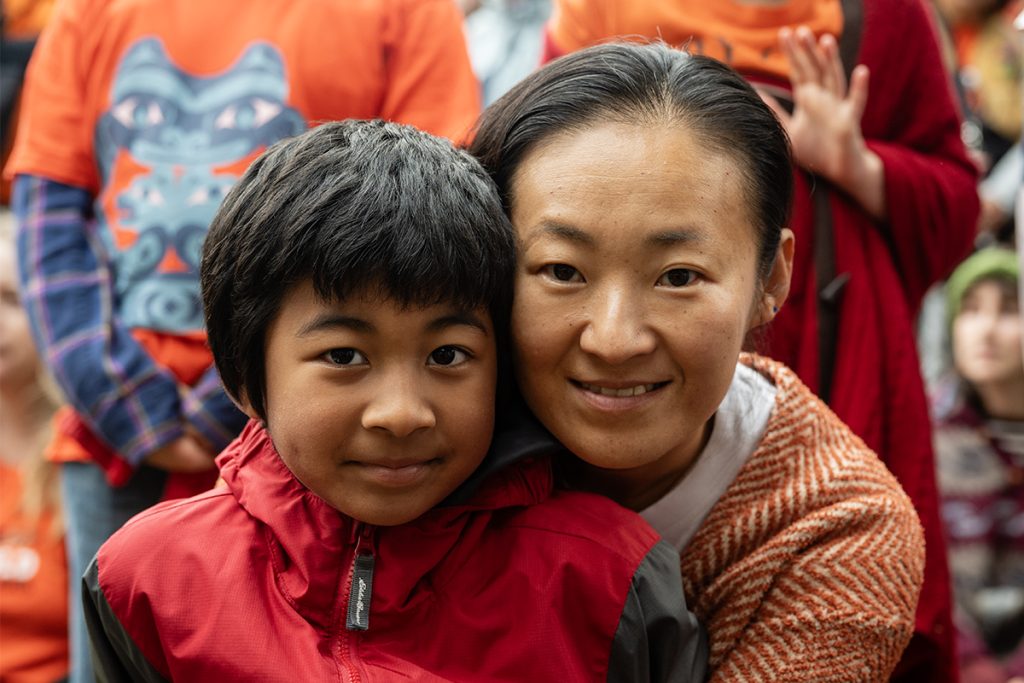
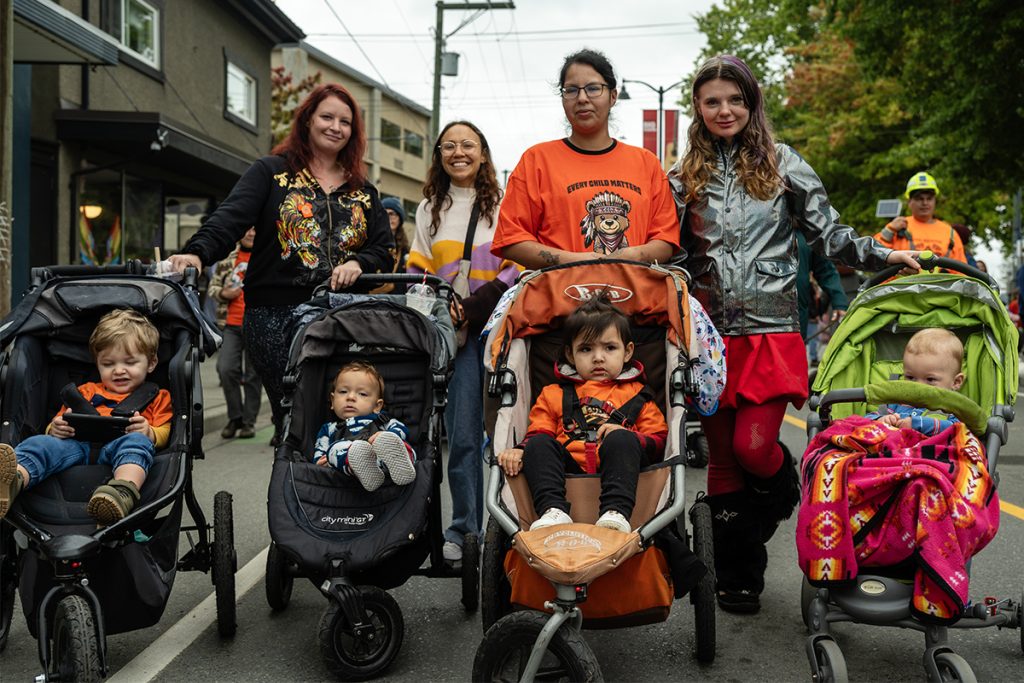
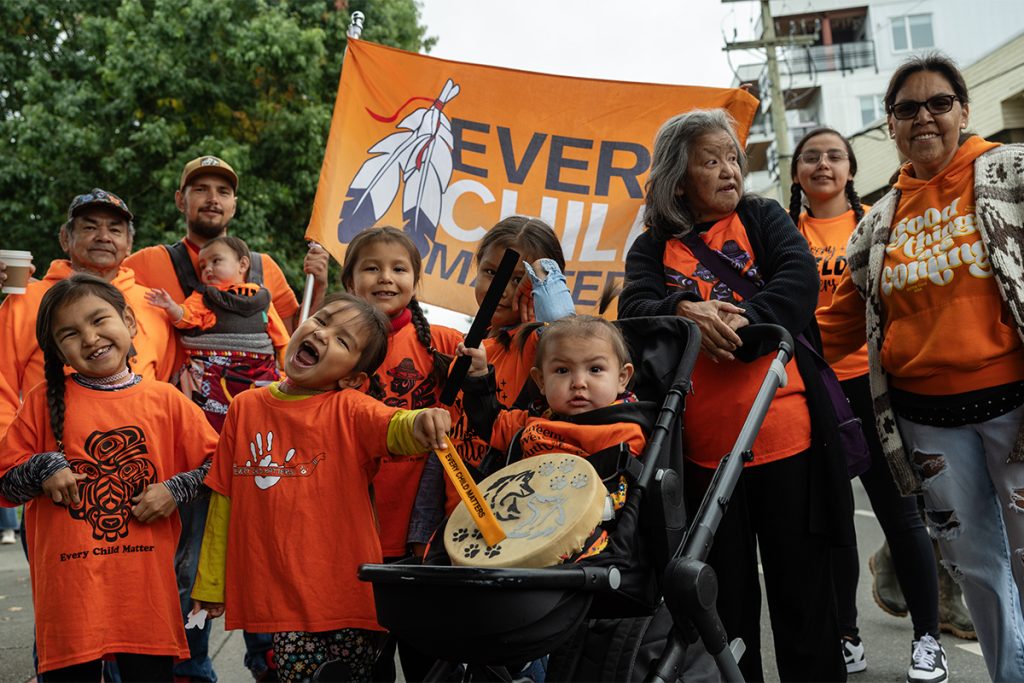
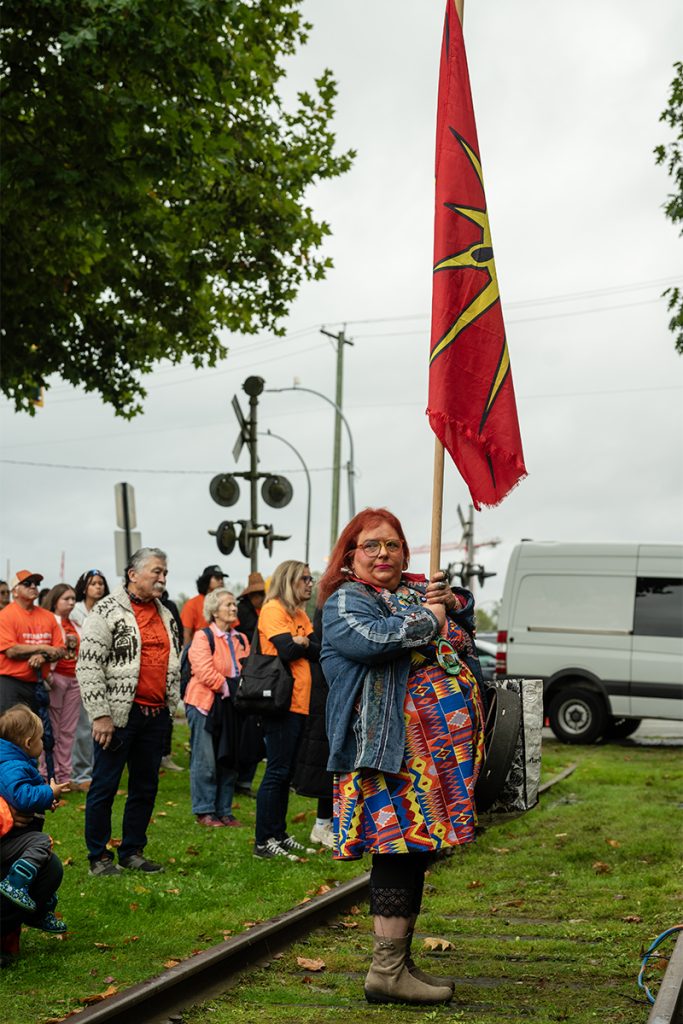
Photos from the Every Child Matters march by Mick Sweetman / The Discourse
(Click or tap on photo to enlarge).
What did you think of this story?
Your feedback after we publish a story helps ensure we're always improving our reporting to better serve you
Author
Related Articles
What to do and who to call when juvenile salmon are in danger
Officials say Cowichan Valley residents should call experts to move salmon in isolated pools because of risks associated with relocation.
How is The Discourse’s journalism funded?
And what does it cost to produce The Discourse’s in-depth, independent journalism?
Behind the backlash to the Cowichan Valley’s comprehensive zoning bylaw
The campaign against Bylaw 4710 was fuelled, in part, by misinformation and an organized group of advocates. What could this mean for the future of local politics?