
New family medicine residency program aims to ease Cowichan doctor shortage
Almost one in four local residents continue to lack access to primary health care.
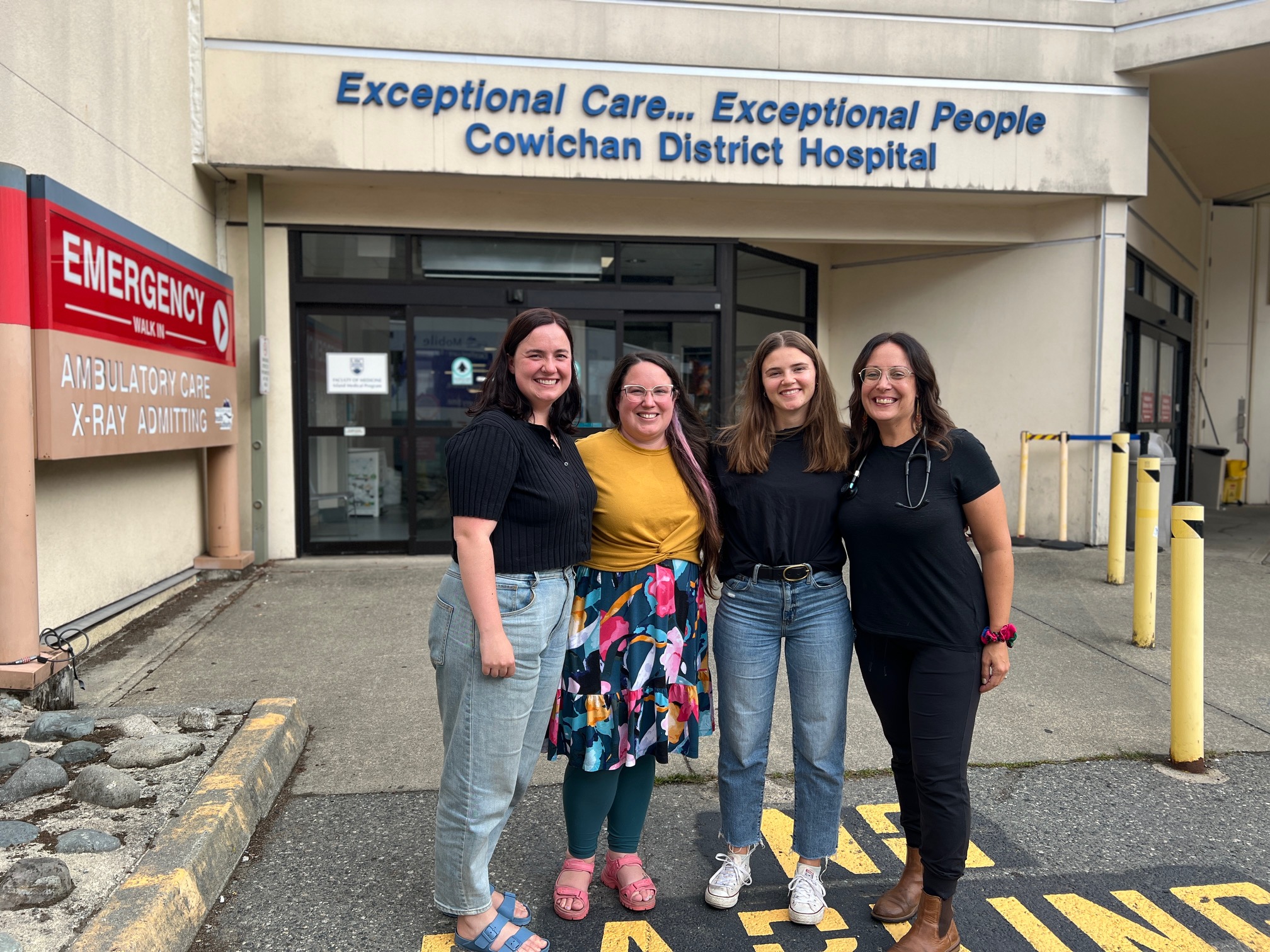
Katie Green was on the ferry ride to Vancouver Island from Vancouver this summer when she began chatting with a family local to the Cowichan Valley. Green was coming over to be part of the first cohort of the new Quw’utsun Family Medicine Residency Program. When she told the family she was one of four UBC Medical School graduates coming to do a residency in family medicine, they asked her if she was accepting patients.
It’s a premature question for someone who won’t finish her residency until the summer of 2026, but it’s one that Green has been asked several times over the past few months. It’s an indication of how acute the local family doctor shortage remains since The Discourse wrote about the issue three years ago, with an unchanged percentage of people unattached to a family doctor and concerns that the issue may worsen over the next couple years due to several impending retirements.
Green says the first few months of the residency program have gone so well that she and the three other residents in the new program are all considering staying in Cowichan and working in a family practice after their training is over.
That’s part of the plan, says the program’s co-director Dr. Tom Rimmer, who notes that data shows about half of residents typically stay in the communities they train in. Each summer, a new crop of four UBC medical graduates will begin a two-year residency in the new training program.
“This would mean an average of two fresh doctors each year,” Rimmer says. “That will make a huge dent in our unattached problem.”
Almost a quarter of Cowichan residents are unattached to a family doctor
In a 2023 international survey of 10 high-income countries, Canada had the highest percentage of adults without access to primary care at 14 per cent, a sharp decline from 7 per cent in 2016. That percentage is even higher in the Cowichan Valley.
According to the Cowichan Valley Division of Family Practice, an estimated 23 per cent of local residents lack a family doctor — or, in other words, are unattached. This attachment gap has held steady over the past three years despite the widespread physician shortage and the Cowichan Valley’s growing population, according to a joint statement sent to The Discourse from Cowichan Valley Division of Family Practice co-chairs Dr. Bryan Bass and Dr. Carole Williams.
Their statement notes the division’s work in bolstering local clinics’ individual recruitment efforts and promoting physician retention. The division has also collaborated with others on a broader recruitment strategy, including Island Health, the Vancouver Island Regional Recruitment and Retention Committee and an Island-wide Physician Return of Service program. Such efforts have contributed to approximately 40 family doctors coming to Cowichan over the past three years, Bass and Williams say.
However, not all of the new family doctors work in longitudinal care, where physicians have an ongoing relationship with patients regardless of whether they have health problems. There are about 80 family physicians working in 19 clinics providing longitudinal care in the area and that number has stayed the same over the past three years.
Bass and Williams also tout successes by the Cowichan Primary Care Network, a partnership between the division of family practice, Island Health, First Nations Health Authority and local Indigenous communities. These include adding 13 social workers to family practice clinics, a net of seven new nurse practitioners to community clinics and new primary care clinics in Duncan (CareBridge) and Lake Cowichan (Kaatza).
The network has also worked with Indigenous communities to understand ways in which it can help stabilize and increase services in their communities, and worked to secure a Cowichan urgent and primary care center slated to open in late 2025.
“We’re extremely excited about the addition of the new family practice residency program for the community and the long-term stability it will help to provide,” their statement reads. “Although these remain challenging times, we remain optimistic that we are now on an upward trajectory. The level of collegiality, dedication and close collaboration we see from every corner of our local health care system is a significant part of why we’ve been able to maintain service levels during several difficult years.”
Local medical community gives new residents a warm welcome
Green, 29, had spent most of her life in Vancouver, including for her undergraduate and medical school at UBC, where her husband is currently studying. But when it came time to rank her choices for doing a two-year family medicine residency, she says the new Cowichan program was her clear first choice.
Green wanted to go somewhere smaller with a wider scope of practice than in a big city, and she was swayed by a presentation by Rimmer that convinced her the new program in Cowichan was “going to be very supportive of [their] educational goals” with a lot of opportunity for finding their niches and developing interests. She also spoke to a UBC classmate who had spent time in Cowichan through the school’s Integrated Clinical Clerkship program for third-year medical students and told her that the area had the warmest and most supportive medical community she had encountered.
That has been borne out so far, Green says. The first week of their residency, a welcome event at the Merridale Cidery in Cobble Hill was packed with about 100 doctors, she says.
“We knew this was a big thing that we were the first group of residents, but it was really meaningful to see how much the residency program mattered to the medical community.”
She says that Rimmer and co-director Dr. Kirsten Yip have been great in helping with the challenging transition from medical student to resident.
“They put a lot of effort into the way they set up, especially at the start of our rotation, to be this nice ease into the change in role. It’s been surprisingly painless and very good,” Green says.
According to Rimmer, the residency program is unlike traditional residency programs that go through the educational process in blocks. Instead, whatever rotation the residents are on, they still do a day in their home family practice each week (for Green, it’s the Ingram Family Physicians clinic) and are also assigned to work regularly with one of three local clinics that specifically serve Indigenous people.
“What we’re trying to do is incorporate as much longitudinal experience for the learners as possible,” says Rimmer, who is also site director for the Cowichan Integrated Clinical Clerkship program for medical students who spend their third year doing integrated training in Duncan.
He notes that while the region has had medical students and visiting residents coming for many years, they would usually come and go. Having their own training site makes a key difference, he says.
New payment model for family physicians in B.C. already paying dividends
UBC is the province’s only medical school, although Simon Fraser University plans to open a medical school with a focus on family medicine in 2026. The new residency program in the Cowichan Valley is one of three new training sites in the province, bringing the total number of residency sites serving UBC graduates to 23.
With 204 new residents each year – up by 30 from two years ago, including the four spots in Cowichan – this makes it the largest family medicine residency program in Canada, explains Dr. Joshua Greggain, who oversees the UBC Family Practice Residency Program and is past president of the advocacy group Doctors of BC. He says the retention rate of residents remaining in the province post-residency is about 90 per cent, a number that has stayed fairly consistent despite the increase in the number of residents, meaning “we are retaining more and more family physicians.”
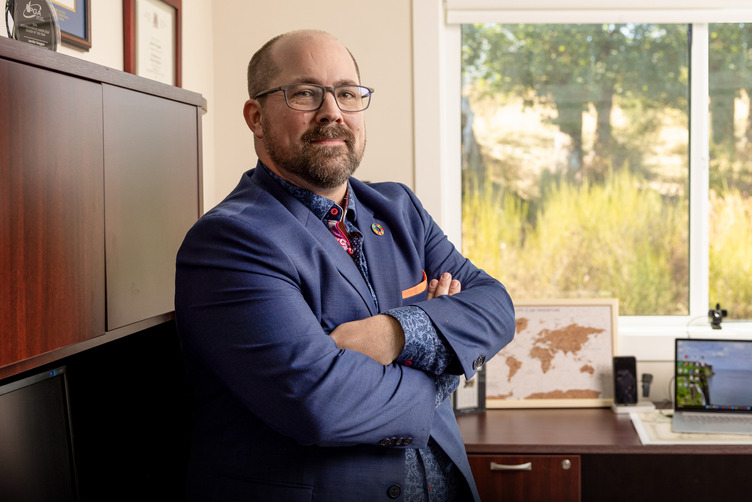
“We’re getting closer to where we need to be as far as the number of graduates being trained in family medicine,” Greggain says. However, he explains it’s also critical that those being trained open up family medicine practices. For a long time, many doctors were choosing hospital-based medicine or specialties over starting up a family practice because those options offered better pay and less of an administrative and paperwork burden, Greggain says.
In February 2023 came a game-changer when B.C. shifted its payment system from a fee-for-service model — based on the total number of patients seen — to the Longitudinal Family Physician (LFP) Payment Model. The new model is based on a variety of factors including the amount of time spent with patients and the complexity of their needs. The B.C. Ministry of Health reports that since the launch of the new payment model, the province has added 835 new primary-care family doctors who are taking on patients.
“LFP has definitely encouraged people to consider this [opening a family medicine practice] as a more viable, sustainable and exciting option,” Greggain says.
Other things that he says are helping include a shift toward a greater use of other health care professionals such as clinical counsellors, physician assistants and nurse practitioners to do things that family doctors don’t need to do, as well as the Practice Ready Assessment program for family physicians who have trained and worked overseas. The program has expanded from 36 to 98 family physicians in the province over the past several years, Greggain notes.
“We recognize, and the public recognizes, just how important having access to a family physician is, and therefore there’s been a prioritization of that both by the government, by Doctors of BC and ultimately by the physicians who work on the ground,” Greggain says. “Some places have already gotten better, and will continue to get better. In some of the more peripheral places or more rural areas, it will take a bit more time. That’s where the creativity of how we provide care, whether that be virtual or in teams, will be imperative to the future of family medicine.”
The family doctor shortage in Cowichan may get worse before it gets better
Rimmer says the phone at his family practice continues to ring off the hook with people asking if they’re taking new patients.
“It’s just horrible to have to say ‘we’re sorry we can’t,’” he says.
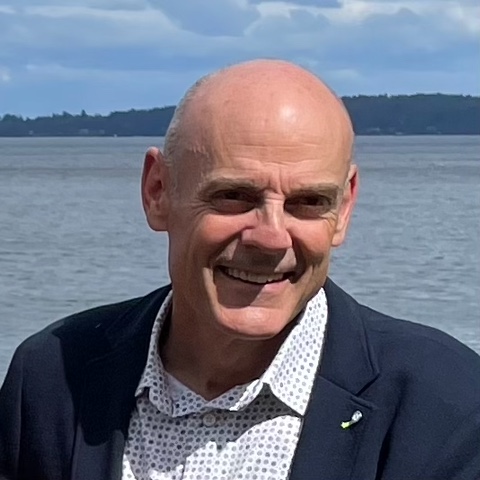
Because there aren’t other practices to refer the callers to, his office directs them to the Health Connect Registry, which tries to match patients when spots become available in their area. According to the B.C. Ministry of Health, the registry has connected 248,000 people in the province with a family doctor or nurse practitioner since the registry launched provincewide in July 2023.
Locally, the new payment system “has stopped the hemorrhage” of family physicians leaving family practices, and some hospitalists and specialists have been wooed back to primary care, Rimmer says. However, in part because it will be two years before the new residency program pays off in terms of increasing the number of local family doctors, he expects the shortage to get worse before it gets better.
The big problem, Rimmer says, is the aging family physician demographic. Several local family doctors serving large numbers of patients have recently retired or announced their impending retirements.
“Every time one of these big practices retires, and they don’t have a replacement, then you suddenly have 1,800-2,000 people freshly unattached,” Rimmer says. Because there seems to be a trend of new family doctors working part-time or on multiple foci, “it takes kind of two people to take it over,” he says.
“I think it’s going to get a little bit worse before it gets better,” Rimmer says. “We are coming to sort of the maximal pinch point, and then with the expansion of UBC training, the new medical school [at SFU], it will get better again. But we’ve got a few lean years that we’re going to have to try and bumble our way through here.”
In the meantime, another benefit of the new residency program is that having four residents – a number that will double next year after a new crop of residents starts – helps shoulder the primary care load, Rimmer says. With a state-of-the-art Cowichan District Hospital slated to open in early 2027, he says the area should be very attractive to new family physicians.
“There’s reason to be optimistic that we’ve got some pretty darn good recruitment tools other than the obvious: it’s a beautiful place to live.”
What did you think of this story?
Your feedback after we publish a story helps ensure we're always improving our reporting to better serve you
Author

Related Articles
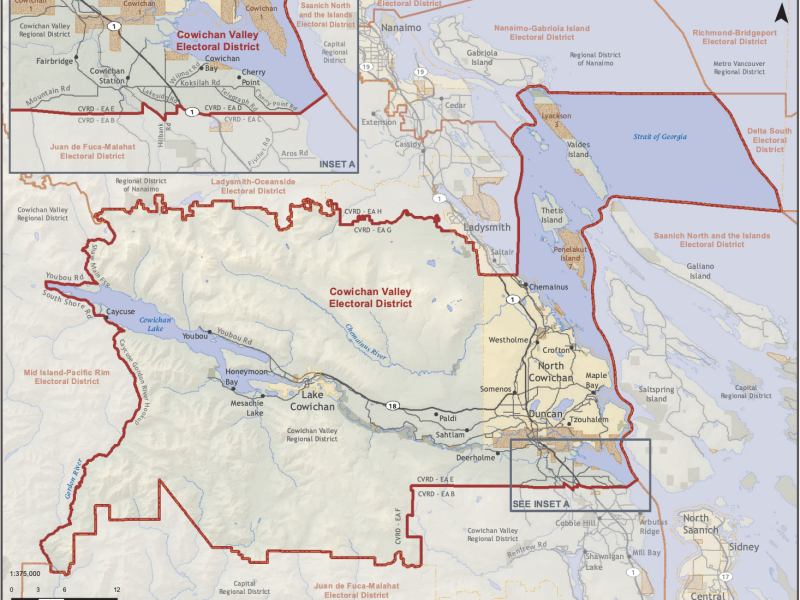
Cowichan Valley’s guide to the 2026 B.C. election
What riding am I in? Who are the candidates? When do I vote? The B.C. election basics for Cowichan Valley residents.

Cowichan Valley local election candidates on natural disaster preparedness
In the summer months, the threat of wildfire is becoming more frequent. In the winter, there’s flooding. What do the candidates suggest doing to prepare?

Voting in the 2026 Cowichan Valley local elections? Here’s what you need to know
Where, when and how to cast your ballot in North Cowichan, Duncan, Ladysmith, Lake Cowichan and the Cowichan Valley Regional District for the 2026 local elections.