
Can North Cowichan staff and infrastructure keep up with Official Community Plan changes?
A contentious council decision to amend the Official Community Plan could set back housing developments and cost future tax payers, municipal staff say.
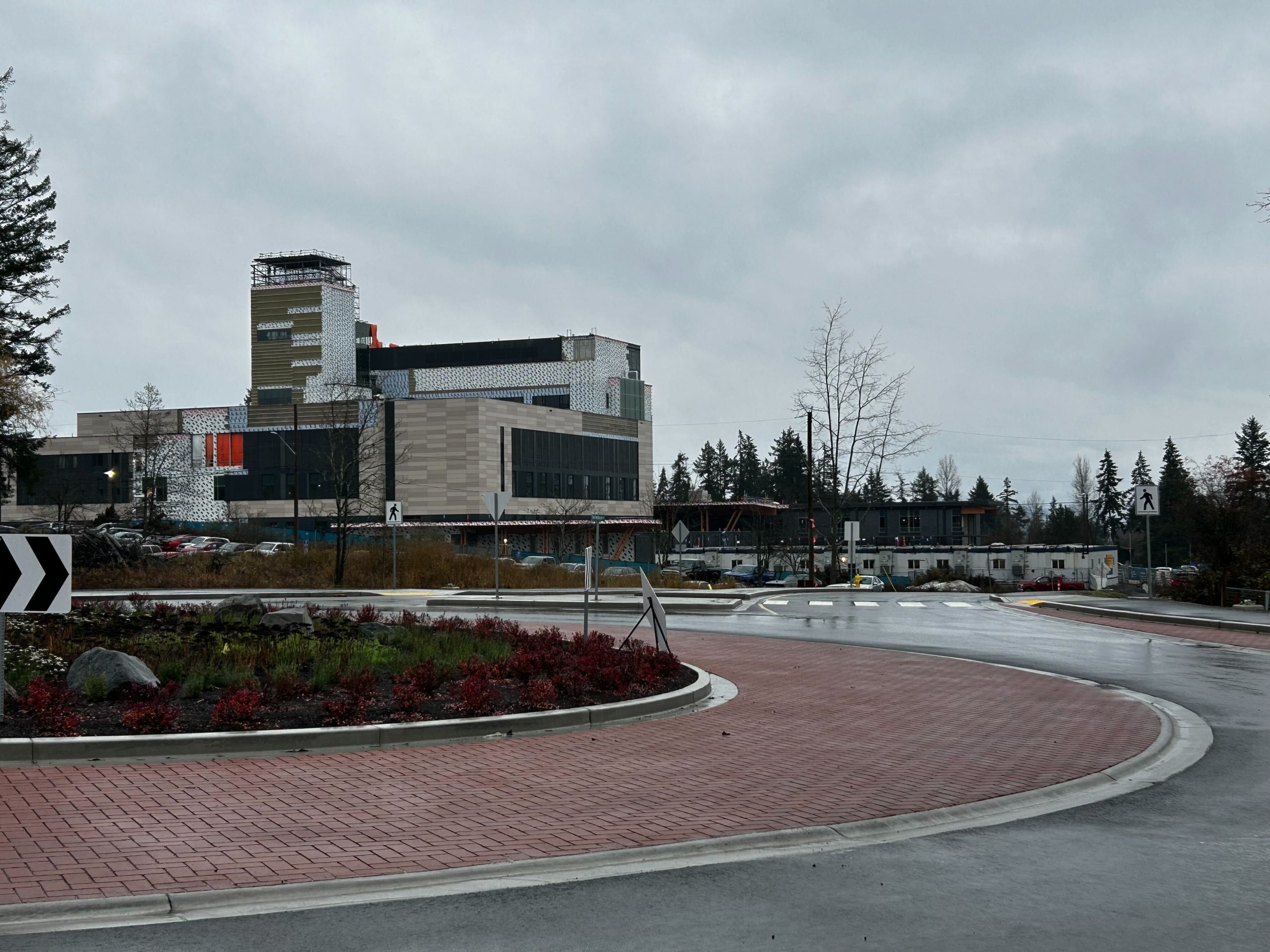
It is hard to miss the new Quw’utsun Valley Hospital rising above Bell McKinnon Road. The structure towers over nearby homes and farmland, as well as many properties that now display “for sale” or “sold” signs. In the coming years, the area around the hospital will likely look very different from its current rural character, and that’s by design.
Across from a newly built roundabout near the hospital sits a large parcel of land. This parcel was at the centre of a contentious council vote in November, and a decision that municipal staff say could set back development in the area for years to come.
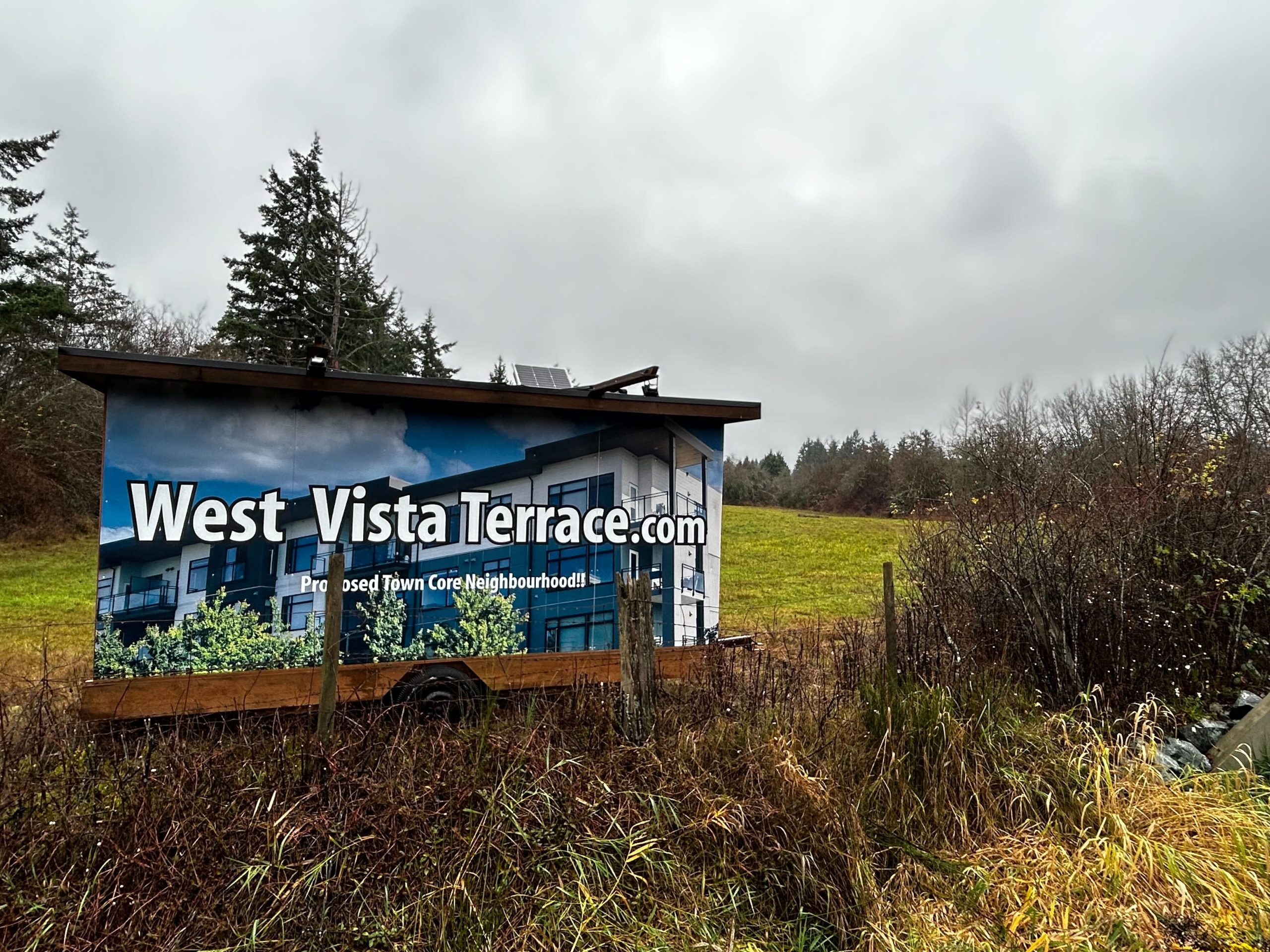
On Nov. 19, North Cowichan Council voted to amend the Official Community Plan and expand the municipality’s Urban Containment Boundary — a boundary that sets out what is considered urban or rural properties in the municipality — to include an area north of Herd Road, including the site of the controversial West Vista Terrace Development.
The development site — located on the corner of Bell McKinnon and Herd roads, not far from the new hospital — was previously in the Urban Containment Boundary until 2022 when North Cowichan adopted an updated Official Community Plan that designated it as an area for future growth.
At the Nov. 19 council meeting, staff told council they did not support amending the Official Community Plan again. They warned it would divert municipal staff resources from housing and commercial developments projects that are already underway. They also said there is currently not enough water and sewer capacity to service the West Vista Terrace development if it were to be added back into the Urban Containment Boundary.
“[Staff] expressed in unusually clear terms that this is absolutely not in the best interest of this community,” Coun. Christopher Justice said at the meeting.
The total cost to taxpayers of adding the West Vista Terrace development into the Urban Containment Boundary is unknown at this time because the applicant for the development hasn’t submitted a fiscal impact assessment — an evaluation of costs for infrastructure, taxes and fees associated with building it — and has asked for the deadline to submit it to be deferred.
“West Vista had purchased in the [Urban Containment Boundary], if they knew this property was going to be threatened, maybe they would have originally purchased south of Herd Road. Instead, they were recommended to purchase extra property,” said Coun. Becky Hogg at the council meeting.
Hogg could not be reached for comment in time of publication, or to clarify who recommended the West Vista developers purchase extra property north of Herd Road.
Coun. Tek Manhas said he believed that ultimately, what is done with staff reports and staff advice is up to council.
“If you want everything as per staff reports, we wouldn’t have councils. You’d have bureaucracy running the councils,” Manhas said.
Mayor Rob Douglas, on the other hand, showed support for municipal staff and their ability to make recommendations to council.
“They’re not blindly following the Official Community Plan. They’re recommending changes to it based on professional expertise,” Douglas said.
OCP, UCB, BMLAP: What do they mean?
North Cowichan staff and council have designated areas across the municipality to revitalize and redevelop. To guide that work, council adopts local area plans — documents that provide details for citizens, developers and municipal staff on the overall direction of the neighbourhood as it grows.
The municipality currently has four local area plans. One of those is the Bell McKinnon Local Area Plan (BMLAP), which originally covered an area east of the Trans-Canada Highway to what would become new Quw’utsun Valley Hospital on Bell McKinnon Road and north of Norcross Road to Sprott Road.
The plan was approved by council unanimously in 2018 and received a gold award from the Planning Institute of B.C. It was created in response to the expected residential and commercial growth brought in by the new hospital.
The plan is extensive, covering everything from how the area would be planned, how land would be used, how tall buildings would be and what they could be built from.
The municipality’s Official Community Plan covers the broader direction of North Cowichan, covering topics such as services, infrastructure, parks, economic development and the Urban Containment Boundary, which is what kicked-off the debate around West Vista Terrace in the first place.
The Urban Containment Boundary, or UCB as it is often referred to, is a boundary that the municipality uses to separate developed urban areas and underdeveloped rural areas. The intent of the boundary is to focus on what parts of the municipality can be developed for high density and growth and areas that aren’t prepared for explosive growth.
The land for West Vista Terrace, north of Herd Road, was originally included in both the UCB and Bell McKinnon Local Area Plan. But in 2022, council voted to amend the OCP and reduced the size of the Urban Containment Boundary.
The more recent amendment passed by council on Nov. 19 sought to restore the UCB to its pre-2022 boundary, bringing the West Vista Terrace land back inside it.
Why was West Vista Terrace excluded from the Urban Containment Boundary?
When North Cowichan adopted an updated Official Community Plan in 2022 — in a 4-3 vote at council — it reduced the size of the Urban Containment Boundary. The land encompassing the West Vista Terrace development was designated as an area that could be used for future growth when it’s needed.
It was removed due to the lack of municipal servicing at the north end of the Bell McKinnon Road where it crosses Herd Road, as well as concerns that it would fragment development in the area, making infrastructure upgrades less efficient.
“One claim is that changes to the UCB were somehow made arbitrarily, which is just not accurate,” Douglas said at the Nov. 19 council meeting. The municipality spent multiple years consulting with the public and spent a “significant amount” of taxpayers dollars to review the Official Community Plan, he added.
In 2021, residents were also given the opportunity to give their feedback on a draft version of the Official Community Plan by attending an online webinar to have their questions answered by staff and directly provide comments on the document online. Douglas said a survey at the time received around 1,000 responses from the community, which he noted is considered to be a very strong response. That community feedback, plus planning and recommendations from municipal staff, led to the Urban Containment Boundary being revised in 2022 to not include the West Vista Terrace development lands.
Why are staff opposed to the expansion?
In a report to council last month, staff said the possibility of an OCP amendment had slowed down work to approve permits and prepare the land south of Herd Road for further developments, which had been expected to wrap up by mid-2025. With the Urban Containment Boundary now expanded again, work to review the Bell McKinnon Local Area Plan will not be completed until mid-2027.
Staff said the goal had been to have some of the developments near the new hospital completed around its 2027 opening date. That now seems unlikely, as several major applications have been on hold since the spring because of deliberations over this recent OCP amendment.
Some developers attended the Nov. 19 council meeting, including Kevin Hussey, president of Penny Farthing Homes. He has submitted a rezoning application for a 137-unit purpose-built rental building on Bell McKinnon Road across from the new hospital site.
Hussey said he is concerned the Urban Containment Boundary expansion will reduce municipal staff capacity to process applications — something confirmed in a recent staff report. He submitted his application in October 2024 and is still waiting for approval.
“Heed the recommendation of your staff about what the impact would be for the developers in the south, who have been making decisions based on the current Urban Containment Boundary,” Hussey said.
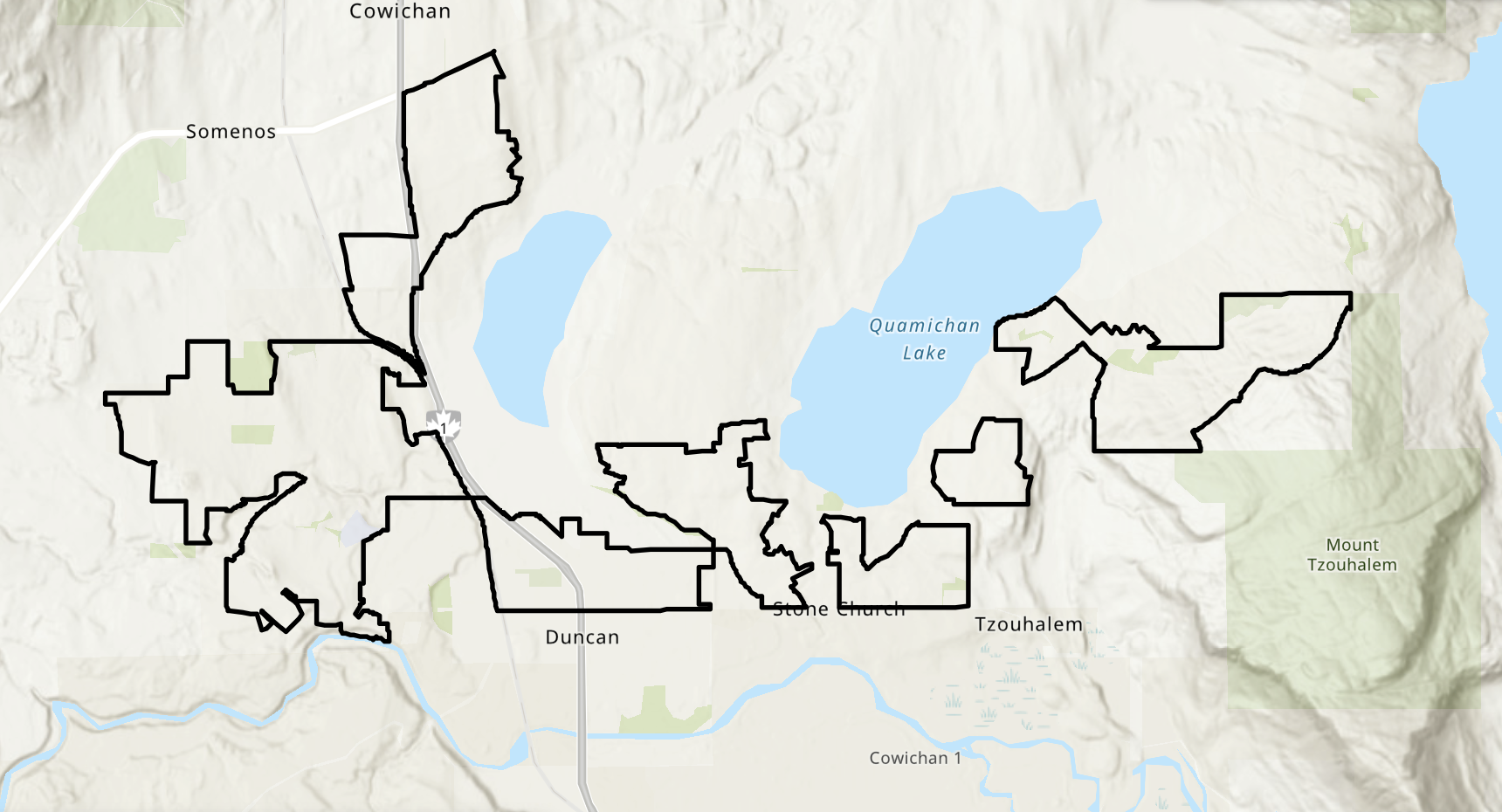
According to staff reports included in the agenda package, servicing a large new development north of Herd Road, such as West Vista Terrace, is not possible until major upgrades are made to the municipality’s sewer and water systems.
To get water and sewage to developments north of Herd Road, new trunk mains — large pipes designed to carry high volumes of water — would need to be built sooner than planned, and a new pump station would be required to move water into the new development.
The new pump station and its associated infrastructure — such as a new inlet and outlet pipes — is projected to cost $33 million, according to a staff report.
“If you have [an Urban Containment Boundary] that can support 36 years of growth, why do you want to go outside the UCB and not preserve the limited capacity that you have,” Clay Reitsma, director of engineering at North Cowichan, said.
Staff said if West Vista Terrace was allowed to proceed, it will consume service utility capacity (including water) that will not be available to other applications that are already in progress.
Staff are also concerned about the amount of building applications that are already being managed within the Urban Containment Boundary.
Earlier this year it was reported that North Cowichan was “facing an unprecedented number of building applications,” numbering around 10,100 homes.
A report to council said expanding the Urban Containment Boundary will divert limited staff resources away from in-progress applications for developments that are closer to the hospital.
Expanding the boundary would also force staff to repeat work already completed south of Herd Road, such as reviewing roads, utilities and environmental impacts. Extending that work north of Herd Road would require an additional $150,000, staff told council.
Staff said the area may be suitable for development in the future, but expanding the Urban Containment Boundary now would be too costly and would disrupt ongoing work south of Herd Road, especially given the existing capacity for new housing units within the boundary.
Another issue is water licences — the amount of water the municipality is legally permitted to draw from aquifers — which are issued by the province.
“The one that worries me is the water supply, because no amount of money is going to fix that,” Reitsma said, noting that only the province can increase the municipality’s water licence and the timeline for such a decision is unknown.
Will the expansion help meet housing needs in North Cowichan?
A 2024 housing needs report compiled by the municipality found that in the next five years the municipality will need 2,172 new housing units and in 20 years, it will need 7,083 new units.
The data was generated using a calculator created by Housing Assessment Resource Tools, a UBC research group that creates data-driven tools for local governments to create housing policy.
The BC Housing Supply Act, which set out housing targets for municipalities, ordered North Cowichan to build a minimum of 1,233 new units over five years.
As it stands, the Urban Containment Boundary has the capacity to accommodate between 22,000 to 23,000 new units of housing. Staff say it is likely that the existing area around the hospital site that is already inside the UCB can accommodate 6,000 new units alone.
And while municipal staff estimated that West Vista Terrace would add approximately 1,850 units of housing, they also pointed out that land is not the constraint for building new units within the Urban Containment Boundary.
They warned that expanding the UCB to include West Vista Terrace again would slow down housing projects that are already underway or are being planned within the existing boundary.
What did you think of this story?
Your feedback after we publish a story helps ensure we're always improving our reporting to better serve you
Author

Related Articles
What to do and who to call when juvenile salmon are in danger
Officials say Cowichan Valley residents should call experts to move salmon in isolated pools because of risks associated with relocation.
How is The Discourse’s journalism funded?
And what does it cost to produce The Discourse’s in-depth, independent journalism?
Behind the backlash to the Cowichan Valley’s comprehensive zoning bylaw
The campaign against Bylaw 4710 was fuelled, in part, by misinformation and an organized group of advocates. What could this mean for the future of local politics?