
‘Enough is enough’: Penelakut family calls on Island Health to address systemic racism after Lenny Sylvester’s death
Community leaders say his death following a routine medical procedure highlights long-standing racism in the health-care system.
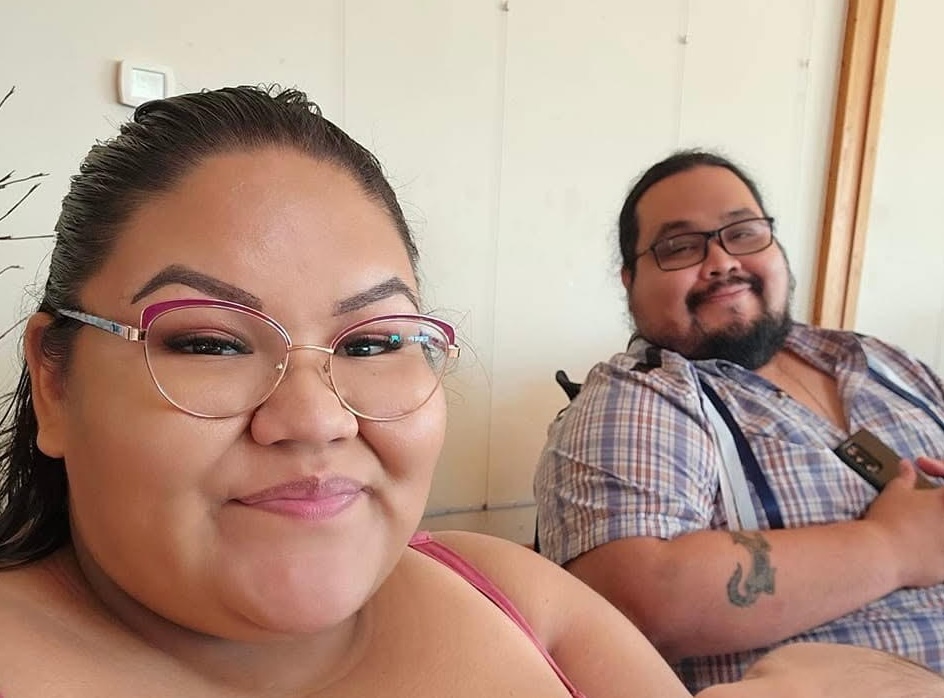
Community members gathered to call for better transparency and accountability from Island Health following the loss of Lenny Sylvester, a member of Penelakut Tribe, who died in mid-November after a simple procedure spiralled into a medical emergency.
Lenny’s family says his death is a result of systemic racism in Island Health.
Friends and relatives shared stories about Lenny, 38, who was known as a cultural doctor for members of his nation. The father of three was also a member of the Quw’utsun Tzinquaw Dance group and an avid fan of Sasquatches.
He leaves behind his wife Boedaya and his children, Alecxavier, Eleanor and Silas.
Lenny’s family held a rally on Dec. 8 at the Cowichan Community Centre to bring attention to Boedaya’s efforts to get answers about what happened to her husband. Community leaders, friends, family and representatives from Island Health were in attendance.
Boedaya said in a statement that what happened to her husband while in Island Health’s care is another example of how First Nations people continue to be failed by the health-care system.
“Lenny is another example of systemic racism in our health-care system — these are patterns First Nations families have faced for generations,” she said.
Penelakut Chief Pam Jack said in a statement that Lenny was a cultural doctor for the community and had a profound impact on all people of her nation.
“Enough is enough. We deserve accountability, transparency and a health-care system that works for all Canadians regardless of background,” she said.
Boedaya’s aunt Teltitelwetl (Connie Paul) is a registered nurse who works at Snuneymuxw Hulit Lelum, an accredited medical and wellness centre, and shared an update from the family that an autopsy will be done, something his family had been demanding since he died.
Lyackson Chief and Coast Salish representative to the First Nations Health Council Laxele’wuts’aat (Shana Thomas) spoke in solidarity with Lenny’s family and said that Indigenous communities are all too familiar with harmful experiences like this in the health-care system.
“What we know for sure is that the colonial violence that our people experience every single day is alive and well in British Columbia,” Laxele’wuts’aat said.
What happened to Lenny Sylvester?
Lenny entered Cowichan District Hospital on Nov. 1 for what Boedaya was told was a simple surgical procedure for gallstones. He went home the same day without any prescriptions.
Twelve days later, he was admitted to the Cowichan hospital’s emergency room (ER) with severe back pain. While waiting in the ER, Lenny was not given adequate pain medication, Boedaya said. By that evening, his breathing had worsened and he was placed on oxygen.
On Nov. 15, he was transferred to Victoria General Hospital. The next day, surgeons removed his gallbladder.
When Boedaya went to see him that evening, she found his room empty.
“No one called me. No one informed me that something had gone wrong. He had been moved to the intensive care unit and placed on life support with zero communication to me, his wife,” she said.
Lenny was later placed on dialysis and, despite his small intestine, large intestine, heart and lungs being intact, Boedaya said he declined rapidly.
He died on Nov. 20, less than three weeks after his initial surgery.
What followed, Boedaya said, was unacceptable. As she tried to get answers about what happened to her husband, she and her family say they were met with poor communication, lost paperwork and a refusal to investigate properly.
“We need to be a part of the solution, to change the system. It can no longer be about us. It needs to be with us,” Teltitelwetl said at the rally.
Promises from Island Health leaders after ‘avoidable loss’
Island Health representatives attended the rally organized by Lenny’s family on Dec. 8, including Marko Peljhan, vice president of clinical operations, and Graham Blackburn, medical director at the Cowichan District Hospital.
Blackburn acknowledged that Lenny’s death was an “avoidable loss,” and said Island Health has a long way to go to make care better for Indigenous people.
Peljhan said he is committed to taking Boedaya and her family’s concerns “extremely seriously.”
“We will be doing a full review, we will be transparent and we will share that review with every one of you along the way,” he said.
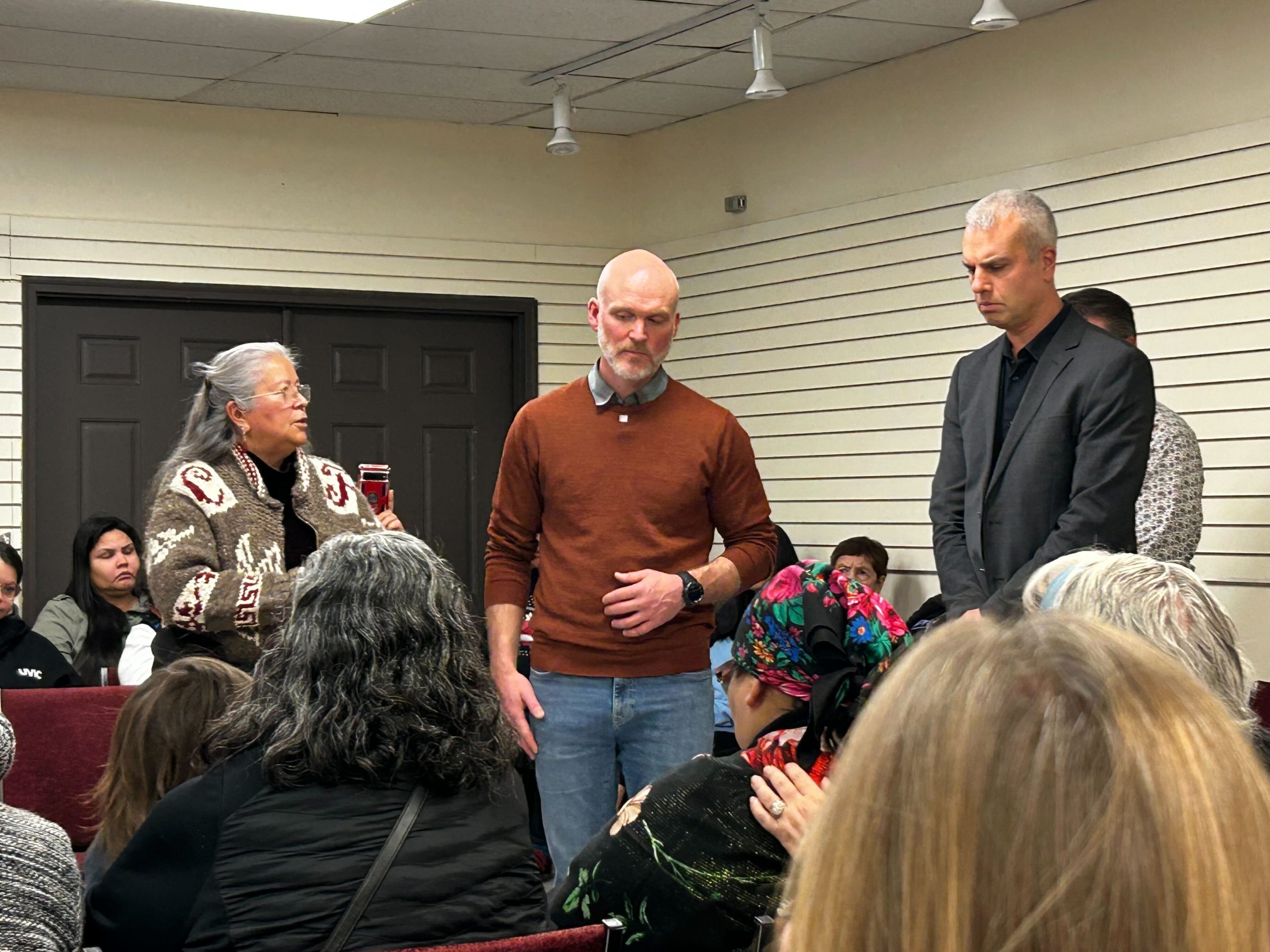
Garrett Elliott, director of Indigenous health services for central Vancouver Island, said he would organize gatherings where Indigenous community members could share their stories of mistreatment by the health-care system with non-Indigenous leaders at Island Health.
“They need to hear from us. They need to hear from you. We need to be sharing our stories,” Elliott said.
Elliott said that community members should hold him accountable and if their concerns aren’t being addressed, they should contact him directly.
“What we heard today was, ‘you tell us’ — that’s not good enough,” Laxele’wuts’aat said.
“Our people have used their voice over and over and over again to say exactly what it is.”
Racism ‘In plain sight’
Racism against Indigenous people and other racialized groups in health care is nothing new in B.C. and communities had been sounding the alarm for years. However, it was only in 2020 that a comprehensive study attempted to document and quantify the discrimination First Nations people experience as they seek care in the province.
In Plain Sight: Addressing Indigenous-specific Racism and Discrimination in B.C. Health Care was the result of an investigation into the issue, involving submitted accounts from Indigenous people, health-care workers and high-level leaders in the health-care system.
The report was launched due to specific allegations that emergency health-care workers in some hospital emergency rooms played a “Price is Right” game where workers were guessing the blood alcohol levels of Indigenous patients.
While no specific evidence of this game being played was found, the report did find the B.C. health-care system exhibited widespread Indigenous specific systemic racism involving stereotyping, discrimination and prejudice that resulted in harm and even death.
The report found that stereotyping and racist treatment in health care were common for Indigenous people in all regions of the province. Common perceptions of Indigenous patients included that they were “less worthy of care” and not willing or capable of taking responsibility for their health care.
The report also pointed to systemic failures in health care, such as a lack of education and training for health-care workers to address racism, a broken complaints process that does not work for Indigenous people and a lack of policies and legislation for Indigenous cultural safety and anti-racism.
According to the report, all of these structural issues had compounding effects that resulted in Indigenous people having a lower life expectancy, a higher rate of chronic disease and having a general distrust of the health-care system.
“Our people don’t trust police, they don’t trust doctors, they don’t trust teachers, they don’t trust anybody because of what happened to our people in the past,” Halalt Chief James Thomas said.
The report made 24 recommendations ranging from improving the complaints process, changing the existing Health Professions Act to include cultural safety standards and that the B.C. government issue an apology for Indigenous-specific racism in the health-care system.
In 2020, the province’s then Health Minister, Adrian Dix, issued a public apology for the harms caused by Indigenous-specific racism in B.C. health care.
Some of the other recommendations have been implemented by the province, however the last update on this work was in 2023.
Reporting by IndigiNews found that in 2020, Island Health’s cultural safety facilitation team, which was responsible for combating anti-Indigenous racism within the organization, was dismantled. Cultural facilitators who were interviewed said their team was unfairly targeted following the province’s investigation.
Dawn Thomas, who was hired as the lead executive in June 2020, before the alleged dismantling took place, is still the acting vice president of Indigenous Health, which oversees the Cultural Safety and Humility Team. The team currently has two cultural safety facilitators and one director.
Thomas was unable to attend the rally on Dec. 8 as she was at a medical appointment with her son that day, according to Elliott.
On May 1 of this year, Island Health implemented an Indigenous Specific Anti-Racism and Discrimination Policy guide and mandatory training for every Island Health Employee.
“I want to see policy change. I don’t want Lenny’s story to be just Lenny’s story. His story belongs to many community members in this province,” Teltitelwetl said.
What did you think of this story?
Your feedback after we publish a story helps ensure we're always improving our reporting to better serve you
Author
Related Articles
What to do and who to call when juvenile salmon are in danger
Officials say Cowichan Valley residents should call experts to move salmon in isolated pools because of risks associated with relocation.
How is The Discourse’s journalism funded?
And what does it cost to produce The Discourse’s in-depth, independent journalism?
Behind the backlash to the Cowichan Valley’s comprehensive zoning bylaw
The campaign against Bylaw 4710 was fuelled, in part, by misinformation and an organized group of advocates. What could this mean for the future of local politics?