
The long road home for newcomers to Nanaimo
‘I was a teacher and now I’m a dishwasher.’ Three women share their unique stories and common struggles in making Canada a new home.

This article is the second in a three-part series written in partnership with The Women’s Poverty Response Circle and Mid-Island Métis Nation, which looks at the experience of local Indigenous and newcomer women when it comes to housing, childcare and poverty issues.
When Angelika Valchar came to Canada to work as a live-in caregiver 30 years ago, she vividly recalls the challenges that came with moving to a new and unfamiliar country.
A newcomer from Slovakia, some of her early experiences in Canada involved being pressured into working 14-hour days and cleaning bathrooms with a toothbrush even though it wasn’t in her job description as a nanny.
“I’ve lived through all the stories and struggles that every newcomer has. My personal experience was not the best one,” she says. “Without speaking English, I just remember thinking, ‘What am I gonna do? What am I gonna do?’”
It’s something she can laugh about now, but those experiences have formed an integral part of what she brings to her current role as the Director of Client Services at Central Vancouver Island Multicultural Society (CVIMS).
As someone on the front line of resettling new residents who arrive in Nanaimo, she says people come here for a number of reasons, from seeking greater economic opportunities or an education to fleeing war or persecution — and all are treated equally, though supports are different based on a client’s needs.
Valchar’s own experiences have also given her insight into some of the challenges other newcomers, especially women, face when they arrive in a new place. These issues range from struggles with language and finding childcare to feeling culturally isolated and homesick — especially if they were working professionals in their home country but can’t work here. In some cases women suffer from depression and post-traumatic stress disorder (PTSD).
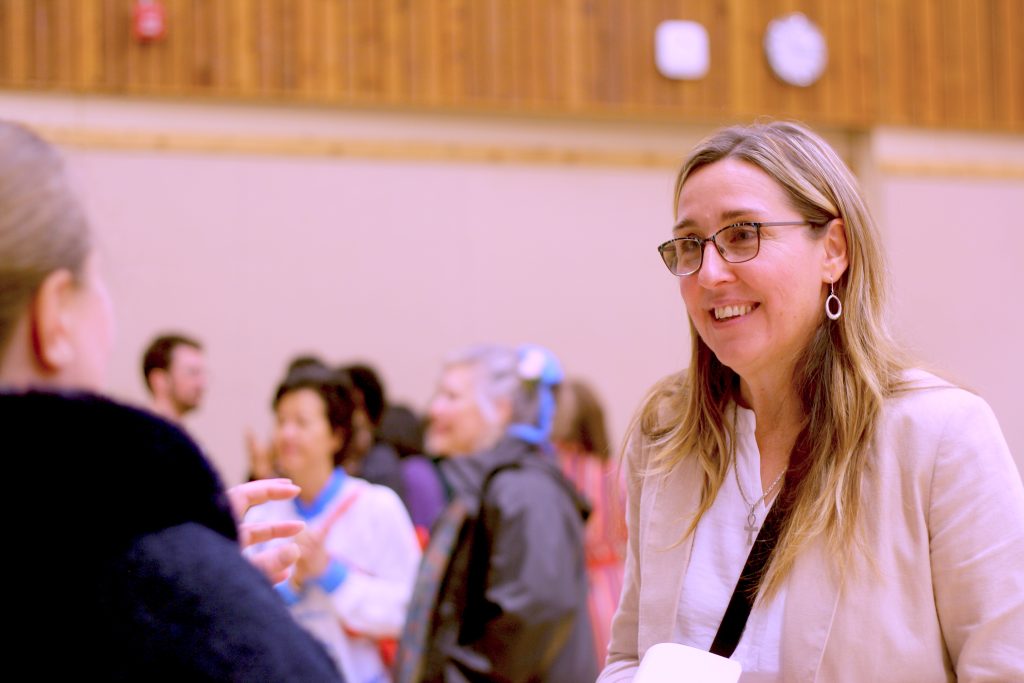
“Take, for example, the Afghan women that have arrived as refugees within the last two years, we have seen that there was lots of PTSD. Most of their men either were killed, or were not anywhere to be found. So it will be females who have children, and you have four or five, six children. How do you manage that?”
This was the case for Zarghoona, a teacher, clothing designer and mother of five who escaped from Afghanistan after she was targeted by the Taliban and now lives in Nanaimo. Her last name is being withheld to protect the identity of her teenage son, who is still in Afghanistan.
Trouble started for her family in 2018 while living in Kabul, when she received a letter from Taliban officials who took issue with the clothing business she was running. With customers all over the world, she designed and sold embroidered and colourful traditional Afghan clothing for women. She says the Taliban disapproved of her business and wanted her to also make burqas, a robe that fully covers a woman from head to foot with a piece of mesh that also covers the eyes. Zarghoona refused.
Though scared, she says her husband, who worked as a medical technician and was a “very open minded person,” urged her to continue running her business despite the threats.
“After four months, my husband disappeared. He went outside to bring something home but he never came back,” says Zarghoona, who has not seen him since. “I don’t have any information about him. I was very concerned and crying and I went everywhere to try and find him but I can’t.”
By 2020, the U.S. government had signed a peace agreement with the Taliban, which involved a full withdrawal of its troops by the following year. Ahead of the deadline, the Taliban pushed out the U.S.-backed president Ashraf Ghani and collapsed the Afghani government.
On August 15, 2021 Taliban fighters took control of Kabul and that night, Zarghoona and her children — three sons and two daughters — decided to flee and walked for six days to get to Peshawar in Pakistan.
However, the situation in Pakistan for refugees from Afghanistan, now numbering more than a million, can be complex, and their safety from the Taliban or other threats is not assured.
Zarghoona felt she was being followed when she went out during the day, and so she paid for two of her boys to be illegally smuggled into Istanbul, where she thought they would be safer.
After she sought help from the UNHCR and showed the refugee agents her letters from the Taliban, she was granted passage into Canada in May of 2023 with her now-12-year-old daughter, Iqra.
Though three of her children are now adults and living in Pakistan and Serbia, her 14-year-old son Omar was caught by the Turkish police. Without the proper papers, he was deported to Iran where he fell into the hands of kidnappers and was imprisoned, beaten and held for ransom.
After escaping from the prison with 20 other children, Zarghoona says Omar was assisted by the Iranian police, who helped him contact her and then deported him back to Afghanistan. He is now essentially in limbo and staying in a hotel, says Zarghoona, who speaks with him regularly and is doing everything she can to get him into Canada.
She has met with Nanaimo-Ladysmith MP Lisa Marie Barron, whose constituency office has helped with the necessary paperwork, but in the meantime Zarghoona can do little else but wait and see what happens. Though she is grateful to have found work, it doesn’t pay much, and she worries about how to afford housing and other expenses once her one year window of support from the federal government dries up.
“I work in a restaurant as a dishwasher. But I should be supporting my family. Every month I send money for my son and for my daughter — she is in Pakistan,” she says, through tears. She stares at her hands. “Look at me. I was a teacher and now I’m a dishwasher.”
Growing need for resettlement support
Recognizing the risk that the rise of the Taliban posed, in 2021 the federal government committed to welcome 40,000 vulnerable Afghan refugees into Canada, which was then supported by a $2 million fund for resettlement in B.C.
That same year, CVIMS received a federal contract after Nanaimo was identified as one of the communities that could manage resettling newcomers. It’s one of the fastest-growing cities in Canada and could stand to be a bit more diverse, says Valchar.
Valchar says that during the most recent fiscal year, and with three months left to go, CVIMS has already helped 178 Afghan refugees. She estimates the final total will top the previous two years, in part due to Pakistan’s plan to forcibly remove all undocumented immigrants after a Nov. 1, 2023 deadline to leave voluntarily.
Other government-assisted refugees CVIMS has recently helped include migrants from South American countries such as Venezuela and Honduras, and from African countries like Somalia and Kenya. However, due to the ongoing conflict, Ukrainian citizens still make up the majority of newcomers they serve, she says.
The agency also works with newcomers who arrive in Canada with already-approved permanent residency, as well as provincially-supported newcomers like temporary foreign workers and international students.
“This year, we have served over 2,470 clients. I have never seen that in the last 18 years that I have been with the agency. That’s in 10 months. These are all new community members,” says Valchar.
Though there has been some recent hand-wringing over what numbers like these might mean for Canada’s housing crisis, Valchar says the issue is primarily one of planning.
“It’s easy to point a finger at international students or temporary foreign workers, but if [the government] had had a plan in place, they would have been building housing, shelters, or affordable housing in the last 20 years,” she says.
According to data compiled by the UN Refugee Agency, refugees make significant economic and cultural contributions to Canada. Compared with people born in Canada, they are more likely to report a strong sense of belonging to the country and more likely to start their own business.
‘What was my education even for, if I’m just going to be a housewife?’
When newcomers arrive in Nanaimo, especially from traumatic situations like Zarghoona’s, CVIMS utilizes its on-staff language interpreters to get the client connected to crisis counsellors and support groups.
But people come to Nanaimo for a number of reasons, and the challenges they face — especially for women — can be diverse.
During the COVID-19 pandemic, Valchar says the isolation meant an increase in clients dealing with domestic violence, and seniors who were left stranded when their partners died from COVID infections.
“We had about five situations in the first three months during COVID where you have women who don’t know how to pay for rent and [have] never been involved with the banking, so when their husband passes away, you suddenly are dealing with a woman that was fully supported by the husband,” she says. “She may have been in the country for 20, 30 years and is realizing that the whole world has collapsed. And they have to learn — in their 60s or mid-70s — how to go to the bank.”
Some of these challenges are caused by coming from cultures that are male-dominant, but are also due to the sometimes-arduous process that many skilled newcomers face when trying to find employment in their field, though B.C. recently introduced legislation aimed at reducing barriers for internationally trained professionals.
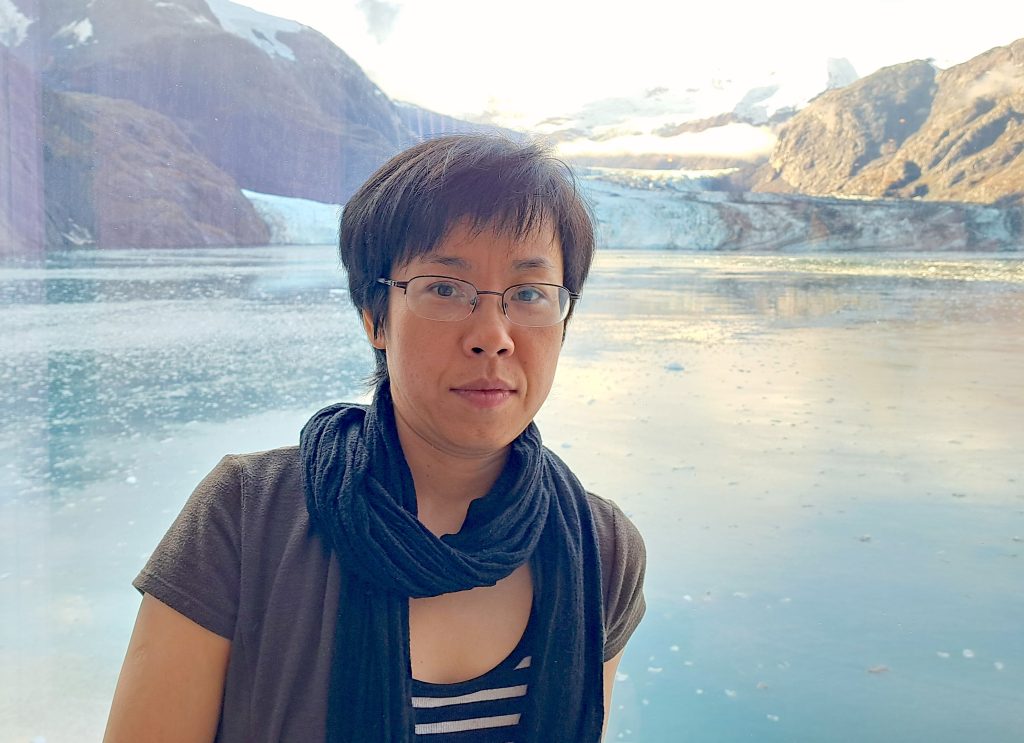
Cari Gong recalls how when she moved to Nanaimo in 2015, she struggled with cultural differences, isolation and trying to learn English.
One thing people may not realize is that even simple activities, like walking in the forest, are often experienced differently by newcomers, she says. It isn’t necessarily soothing, like it is for so many who grew up here, but instead can feel dangerous.
“It’s deadly quiet — it’s so weird, the quiet,” she says with a laugh, though she does love how Nanaimo is on the water. “I didn’t see the ocean until I was 25 years old.”
Gong was born to what she describes as a poor family of farm labourers and factory workers, and grew up in Shuangyashan, a cold city known for its coal mining and rich black soil, located in the Heilongjiang province of Northeast China, close to the Russian border.
She was the first member of her family to go to university. After earning her master’s in law from Jilin University in Changchun, she taught law at Yang-En university in Quanzhou. She and her husband came to Nanaimo in 2015, after first landing in Edmonton, and had two children.
Though he was an engineer in China, her husband Charles worked two jobs as a dishwasher — where he had to compete for one of the jobs against ten other candidates — but over time managed to re-train himself as a software developer. He now works for Dow Chemical.
“His English wasn’t so good but his math is good,” she says with a laugh. “The interview staff said to him later when he got accepted that they hardly understand him, but his software skills are great.”
It didn’t make financial sense to pay for childcare, so Cari agreed to stay home with their children, but quickly grew depressed with the isolation and lack of friendship or intellectual stimulation.
Though confident in her education and literacy, she still found English a challenge. While receiving a phone call one day while at home, she recalls how she struggled to take a message because she “couldn’t understand anything.”
“I was so upset,” she says, and remembers thinking, “What was my education even for, if I’m just going to be a housewife?”
With the help of CVIMS, Gong accessed counselling for her depression and started taking the organization’s free Language Instruction for Newcomers to Canada (LINC) classes.
She also joined the Nanaimo Women’s Poverty Response Circle, an anti-poverty network whose members are primarily Indigenous and newcomer women who have experienced poverty and other systemic barriers, which was helpful for building community friendships.
The group is now working to influence policy to become more equitable for women in their position. Of all the issues newcomers face, Gong says finding housing is probably the most pressing and requires the most resources.
Not just expensive and difficult to find, dealing with landlords is also a struggle when many newcomers have no references or credit that transfers over from their home country, she says.
“Renting a place is hard because [newcomers] have no connection with local people, and have the language barrier,” says Gong. “Sometimes there is racism, which is something you’re exposed to when you come to another country, and discrimination… I can understand why they don’t trust you, but on the other side it’s very challenging for newcomers.”
What did you think of this story?
Your feedback after we publish a story helps ensure we're always improving our reporting to better serve you
Author

Related Articles
Snuneymuxw Days shares culture with Nanaimo community
Health and wellness event features sport, traditional games and a feast.
Why are nurses in Nanaimo on strike?
Hundreds of nurses and healthcare workers picket Nanaimo Regional General Hospital.
‘Drag racing’ disrupting Departure Bay residents
Residents ask city council to do something about loud cars and motorcycles late at night.