
Q&A: Interim VIU president says he wants to ‘turn VIU around’
Dennis Johnson talks about leadership, international students and finances in a sit-down interview with The Discourse.
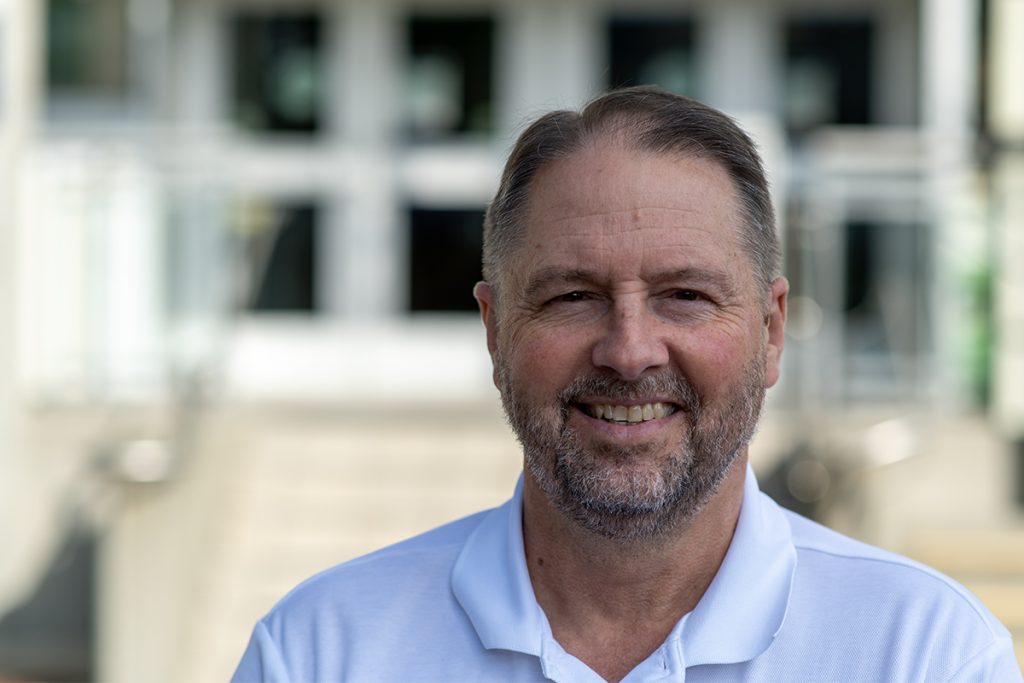
Vancouver Island University is in the midst of an ongoing financial crisis that has led to a series of programs being cut, including its longstanding jazz program. The former president stepped down in March following non-confidence votes by both the faculty and student unions.
In June, the university’s board of governors appointed Dennis Johnson as its interim president who will serve for up to two years as the search for a new president takes place.
Johnson previously worked as the president of the College of New Caledonia in Prince George from 2019 to 2023 and has worked as a consultant with post-secondary institutions on financial and organizational issues.
He holds a doctorate in educational administration from the University of Saskatchewan, a master of education in post-secondary studies from Memorial University of Newfoundland, a bachelor of education in adult education from Brock University and a carpentry certificate of qualification and certificate of apprenticeship from B.C.
The Discourse sat down with Johnson to talk about the state of the university and his role as interim president, as well as his plans to “turn VIU around.”
Editor’s note: The following Q&A has been edited for length and clarity.
Mick Sweetman, The Discourse: How did you first develop your leadership skills?
Dennis Johnson: I apprenticed as a carpenter right out of high school, and I was probably starting to run jobs by my second year. Back in the day, if you could read and understand the drawings and could do layout, you got pushed up pretty quickly. So I was running jobs in my early 20s and then I started teaching apprenticeship when I was 29. I was a construction supervisor on commercial work before I started teaching. That was the early, early years. Then in higher education, the leadership roles come when you don’t sit on your hands. They’re always looking for somebody to sit on a committee or something and take on a curriculum project, that kind of thing. I was just always involved.
Were you involved in trades education at all?
Yeah. I started teaching carpentry apprenticeship at Ontario’s Mohawk College. The way I ended up teaching is I was managing the construction of the new carpentry trades training shop for Mohawk College — the company I worked for had the contract and it was my project. I got talking to one of the electrical instructors that came by the site [and] next thing, I’m in the classroom and I have a two month contract. I never went back. That was 35 years ago.
VIU is a unique institution because it does have all the trades as well as the undergraduate and even still some graduate level courses. How does your experience inform your leadership at this institution?
Honestly, a lot of people want to talk about that trades background but the last 30 odd years have been spent in the broader educational landscape. All of my degrees are about the post-secondary system or adult education. I think starting in the trades training was a good foundation but since then, I’ve developed bachelor’s degrees, I’ve served on senate. So it was a good start, but I’ve had to learn and grow far beyond my original trades roots and have spent a lot more time as an administrator than I ever spent as a carpenter.
There was a major capital project that ran into problems at VIU — the child-care centre. What steps has VIU taken as an institution to ensure that when there are major capital projects, they are managed efficiently and effectively?
My project here is to turn VIU around, change the trajectory, make us sustainable and healthy again. Part of that is we just really need to tighten up how we do things — the quality of our management decisions, our processes. I wasn’t here for that, but it’s an example of the things that we will absolutely have to avoid in the future. We can’t start and stop things, so we’re taking a very evidence-informed approach. I bring a lot of background in management processes, some process improvement and organizational development to the role, so we’ll be upping our game as far as approvals and decision making and all of that.
Are there any concrete policy changes that you’ve made for capital projects, specifically?
The only major project that is even being considered is already going and that’s the residence. Right now, we have other things to do before we ever worry about buildings. There’s a fair bit of deferred maintenance. It’s a common thing when institutions are struggling financially, they put off things like building maintenance, technology, that kind of thing. So we’re focusing on that, but really, the next little while is a focus on fundamentals. There’s no grand ambition for more capital projects or anything like that. We’re excited about the new residence that’s going to really increase our capacity. We have a lot of students that want to study here and can’t get into our residences.
Over the last couple of years, we’ve seen VIU do a number of spending reductions and some programs have been cut. Beyond reducing programs that aren’t revenue neutral, what is the strategic vision for the institution? How do you want to go beyond balancing the books and making VIU a strong post-secondary institution?
I’d say there’s some business fundamentals — to use that language — or organizational fundamentals for those that don’t like to use business and university in the same sentence. We really have to just focus on strengthening what we do and what we do well. There’s no grand vision except to really make VIU stronger at what we’re good at. You’ve already seen some decisions around pulling back on some things, and over the next little while, there’ll be many conversations about, “Does this fit? Can we sustain it?”
In our legislation, graduate programs are optional if resources allow, as they aren’t funded. You really have to look at the business model and say, “can we support these?” If we can, great, but the focus of my vision — it’s not the institutional vision because I’m here on an interim president’s role for up to two years — is to get this place solid and strong to the point where the next leader can come in and work on the next strategic plan and work with the board on that grander vision. But my vision for the institution is just to make it sustainable and healthy.
There were obviously the financial problems that VIU had, but there was also a crisis of leadership. We had the faculty union and the student union both say publicly that they had no confidence in the former president. What are you doing to restore that confidence?
I’m trying to talk to everybody I possibly can. I’ve met with the union leadership, am meeting with faculty [and] staff across the institution and I’m engaging in conversations wherever and whenever I can. I can’t speak to what was before but my leadership style, my approach, is I can’t do this by myself. I need a whole bunch of people that are helping. The only way we’re going to build that culture is to make sure that I’m very engaged with everybody, and that includes the students too. I don’t want to forget the students, they can vote with their feet. We want to find out what they want from VIU in the future and why they choose us in the first place. I’ve done a lot of informal engagement since the students came back, but we’ll be doing some formal focus groups with students and faculty staff so that everybody can share their perspectives.
You mentioned adult education, one thing in my personal observations is that VIU doesn’t really offer a lot of continuing education or classes in the evenings and in the summertime the campus is underutilized. Do you have any plans to use the infrastructure you have more effectively by offering courses at different hours?
I would frankly love to see us really broaden our reach, and that is definitely part of the conversation we need to have. As you’re very aware, a university has a bicameral governance structure, and so there’s lots of other voices that need to be part of that discussion but, ideally, a best practice right now in the sector is to really look at how and when we offer our programs and where it’s feasible to increase access. We definitely would like to, and I think that’s an opportunity, but we have to have the conversations and engage the senate. And, of course, the financial model needs to make sense. But, to your point, I agree. I would probably not be here right now if it hadn’t been for institutions where I could take classes online or at night. My first degree took me nine years while I was working full time. So I worked and part-time night school was a big part of that. I’d love to see us provide those same opportunities for the community.
VIU has a couple of other campuses. In Cowichan specifically, there was an announcement that the trades building there is being closed, and some of the programs are being moved here. The practical nursing program was closed there as well. What are the plans for those smaller campuses? Where do they fit into the future?
So the idea is to grow where we can, across the board. I don’t really want to shut any more programs down but they have to make financial sense. The enrolment has to be there so the push for the next little while will be on increasing enrolment, telling the stories about what we offer and the benefit to the prospective students. And that’s for all campuses, not just Nanaimo. Decisions were made for, I’m sure, good reasons at the time but to me, that’s not the first place to start. We really have to start trying to promote and strengthen programs before we amalgamate them or close them. I’m not saying that will never happen, but that’s not the first thing we want to do.
In terms of enrolment, the most significant decline in enrolment that I’ve read in the reports is specifically international students during the pandemic. And it hasn’t really recovered since then. What are your plans for recruitment of international students?
Actually, if I can just add a little bit to your story, the pandemic was not the most precipitous drop, it’s been since the federal government policy, it’s really what’s devastated [international enrolment].
In January of 2024 the federal government substantially changed the rules [for international students] and then made a series of additional policy changes.
Each year we have fewer and fewer international students starting because we can accept them, and they can be willing to come, but if they can’t get their visas — if they can’t get approved or, in some cases, the visas are taking eight months — they’re not getting them in time to start. This is a problem across Canada right now, not just at VIU.
Do you know what ballpark we were looking at?
The number I have right now is we’re down a further 54 per cent from last year’s enrolment.
Editor’s note: According to VIU, international student enrolment was 1,170 in the 2024-25 academic year, a drop of 21 per cent from 2023-24. Domestic enrolment was also down by six per cent. This story will be updated with current numbers for the 2025 fall semester when they are available later this week.
With the drop in international tuition revenue, what would you like to see change in terms of the funding model for institutions, like VIU, that are not big research universities but rather smaller teaching institutions?
Frankly, the whole sector can always use more funding. I’ve been in the sector for 35 years. I don’t know what time, other than the heyday of international students, where institutions had extra money. The price of that was that we had gone in a big way on international students and now it’s proven to be, in hindsight, not the best idea.
The biggest thing is for the government to just continue to value what we do and support it at a level that allows us to continually improve. But we also have to carry our share of the work, and that’s to use the money we do have more efficiently and effectively and really take a good, hard look at how we’re spending those dollars, and that’s what we’re doing right now.
There’s been some criticism around the size of VIU’s administration and senior leadership. Are there any plans to reduce that as part of the overall cost cutting?
We’re looking at everything. Everything is up for review. And that’s what we’re currently doing is we’re reviewing every part of our organization. Since I’ve come, there have been previous reductions. I’ve made a few additional reductions since then.
Can you tell me what those are?
I don’t have the exact numbers. We did some layoffs yesterday.
Of senior administration?
It’s some administration and unionized positions. The approach we’re taking to get there is not, for the lack of a scientific term, willy nilly. We are reviewing everything we’re doing, we’re taking a good, hard look and saying, “Do we need this right now?” There’s good people doing good work, but is it the priority right now? For example, international student numbers have dropped, so some of the reductions were in the capacity around international students. It makes sense, and that’s the approach we’re taking across the board. Do we absolutely have to have this position? Is there some savings? Is there a more efficient way to do things? We’re taking a very business, methodical, evidence-informed approach.
Editor’s note Sept. 18, 2025: After the interview the university confirmed that approximately 20 “administrative” positions were eliminated on Sept. 11, 2025, a majority of them unionized workers, with no reduction in senior leadership positions.
Is there anything else that you think is really important for our readers to understand about what’s happening in VIU right now?
I’ve been here three months and there’s no denying we have financial issues and we’re addressing them. I’ve been in the sector for 35 years and everything I see here is that VIU absolutely can be sustainable and strong again. The fundamentals are here, the people are great, the students are happy. We just need to get our finances in order and prioritize the things that matter most to students and the community, and we’re going to do that.
What did you think of this story?
Your feedback after we publish a story helps ensure we're always improving our reporting to better serve you
Author

Related Articles

Nanaimo Jazz Festival celebrates 10 years with more than a dozen shows in September
Local and international artists to perform on multiple stages in the city at this year’s Nanaimo Jazz Festival.

Snuneymuxw Elder C’tasi:a shares traditional plant knowledge in new book
‘Plant Teachings from my Auntie’ by Snuneymuxw Elder C’tasi:a and ethnobotanist Nancy Turner delves into traditional plants and plant medicine.
How is The Discourse’s journalism funded?
And what does it cost to produce The Discourse’s in-depth, independent journalism?