
How an Indigenous conservation group is bringing the ‘excitement’ of the herring spawn to Vancouver Islanders
Your guide to herring spawning etiquette and where to see it on the Salish Sea.
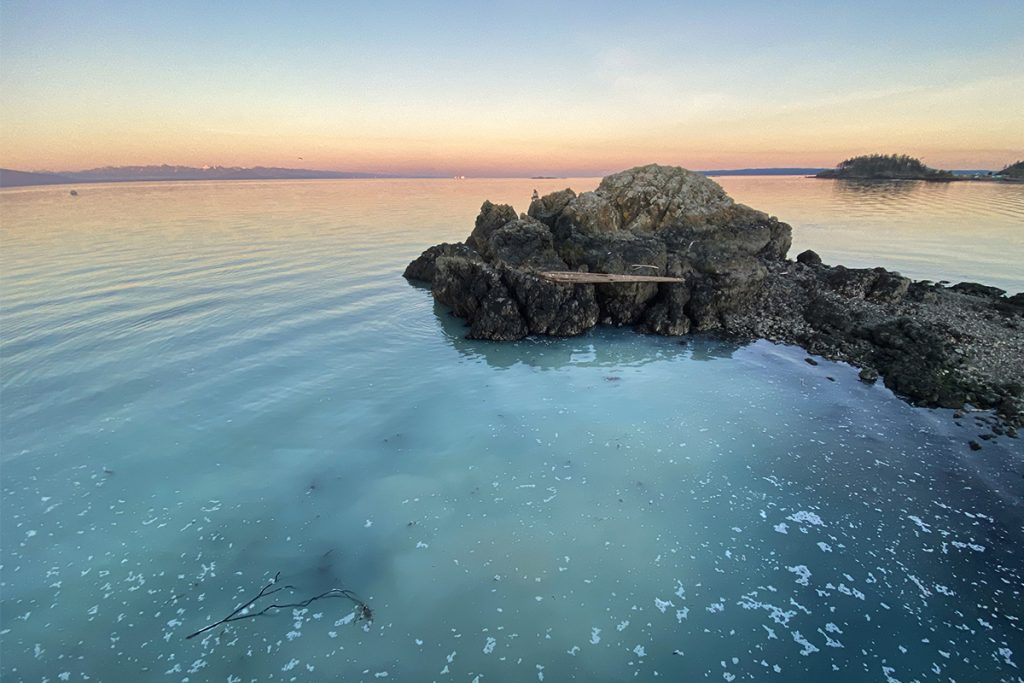
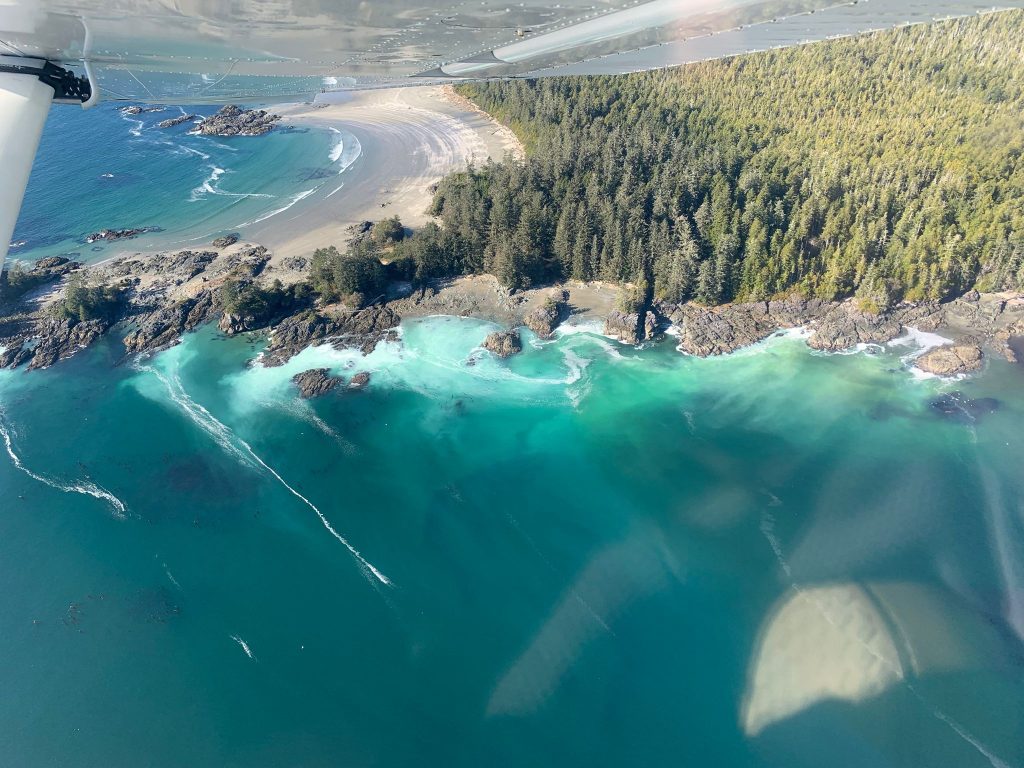
The 2026 herring spawn is underway with spottings of the tell-tale murky, blue-green waters already being spotted on the west coast of Vancouver Island and Howe Sound.
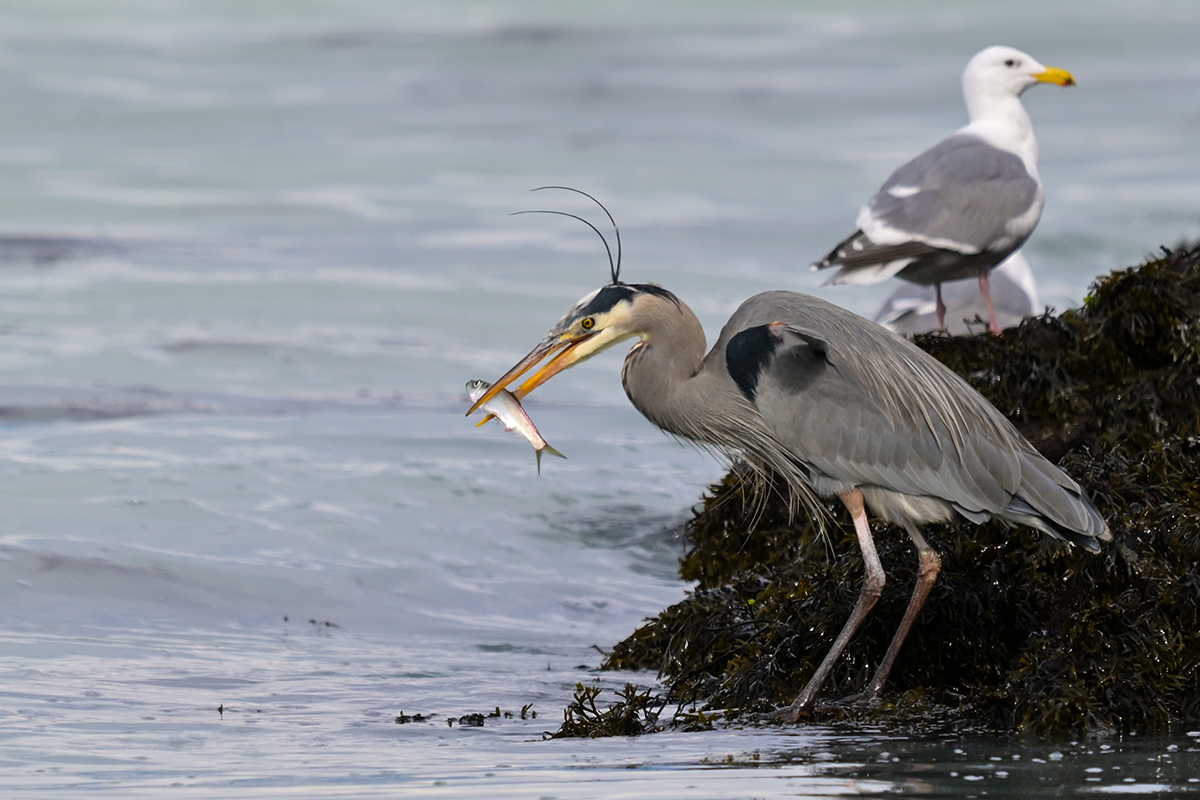
It’s a time when many people of the Pacific Northwest flock to the shores to see eagles, sea lions, seals, heron and shore birds feasting on the fish.
Nick Chowdhury, president of the Island Marine Aquatic Working Group, a non-profit conservation group that has a membership of 15 First Nations, said the herring spawn is an event where people can reach into the past and remember Indigenous teachings that have been passed down from previous generations.
As a member of Da’naxda’xw/Awaetlala Nation raised in the unceded territory of the K’omoks First Nation, he conveys his deep appreciation for the herring spawn each year as he speaks to the media.
Having recently completed several media interviews, his son asked him what all the fuss was about.
“I told my kid, ‘This is a little different because it’s food to us, but if we go back generations, it was more than food. It’s part of our life cycle. People who get herring will trade with some people who don’t get herring. The people with moose will trade some with people who don’t get moose.”
Traditionally and today, herring roe serves as a nutritious food source for First Nations, while also feeding other aquatic life that people depend on, including salmon and groundfish species that could be further traded or stored to feed communities.
“So, as significant as one event may seem right now with the herring spawn, if you pull back the fabric of society a little, you could find the same excitement at salmon spawning times,” he said.
Now, with the amplification of social media, the spawning locations are easier to track as they pop up along the shore.
How a Facebook page became the go-to place to find herring spawn
Chowdhury said that the Department of Fisheries and Oceans had a lot of data on herring spawn, but not a lot of capacity to search for more and confirm locations of spawning.
That’s when his organization, which is composed of 15 member First Nations from across Vancouver Island, decided to step in to help.
“People are always taking pictures and talking about it, and we came up with the idea of putting a Facebook page together,” Chowdhury told The Discourse.
The Pacific Herring Spawn Reporting Facebook page now has more than 10,000 followers and posts regular updates on the work of its biologists tracking the annual event in the Salish Sea and the Pacific coast of Vancouver Island.
The updates include aerial photos of spawning locations, estimates of herring sizes and updates on the Herring seine fishery, which is regulated by the Department of Fisheries and Oceans. Occasionally, at the request of a local First Nation, the exact location of the spawning is not shared.
Chowdhury said that the reports of sightings on the page has become a valuable resource for the public, local First Nations and the Department of Fisheries and Oceans.
“The interest and the engagement was amazing right from the start,” Chowdhury said of the 2019 launch. “Year by year, more and more people are interested in the page. They’re sending in photos or sightings.”
Bryan Rusch, regional pelagics manager for Fisheries and Oceans Canada is the local expert on herring for the federal government. He told The Discourse that information on spawn locations are a “key piece” of data that they use to assess the health of the herring population and set commercial fishing limits.
Once Fisheries and Oceans Canada gets information about a spawn location they send scuba divers to those spawn locations to document the layers of eggs and estimate how many herring were there.
“We use that information to make sure we cover as much as the spawn as possible with the dive surveys,” Rusch said.
Fisheries and Oceans Canada collaborates with the Island Marine Aquatic Working Group by sharing photos from government-funded flights that then can be shared on the Facebook page.
“They’re able to host and post the information a lot easier than we can,” Rusch said.
So far, herring spawns have been sighted on the west coast of Vancouver Island as well as Savory Island and Qualicum Beach.
Herring still recovering
According to Chowdhury, the herring spawn has “come back from some critical points” in the past but is still rebuilding after years of overfishing.
“It’s not like we are in a place where we’re going ‘The abundance is amazing, and the numbers have rebounded so much beyond our expectations and hopes.’ No, we’re still taking small steps towards improvements,” he said.
Chowdhury said that sometimes the excitement of the herring spawn leads to people thinking “‘Well, everything is great, let’s go get them.’ We’re so quick to want to take the fish out of the water for our food,” he said.
Rusch said that the herring population has been stable in the Strait of Georgia at roughly 100,000 tonnes for the past decade but it’s only been in the past couple of years that there has been a large increase on the west coast of the Island.
The harvest rate has been set at 14 per cent of the total estimated population for the past two years, down from 20 per cent previously, and this year the allowed catch is set at 14,000 tonnes, Rusch said.
Tips for seeing the spawning
In addition to the The Pacific Herring Spawn Reporting Facebook page, people who want to see where the herring spawn can check the Comox Valley Wildlife Sightings page on Facebook for information on sightings in the Salish Sea.
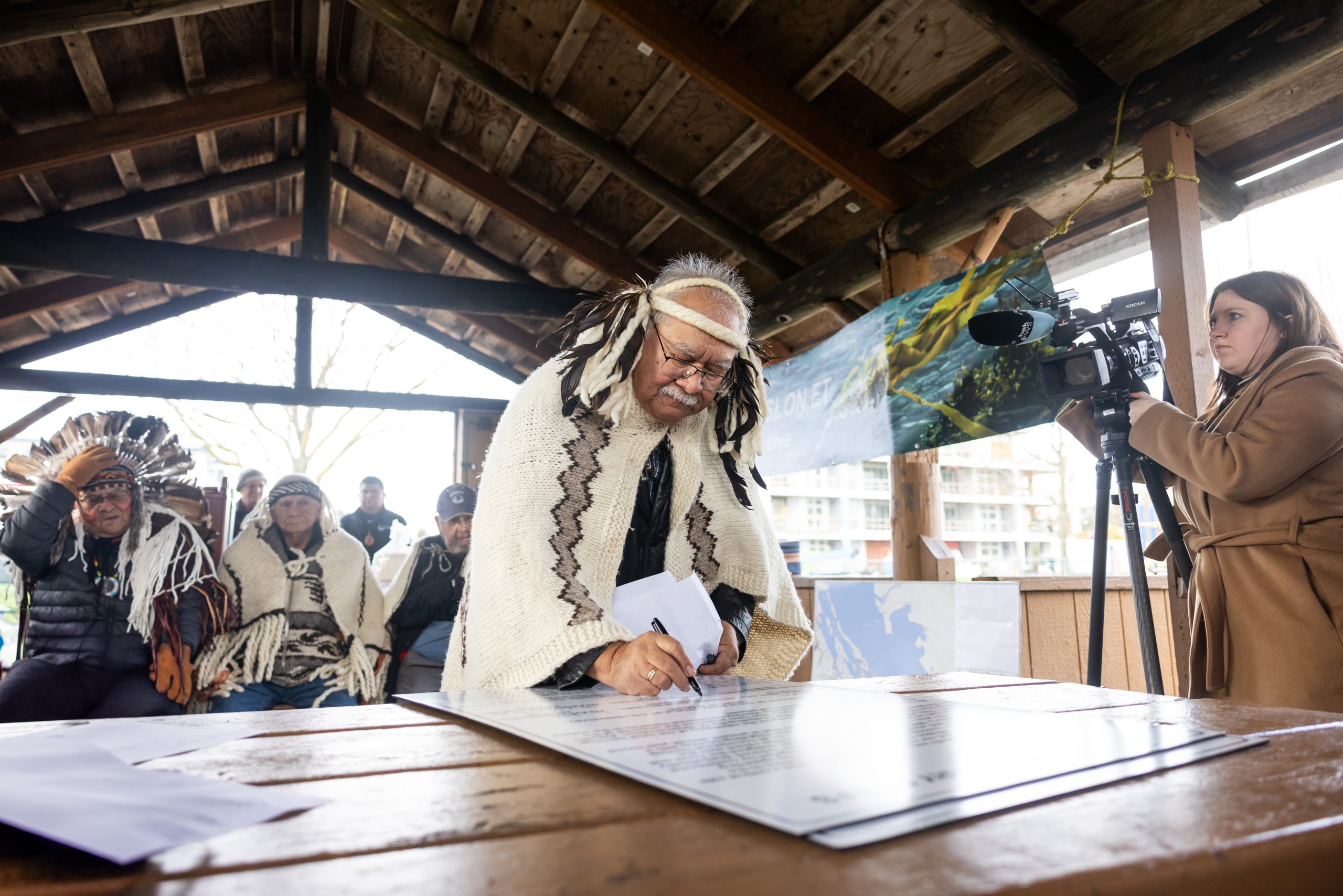
Chowdry recommends checking with the local First Nation or Department of Fisheries and Oceans before going to an active spawning location.
He said that if an area is seeing a high level of foot traffic on the beach, signs may be posted reminding people to take care as they watch the herring spawn and accompanying wildlife.
“I would say be careful, be gentle, think about how children are taught to be mindful when they’re at the beach now,” he said.
When he was a child, he would “throw stuff around, have a blast” but when his kids were in elementary school they learned to not be disruptive to the small crabs, clams and other life on the beach.
“If we can start with recognizing that, we’re bound to take better steps,” he said.
The Field Naturalists of Vancouver Island group on Facebook has a list of tips for people wanting to see the spawning.
It recommends staying off beaches covered in eggs, avoiding walking through eelgrass beds, keeping dogs leashed and out of spawning areas, and observing from above or on hard surfaces. It also suggests thinking carefully before sharing precise real-time locations publicly.
What did you think of this story?
Your feedback after we publish a story helps ensure we're always improving our reporting to better serve you
Author

Related Articles
Nanaimo Blues Festival brings international headliners and local talent to Maffeo Sutton Park
‘Blues is for everyone,’ says Nanaimo Blues Society president
What to do and where to go during extreme heat events in Nanaimo, the Comox Valley and the Cowichan Valley
A guide to prepare for extreme heat events on Vancouver Island
Snuneymuxw Days shares culture with Nanaimo community
Health and wellness event features sport, traditional games and a feast.