
Where Comox Valley MLA candidates stand on housing, harm reduction and watersheds
Four of seven candidates in Courtenay-Comox and Mid Island-Pacific Rim answered three questions from Discourse readers ahead of the Oct. 24 B.C. election.
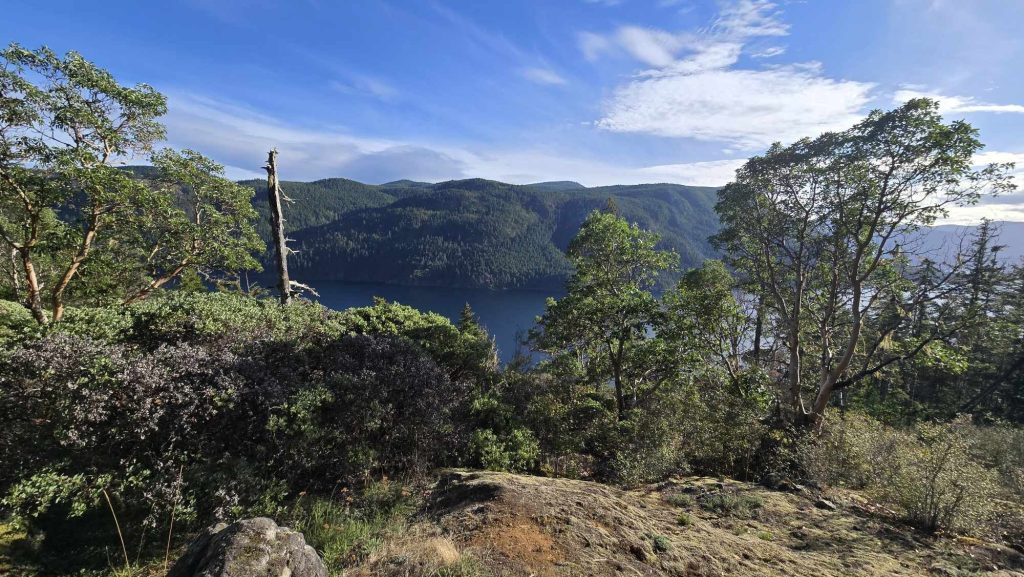
B.C. votes on Saturday, Oct. 24.
In September, The Discourse asked Comox Valley readers what they wanted to know from candidates in the local election, which took place on Oct. 17. Many of the issues raised are the province’s responsibility, so we turned three reader questions into a questionnaire for every MLA candidate in Courtenay-Comox and Mid Island-Pacific Rim. The candidates were asked to respond with a maximum of three sentences.
Comox Valley readers who answered The Discourse’s survey most often named the environment, reconciliation and housing as top issues. They asked for more supportive housing, harm reduction and protection for the watersheds that supply the Valley’s drinking water.
Four of the seven MLA candidates in the region answered by The Discourse’s deadline.
Candidate responses are grouped by riding and by question, with candidates in alphabetical order by last name. They appear as candidates sent them. Where a candidate makes a claim we could check, we’ve added a fact-check note. For candidates who didn’t respond, we’ve linked to their party’s platform and, where we could find it, what they’ve said on the issue elsewhere.
Not sure which riding you’re in? Look up your address with Elections BC’s Where to Vote tool, or see our Comox Valley guide to the 2026 B.C. election for candidate links, party platforms and how to vote.
Courtenay-Comox
Candidates: Will Cole-Hamilton, BC NDP; Jason Cook, CentreBC; Brennan Day, Conservative Party (incumbent); Jay Van Oostdam, BC Green Party.
1. What would you push BC Housing to fund here, and would you back those projects when neighbours oppose them?
Will Cole-Hamilton, BC NDP
Building affordable housing is one of my proudest accomplishments in local government as a Courtenay city councillor and chair of the Comox Valley Regional District, including building nearly 200 supportive housing units in Courtenay over the past four years, creating the Comox Valley Housing Authority [a regional district body approved in December 2025] to accelerate housing and recently celebrating the groundbreaking of supportive housing and shelter investments on Braidwood Road in Courtenay. I have experience bringing all levels of government together to maximize funding and working with people with different perspectives to find solutions. I’ll keep pushing for more affordable and supportive housing in the Comox Valley, and stand behind projects that meet our community’s needs.
Jason Cook, CentreBC
We will build 1,000 supportive homes by 2030/31 with on-site health care and conduct rules. Funding depends on operators publishing how many people stay housed, and neighbours get a contact line (CentreBC platform page 27).
Brennan Day, Conservative Party, incumbent
Editor’s Note: Day won the riding for the Conservatives in 2024. He left the Conservative caucus on Aug. 26, 2026 to sit as an independent, then rejoined the party on Sept. 22, the day the election was called. He is running as the Conservative candidate.
Day’s team contacted The Discourse before an Oct. 13 press conference but did not respond to the reader questionnaire.
“We believe supportive housing should provide stability for individuals with physical and mental health challenges. Public and nonprofit partnerships are essential, as seen with the We Can Shelter Society’s efforts to build affordable housing without government support. These partnerships offer a fiscally responsible way to address critical housing needs.” (The Discourse, Oct. 9, 2024)
See their campaign website and the Conservative Party of B.C.’s platform.
Jay Van Oostdam, BC Green Party
Van Oostdam’s campaign communications contact acknowledged receiving the questionnaire but did not file a response by the deadline.
Party position (BC Green Party): “Immediately restart the Community Housing Fund and Indigenous Housing Fund, with a goal of building and protecting 26,000 housing units per year.” (BC Greens 2026 platform)
Party position (BC Green Party): “Increase access to transitional and public housing projects, with wrap-around healthcare and harm reduction principles.” (BC Greens 2026 platform)
See their party profile and the BC Green Party’s platform.
2. How would you position harm reduction and involuntary care in our health-care system?
Will Cole-Hamilton, BC NDP
We need to use every tool available to save lives and support people struggling with addiction, including harm reduction, voluntary treatment and involuntary care when necessary. Since 2017, the BC NDP has built more than 860 new treatment beds and expanded access to naloxone. We’re also investing in youth mental health and addiction services through 35 Foundry centres across B.C., including the Comox Valley Foundry, which opened in 2022.
Jason Cook, CentreBC
Voluntary care comes first: 150 more detox beds and 500 more treatment beds by 2030 (CentreBC platform page 18). For people too ill to keep themselves safe, we will keep secure care with individual capacity assessments (page 18). We have not set out a separate position on harm reduction.
Brennan Day, Conservative Party, incumbent
Day did not respond by the deadline.
“People struggling with serious mental illness and addiction need timely access to treatment, while police, paramedics and other frontline responders need the staffing, resources and support to do their jobs safely and effectively. We cannot simply leave people in crisis on the street and expect first responders to carry the entire burden.” (Comox Valley Record candidate Q&A, Oct. 15)
See their campaign website and the Conservative Party of B.C.’s platform.
Jay Van Oostdam, BC Green Party
Van Oostdam did not respond by the deadline.
Party position (BC Green Party): “Enhance access to supervised consumption sites and overdose prevention sites. Ensure that they have the capacity for safe inhalation spaces to reduce harm and public drug use, and support public safety. Ensure these spaces are connection points for detox, recovery, housing, and other supports.” (BC Greens 2026 platform)
Party position (BC Green Party): “Act immediately to bring BC’s legislation into compliance with the Constitution, including strengthening protections around consent, capacity, involuntary treatment, and independent oversight.” (BC Greens 2026 platform)
See their party profile and the BC Green Party’s platform.
3. What would you do to protect local watersheds, including those where private forest companies own much of the land, and what role should K’ómoks First Nation have in those decisions?
Will Cole-Hamilton, BC NDP
I was proud to stand by the Puntledge River in Courtenay on Oct. 10 as the BC NDP committed to invest $30 million annually in watershed protection, protect 30 per cent of B.C.’s land by 2030 and to safeguard water from AI data centres with strict water efficiency standards. The K’ómoks First Nation is a partner in this work. As Chair of the Comox Valley Regional District, I have worked closely with K’ómoks First Nation on many issues and met with Chief and Council often, a practice I would continue provincially.
Jason Cook, CentreBC
We will double the Watershed Security Fund to $200 million (page 32). Our platform does not address private forest land watersheds or a role for K’ómoks First Nation specifically, and we would welcome the chance to discuss both.
Brennan Day, Conservative Party, incumbent
Day did not respond by the deadline.
“BC has an abundance of affordable clean energy, and we see this as an opportunity to grow the economy while reducing emissions. Our environmental approach focuses on responsible resource management and investing in modern infrastructure. We advocate for stricter enforcement of environmental regulations and better management of forestry in watersheds to protect our natural resources.” (The Discourse, Oct. 17, 2024)
See their campaign website and the Conservative Party of B.C.’s platform.
Jay Van Oostdam, BC Green Party
Van Oostdam did not respond by the deadline.
“Our watershed and our community are really struggling as the Comox glacier becomes a less dependable summer water source.” (Comox Valley Record candidate Q&A, Oct. 10)
“– I intend to reform forestry practices to increase the water retention in our watershed. The BC Greens reject the proposed “Working Forest Model” put forward by the NDP (AND previously by the Conservatives) and instead, we will focus on regional, area-based forest planning and setting sustainable harvest levels (no more clear cuts!)” (Comox Valley Record candidate Q&A, Oct. 10)
See their party profile and the BC Green Party’s platform.
Mid Island-Pacific Rim
Candidates: Joshua Dahling, Conservative Party; Gracie MacDonald, BC Green Party; Josie Osborne, BC NDP (incumbent).
1. What would you push BC Housing to fund here, and would you back those projects when neighbours oppose them?
Joshua Dahling, Conservative Party
Dahling did not respond by the deadline.
“Affordable housing, accessible healthcare, public safety and reliable transportation are equally important, especially in rural communities.” (Alberni Valley News candidate Q&A, Oct. 17)
See their campaign website and the Conservative Party of B.C.’s platform.
Gracie MacDonald, BC Green Party
BC Housing was already stretched to the brink when the NDP cut their funding entirely last year. This meant many projects in development, including one I was working on as part of the Denman Community Housing board, were cut completely mid-fundraising and planning. We would reinstate this housing money and increase it. We need non profit seniors’ and family housing, as well as supported housing for people transitioning from the street.
I back non profit housing despite NIMBY and I think involving and educating the community early helps to dispel fears.
Editor’s Note: BC Housing’s funding was not cut entirely. In its February 2026 budget, the province cancelled the July 2025 intake of BC Housing’s Community Housing Fund and paused future intakes. Housing groups say that stalled close to 4,000 planned affordable homes.
Josie Osborne, BC NDP, incumbent
My immediate priorities include advancing shovel-ready affordable housing projects on Denman Island and in Cumberland, which would build on recent successes on Hornby Island, in Bowser and elsewhere across Mid Island–Pacific Rim — I’ve pushed previous housing ministers to recognize the unique challenges of building affordable housing in rural communities, and will continue to do so. I’m also deeply committed to expanding transition and second-stage housing for women and children fleeing violence, as well as supportive housing that provides people with both a stable home and the services they need.
And yes, I’ll stand behind housing projects even when there’s opposition — I have a track record of doing exactly that as mayor of Tofino, where we built 96 affordable homes across two sites — but that comes with my commitment to always work collaboratively, to listen to neighbours, address legitimate concerns and work together to make projects successful.
Editor’s Note: The most recent Community Housing Fund applications from Cumberland and Denman Island were rejected when the province cancelled the fund’s July 2025 intake in its February 2026 budget.
Osborne’s response exceeded The Discourse’s three sentence limit, so it has been edited for length while maintaining the integrity of the response.
2. How would you position harm reduction and involuntary care in our health-care system?
Joshua Dahling, Conservative Party
Dahling did not respond by the deadline.
“I would also advocate for expanded psychiatric care, treatment on demand, residential addiction treatment, dry housing, crisis response, and compassionate intervention for individuals experiencing severe addiction or mental health struggles – including appropriate amendments to the Mental Health Act.” (Alberni Valley News candidate Q&A, Oct. 17)
See their campaign website and the Conservative Party of B.C.’s platform.
Gracie MacDonald, BC Green Party
I am a strong supporter of harm reduction when it’s part of a four pillars approach (prevention, treatment, harm reduction and enforcement) and I would work on dispelling all the misinformation about harm reduction. Frankly, we can’t help someone recover if they are dead. I am not in favour of involuntary care, because there is little evidence that it works — we will increase funding for mental health and addictions care, so that voluntary beds are available.
Josie Osborne, BC NDP, incumbent
Harm reduction – a practical approach to supporting people who use substances by reducing the dangers and health risks associated with substance use – is an essential part of a comprehensive continuum of mental health and addictions care, alongside prevention, early intervention, treatment, recovery and long-term supports but harm reduction is not a substitute for treatment and recovery, and we shouldn’t be treating these approaches as competing priorities.
Involuntary care – a legal and medical process where a person is admitted to a health-care facility and treated without their consent – has an important, but very specific, role in our health-care system. While B.C. already has more than 2,000 mental health beds that can accommodate involuntary patients, we need more specialized capacity for a small but growing population of people with extremely complex needs, often involving a combination of acquired brain injury, severe mental illness and substance use disorder. These individuals may be unable to recognize or seek the care they need and can be at serious risk of harm, and they have been the focus of the work the BC NDP government has begun expanding specialized care through initiatives at Surrey Pretrial Services Centre and community-based facilities like Spiritwood Homes [in Maple Ridge].
The recent B.C. Supreme Court decision [in July 2026, striking down the act’s “deemed consent” rule] underscores the need to modernize the Mental Health Act, particularly around consent to treatment, and our government has committed to doing so.
Editor’s note: Osborne’s response exceeded The Discourse’s three sentence limit, so it has been edited for length while maintaining the integrity of the response.
3. What would you do to protect local watersheds, including those where private forest companies own much of the land, and what role should K’ómoks First Nation have in those decisions?
Joshua Dahling, Conservative Party
Dahling did not respond by the deadline.
Party position (Conservative Party): “We will invest in wildfire prevention, early detection and community protection, improve readiness for floods and drought, and support responsible stewardship of forests, wildlife and watersheds.” (BC Conservatives platform)
Party position (Conservative Party): “Strong relationships with First Nations are also essential to our economic future. We will honour constitutional rights and respect the duty to consult and accommodate where required.” (BC Conservatives platform)
See their campaign website and the Conservative Party of B.C.’s platform.
Gracie MacDonald, BC Green Party
We need to negotiate with the forestry companies to protect our watersheds, and to involve KFN in these negotiations. Compensation can be financial, or land swaps. At the same time we need to enforce, and be clear that we will enforce, existing laws that protect our water.
Josie Osborne, BC NDP, incumbent
Having served almost eight years as mayor of Tofino, I understand firsthand the responsibility local governments have to provide safe, reliable drinking water while keeping costs affordable for taxpayers. Protecting water at its source isn’t just good environmental policy, it’s sound financial management.
I’m proud our government established the $100-million Watershed Security Fund, working with First Nations to support watershed restoration, protection and community- led stewardship [and] we are committed to building on that investment with $30M annually and strengthening collaborative watershed planning and decision-making, bringing First Nations, local governments, farmers, private landowners and other water users together to balance drinking water, ecological and agricultural needs.
I also support strengthening the Private Managed Forest Land Act to better protect drinking water, fish habitat and ecological values — local governments have proposed practical solutions through UBCM, including stronger oversight, watershed risk assessments and provincial support for strategic land acquisition where harvesting threatens water supplies.
Komoks First Nation [K’ómoks] must be a full partner in these decisions from the outset, with its rights, title, knowledge and stewardship responsibilities respected and reflected in shared decision-making.
Editor’s note: Osborne’s response exceeded The Discourse’s three sentence limit, so it has been edited for length while maintaining the integrity of the response.
What did you think of this story?
Your feedback after we publish a story helps ensure we're always improving our reporting to better serve you
Authors

Related Articles
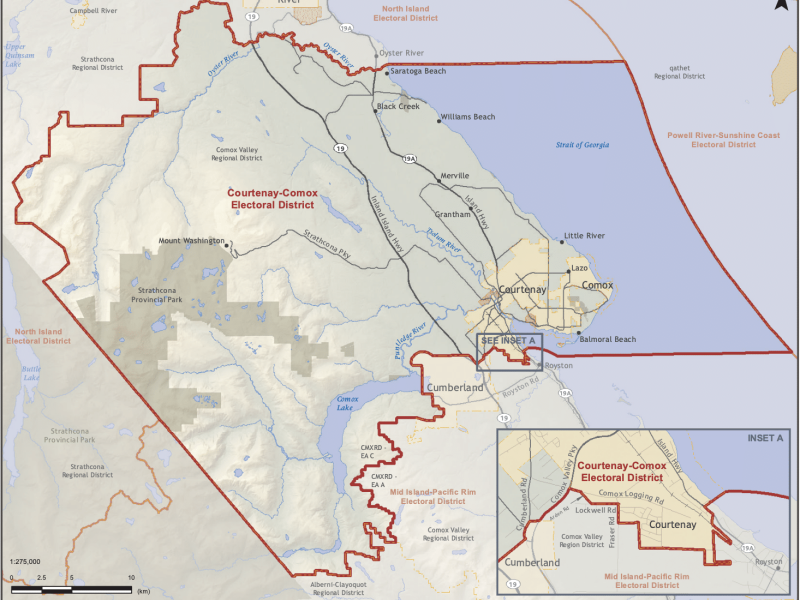
Comox Valley’s guide to the 2026 B.C. election
What riding am I in? Who are the candidates? When do I vote? The B.C. election basics for Comox Valley voters.
Courtenay mayoral candidates on water conservation strategies amid worsening drought conditions
For the second time this year, Courtenay residents see Level 3 water restrictions, days before the Oct. 17 municipal election.
Comox Valley local candidates on housing affordability
Candidates in Courtenay, Comox and Cumberland share how they’d support housing affordability and increase the supply of affordable housing.