
Courtenay mayoral candidates on water conservation strategies amid worsening drought conditions
For the second time this year, Courtenay residents see Level 3 water restrictions, days before the Oct. 17 municipal election.
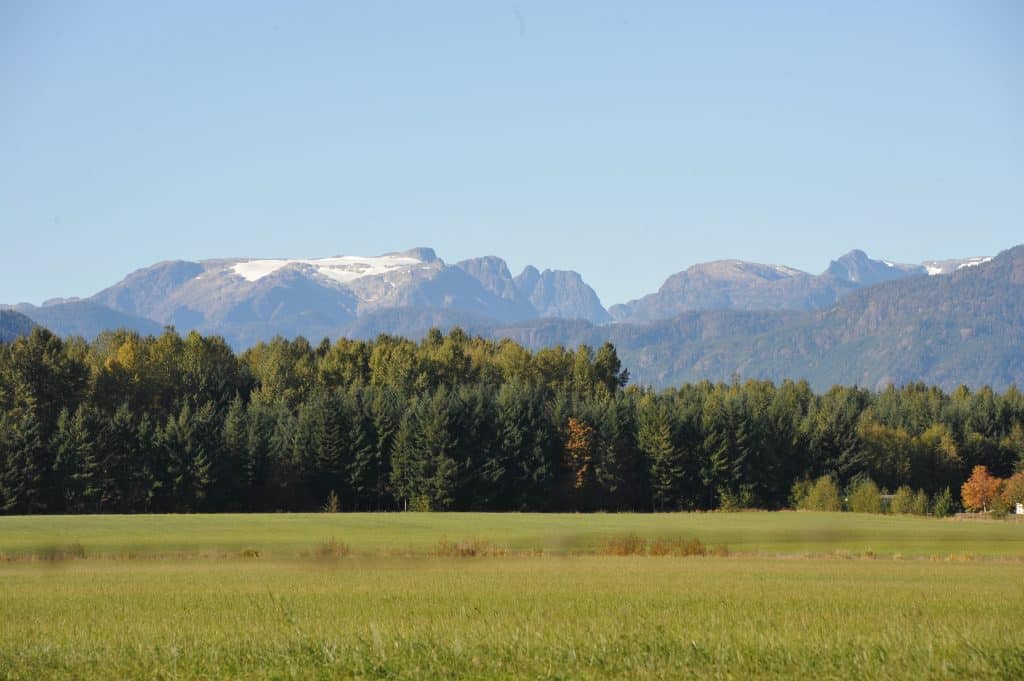
The Comox Glacier, which feeds into Comox Lake and the City of Courtenay’s drinking water, has shrunken noticeably in recent years. <b> Photo by Dave Flawse/The Discourse </b>
Two mayoral candidates for the City of Courtenay, Bob Wells (incumbent) and Manno Theos, disagree on how to conserve water in the city.
(The third 2026 candidate, Trish McPhail, did not respond before the publication deadline. Read their platform on their campaign website.)
A record low snowpack and an ongoing drought coupled with continued water restrictions has brought water conservation top of mind for voters in the Oct. 17 local election.
On Oct. 7, the Comox Valley Regional District — the City of Courtenay’s water supplier — said it’s placing Level 3 water restrictions back on for the second time this year.
Level 3 means no lawn watering or washing vehicles at any time. It limits garden watering to handheld containers, handheld hoses with automatic shut offs and “micro-irrigation/drip-irrigation systems.”
Before a brief pause in September, the regional district had implemented Level 3 water restrictions back in June, making it the earliest date to see this step in its history, according to a press release.
The regional district cited drought and “lower-than-normal snowpack and precipitation” as the cause.
This summer, the regional district also overhauled its water conservation bylaw “in response to the frequency and severity of drought conditions,” implementing a new Stage 5 designation for water system emergencies and introducing Stage 4 for “extended periods of severe drought conditions,” according to a press release.
The City of Courtenay has long been committed to water conservation, laying out details in its 2019 master plan to reduce non-agricultural per capita water consumption by 50 per cent by 2050 (from 2008 levels).
The Discourse spoke with two of three 2026 mayoral candidates to hear their strategies to achieving the goals set out in the 2019 master plan.
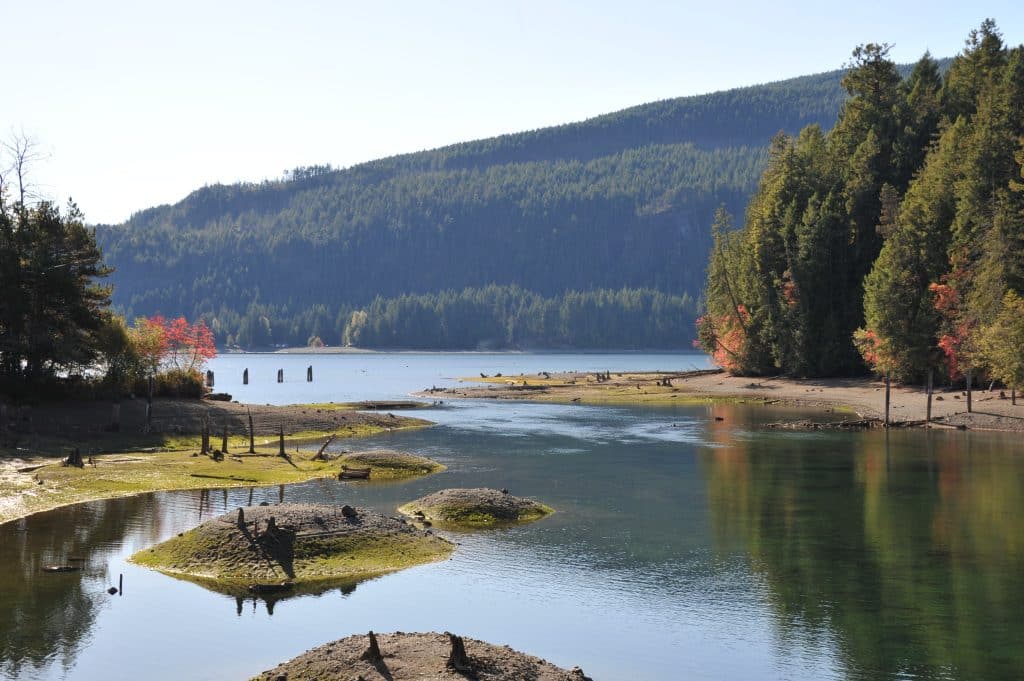
City of Courtenay the largest water consumer
According to a City of Courtenay report, the municipality is the regional district’s largest water consumer.
Single residential homes are the highest users “with peak summer usage nearly doubling winter base demand,” the report reads.
And demand is outpacing population growth. Between 2015 and 2023, summer use “rose 59 per cent (582 to 928 litres per person, per day) despite the city’s population growing by only 25 per cent during this same period.”
According to the report, the increase comes from “substantial behavioural and irrigation-driven components in consumption.”
Or, put more simply, “The number one reason why water usage goes up in the summer is watering lawns,” mayoral candidate and incumbent Bob Wells explains.
Water conservation solution voted in by Courtenay’s current mayor and council
Earlier this year, Wells and Courtenay’s city council approved a phased residential water metering program, which will allow the city to bill users for the exact amount of water they use.
The city currently relies on flat-rate billing for nearly all its residential water use. This type of billing is cost effective to administer and requires no extra infrastructure.
But under this system, residents have little incentive to reduce water consumption or find hidden leaks around homes, “many of which can persist for long periods,” the city report said.
The report projected a 36 per cent reduction in water consumption once the program is fully implemented.
At a cost of $29 million, however, it’s a hefty price tag.
In defence of the expenditure, Wells said, “it’s likely going to save $1 million a year just on water savings,” adding that the cost of water is likely to increase, “so that number is going to escalate.”
“Yes, there’s a cost, but the savings will actually be something that offsets that cost a lot more significantly than I think people think.”
“The cost of water meters was estimated to be upwards of $16 million [in 2015],” said Wells, who is now running in his third election as mayor and previously served as a councillor.
“Unfortunately, I was convinced at the time, rather than doing water meters, to try to get people educated.”
Wells said education and water restrictions aren’t enough to reduce consumption, explaining that they do help but, “when we look at summertime usage, it does seem to be going up per capita.”
Mayoral candidate Manno Theos looks to increasing supply
To ensure the city has enough drinking water in the future, mayoral candidate Manno Theos said he would look into increasing the city’s water supply through water catchment, building another dam and desalinization methods, he said in an interview with the Discourse.
While Theos could not say whether desalinization — removing the salt from sea water, thereby making it safe to drink — is more cost effective compared to water metering, he said, “These are solutions that you have to look at with a bigger picture in mind. So at the moment, it’s an expensive venture worth looking at,” adding, “I’m not saying we’re going to commit, of course.”
Theos, who has been elected to Courtenay city council six times, cited education and incentives as another strategy, saying he’d support funding for “low-flow shower heads or Rain Bird systems or even low-flush toilets,” as opposed to “an expensive infrastructure project like water metering that’s going to put us further and further into debt.”
But those measures would not address hidden leaks. For that, Theos suggested using technologies such as infrared leak detection.
As to how the technology works or how it would be implemented across the city, Theos admitted that he doesn’t know all those details.
“I just know it’s available.”
Climate change reduces water availability
According to a recent Canadian Climate Institute fact sheet, climate-driven “snow drought” puts water supplies at risk for municipalities that rely on snow melt to feed reservoirs.
To help reduce the impacts of climate change, Bob Wells said the city is using climate change as a lens to guide decisions, such as purchasing vehicles and heating or cooling buildings.
“That’s where things like electrification make sense,” Wells said, adding that the city has taken steps to reduce its carbon footprint.
“We have the largest electric garbage fleet in North America,” Wells noted.
In 2024, Emterra Environmental announced that it launched the largest fleet of Mack LR electric trucks in North America. The trucks are for collecting recyclables, waste and organics and services the City of Courtenay and Town of Comox, according to a news release.
When asked what he would do to help the city reduce its carbon use, Manno Theos said he thinks the city has already taken the required steps.
“And I don’t think that me as a layman that is not carrying the degree in this type of work is going to be able to solve the issue,” he said, adding that he’ll work with staff and “the people that are experts in the field” on the issue.
What did you think of this story?
Your feedback after we publish a story helps ensure we're always improving our reporting to better serve you
Related Articles
Comox Valley local candidates on housing affordability
Candidates in Courtenay, Comox and Cumberland share how they’d support housing affordability and increase the supply of affordable housing.

Comox Valley candidates on supportive housing, second-stage housing and warming centres
Candidates in Courtenay, Comox and Cumberland share how they’d support adding supportive housing beds, second-stage housing and warming centres.
How would Comox Valley local candidates move toward reconciliation?
Candidates in Courtenay, Comox and Cumberland share which of the TRC’s 94 Calls to Action they’d address locally, and how.