
Comox Valley candidates talk education at local forum
Comox Valley’s provincial election candidates gathered at Vanier Secondary School on to answer questions about education funding, mental health, SOGI 123 and more.
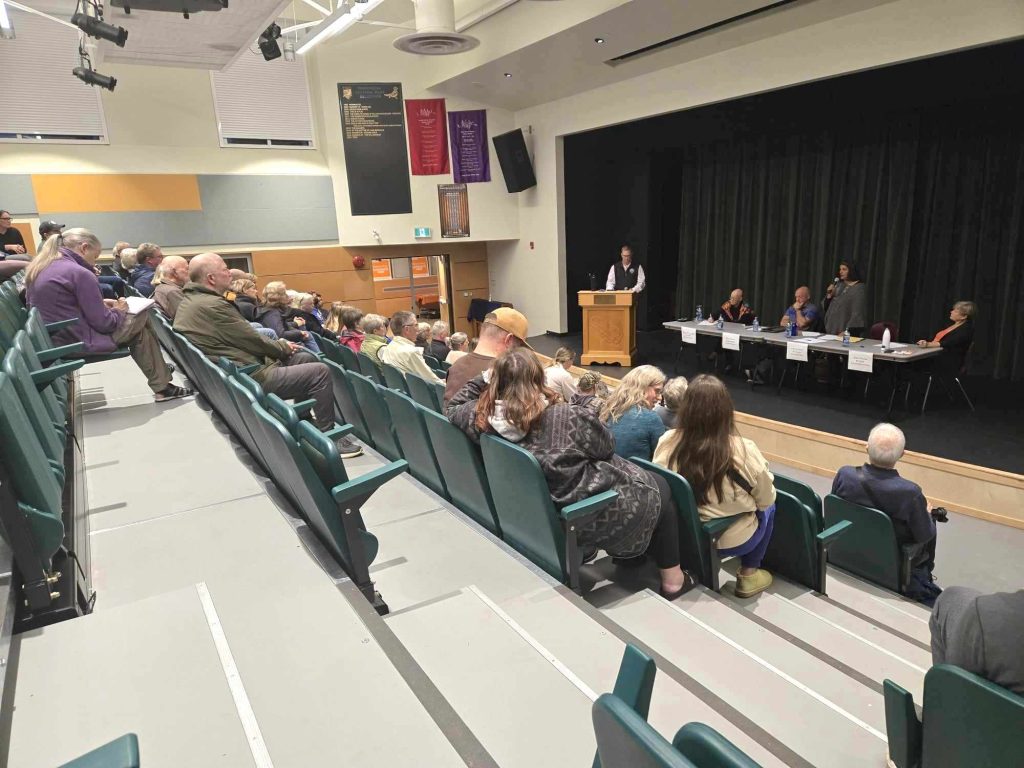
On Oct. 2, Courtenay-Comox and Mid Island-Pacific Rim provincial election candidates attended Vanier Secondary School for an all-candidates forum on education.
In attendance for Courtenay-Comox was BC Green Party candidate Arzeena Hamir, BC NDP candidate (and incumbent MLA) Ronna-Rae Leonard and Independent candidate John Hedican.
Candidates discussed Indigenous education, SOGI 123, funding for programs and more classroom space, budgets, youth mental health and school food programs.
Conservative candidate Brennan Day was not present but answered questions via phone call.
BC NDP’s Josie Osborne (incumbent) was the only candidate from the Mid Island-Pacific Rim riding in attendance.
Questions included those emailed in from parents and community members, as well as the three groups who hosted the forum — District Parent Advisory Council, the Comox District Teachers Association and the Canadian Union of Public Employees Local 439.
They ranged from more in-depth questions with preambles — such as discussing how school districts are facing rapid enrollment and forced to use operating funds to purchase portables — to short, closed-ended emailed questions, such as, “do you believe that parent’s rights are being eroded?”
Candidates share support for UNDRIP and Indigenous education
To start off the forum, the candidates were asked about the inclusion of Indigenous perspectives in education. Both Hamir and Leonard underlined the importance of implementing UNDRIP, and Osborne echoed this and stated that she is grateful for the increased inclusion of Indigenous education in schools, because she did not get the opportunity to learn about it as a child. Hedican also shared his support for UNDRIP and Indigenous education.
Day said it is important to understand Indigenous perspectives and histories and that schools are “making sure we’re examining those histories to the context of the modern times we live in.” He added that encouraging both education and economic activity for Indigenous people will help achieve “true reconciliation.”
Hamir underlined the importance of supporting nations to make decisions about education in their own territories.

‘This is supporting our kids to be who they are’
Next, candidates were asked whether they would support programs that educate students about sexual orientation and gender identity — referred to as SOGI 123 or just SOGI — and other anti-discriminatory education.
Osborne shared her “unequivocal support for the [SOGI 123 guidelines].” She added that there is a lot of controversy about it, and added a reminder that the “guides are there for teachers and staff in schools to help create those safe environments for kids.”
“This is a human rights issue. This is not activism, this is not indoctrination. This is supporting our kids to be who they are,” Osborne said.
Day said “inclusivity in schools is absolutely critical, but the issue is taking us away from the real concerns that I’ve been hearing at the door.”
He said the topic is “too polarizing at so many levels. When I speak to parents and teachers at the door, I constantly hear concerns about overcrowding classrooms and declining outcomes, and I don’t hear about SOGI very much.”
“These lightning rod issues just distract us from the work that really needs to be done and ensuring our kids are getting proper education,” Day said.
Answering right after Day, Leonard responded, “The fact is that it has been so bad out there that as a government, we’ve had to introduce legislation to create a safe zone in schools to protect students, parents and teachers.”
“This is not an issue that is debatable, as Josie said, this is a question of human rights,” Leonard continued.
“There’s all kinds of weird conspiracy theories out there around coercion to try and change children and fear mongering, and it’s just not true, and it is a fact that people have the right to be who they are, no matter what that is, and if we don’t support kids as they’re growing up, we’re not going to be able to have a very good society in the future.”
Hamir said that she too would like to unequivocally show her support for SOGI 123.
“Feeling safe at school is not a distraction. I’m incredibly offended by Mr. Day’s last comment. How do you learn at school if you do not feel safe to be your true self?”
“[SOGI 123] is anti-bullying legislation. It is anti-suicide legislation. It is supporting all of us,” Hamir said.
She added that she would like to see an addition of more anti-racism education in schools, along with SOGI 123.
“We are seeing more and more racist incidents here in the Comox Valley. I think we have a lot to learn from our SOGI curriculum, and we need to now expand that, bring in partners like our immigrant welcome centers, so that we get better supports for racialized individuals in our community.”
Clarrification
Hamir refers to SOGI as curriculum. SOGI 123 is not part of the B.C. curriculum but can be used to inform policies and procedures, learning environments and more. Educators determine which resources are age appropriate for their classes and can use teaching resources to help guide lesson plans. Read more about how SOGI 123 can show up in schools in this story from The Discourse.
Hedican said he is also supportive of SOGI 123.
“It’s hard to believe that we actually have to have this question asked to us, because it’s just [the] reality and needs to be acknowledged and supported. And I can’t add much more than my three colleagues here … but I would seek out the educators, and I would seek out the students to ask them what they need in order to provide a safe space.”

Are parents’ rights being eroded?
Nearly all of the candidates agreed on the answer to the next question, except for Day.
The question, which was emailed in, asked if candidates believed parents’ rights concerning their children’s education are being eroded. It was Day’s turn to answer first.
“Parents play a critical role in education and it’s important that they feel informed and involved at school. I know it’s a challenge for people that are working a lot or not able to get to school,” he said.
“I think it’s important that clear lines of communications with teachers and support staff are there, and we have to make sure whether it’s the curriculum or classroom activities that we keep parents in the loop about what’s going on so that the child can grow effectively. It’s about fostering a partnership between parents and teachers.”
This answer received some chuckles and commentary from the crowd.
Leonard asked if a one-word answer to the question was appropriate. Given the OK, she answered “no,” and sat back down.
Hamir echoed with “Unequivocally, no. I just want to point out that that question was a dog whistle … Anti SOGI sentiments [that] I do not support,” she said.
Independent candidate John Hedican said, “I hear a lot of conversations between my wife and my daughter, and that subject never comes up.”
“At the risk of being repetitive, I’ll also offer the answer: No,” Osborne said.

Candidates agree that funding for portables should not come out of school operating budgets
After the audience died down a little, the questions moved on to the topic of funding. How will candidates address the funding challenges that result from the use of portables to accommodate rapid growth? How can they ensure that growing districts are not forced to divert critical resources to temporary solutions?
Leonard answered first, pointing to her opening remarks which discussed the addition of 270 seats at Aspen Park Elementary announced earlier in 2024, as well as the increased seats at Cumberland Elementary that Osborne discussed.
“Those are rapid. It’s a quick build of modular housing, and it is capital that is on the back of the province, rather than being pulled out of the operating budgets that portables have.”
Leonard closed her response by touching on how it’s a challenge to catch up to the deficit that was already in place when the BC NDP government came into power.
“I understand that there is a desire to relook at the way that capital funding happens. And that’s important for us to examine as well,” she added.
Hamir brought up how the current government is funding private schools, and added that the money could be used “to increase the operating budgets of schools so that they aren’t having to sacrifice space versus teacher time and education assistant time.”
“I have nothing against people and parents who choose to put their children in private education. I think all parents deserve choices of where they want to send their children, but those choices should not be extracting from the public school system.”
Hedican — the Independent candidate who is running with a platform that highlights awareness of the toxic drug crisis — proposed that money generated from a legalized drug system could help fund public schools. He pointed to the money spent on the B.C. special forces unit, composed of RCMP officers across the province to combat drugs and gangs
Fact check
A 2013 fact sheet from the provincial government says the province puts $22 million a year into its anti-gang strategy, involving action from RCMP officers in The Combined Forces Special Enforcement Unit of British Columbia (CFSEU-BC), which operates in major cities throughout the province, including Victoria.
In recent years, multiple initiatives have taken place to fund the special forces. In 2022, B.C. also announced that it will be investing in $230 million over three years to invest in specialized and rural police services, which includes expanding specialized units for crime.
“What is that amount and what has it changed in our communities? It’s changed nothing.”
He argued that if drugs were legalized — like cannabis and alcohol already are — vast amounts of money could be put into the Ministry of Education and Child Care.
Osborne said she is sympathetic to school districts.
“I know just how difficult it is to carry a budget forward every year that needs to be balanced and not have the ability to take a deficit.”
She echoed Leonard’s statements on the difficulty of “crawling out of a deficit,” and said that it’s going to take time.
“There are only so many [tradespeople] out there right now that are building hospitals and bridges and schools and housing, and so we need to make the best use of these resources, increasing those skilled trades out there, recruiting more people into that industry, so that we can continue to tackle this problem.,” Osborne said.
“We need safe schools. We need seismically sound schools. We need climate friendly schools as well.”
Day said the preference for solving this issue would ideally “go towards brick and mortar and pre-planning,” but that the issue is difficult because the community is catching up with population growth.
“We absolutely have to make sure we’re pre-planning for those portables, and they should absolutely not be part of the operational budget. Those should be capital expenditures that are baked in based on student enrollment,” Day said.
“Across the board, we have to look at the funding models in education to make sure that they’re equitable, especially in districts that are under higher enrollment pressure.”

Candidates address need for mental health support for students
Next, candidates were asked what their party’s plan is to support youth and their families who require timely access to services for issues related to mental health, and how schools can play a part in addressing some of these issues.
Hamir highlighted some of what was in the BC Greens’ platform.
“We want mental health services covered by MSP so that every person has access to at least six visits to psychologists [and] not having to [pay] out of pocket,” Hamir said. “We want to add mental health to the 911 services, so that if you’re asking for 911 you can ask for fire, ambulance, police [and] mental health as well.”
Hamir added that the Greens also want every school to have a full-time, paid psychologist or counsellor, and that students also need more support with dealing with climate-related anxiety .
“I think parties who really support true climate action, support mental health.”

Hedican stuck to his messaging around the toxic drug crisis, and said that the support of legalization is a solution.
“By allowing organized crime to supply drugs that become more toxic by the day, that only adds to the mental health struggles that people have. We’re not acknowledging, nor are we addressing, that organized crime is going to continue to fill that need.”
Hedican said legalization would help remove toxic drugs from the streets, and acknowledged that people will always suffer with mental health issues and continue to try and relieve the pain from them through drugs and alcohol.
“We need to acknowledge that toxic drugs are playing a huge, huge role in our mental health issues today. And until we do that, we’re not addressing the whole situation in reality,” he said.
Osborne pointed to the action that the BC NDP has already taken locally. She pointed to programs, such as the Foundry, where kids and teens can go to discuss mental health, physical health and sexual health. She also pointed to the Integrated Child and Youth team in the Comox Valley and the work that they’re doing with children.
Day said he knows there is a shortage of counsellors in certain schools, and that positions are underfunded. He also pointed to his work in mental health as the current executive director of Eureka Support Society — a care centre for adults with mental health issues. He said early intervention is crucial for youth to get the support they need, as well as providing early supports.
“That could be as simple as counseling, it could also be more rehabilitative programming for kids that are struggling. I know isolation and social media has become a huge issue with youth, so I think those types of programming — much like we do down at Eureka Support Society — to allow people to address those problems early and get the support, sort of on demand, is critical.”
Leonard pointed to the NDP’s creation of a Ministry for Mental Health and Addictions.
“It took a lot of time for us to create the integrated children and youth teams, to work with school districts, through the Ministry of Education, through [the] Ministry of Children and Family Development (MCFD), through [the Ministry of] Mental Health and Addictions, to try and piece together all of the parts that make a whole.”

BC Green Party candidate calls for food program that serves all students
Candidates were then asked if they support a universal food program. If so, how would they implement it?
Hedican shared a brief answer saying that he supports a universal food program “100 per cent.” Osborne and Leonard both pointed to the impact they have already seen from lunch programs.
“I’m so supportive of school food programs,” Osborne said.
“I … want to speak a little bit more personally of my home in Tofino where I have seen the impact of school programs, breakfast programs, lunch programs, on kids … and knowing that almost 90 per cent of schools in B.C. now have established food programs. There’s more to do, and the funding needs to be ensured so that it’s secured and the program can last.”

Leonard pointed to initiatives already in place, such as Feeding Futures.
“I’m very proud of the school district for the work that they’ve done with the Feeding Futures money, creating a good survey to see where need is with what we provided in that program,” Leonard said.
“We are also the first province in Canada to provide that kind of a school food program to feed 20 per cent of the children in this province. Because of that, now we are seeing the federal government taking up the baton and saying, ‘yes, we’re going to fund universal programs.’”
Day said school food programs “can make a huge difference for kids, but the larger issue has to be around the cost of living as a whole, and the pressure that’s putting on families.”
He acknowledged school food programs are “essential in making sure that every child has the nutrition and the needs met so that they can focus and succeed in the classroom.”
“We need to address affordability head on, ensuring that families have the support they need, not just in schools, but also in their day to day lives,” Day said.
Hamir said she not only believes in a universal school food program, but pointed out how she started one 13 years ago at Huband Park Elementary. She added that she wants to see more than 20 per cent of children having access to a school food program.
“Why have we only seen 20 per cent of children being targeted?” she said.
“Universal social programs mean that there is no stigmatization, and that should have been in place from the very beginning … The BC Greens are the only party in their platform that has costed and is putting forward the universal school food program as a major part of its platform.”
Hamir also called for more community partnerships so food can be prepared and produced efficiently with local, healthy ingredients.
What did you think of this story?
Your feedback after we publish a story helps ensure we're always improving our reporting to better serve you
Author

Related Articles
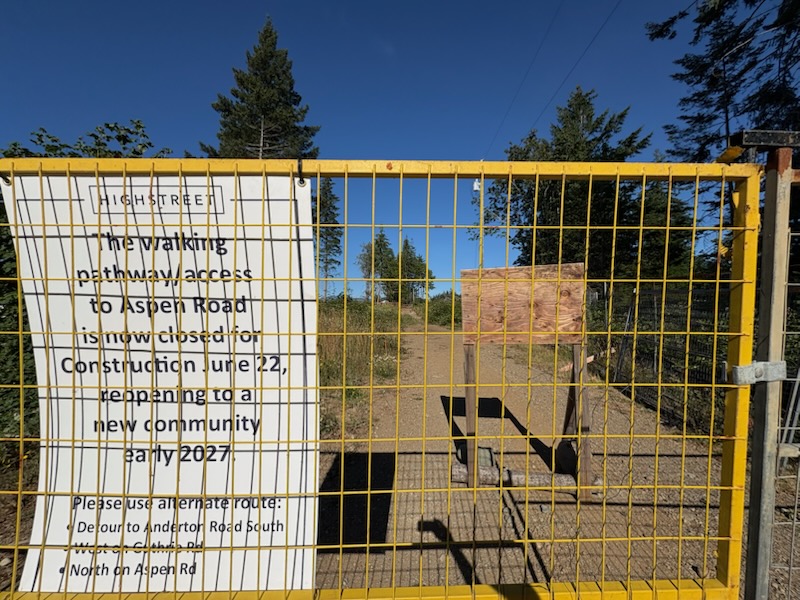
Residents upset with Aspen Road development in Comox
Comox councillor says housing development should be balanced with community compassion
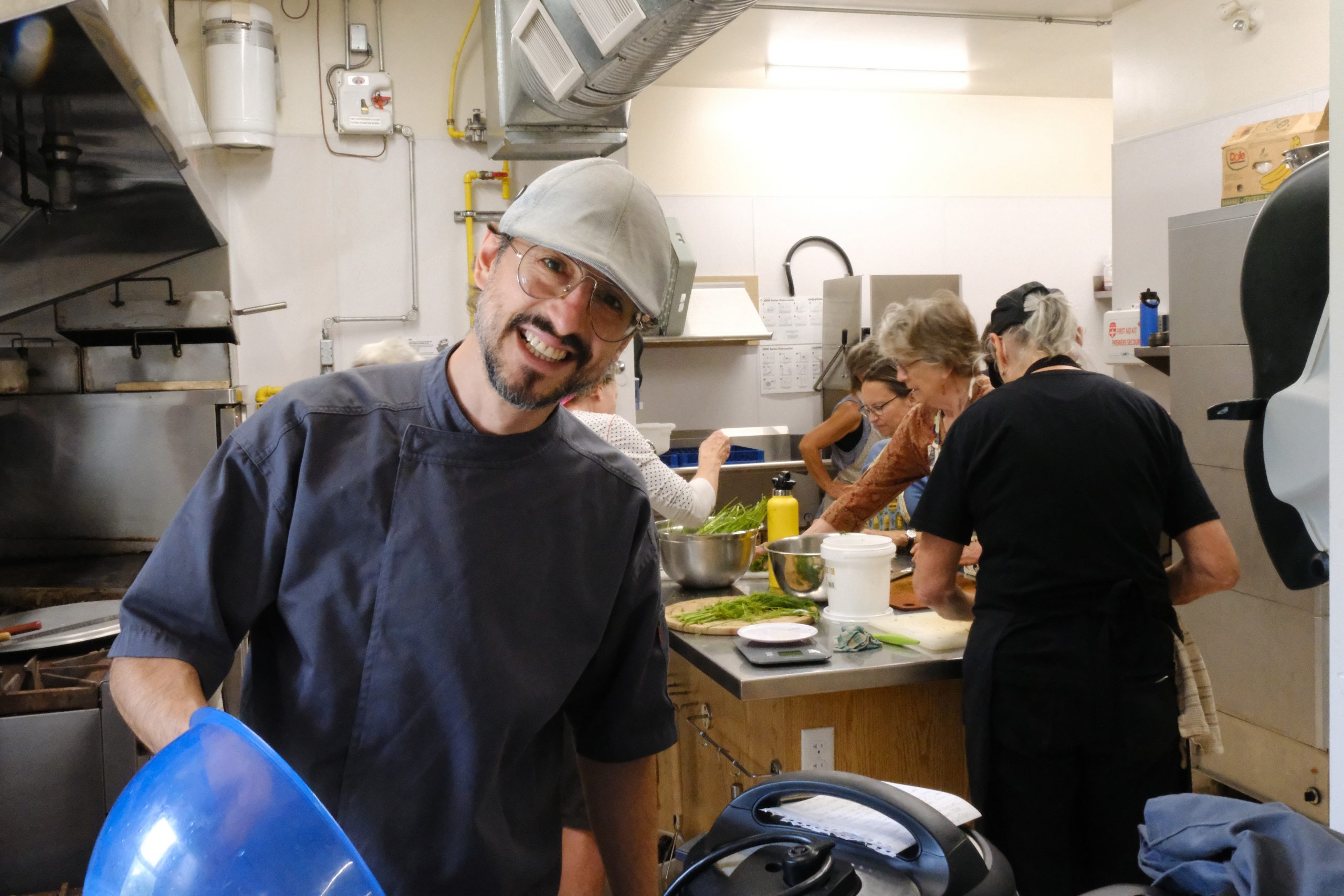
Q&A: Palestinian chef brings traditional cooking and food history to Vancouver Island
Izzeldin Bukhari speaks on the origin of falafel, Gaza’s rummaniyeh and why he sees food as a way to hold on to a culture under threat.
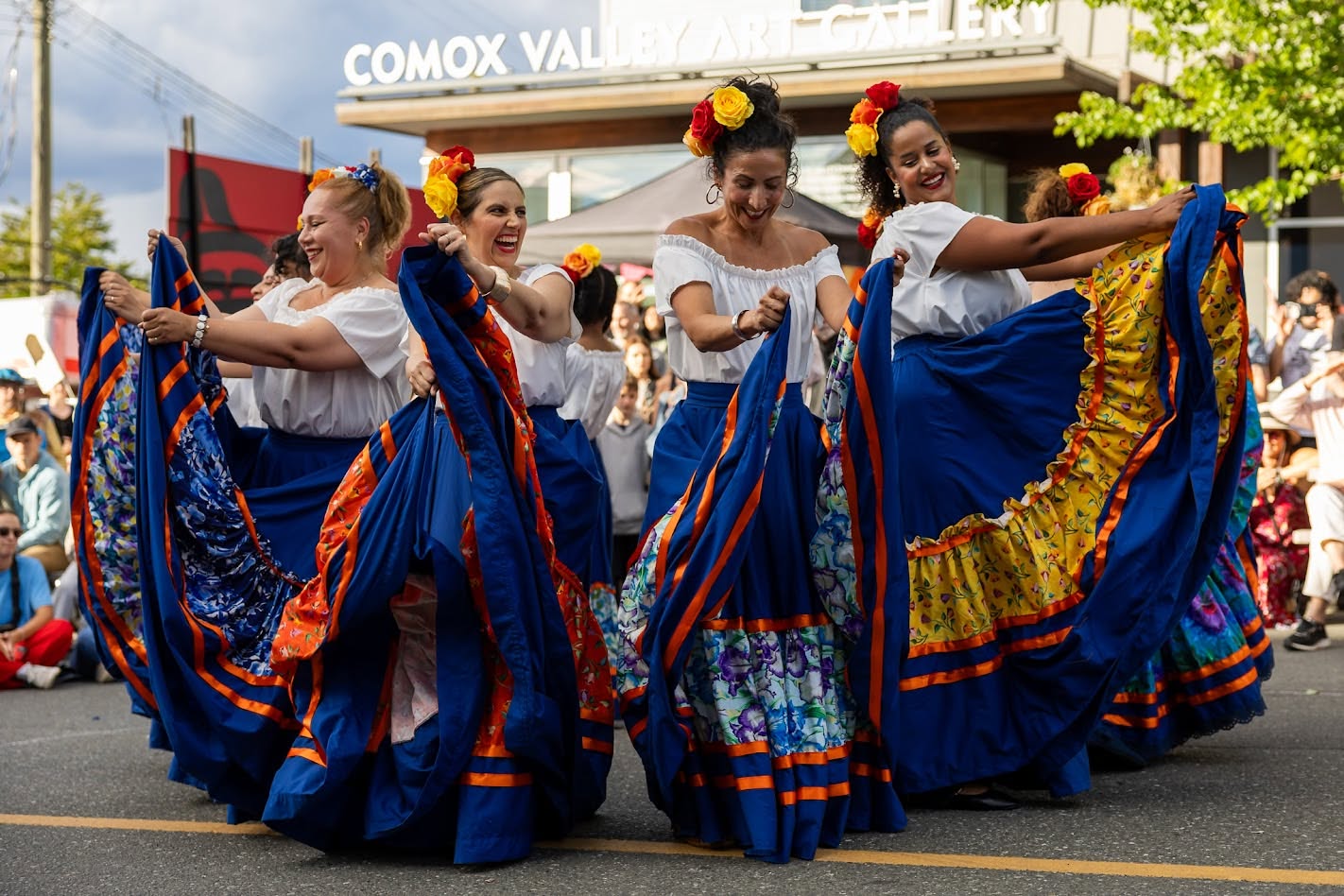
Pulse on the Plaza jumpstarts the heartbeat of Courtenay’s downtown
Fusion of cultures the ‘secret sauce’ of the festival series’ success, Comox Valley Arts director says.