
DRIPA debated in B.C. election on Vancouver Island
The Conservative party of B.C. is promising to repeal the Declaration on the Rights of Indigenous Peoples Act (DRIPA), while other parties argue that would set back relations with First Nations and create economic uncertainty.

Indigenous rights have become a contentious issue in the B.C. election with the Conservative Party of B.C. promising to repeal a law it says undermines private property rights and allows international declarations to trump provincial law.
In 2019, the NDP government of B.C. passed the Declaration on the Rights of Indigenous Peoples Act, or DRIPA, as the province’s “framework for reconciliation as called for by the Truth And Reconciliation Commission’s Calls to Action.”
In 2021, legislation in B.C. was amended by then Attorney General David Eby to include a clause that read “Every Act and regulation must be construed as being consistent with the Declaration.”
In the past year, the legislation has become a political hot-potato after a ruling by the BC Court of Appeal on mineral rights on Gitxaala Nation territory found that B.C.’s Mineral Tenure Act was inconsistent with DRIPA and the United Nations Declaration on the Rights of Indigenous Peoples.
As of spring 2026, the B.C. NDP government is appealing the mineral claims decision to the Supreme Court of Canada. At the time, Eby’s government also attempted to enact legislative changes to DRIPA, which was then put on pause. Eby then announced the province would work with First Nations to co-develop a plan to implement DRIPA..
Then, in October, B.C. Premier and NDP leader David Eby called a snap provincial election.
The Conservative Party of B.C. says it would repeal DRIPA should it form government.
Speaking at the televised leaders debate on Oct. 14, Conservative Party leader Lorne Doerkson reaffirmed this policy.
“The reality is that DRIPA has to be repealed in this province,” Doerkson said.
Doerkson said DRIPA has “created more division on the landscape than I have ever seen in my life,” and says that he wants to find a better way forward with First Nations.
“We have to ensure private property rights for owners,” Doerkson said. “We have to ensure that tenures that exist on the landscape are also protected in some way.”
Asked by Green Party Leader Emily Lowan during the debate what his plan is after repealing DRIPA, Doerkson said there is “no moving forward without a relationship with First Nations.”
“Which would be broken if you repeal DRIPA,” Lowan interjected.
“We are at odds constantly in this province and there is no clarity on the landscape,” Doerkson continued. “There hasn’t been, and there won’t be under DRIPA.”
In Nanaimo, the issue of DRIPA came up in a recent all-candidates debate hosted by the Nanaimo Chamber of Commerce.
Conservative candidate for Nanaimo-Gabriola Mark MacDonald, told the crowd that DRIPA would be repealed.
“We talk about rights,” he said. “What about the constitutionally protected rights of homeowners?”
MacDonald said property values in Richmond, B.C. dropped by 70 per cent and “not one house has sold there” since a court decision ruled that Aboriginal title was held by five First Nations that make up Quw’utsun (Cowichan) Nation on a former fishing village site on the Fraser River.
According to Realtor.ca, more than 2,000 homes have sold in Richmond over the past year.
The Quw’utsun court decision was independent of the Court of Appeals Ruling on mineral rights and the case had been working its way through the system for over five years.
“With an NDP government, DRIPA will spread throughout the province, and don’t be surprised if your home values go down significantly as well,” MacDonald said.
Conservative candidate in Nanaimo-Gabriola Island calls allegations of racism ‘complete lies.’
Speaking on an episode on APTN about the B.C. election and DRIPA, Nanaimo-Gabriola Green Party candidate Anna McKenzie said MacDonald “has made some pretty racist comments right to my face during debates” and “has a history of very racist reporting here in Nanaimo.”
In March 2013, when MacDonald was the managing editor of the Nanaimo Daily News, the paper printed a letter to the editor titled “Educate First Nations to be modern citizens.”
In September of that same year, the Daily News published a second letter titled “No groups in Canada should get special status.”
The publication of both letters sparked protests and condemnation from then Nanaimo Mayor John Ruttan and the Assembly of First Nations.
The newspaper removed the first letter from its website and the publisher apologized saying it should not have been published.
When MacDonald’s candidacy for the conservatives was first announced, former Snuneymuxw First Nation Chief Doug White posted on Facebook about the past letters controversy saying that reading the letter in 2013 “felt like a punch in the stomach.”
In a post he made a day before the announcement of MacDonald’s candidacy, White wrote about the letter and how it was published on the same day Snunneymuxw signed a major reconciliation agreement with the Province of B.C. in 2013.
He called it “one of the ugliest moments I had experienced as Chief” but also said that solidarity shown by the community “was profoundly moving.”
McKenzie said on APTN that she finds MacDonald’s “particularly divisive tactics are very much MAGA and very much Trump.”
In an email to The Discourse, MacDonald called McKenzie’s comments “deeply offensive, slanderous, and categorically untrue.”
MacDonald, who said that he has First Nations members in his family and worked for the Ucluelet First Nation, said he only met McKenzie once at the all-candidates debate and only spoke with her briefly to say hello.
“Her allegations regarding ‘very racist reporting’ are also a lie,” MacDonald said.
He noted that the letters to the editor were not written by himself or Nanaimo Daily News staff.
“It was written by a private citizen,” MacDonald said. “Neither any member of my staff, nor myself, wrote it. Anything I have written that has my name on it and I stand behind it. Period.”
MacDonald sent The Discourse a link to an interview he did at the time of the controversy with Shaw TV Nanaimo where he discussed the difference between publishing a letter to the editor and a report or opinion column written by newspaper staff.
In the 2013 interview, MacDonald said it is “important to understand that letters to the editor are not our opinion, it is a public forum” and that “many of the letters that run in the letters to the editor, I don’t agree with. So we run that line, are we a censor or are we a community gateway?”
MacDonald also took issue with McKenzie’s comments comparing him to US President Donald Trump.
“Nothing can be further from the truth,” he told The Discourse. “Most people recognize that David Eby is trying to blame BC’s current plight on the U.S. President, to deflect from the damage his governance has inflicted on the province’s economy.”
MacDonald called McKenzie’s comments “complete lies. Her accusations and comments are vicious and baseless.”
“If she is suggesting that anyone that is opposed to DRIPA is racist, that’s her business. It is a very flawed document that threatens fee simple land ownership for all B.C. citizens,” MacDonald said. “I suggest that since Ms. McKenzie has pointed a finger regarding racism, she might note that there’s usually three pointing back at the pointer, as they are likely doing the same thing.”
Indigenous conservative candidate says DRIPA is “holding us back”
Á’a:líya Warbus, who is running for re-election under the Conservative banner in Chilliwack-Cultus Lake, told APTN that at the heart of the debate around DRIPA is the question of if the Province of B.C. has “the jurisdiction to enact law when it pertains to Indigenous people.”
She said that as UNDRIP has been ratified at the federal level, and the federal government has responsibility for First Nations under the Indian Act, having a provincial framework where all laws are “filtered through this international doctrine, is actually very unworkable.”
Warbus said DRIPA “has become one of the things that’s holding us back, not bringing us forward” and what’s needed is a “wide lane that’s flexible to work with Indigenous Peoples and economic developers.”
McKenzie disagrees that DRIPA is causing uncertainty.
“I’m running to very forcefully protect DRIPA,” she said. “I personally don’t see the complexity in applying a basic human rights framework, specifically in the child welfare system, to ensure that our citizens in British Columbia have that protective lens that is a bare minimum human rights framework that people across British Columbia and Canada fought decades for to have recognized. So to have it as a framework here in the province is a life or death issue for Indigenous people.”
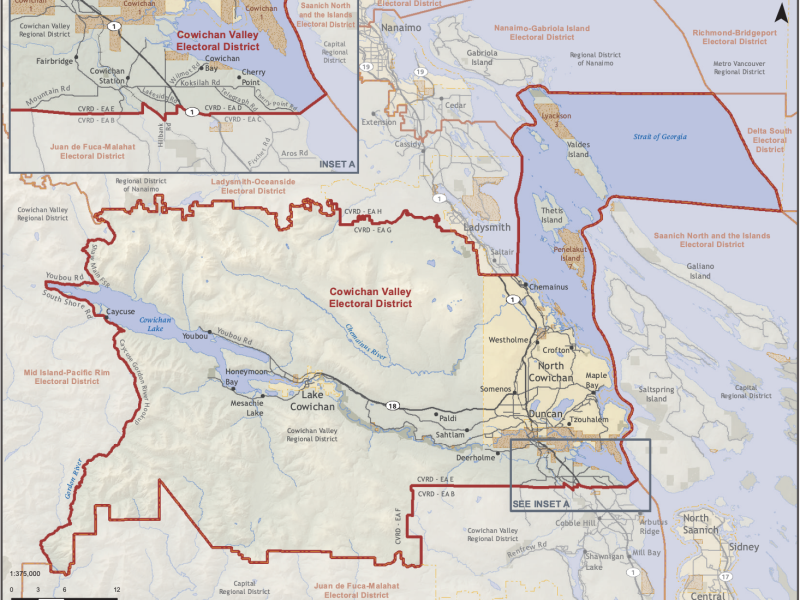
Three of four Cowichan Valley candidates support DRIPA, conservative stays quiet
With the Cowichan court decision, Indigenous rights is a hot topic in the Cowichan Valley district and was most recently represented by NDP candidate Qwulti’stunaat (Debra Toporowski), a five-time councillor of Cowichan Tribes and former North Cowichan councillor who was elected as MLA in the 2024 election.
“The BC NDP strongly supports reconciliation, Indigenous rights and the Declaration on the Rights of Indigenous Peoples Act,” Toporowski said in an email to The Discourse. “Working in partnership with First Nations creates jobs, strengthens communities and advances Indigenous-led health care, justice and conservation initiatives. We will continue working with First Nations on the path forward, aiming to return to the act’s original intent and provide clarity for communities and major projects. We should work with First Nations to resolve concerns and build a stronger future for everyone in B.C.”
Cowichan Valley BC Green Party Candidate Justin Douglas said his party supports DRIPA and that the Conservatives are “using it as a tool to other a group of people rather than focusing on their own policies and what they can do for this province.”
Speaking via phone while out canvassing, Douglas told The Discourse that the residents he is talking with at the doors aren’t bringing up DRIPA.
“In terms of issues that really matter to people on the ground, it is affordability, cost of living, health care, seniors,” he said. “In the hierarchy of needs it’s not something that is super resonating with Cowichan at this time.”
A statement from the BC Green Party said recent court cases have “laid bare the historic reality of illegal land dispossession” and that “First Nations’ need for land to support their communities has been weaponised by bad-faith actors on an ongoing basis, further increasing the racism experienced by Indigenous people.”
The Greens will “fully implement DRIPA through legislation” while improving the modern treaty process, the statement said.
James Chumsa, Communist Party of BC candidate for Cowichan Valley, told The Discourse that his party “fully supports DRIPA.”
“We need to return all stolen and unceded land to First Nations, which is why I support the Cowichan land decision,” Chumsa said in an email. “Restoring the role Indigenous Peoples had as stewards of the land is the best way we can protect the province’s ecosystems from corporate plunder. Indigenous land defenders are the ones on the frontlines protecting old growth, and First Nations should have the legal power to say “no” to resource extraction companies that want to exploit the land.”
Bert Chen, Conservative candidate for Cowichan Valley, did not respond to a request to comment by deadline.
Editor’s note: The Discourse asked candidates in the Cowichan Valley, Ladysmith-Oceanside and Juan de Fuca-Malahat ridings about how DRIPA should shape land decisions in the Cowichan Valley, as well as two other questions. You can see their responses in this separate story.
Party platforms on DRIPA for further information
You can read the section of the BC Green party’s platform on reconciliation, including DRIPA, on its website. The Greens also promise to establish an advisory committee on Indigenous rights, DRIPA and constitutional law and fund public education about DRIPA “to combat misinformation.”
The BC Conservative platform mentions DRIPA once under “Protect private property rights,” saying it would repeal DRIPA as well as section 8.1 of the Interpretation Act and “restore the section 35 constitutional framework.”
The BC NDP’s platform does not mention DRIPA but states that it will partner with First Nations to improve stewardship of the land through First Nations Guardian programs
The BC Communist Party’s platform is also available and promises to “stop the attacks” on DRIPA and “ensure Indigenous inherent title to all traditional, stolen and unceded territories.” It also proposes categorizing residential “school” denialism as hate speech, something that would require changing federal law.
General voting day is Saturday, Oct 24, 2026.
Editor’s note, Oct. 22, 2026: Nanaimo-Gabriola Conservative Party of B.C. candidate Mark MacDonald asked The Discourse to publish his statement, in response to Anna McKenzie’s comments on APTN, in full without any edits. The Discourse has included the majority of his statement through quotes and paraphrasing (and has kept the original tone and integrity of it intact) but, in keeping with CAJ Ethics Guidelines around fairness, has decided to not publish the entire, unedited statement.
What did you think of this story?
Your feedback after we publish a story helps ensure we're always improving our reporting to better serve you
Author

Related Articles
Where Nanaimo’s MLA candidates stand on addictions care, family doctors and Island rail
Four of seven candidates in Nanaimo-Gabriola Island and Nanaimo-Lantzville answered three questions from Discourse readers ahead of the Oct. 24 B.C. election.
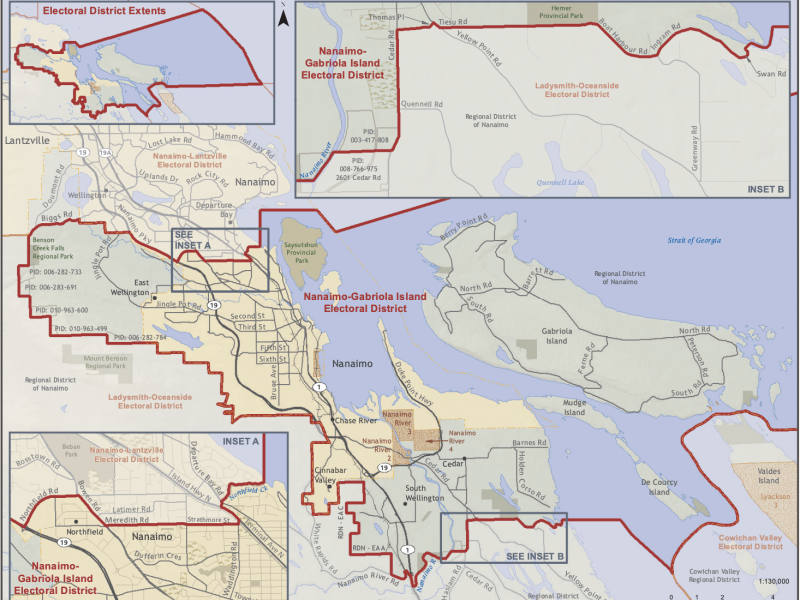
Nanaimo’s guide to the 2026 B.C. election
What riding am I in? Who are the candidates? When do I vote? B.C. election basics for Nanaimo voters.
Nanaimo mayoral candidates address the homelessness crisis
Homelessness is a key election issue but what can the City of Nanaimo do about it?