
Poll: Climate change a top concern for Canadian farmers
Comox Valley farmers are already feeling the climate change heat.
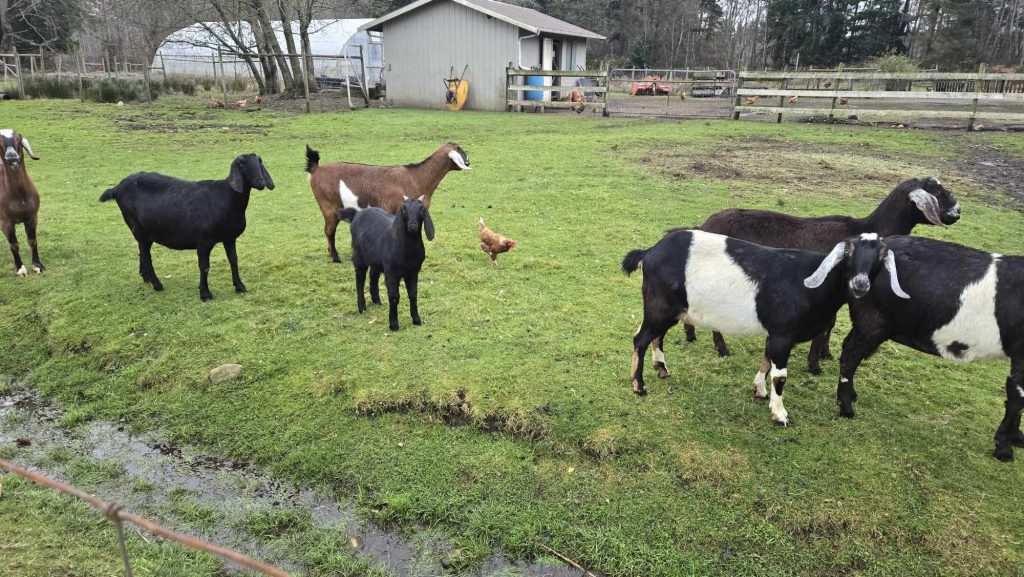
Mike Farrell, one of the owners of Shamrock Farm in the Comox Valley, has noticed a change in weather patterns since the farm opened in 1993.
“We’ve seen heat that we’ve never seen before,” he said.
When Shamrock Farm first began operations, Farrell said the focus was trying to get out in the field and get rid of an excess of water, especially because the farm is on a floodplain.
“And I always remember the big panic was to wait for things to dry up enough so that we could plow and get things moving,” Farrell said.
Now, because it gets drier so much sooner due to changing climate and weather patterns, the farmers are doing their field work earlier.
Farrell also noticed a difference in soil moisture, noting the heavy rainfalls that the area gets don’t recharge the soil the way they used to.
“We put a new septic system in the shop early this spring and we dug an eight foot hole. Memory serves me when we first got here, at that time of year, if we dug a hole that deep it would have been full of water up to within a foot of the top within hours. And this never, ever did get more than a trickle of water coming in.”
Shamrock Farm isn’t the only local farm that’s been dealing with dry conditions. In 2023, The Discourse spoke to another local farm, Wild Bee Florals, about how it’s also dealing with drought, heat and the changing climate.
Thanushi Eagalle, owner of Wild Bee Florals, said water was one of her biggest challenges on the farm. The farm ran out of water in August 2023, which posed more issues for the flowers and future planting plans.

Wild Bee Florals is also among the many farms that need to plan their planting a year in advance, and unpredictable and extreme weather conditions due to climate change make that very difficult.
“Water is the life force of the farm,” she said.
“How do you address a situation like this, where you run out of water four-to-six weeks before you thought you would?”
Climate change a concern for many farmers
According to a recent poll from Farmers for Climate Solutions, Eagalle and Farrell are not alone in their experiences and concern.
The organization represents farmers across Canada who aim to reduce emissions and build resilience on their farms. It also does advocacy work for climate policy; works with researchers, academics and farmers to look for ways to reduce emissions and has a national training program to help farmers adopt low emissions and high resilience practices.
Brent Preston, a farmer and president of Farmers for Climate Solutions, said he and his wife noticed issues on their farm in Ontario, which led them to come together with other farmers to form Farmers for Climate Solutions. Changing weather patterns, more intense storms and longer periods of drought that he didn’t have to deal with 20 years ago were just some of the changes Preston noticed.
And although he is living in Ontario, his concerns echo those of Farrell’s — drought and extreme weather.
In December 2024, Farmers for Climate Solutions hired the market research firm Leger to conduct a phone poll asking farmers what their top concerns were. The poll includes answers from 858 farmers and ranchers across Canada and Preston was surprised by the results.
He knew many farmers were concerned about climate change, but what shocked him was the large number of respondents who said it was their top concern.
“When we asked an open-ended question right at the start of the survey — ‘What do you see as the biggest challenge to Canadian agriculture’ — climate change was the number one response, and that was surprising to me.”
He said that although opinions on why climate change is happening vary from farmer to farmer, the idea that it’s happening and is a significant challenge is something that, in Preston’s view, is much more widely accepted in the farming community than he previously thought.
Many farmers were not only concerned about the future of climate impacts on their farms, but have already felt its effects.
“Over 75 per cent of the respondents in the survey said that they’d already been impacted in the last five years by extreme weather events,” Preston said.
Additionally, farmers also anticipate climate change will lead to restrictive policies and regulations, lower incomes and increased mental health challenges for farmers.
Other top concerns identified in the poll are worries that climate change could reduce net farm income and could reduce yields.
Despite these challenges, the poll also found that farmers and ranchers continue to show interest in adopting low-emission farming practices such as rotational grazing and cover cropping. They are further incentivized to adapt their practices by increased profitability and improved productivity.
Cover crops are crops planted for the sole purpose of enriching the soil. They can also slow erosion and enhance water availability. Rotational grazing is when animals graze a specific area of the farm and are rotated at different times which helps recovery and growth of plants after the grazing period.
Animals can also be used strategically for other work on the farm. Despite being mainly a vegetable farm, Shamrock Farm placed six pigs in an overgrown area that needed clearing and at the end of the season, the area was cleared and ready for crops. The pigs’ snouts were strong enough to dig up old roots and clear an area that was previously very overgrown.
Concern for water leads to creative farm management
As droughts and dry seasons continue to grow longer, Farrell said he believes water will be a big commodity for farmers to think about in future. But Shamrock Farm has adapted and is doing OK because of its efficient drip irrigation watering system, he said.
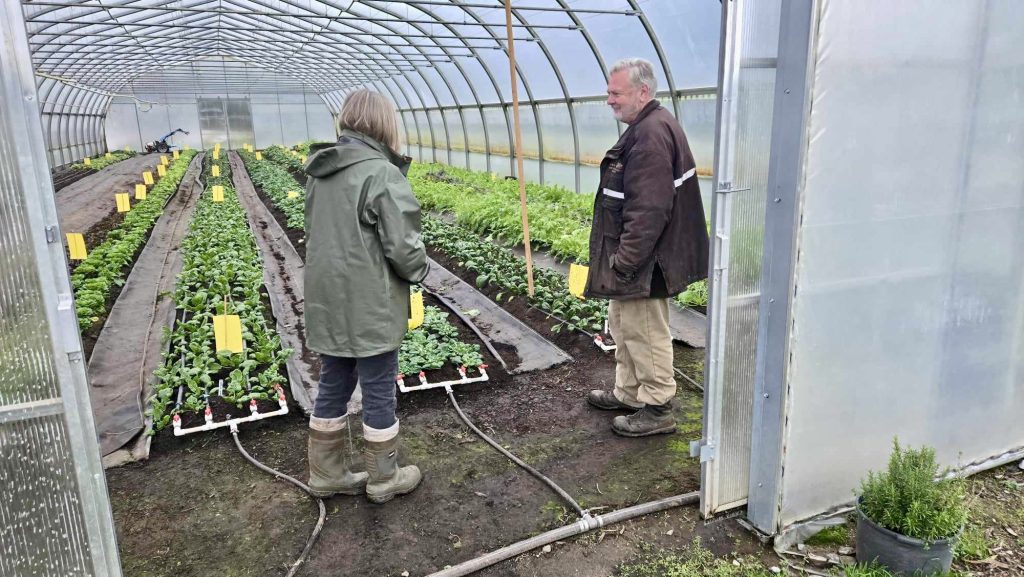
All crops at Shamrock Farm go under starch-based plastic with drip tape placed underneath. Drip Tape is designed to help water drip directly on to the plant root zone underneath the plastic so it can’t evaporate. It is maximizing the water being used so it goes directly to the plants.
“So we’re not losing water by spraying it into the air through evaporation,” Farrell said. “That’s been the metamorphosis over the years. We are at a stage where I can’t imagine going into a summer without that setup.” .
While they’ve been fortunate, Farrell said Shamrock Farm has had some partial crop failures due to heat and not being able to get enough water to crops.
“But we’ve always managed to seem to have that little bit of rain to keep most of everything going when we’re starting to lose ground with the water,” He said.
Farrell noticed that when it does rain on his farm, water is absorbed into the ground faster as it rushes through the land — minimizing its interactions with the soil and crops. One of Farrell’s theories as to why water is rushing through the watershed and land much quicker is because of “the whole top of Ryan Hill [being] progressively stripped to nothing” to accommodate development and a growing population.
According to municipal census data, the City of Courtenay’s population more than doubled in the 20 years from 1991 to 2021, with a recorded population of 11,652 in 1991 and 28,420 in 2021. New developments — which include houses and roads — are being built to keep up with the population, but it comes with the price of losing some vegetation in the watershed.

“You think of all those tree roots and all that foliage that was [a] big sponge when it rained, and it soaked up the water and it held it there and let it out slowly. Now, what’s holding the water there? I don’t think a whole lot of anything and it just runs out and it’s gone,” Farrell said.
Farrell’s observation has a wide body of science to back it up. A 2017 research paper published in Global Environmental Change reviewed various bodies of research to confirm that forests and water provide foundations for carbon storage, cooling the earth’s surface and distributing water resources. The authors argue that forests must be recognized as important regulators with water and carbon cycles and add that management must take the importance of biodiversity into account.
Jeanniene Tazzioli, Manager of Environmental Engineering for the City of the Courtenay, told The Discourse that it is important to understand that trees consume water and keep it within the landscape, but she also said that is only part of the story. She said underground soil types and the way water moves across the landscape are also very important for the whole system.
Jared Qwustenuxun Williams, a Coast Salish food sovereignty advocate, cultural educator and a contributing writer for The Discourse, also learned from his Elders about the importance of trees and moss for groundwater recharge.
“It wasn’t until I sat with an Elder in my family who talked about moss and mountain forests that things began to come together. They talked about how the moss and leaf litter were massive hectare-size sponges sucking up the rainfall,” he said in a previous story on the Quw’utsun watershed.
“This was so fascinating that I left that conversation hungry for more. I quickly found that trees do basically the same thing. Trees are full of veins and waterways that suck water up from the ground. In the summer, the water in the trees depletes and in the winter, they replenish themselves. I even learned how tree roots help rainfall reach the aquifers deep within the earth, helping them recharge in the wet season.”
Another story published by The Discourse dove into the specifics of a study, called the Twinned Watershed Project, that found ways to improve fish habitat in the Xwulqw’selu (Koksilah) and Chemainus rivers.
Heather Pritchard, a professional forester and the Twinned Watershed Project’s riparian habitat lead, explained how trees act as sponges. They hold 25 times more water than the soil they are resting on. This water becomes crucial during summer droughts because it helps to support and feed the vegetation around the trees.
Adapting and building resiliency on farms is a top priority
There are creative ways to adapt to these weather changes, such as growing food that historically hasn’t been able to grow in the region — watermelon.
In a previous interview for The Discourse, Shannon Farrell, co-owner of Shamrock Farms and Mike Farrell’s wife, said that she thought her son was crazy when he suggested the farm try to grow watermelons — they had never had success in the farm’s early years. But in the last few years, the farm has been able to grow them.
“I never thought I’d see a watermelon growing here,” Mike said.
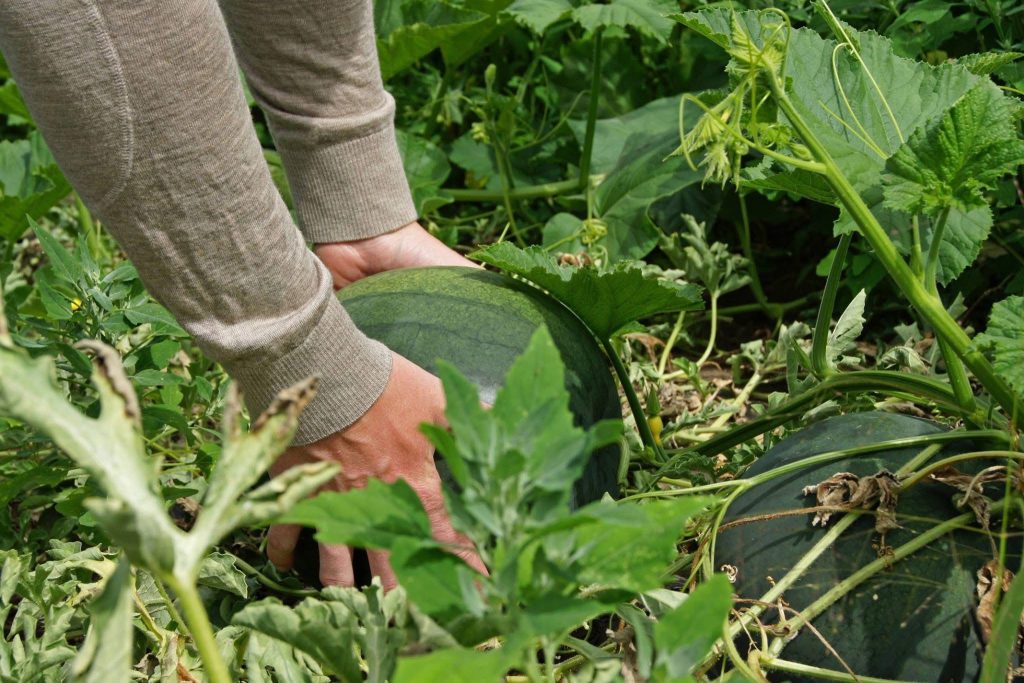
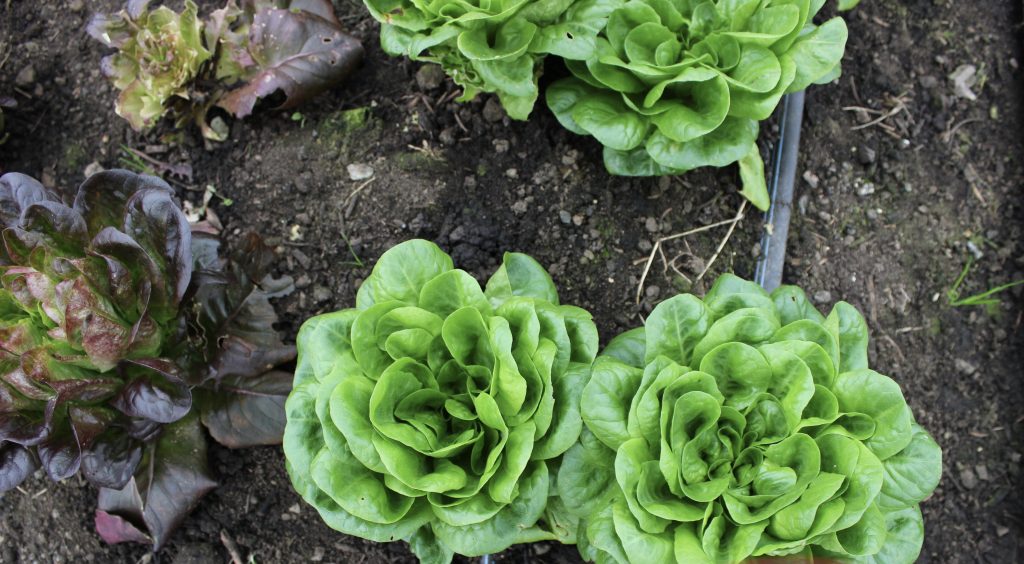
But the positive watermelon yield means negative yields of some other crops, such as some of the leaf crops including lettuce and spinach.
“We wind up getting shut down earlier on that because they are more of a cooler crop and they bolt,” Mike said. “You kind of just adapt,” Mike said. “You’re not really conscious that you’re adapting, but you are. I think it’s like anything — there are some negatives, there’s also a flip side and some positives.”
Ninety-four percent of farmers from the Leger poll also said improving soil health is a top priority for them.
Preston’s farm has been adopting practices to try to increase the amount of organic matter in their soil and to protect the soil with living plants growing in it. Some of the methods to do so include using cover crops and rotational grazing.
“We use the catch-all term of regenerative agriculture for the kind of things we need to do on our farm. So things like keeping living roots in the soil all the time, never having bare soil, making sure things are growing all the time [and] using cover crops,” he said. “We started integrating animals into our operations, so we grow vegetables on our farm but we now graze cattle and we graze pigs and [have] poultry.”
Preston said this helps increase the diversity of the farming system.
“I think these are the kind of practices that farmers all over the country are using and getting good results in terms of climate resilience, but also in terms of profitability for the farm and the productivity for the farm as well.”
For Mike Farrell, one of the most important things that community members can do is gain awareness about what’s going on in the environment and how it may affect where their food comes from.
As for Preston, he encourages more awareness so people understand that many farmers are highly concerned about climate change.
“There are many farmers who see what they are doing as a solution to climate change,” Preston said.
Preston hopes that those farms are viewed in a positive light, that communities continue to source from the farms that are using sustainable practices and that governments continue to be encouraged to support that transition to sustainable farming practices.
“There are opportunities on farms to sequester carbon in our soils, to reduce emissions, and to ensure a stable food supply. Sometimes, in the public discussion, there’s some vilification of farmers, you know, ‘Farmers are raising cattle and producing all this methane and leading to climate change’ [but] there are a lot of farmers who are really jazzed about the possibility of making a positive contribution.”
Editor’s note, Feb. 6, 2024: Clarification: A previous version of this story said Farmers for Climate Solutions represents farmers who engage in regenerative processes. The organization does not only represent these farmers, but also farmers across Canada. The story has been edited to make this more clear.
What did you think of this story?
Your feedback after we publish a story helps ensure we're always improving our reporting to better serve you
Author

Related Articles
Residents upset with Aspen Road development in Comox
Comox councillor says housing development should be balanced with community compassion
Q&A: Palestinian chef brings traditional cooking and food history to Vancouver Island
Izzeldin Bukhari speaks on the origin of falafel, Gaza’s rummaniyeh and why he sees food as a way to hold on to a culture under threat.

Pulse on the Plaza jumpstarts the heartbeat of Courtenay’s downtown
Fusion of cultures the ‘secret sauce’ of the festival series’ success, Comox Valley Arts director says.