
Q&A: Cumberland Community Forest Society embarks on its largest conservation project yet
The organization recently purchased 105 hectares of forest in Cumberland. The Discourse spoke with Cumberland Community Forest Society’s executive director to learn more.
Last month, Cumberland Community Forest Society announced the completion of a purchase of 105 hectares of forest in Cumberland known as Middle Earth.
Acquired from Manulife Resource Management, the $2.1 million purchase marks the organization’s largest conservation project to date, according to its website. The land is within the Trent River watershed and features popular trails used for mountain biking, hiking and trail running.
Cumberland Community Forest Society fundraises and purchases parcels of the forested areas surrounding the Village of Cumberland for conservation.
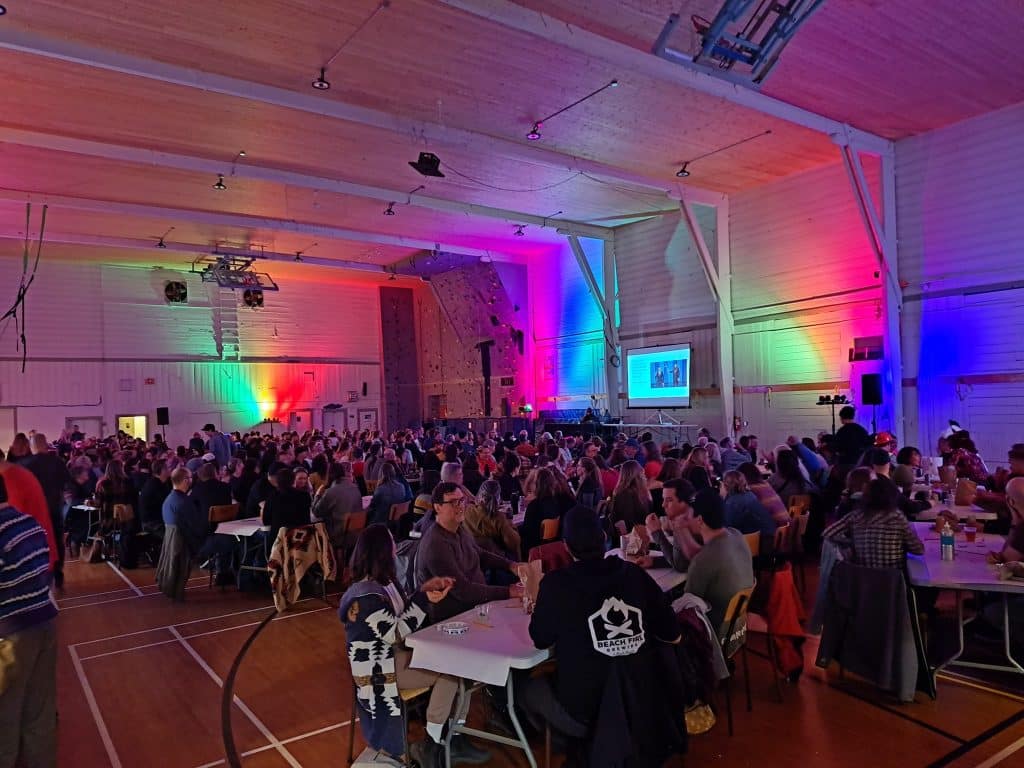
Formed in 2000 by a group of friends, the organization aims to protect these areas of forests for “ecological, historical, economic and recreational values,” according to its website. Money is raised through its trivia nights, organized fundraising events and trail runs such as The Cumby and Perseverance, as well as its monthly donors.
In an email to The Discourse, Cumberland Community Forest Society’s executive director Meaghan Cursons said much of the support for this fundraising was thanks to Cumberland resident Martha Johanson, who died in 2021 and chose to leave her home to the forest society to sell. Cursons said the sale of her home was a big part of the money raised for Middle Earth.
“The rest of the community then jumped in for some incredible fundraising over the past 18 months,” Cursons said, adding that the trail races and trivia events also played a big role.
“We are also very grateful for our generous monthly and one-time donors and for the support of the Courtenay and District Fish and Game Club, the BC Parks Foundation and the Sitka Foundation.”
Discourse reporter Madeline Dunnett reached out to Cursons via email with questions about why this project is exciting for her and what is next for the forest society. Here’s what she had to say.
The responses have been lightly edited for grammar and concision.
Madeline Dunnett: Many Comox Valley residents bike, run and walk throughout these trails. Which area of the Cumberland Forest is this? What else is special about this section of forest?
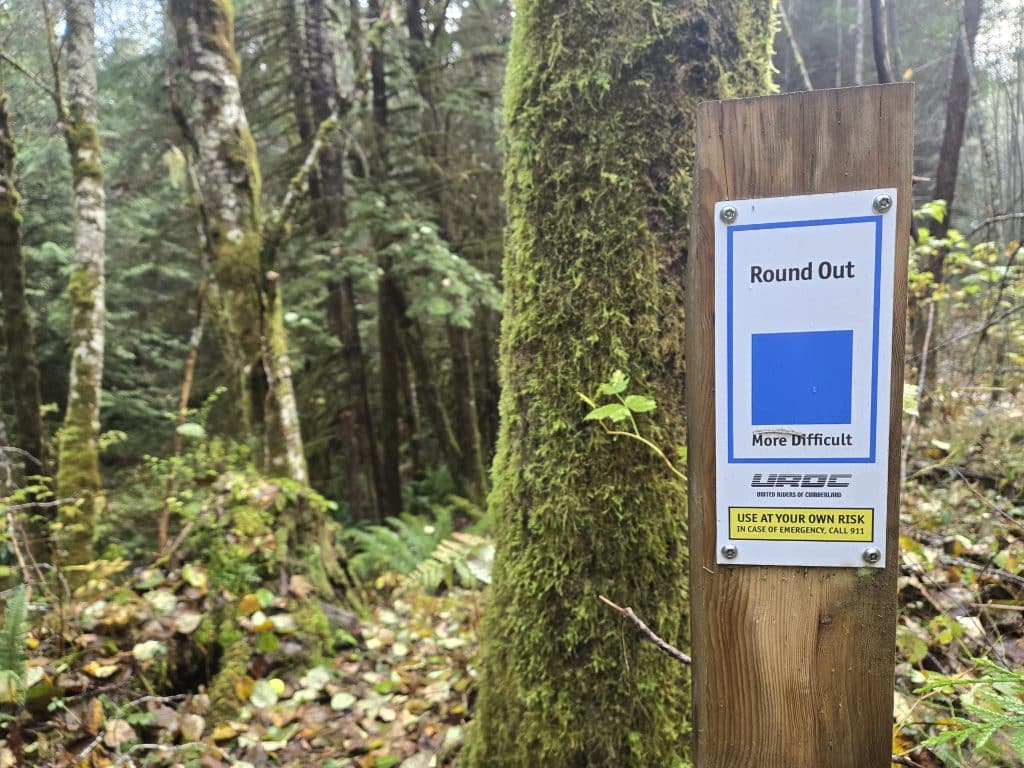
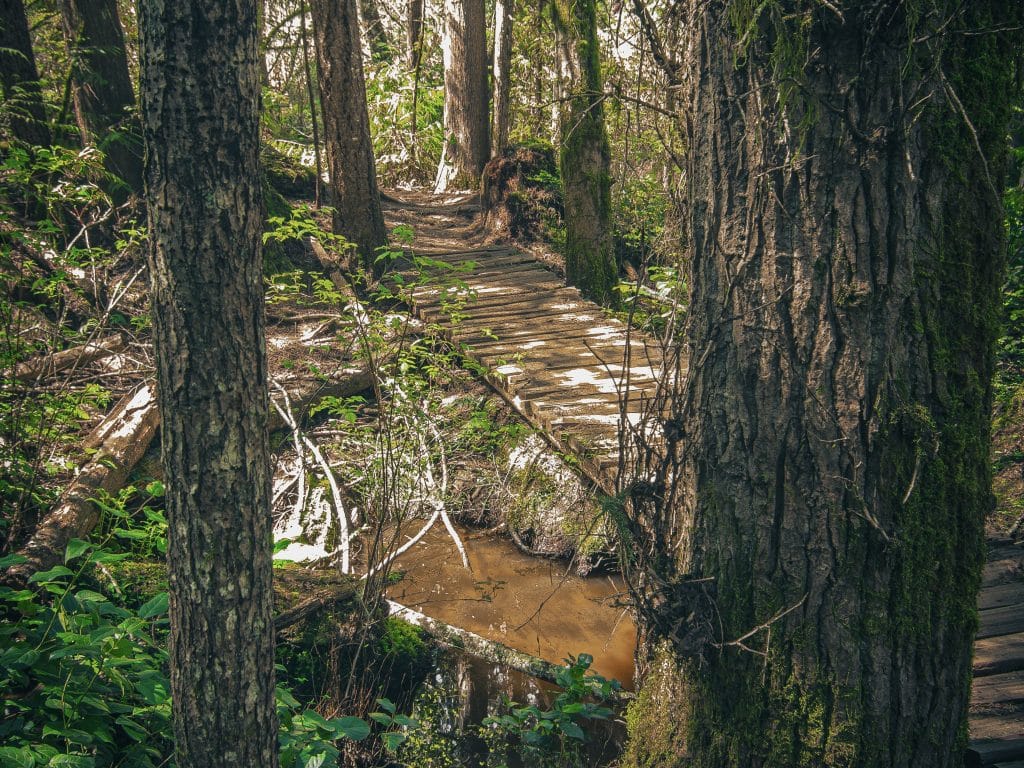
Meaghan Cursons: This area of private forest land is to the east of the existing Cumberland Forest. It includes trails like Rapture Access, SapSucker, Bonestorm, Resurrection, 2 Flats, Outfox and Round Out. This parcel stretches south right up to the base of Nikkei Mountain and includes a long wetland corridor that flows into the Trent River.
It is home to species at risk like red-legged frogs, little brown bats and painted turtles. It is an important part of the low-impact recreation network and also has important ecological values.
This is Cumberland Community Forest Society’s largest purchase to date. Can you share a bit about what the society had to undertake for a purchase this big?
The Cumberland Community Forest Society has been acquiring private forest lands for over 20 years, and we’re excited to be building on our capacity to purchase lands at this scale.
Ultimately — thanks to the E&N Land grant 140 years ago — we live in a private managed forest landscape governed under the Private Managed Forest Lands Act. The owners and manager of the lands are operating with the rules of that legislation. The likelihood of that legislation changing is low because it represents a very small per cent of the forests of the province, but a large per cent of Vancouver island.
We become aware of certain areas and become attached to their beauty only because we have recreational access to these lands through hard won agreements negotiated between private timber and the local trails community. At the same time, Cumberland Community Forest Society has been working away to acquire lands to manage for a different set of values — ecosystem health and watershed security, as well as low-impact community access — and to advocate for watershed security locally and across B.C. That’s our approach, to be open and transparent that we have different values, maintain respectful working relationships in our community and to seek opportunities to protect or purchase lands. We will continue to do that.
You purchased these [105 hectares] from Manulife Resource Management. Was this different from other purchases you made in the past? If so, how?
Our previous five purchases have all been from Manulife Resource Management. They have been an excellent partner to work with over the past 20 years and we look forward to continuing to work with them in the future. They are one of two owners in our watershed, the other being Mosaic. We also work with Mosaic on a project called the Perseverance Watershed Initiative that we hope will lead to lands being protected higher up in our drinking watershed.
Can you share a bit about how the purchase helps protect the forest? Are these areas of forest still at risk of being logged in the future at all?
The forests and watersheds of eastern Vancouver Island are all part of the E&N Land Grant legacy and the majority of the lands are still working forests. We believe that it is critically important to move significant parts of these forests out of industrial forest activity and into community ownership to allow them to recover ecologically and hydrologically. This is the core of our work.
Cumberland Community Forest Society is no stranger to setting big goals — what’s next?
We are seeking opportunities to collaborate with local government and conservation partners to expand the network of protected areas in our region.
As risk of wildfire grows year after year, we are very focused on projects that help to keep water on the landscape. We are also wanting to continue to connect areas of conservation land in the Perseverance, Trent and broader Comox Lake watersheds. We are stitching together a highly altered landscape and doing it in collaboration with our diverse community. It is such an honour to be engaged in this work.
What did you think of this story?
Your feedback after we publish a story helps ensure we're always improving our reporting to better serve you
Author

Related Articles
DRIPA debated in B.C. election on Vancouver Island
The Conservative party of B.C. is promising to repeal the Declaration on the Rights of Indigenous Peoples Act (DRIPA), while other parties argue that would set back relations with First Nations and create economic uncertainty.
Where Comox Valley MLA candidates stand on housing, harm reduction and watersheds
Four of seven candidates in Courtenay-Comox and Mid Island-Pacific Rim answered three questions from Discourse readers ahead of the Oct. 24 B.C. election.
Comox Valley’s guide to the 2026 B.C. election
What riding am I in? Who are the candidates? When do I vote? The B.C. election basics for Comox Valley voters.