
Q&A: Comox parks manager on a new, ‘wider scale community approach’ to urban trees
Town of Comox parks manager Robbie Nall discusses the revamped urban forest plan and its focus on green spaces and cooler neighbourhoods.
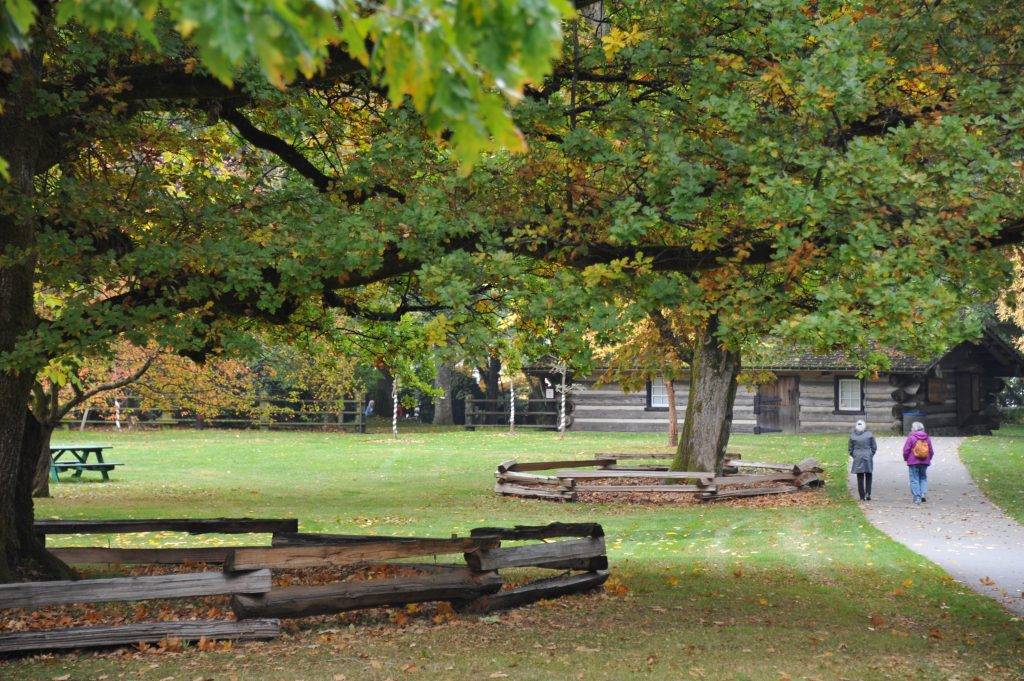
While humans measure life in decades, trees on K’ómoks territory live on a timescale of centuries. At the Town of Comox, parks manager Robbie Nall must bridge these contrasting — and sometimes conflicting — timelines.
Plants have always intertwined with Nall’s adult life, from tree planting in summers during university to getting his hands dirty in a landscape horticultural apprenticeship.
Nall arrived at the Town of Comox three years ago, having worked up to the role during 10 years at the City of Port Moody.
Part of his current job requires planning on the timescale of trees by steering the Town’s new 30- and 50-year Urban Forest Management Strategy.
The Discourse reporter Dave Flawse phoned Nall to ask about this stiff-sounding plan and a relatively young community’s relationship with its trees.
This interview has been edited for concision, grammar and length.
Dave Flawse, The Discourse: What legacy was left to the Town of Comox in terms of its urban forest?
Robbie Nall: From past generations we have a strong foundation here, especially within our park system.
A lot of good work was done by previous managers and parks directors to plant a variety of species in our parks and ensure a good variety and good amount of canopy coverage on town land.
What is a good amount of coverage on townland? What does that look like?
RN: Well, recent studies have shown that 30 per cent canopy coverage is a target that you want to seek, essentially throughout the town as a whole.
There’s not only town land, there’s private lands, institutional lands — like school land — and other areas that aren’t owned by the town, such as federal and provincial land.
Currently, for our canopy analysis, we’re at 26 per cent coverage. That’s comparable with Nanaimo, so higher than other [larger] urban centers but lower than some of our neighboring communities, such as Campbell River or Courtenay.
The plan is setting achievable goals for the future. The current Urban Forest Management Strategy is a 30-year plan, but we’ve also set a target for 50 years in terms of reaching 30 per cent canopy coverage.
The plan still needs to be endorsed by council and the community, and we will be going out to the community in November 2025 with the draft.
Why is now the time for an urban forest management strategy?
RN: The urban forest is under pressure from climate change, aging infrastructure and development. Also, our last forest management plan was done in 2012, and now it’s time to update that plan. We’re updating the OCP [Official Community Plan], and we’ve also had the Climate Action Plan in 2024 and the Parks and Trails Master Plan.
So, it aligns with other initiatives and is a good time to do it in that sense.
What’s going to be in this most recent plan that was not in the 2012 plan?
RN: It’s going to have updated canopy analysis. It’s also looking at tree equity, so ensuring that all areas in Comox are looked at in terms of canopy coverage and access to trees and green spaces and ensuring cooler neighborhoods.
It’s taking more of a larger scale, wider scale community approach through community engagement.
I wasn’t here in 2012, so I can’t speak to what level of engagement went on, but [for this plan] we’ve gone out with surveys. We had a survey in phase one and we’re going out with a survey in phase two.
What do you think this most recent plan will mean for future generations? How will it impact their lives?
RN: We’re hoping that they’ll benefit from healthier ecosystems and cooler neighborhoods and more access to green spaces and ensuring that Comox remains a green, livable and resilient community.
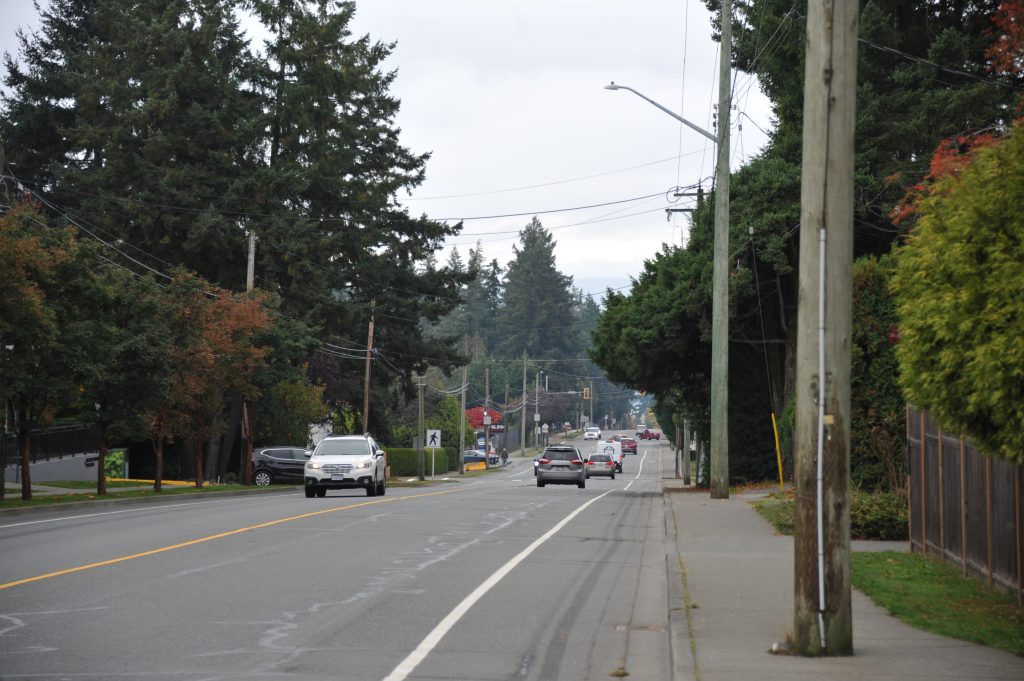
A couple parks stand out as long-time favourites in the community. Brooklyn Creek Park comes to mind and the Filberg Heritage Lodge and Park.
RN: Yeah, the Filberg became a Level 1 Arboretum this year.
OK, what is that?
RN: It’s a certification that values the variety of trees in the park. You could call it a sort of tree museum.
It’s a very unique place that showcases diverse plant species and encourages environmental stewardship and provides a tranquil space to enjoy.
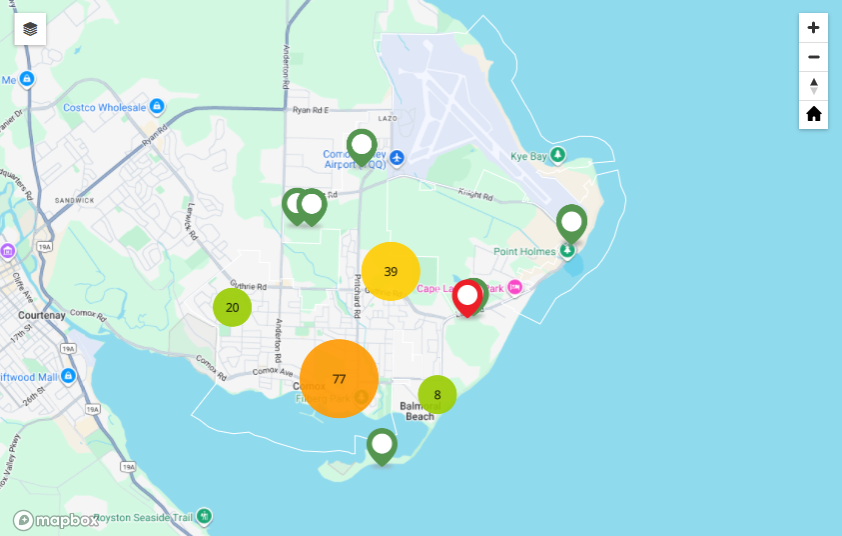
It’s in partnership with the Filberg Heritage Lodge and Park Association. Their website has a mapping inventory of all the tree species [including] age, plant family and origin.
There are over 100 varieties of trees.
Do you have a favourite tree in Filberg Park?
RN: That’s a good question. There are so many. I do like the English oaks. That’s my favourite. The form, the fall colour, the structure — it’s something unique to a large oak tree.
Also, London plane. I’m kind of being biased here because I grew up in England. I’m showing my roots.
The park also has native species and a Japanese garden area. Lots of good varieties.
What did you think of this story?
Your feedback after we publish a story helps ensure we're always improving our reporting to better serve you
Related Articles
Courtenay mayoral candidates on water conservation strategies amid worsening drought conditions
For the second time this year, Courtenay residents see Level 3 water restrictions, days before the Oct. 17 municipal election.
Comox Valley local candidates on housing affordability
Candidates in Courtenay, Comox and Cumberland share how they’d support housing affordability and increase the supply of affordable housing.
Comox Valley candidates on supportive housing, second-stage housing and warming centres
Candidates in Courtenay, Comox and Cumberland share how they’d support adding supportive housing beds, second-stage housing and warming centres.