
Is the town hall disappearing from Canadian politics?
Gone are the days of open town hall events in Canadian politics. They have been replaced with partisan events that cater to party loyalists and potential donors, a political scientist says.
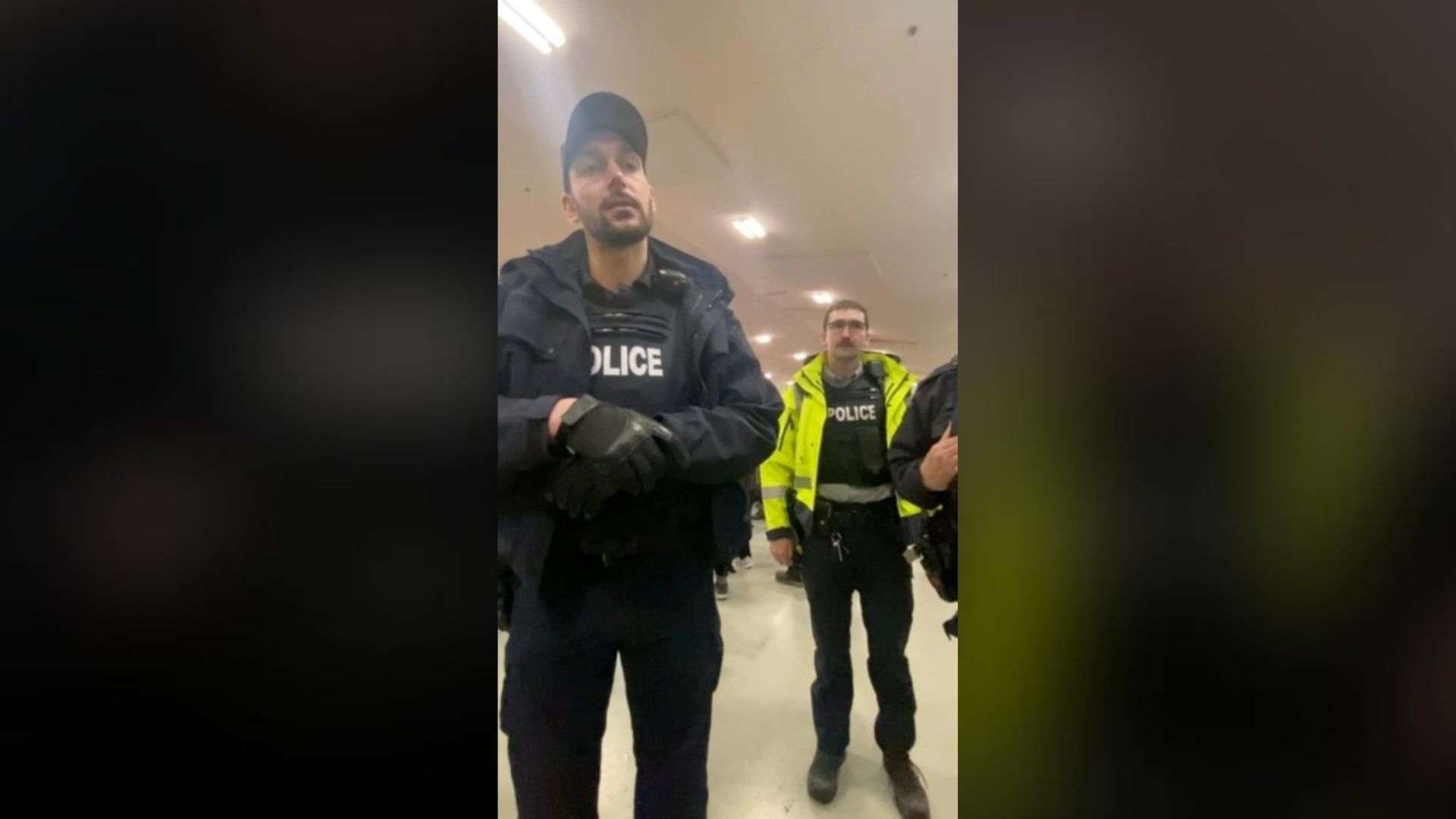
Three Cowichan Valley residents who were removed from a January town hall event allegedly because of messages on their t-shirts have confirmed that the event was funded by the federal Conservative Party, and not by taxpayers through the parliamentary budget.
While one expert tells The Discourse this reflects a troubling pattern of silencing dissenting opinions at Conservative Party events, another says the issue isn’t limited to the Conservatives. All political parties, they argue, are increasingly restricting who can attend events and are less interested in holding open town halls.
On Jan. 10, Kristi Koons, Erin Blondeau and Jessica Barker were escorted out of a packed town hall featuring federal Conservative Party Leader Pierre Poilievre and Jeff Kibble, the Cowichan-Malahat-Langford member of parliament.
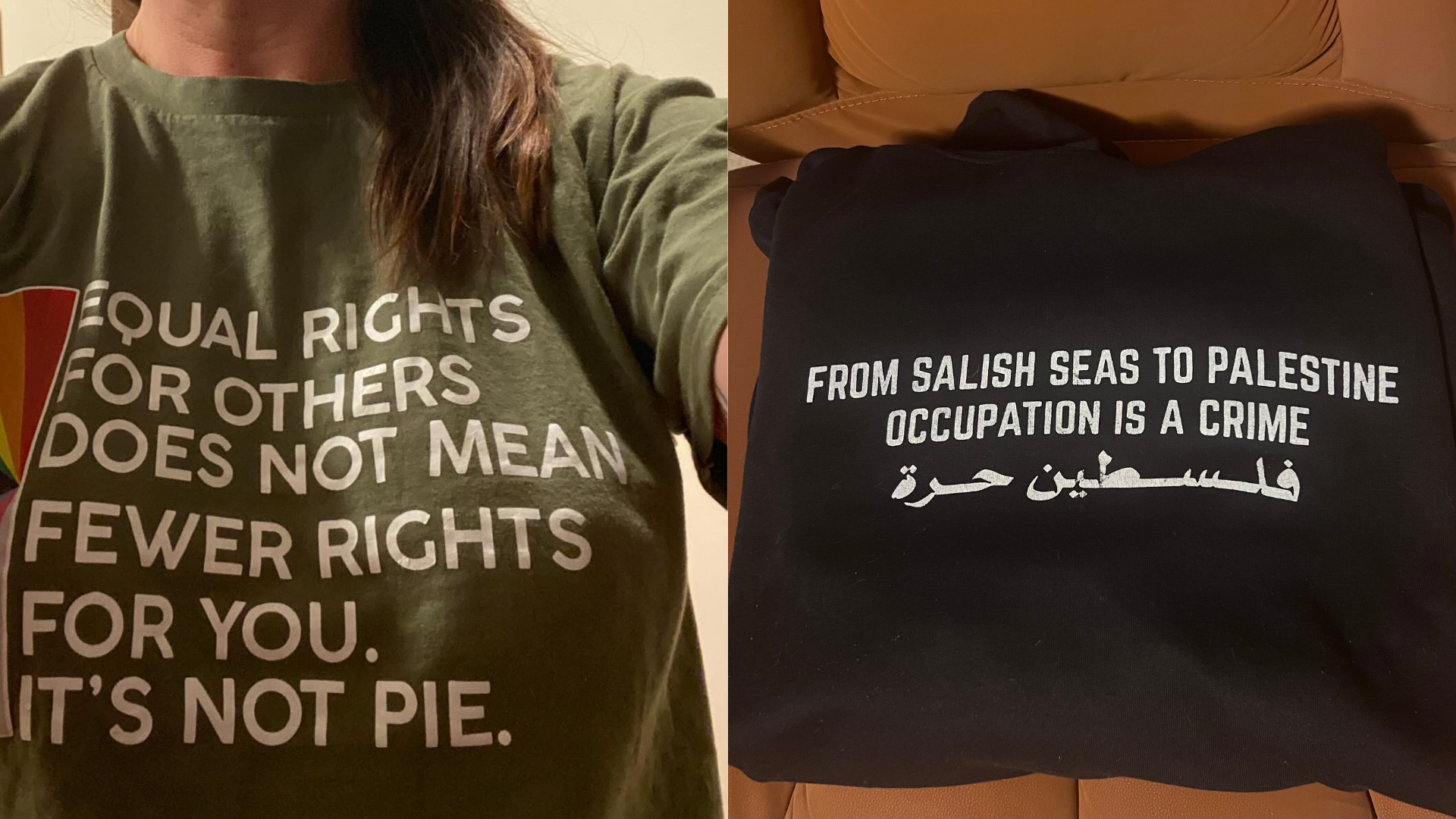
The three women were told to leave the event by organising staff who identified them as disruptive based on the t-shirts they were wearing. One of the shirts had a message of equality on it and the other was a slogan related to the Palestine liberation movement. Koons, Blondeau and Barker were threatened with trespassing charges by the RCMP if they didn’t leave.
READ MORE: Cowichan Valley residents seek answers after ejection from public town hall event
After speaking up about what happened, the trio met with Kibble two weeks later, on Jan. 24, and confirmed that the event was funded by the Conservative Party of Canada. Koons said Kibble also told them he would ask why they were kicked out of the event, but still could not confirm the exact reason for their removal.
The use of party funds to stage events branded as town halls is nothing new in Canadian politics according to Alex Marland, a political researcher and professor at Acadia University. Marland specializes in researching how governments communicate with the public and how political parties market themselves.
Speaking to The Discourse, Marland said the funding distinction regarding this event matters because it determines which rules apply. Events paid for through a parliamentary budget must be non-partisan, while party-funded events are governed by the party itself, which decides how they are advertised and managed.
“When it’s a private party event, they’re the ones who get to decide who is in the building. It’s very different than if it’s publicly funded,” he said.
Koons, Blondeau and Barker said they are concerned about the precedent their removal sets, especially for marginalized community members who didn’t feel safe attending.
Wilbur Turner, a 2SLGBTQIA+ advocate and founder of Advocacy Canada told The Discourse the incident in Duncan is part of a worrying pattern of the Conservative Party creating an “echo chamber where there’s no tension or friction around human rights.”
“It’s concerning when politicians want to cut people off [who] they’re supposed to represent,” he said. “When someone is elected to office, they’re elected to represent everyone in their constituency, not just the people who agree with them.”
But Marland said the curation of attendees and control of messaging at political events is not just a Conservative strategy. It’s the norm for all political parties in Canada.
“You can well imagine that if somebody showed up at, let’s say, an event run by the NDP, and had worn a t-shirt that said ‘climate change isn’t real,’ how that would cause concerns for the MP or party,” Marland said. “These things are often decided on a case-by-case basis.”
He added that parties may deny entry based on perceived opposition, such as social media posts with rivals or if an attendee happens to be a member of a different party.
However, Turner said political parties and their events need to be able to handle debate, rather than curate it out.
“The message on the shirts was a political message to it, but it was also a message of human rights,” Turner said, noting that he believes people should be allowed to speak their mind at any political event.
“It’s important that we do speak up and it’s important that the leaders of even the official opposition listen to us.”
How accessible is your member of parliament?
According to Marland, there is often confusion in the general public between the ideals of democracy — freedom, fairness and accessibility — and private political parties.
“A political party is a private club. It doesn’t have to have the same kind of openness,” he said. “Political parties are free to do things that the rest of us may not agree with.”
The real notion of democracy, Marland said, is rooted in non-partisan bodies such as Elections Canada or the legislature.
“The big issue is more about accessibility to elected representatives,” Marland said.
Koons said she was keen to attend the town hall event with Kibble because she felt she hadn’t had a chance to get to know him or engage with him as their recently-elected member of parliament.
“This is the first time Kibble has hosted — what I thought was — a public event since he’s been elected, and he’s been very absent in the Cowichan Valley and not very responsive. So it was important to me to go and figure out what’s going on,” Koons said.
Marland said meeting an MP in person isn’t an entitlement, noting a single MP represents about 100,000 people and can’t realistically meet with everyone. The more important question, he argued, is whether constituents receive a timely and well-managed response when they contact an MP’s office and if their concerns are handled effectively by the MP or staff.
Drawing on his own experience of writing to his member of parliament in Nova Scotia and not receiving a reply, he adds that while some politicians are more responsive than others, those who aren’t available in person need to ensure their offices are accessible and responsive.
The end of the federal per-vote-subsidy — payment to political parties from the federal government based on their share of the popular vote — also increased pressure on political parties to fundraise and constantly seek out supporters who can contribute financially. Marland said this can lead parties to focus more on engaging with potential donors and party loyalists, rather than everyday constituents.
Turner, however, said he believes that regardless of political affiliation, elected representatives should still listen to all of their constituents.
“I’ve had meetings with politicians who have different political views than me. And it’s important that they’re at those meetings and support us, and some of them do. But the trend, I think, right now is to cut off that conversation, and it just creates more divide,” Turner said.
How can you tell if an event is partisan?
Marland said the way an event is advertised is something everyone should consider when deciding whether to attend. Based on what Marland knew about the event in Duncan, he was left with questions about how it was marketed to people.
“If it was billed as a town hall, everyone is welcome. That’s very different from saying this is a Conservative Party town hall, come meet the MP,” he said.
In advertisements obtained by The Discourse and shared by Kibble online, there were no visible Conservative Party logos. However, the form to RSVP to the event was hosted on the Conservative Party of Canada website, something Marland said indicates to him it was party funded.
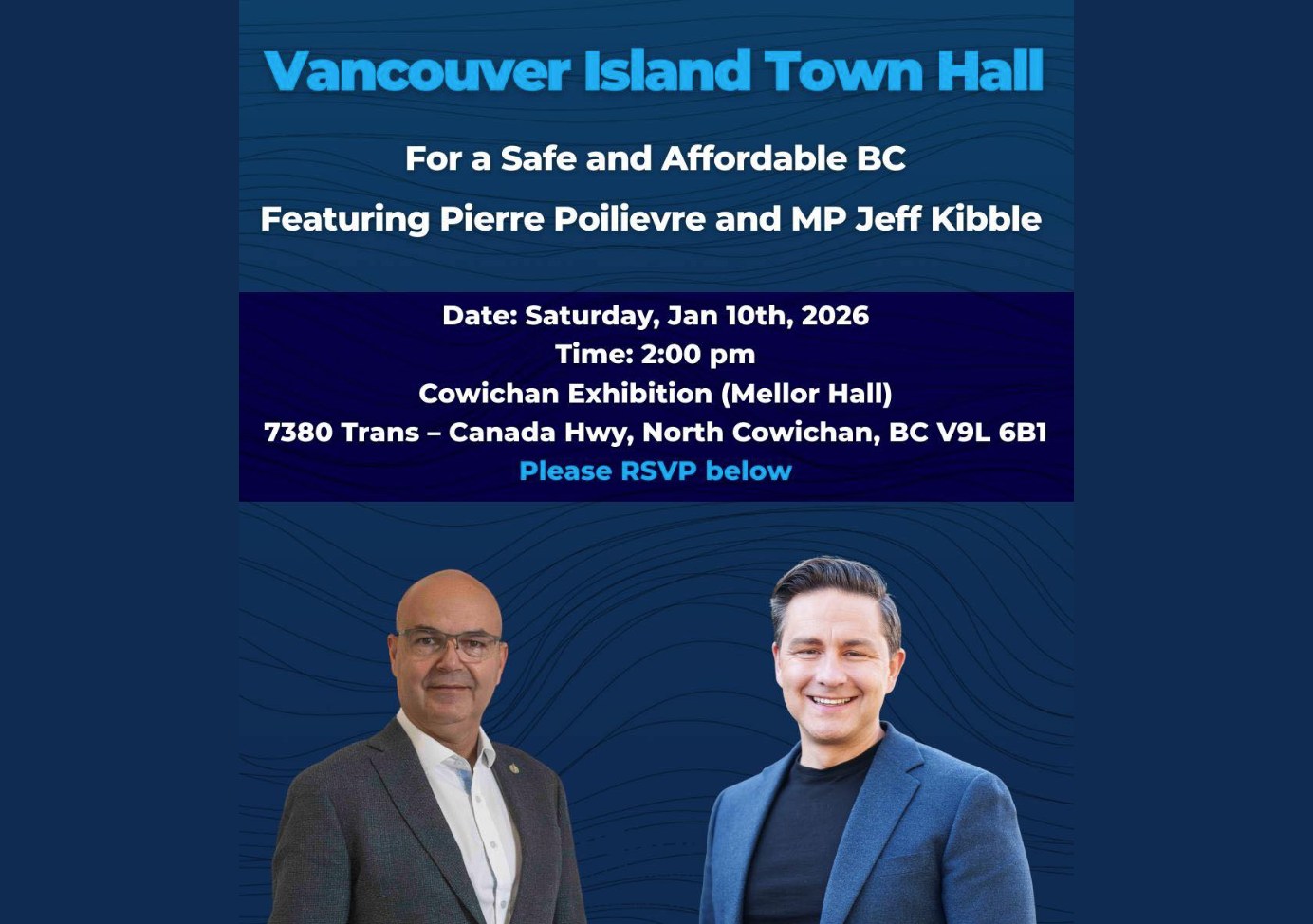
Needing to register ahead of time is usually a good indicator that it is a party event, Marland said.
There are currently no rules on the books that govern how an event like this is advertised or that require a party to disclose to attendees the nature of the event, or how it was funded, according to Marland. However, if parliamentary funds are used for it, that spending would be reported and made publicly available.
“I think the fundamental problem is the confusion that it creates for the public,” Marland said.
The current political landscape
Marland said there are many reasons why political parties or MPs aren’t going to hold an event that’s open to the general public. One concern is with activists attempting to disrupt events. Beyond that, there are also legitimate security concerns.
“There are many politicians that I talk to in different parts of the country who say they’re constantly receiving all sorts of threats, and they are very worried about what can happen if somebody shows up and is violent,” he said.
Koons, Blondeau and Barker told The Discourse they did not intend to disrupt the event and were there to listen to Kibble and ask him questions if the opportunity arose.
In a video obtained by The Discourse, the trio is approached shortly after arriving by individuals who appear to be staff associated with the event. After some discussion, the three women agree to stand quietly at the back of the venue for the duration of the event. After moving to the back, they are approached by RCMP officers and told to leave without a clear reason for their ejection.
Marland added that controversies at local town halls, such as the one that took place in Duncan, used to stay local and were typically only covered by community newspapers. Now, with fewer local outlets and the rise of smartphones and social media, such moments can quickly draw national attention, making politicians more cautious and less willing to take risks or engage in potentially controversial situations.
“The same thing happens with all candidates’ debates in elections,” Marland said. In his experience, politicians and candidates are increasingly choosing to skip those events to go knock on doors instead.
“They’re turning into forums for people to push agendas, and they’re not really places where anybody is interested in a conversation, they’re interested in an argument,” he said.
But Turner said this sets a dangerous precedent for how conversations amongst people with different points of view are addressed by politicians.
“A lot of Canadians just want good, solid governance. We’ve got bigger issues to worry about than trying to punch down on the queer community and people who are vulnerable that have become political pawns,” he said.
“Politicans need to be able to handle opposing ideas.”
What did you think of this story?
Your feedback after we publish a story helps ensure we're always improving our reporting to better serve you
Author

Related Articles

What to do and who to call when juvenile salmon are in danger
Officials say Cowichan Valley residents should call experts to move salmon in isolated pools because of risks associated with relocation.
How is The Discourse’s journalism funded?
And what does it cost to produce The Discourse’s in-depth, independent journalism?
Behind the backlash to the Cowichan Valley’s comprehensive zoning bylaw
The campaign against Bylaw 4710 was fuelled, in part, by misinformation and an organized group of advocates. What could this mean for the future of local politics?