
A timeline of the Crofton mill
The mill permanently closed its doors in 2026 concluding a history marked by a court trial, corporate take overs, environmental issues and strikes.
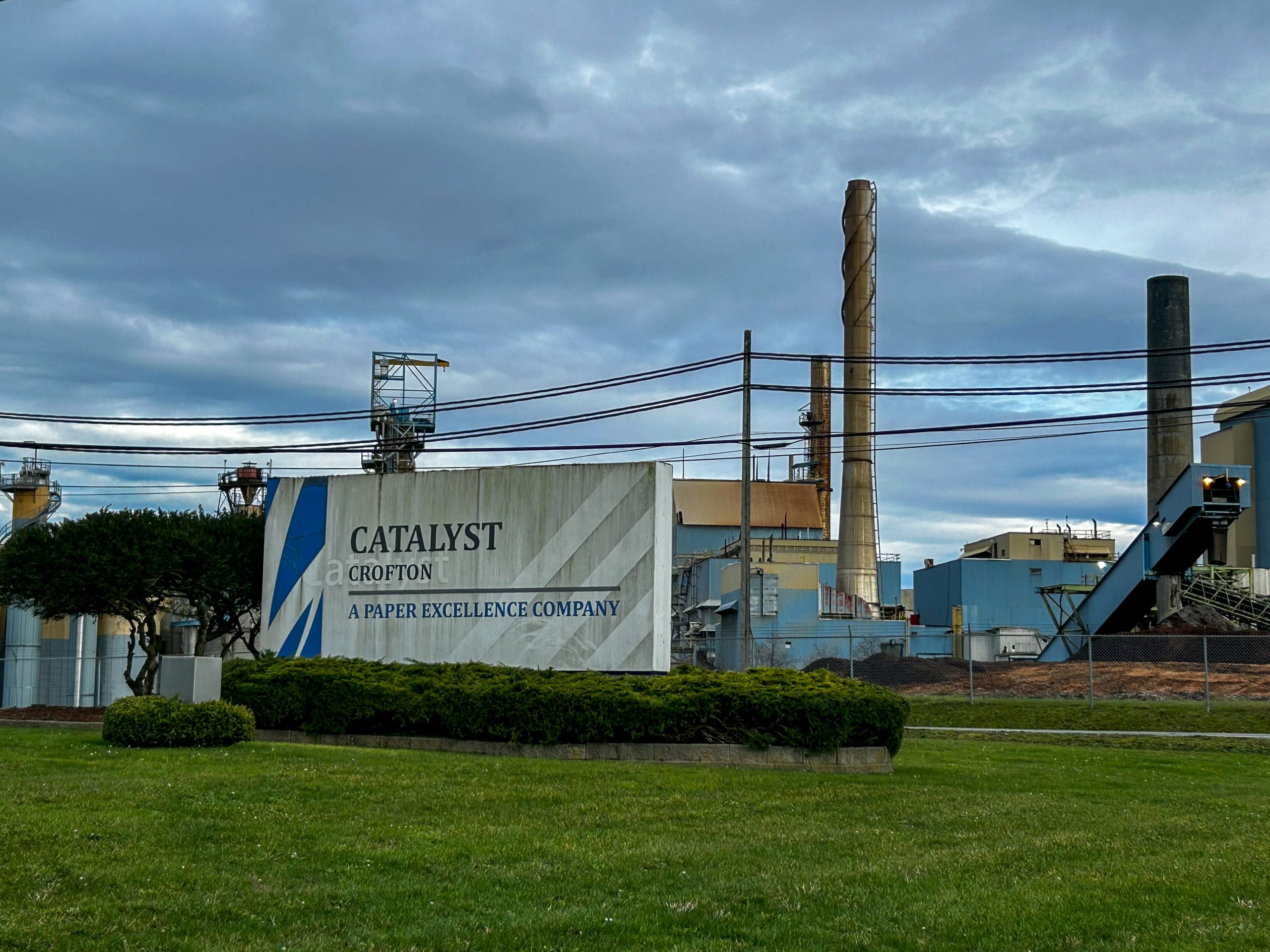
On Dec. 2, 2025, Domtar announced it would permanently close Crofton’s nearly 70-year-old mill, which employed 350 people, citing a lack of affordable fibre in B.C. and rising cost of materials.
In response, the Municipality of North Cowichan created a Community Transition Table to coordinate union leadership, worker support and discussions on the future of the mill site.
Forestry Minister Ravi Parmar and Cowichan Valley MLA Debra Toporowski met with North Cowichan Mayor Rob Douglas and union leadership on Dec. 18.
Since the announcement, North Cowichan staff have met with several investors interested in potentially acquiring the mill site for continued forestry-related operations or other industrial uses.
The Discourse has compiled a timeline of major events at the Crofton mill to help readers understand the historical context of the latest mill closure. Have any events that you think we should include? Is there anything you’d like us to further look into? Let us know at cowichan@thediscourse.ca.
1957: The mill opens and BC Forest Products told the citizens of Crofton it would employ 300 people and have an annual payroll of $1.5 million. Crofton was chosen as the location for the mill after an “extensive” three year survey by BC Forest Products found the Cowichan River had adequate water supply for the mill.
1963: BC Forest Products announced an $18.5 million expansion of the Crofton mill to expand the capacity to produce paper for its second newsprint machine, which it would bring online in late 1964.
1987: The mill changes hands as New Zealand-based Fletcher Challenge acquires a controlling stake in BC Forest Products. The sale happened over the course of the year as Fletcher Challenge increased its ownership stake in BC Forest Products to 49.9 per cent in December. The International Woodworkers of America said it would petition the Bureau of Competition Policy for an inquiry into the sell off of shares.
1988: Fletcher Challenge combines the management of BC Forest Products — which by then it owned 69 per cent of — and Crown Forest Canada to become one of the largest forestry companies in Canada through its ownership of BC Forest Products and Crown Forest.
Ruby Dunstan the then Chief of the Lytton First Nation traveled to New Zealand to voice concerns of Fletcher Challenge’s logging operations in the Stein Valley.
A group of 300 loggers angered by layoffs, the export of raw logs and wasteful logging methods protested at the head offices of Fletcher Challenge in downtown Vancouver.
Greenpeace raises concerns over high levels of dioxin found in the soil and shellfish caught around the Crofton mill, accusing the federal and provincial governments of covering up the contamination. The dioxins come from the mill’s bleaching process.
BC Forest Products announced it would spend $238 million over four years to “modernize” the mill, increasing its pulp production capacity and improving pollution controls.
Canadian Wildlife Service biologists investigate the possible link between dioxin contamination from the mill and the collapse of a nearby nesting colony of blue herons.
Twenty-three environmental groups called on the province to end the use of chlorine bleaches at pulp mills.
1989: Two-hundred people marched on the gates of the Crofton mill to demand the company improve its air and water emissions.
1994: The Pulp, Paper and Woodworkers of Canada announces strikes at both the Crofton and Elk Falls mills. After talks with the company broke down workers hit the picket lines on Dec. 24.
1999: Fletcher Challenge faced charges following the death of two men at the Crofton mill during an inspection of a de-aerator tank. The company and management was found not guilty of safety violations in connection with the deaths in October 1997.
2000: Norwegian Company Norske Skog, the fourth largest producer of newsprint in the world at the time, purchases Fletcher Challenge Paper for $3.6 billion. The new owner pledged to reduce noxious odours at the mill by 85 per cent.
2001: The Crofton mill was named nine times in a non-compliance report by the Water Land and Air Protection Ministry for exceeding the permitted level of total reduced sulfur air emissions.
2005: NorskeCanada, a division of Norske Skog, changed its name to Catalyst Paper Corporation. President and chief executive officer Russell Horner said the name change signaled it is an “independent Canadian company” and will clear up confusion among stakeholders.
2006: Norske Skog agreed to sell 63 million shares in Catalyst Paper totalling around $1.08 billion.
2012: Catalyst Paper and its subsidiaries are granted creditor protection. Before gaining those protections, Catalyst Paper tried and failed to reduce its municipal tax burden. Court documents show the company had been trying to pressure North Cowichan to lower its tax assessment since 2003 and the company also highlighted that Catalyst’s operation of the mill had been losing money in recent years.
2018: The B.C. government announced it was stepping in to protect the jobs and pension benefits of 1,000 retirees and 1,500 Catalyst employees by allowing it to repay its $74 million shortfall of pension funds over 16 years rather than five.
2019: Paper Excellence Canada purchases Catalyst Paper’s Crofton, Port Alberni and Powell River facilities. While headquartered in Richmond, B.C., the company is privately owned by Jackson Wijaya, an Indonesian-Singaporean businessman who has family ties to the Sinar Mas Group — a massive Indonesian conglomerate.
2022: Paper Excellence indefinitely curtails operations at the Crofton mill citing weakening markets in China and the rising cost of energy and wood fibre. Around 150 workers were impacted. The curtailment is extended into 2023.
2023: The provincial and federal governments announce a $18.8 million partnership to fund the retooling of the mill to produce paper products that reduce the need for single-use plastics. By 2024, Paper Excellence returned $4.5 million to the province because they were unable to re-start paper operations.
2024: Paper operations are indefinitely curtailed at the Crofton mill, impacting 25 workers. Pulp operations would continue into 2025. Paper Excellence cites rising material costs and demand for paper used for printing and writing dropped globally. The company is rebranded to Domtar. Jackson Wijaya takes over direct control of Asia Pulp & Paper, the forestry arm of his family’s business Sinar Mas, which he previously claimed was separate from Paper Excellence.
2025: On Dec. 2, Domtar officially announced it would permanently close all operations at the Crofton mill, citing poor pricing for pulp and a lack of access to affordable fiber in B.C. A majority of mill employees were laid off aside from a small team that will remain on site past April 2026 to maintain compliance with environmental laws and regulations.
(Editor’s note, Feb. 26, 2026:): Many of the sources from 2001 and earlier came from newspaper clippings which could not be hyperlinked.
(Editor’s note, Mar. 2, 2026:): Domtar clarified that a small team will be staying on site past April to maintain compliance with environmental laws and regulations.
What did you think of this story?
Your feedback after we publish a story helps ensure we're always improving our reporting to better serve you
Author

Related Articles
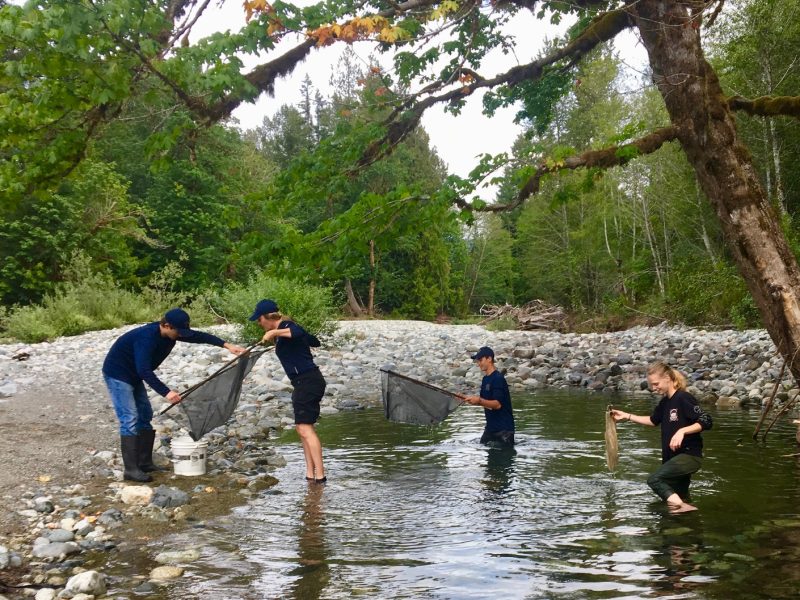
What to do and who to call when juvenile salmon are in danger
Officials say Cowichan Valley residents should call experts to move salmon in isolated pools because of risks associated with relocation.
How is The Discourse’s journalism funded?
And what does it cost to produce The Discourse’s in-depth, independent journalism?
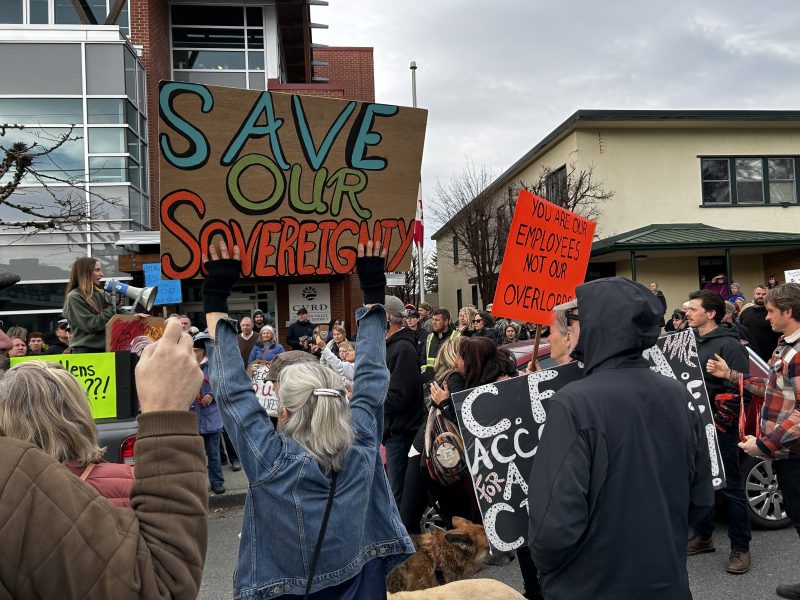
Behind the backlash to the Cowichan Valley’s comprehensive zoning bylaw
The campaign against Bylaw 4710 was fuelled, in part, by misinformation and an organized group of advocates. What could this mean for the future of local politics?