
Where Cowichan region MLA candidates stand on water, old growth and reconciliation
MLA candidates in the three ridings that cover the Cowichan region answered questions from Discourse readers ahead of the Oct. 24 B.C. election.
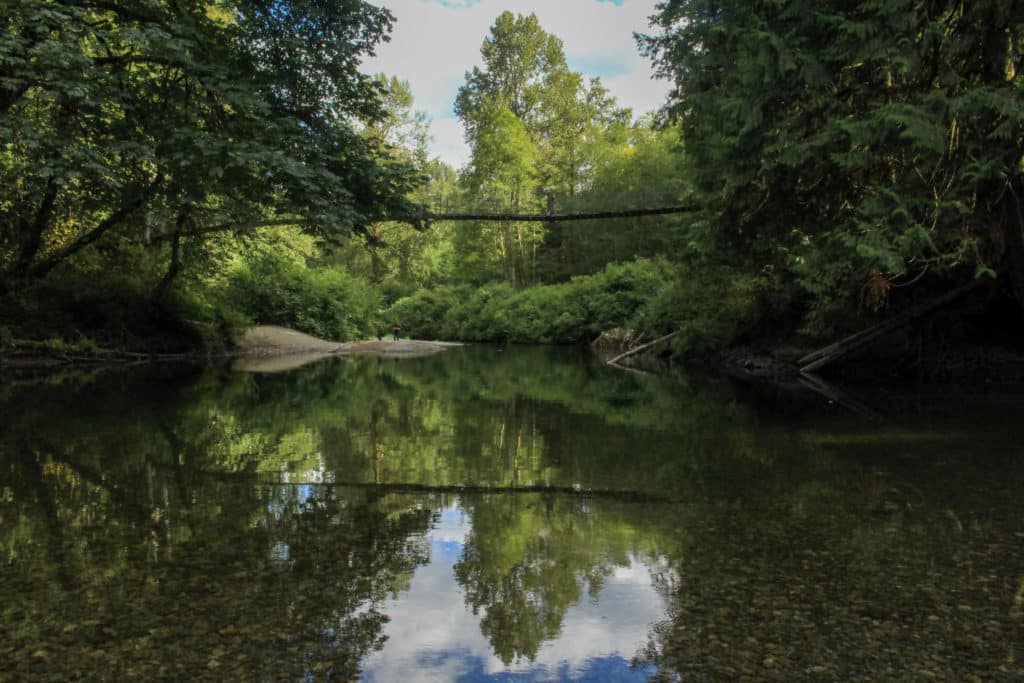
B.C. votes on Saturday, Oct. 24.
In September, The Discourse asked Cowichan readers what they wanted to know from candidates in the local election which took place on Oct. 17. Many of the issues raised are the province’s responsibility, so we sent reader questions to every MLA candidate in the Cowichan Valley, Ladysmith-Oceanside and Juan de Fuca-Malahat ridings. Candidates were asked to respond with a maximum of three sentences.
In our survey, 73 per cent of Cowichan Valley respondents named homelessness and social supports as a top issue and 67 per cent named the environment. Cowichan Valley readers chose reconciliation as a topic of interest far more often than Nanaimo readers did: 44 per cent, compared with 17 per cent.
Candidates in the Cowichan Valley riding answered questions about the old hospital, Crofton’s water and DRIPA. Candidates in Ladysmith-Oceanside and Juan de Fuca-Malahat answered questions about old-growth forests, climate action and DRIPA.
Seven of the 12 candidates answered by deadline. The NDP candidates have submitted similar responses, this is not a mistake.
Answers are grouped by riding and by question, with candidates in alphabetical order by last name. They appear as candidates sent them. Where a candidate makes a claim we could check, we’ve added a fact-check note. For candidates who didn’t respond, we’ve linked to their party’s platform and, where we could find it, what they’ve said on the issue elsewhere.
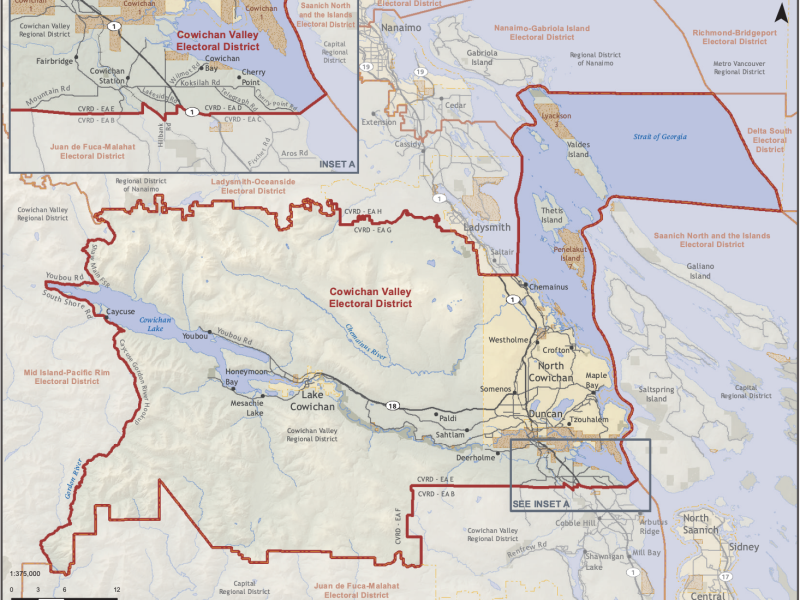
Not sure which riding you’re in? Look up your address with Elections BC’s Where to Vote tool, or see our Cowichan Valley guide to the 2026 B.C. election for candidate links, party platforms and how to vote.
Cowichan Valley
Candidates: Bert Chen, Conservative Party; James Chumsa, Communist Party of B.C.; Justin Douglas, BC Green Party; Debra Toporowski, BC NDP (incumbent).
1. Do you support converting the old Cowichan District Hospital for psychiatric and addictions care once the new hospital opens? What other mental health and addictions services would you bring to the valley?
Bert Chen, Conservative Party
Chen did not respond by the deadline.
“I studied criminology. Nobody chooses addiction, and leaving people to suffer on the sidewalk isn’t compassion. We’ll end the NDP’s safe supply program, stop illegal drug use in shelters, and use compassionate intervention to move people with addiction or mental illness off the street and into care. That comes with more treatment, crisis response and psychiatric services.” (Cowichan Valley Citizen candidate Q&A, Oct. 20)
“As MLA, my first priority will be working with Island Health and the Health Ministry to make Cowichan competitive for internal medicine specialists, so the hospital opens with the staff it needs.” (Cowichan Valley Citizen candidate Q&A, Oct. 20)
See their party profile and the Conservative Party of B.C.’s platform.
James Chumsa, Communist Party of B.C.
Of course, health care should be a human right and severely needs to be expanded in the province. Evidence based solutions such as housing first and safe supply initiatives are needed for many living on the streets and with addictions, along with voluntary care and elder care for the Cowichan Valley’s aging population. We can increase provincial funding for health care by ending tax-breaks and subsidies for corporations.
Justin Douglas, BC Green Party
Douglas acknowledged receiving The Discourse’s reader questions but did not file a response by the deadline.
Party position (BC Green Party): “Establish a working group to create a pilot project for 24/7 neighbourhood mental health centres across the province, incorporating diverse and representative experiences and perspectives and decreasing labour and cost on emergency and primary healthcare services.” (BC Greens 2026 platform)
Party position (BC Green Party): “Expand the existing rural/remote loan-forgiveness program model and create a dedicated BC Mental Health Workforce Scholarship and Loan-Repayment Program, structuring disbursement around demonstrated workforce shortages to encourage an increase in psychologists, psychiatrists, psychiatric nurses, clinical social workers, and addictions specialists.” (BC Greens 2026 platform)
See their party profile and the BC Green Party’s platform.
Debra Toporowski, BC NDP, incumbent
Mental health and addictions challenges impact so many families and people need to get the help they need when they ask for it. I know local officials have been in discussions with Island Health and this site isn’t the best next one to get appropriate mental health and addictions care up and running quickly and affordably in the region. But there’s no doubt the services are needed urgently, and planning for the next regional facility has been underway – a re-elected BC NDP government will complete that work to get more mental health and addictions services in the region.
Editor’s Note: In June 2026 the health minister said the province is planning beds for severe mental health and substance-use care at another southern Vancouver Island location, to serve the whole Island. No Cowichan Valley site has been announced.
2. What will you do to secure Crofton’s water and settle who owns and operates the weir?
Bert Chen, Conservative Party
Chen did not respond by the deadline.
“With the lost property tax revenues from the mill, the local Municipality of North Cowichan is unable to provide the funding to invest in an independent, municipally-owned water system for Crofton.” (Cowichan Valley Citizen, Oct. 19)
“As your MLA, I will secure the funding necessary to revitalize the entire Crofton mill site and ensure clean drinking water for residents.” (Cowichan Valley Citizen, Oct. 19)
See their party profile and the Conservative Party of B.C.’s platform.
James Chumsa, Communist Party of B.C.
The weir should be under public ownership with the Cowichan First Nation [Cowichan Tribes] having significant control as stewards of the watershed. The province needs to have a role in serving the Cowichan First Nation and all the people who rely on Crofton’s water. Water is essential to all life on Earth and should be protected as a human right.
Editor’s Note: The Cowichan Lake weir is owned and operated by Domtar under a provincial licence, and Domtar has agreed to run it until the end of 2026. Long-term ownership of the replacement weir, a project led by Cowichan Tribes, had not been settled as of May 2026.
Justin Douglas, BC Green Party
Douglas did not respond by the deadline.
Party position (BC Green Party): “Protect water resources for the benefit of people not profit, ensuring that drinking water, healthy ecosystems, and food security take priority over water use by AI data centres, industry, and bottled water companies.” (BC Greens 2026 platform)
Party position (BC Green Party): “Establish and fund regional watershed boards with First Nations, local governments and local water users to coordinate watershed planning, monitoring, restoration and proactive drought response, with meaningful authority over decisions affecting the watersheds they steward.” (BC Greens 2026 platform)
See their party profile and the BC Green Party’s platform.
Debra Toporowski, BC NDP, incumbent
We will not let Crofton’s water supply go unsecured. We have encouraged North Cowichan and Domtar to reach an agreement to permanently transfer a portion of Domtar’s water use licence to North Cowichan, and we would facilitate the process if needed. And for the longer term, we have provided over $18 million to support a replacement weir that will be higher and help increase water storage capacity and improve long-term watershed resilience.
Editor’s Note: As of August 2026 no agreement to transfer part of Domtar’s water licence to North Cowichan had been announced, and Domtar has committed to supply Crofton’s water only until the end of 2026.
Editor’s Note: The province committed $14 million in 2024, on top of $4 million provided earlier through the jointly funded B.C. Salmon Restoration and Innovation Fund. The new weir is designed to be 70 centimetres higher; as of May 2026 it was still in planning, with long-term ownership unresolved.
3. How should B.C.’s Declaration on the Rights of Indigenous Peoples Act shape land decisions in the Cowichan Valley, such as logging and watershed protection?
Bert Chen, Conservative Party
Chen did not respond by the deadline.
“And I’ll push to open new markets for BC wood so our workers aren’t at the mercy of Trump’s trade war, with First Nations as partners and owners in the recovery.” (Cowichan Valley Citizen candidate Q&A, Oct. 20)
Party position (Conservative Party): “The NDP has created unnecessary uncertainty in its approach to Aboriginal title litigation. British Columbians shouldn’t need a constitutional lawyer to know whether they own their home. • Protect private property rights: – Repeal DRIPA” (BC Conservatives platform)
See their party profile and the Conservative Party of B.C.’s platform.
James Chumsa, Communist Party of B.C.
No logging or any resource extraction on Cowichan land without full permission from the Cowichan First Nation. Whatever happens to the land should benefit the people on it and have minimal damage to the natural ecosystem. We need to repair the traditional relationship between Indigenous peoples and the land throughout the province if we are to build a sustainable future.
Justin Douglas, BC Green Party
Douglas did not respond by the deadline.
Party position (BC Green Party): “Remove uncertainty and opacity that currently exists by implementing the Declaration on the Rights of Indigenous Peoples Act through legislation.” (BC Greens 2026 platform)
Party position (BC Green Party): “Call on the Eby Government to issue a formal apology to the Cowichan and Gitxaała for mishandling his government’s approach to DRIPA.” (BC Greens 2026 platform)
See their party profile and the BC Green Party’s platform.
Debra Toporowski, BC NDP, incumbent
We’re working together with First Nations to create jobs and opportunity by growing the economy so that we can build a stronger future for everyone in B.C. First Nations in the region are taking leading roles in forestry, keeping investment in our local communities, and we have seen how partnerships like the Cowichan Watershed Board together with the province can strengthen our watershed management. The Conservative Party’s plan to repeal DRIPA would cancel those projects and cost British Columbians thousands of jobs.
Editor’s Note: The BC Conservatives have pledged to repeal DRIPA. The Discourse found no independent estimate of how many jobs or projects the repeal would affect. The Cowichan Watershed Board was created in 2010, nine years before DRIPA became law.
Ladysmith-Oceanside
Candidates: Stephanie Higginson, BC NDP (incumbent); Kris McNichol, Conservative Party; Charlene Smylie, BC Green Party.
1. What would you do to protect old-growth forests?
Stephanie Higginson, BC NDP, incumbent
Our ancient forests are irreplaceable and essential to our biodiversity, culture, and way of life. The BC NDP has a plan to establish a new $50 million fund to convert deferrals into permanent protections for the rarest and most irreplaceable old growth. This builds on our work that reduced old-growth harvesting by 75 per cent compared to 2015 levels, and deferred or protected six million hectares of old growth from logging.
Editor’s Note: The most recent provincial figures (March 2024) show old-growth harvest fell from 66,526 hectares in 2015 to a preliminary 28,688 hectares in 2022, about 57 per cent lower. The Discourse could not find a published source for a 75 per cent reduction.
The roughly six million hectares includes about 3.7 million hectares protected before 2021; about 2.4 million hectares have been deferred or protected since November 2021, and deferrals are temporary (B.C. Forests Ministry, February 2025 figures).
Kris McNichol, Conservative Party
McNichol did not respond by the deadline.
Party position (Conservative Party): “Resolve the old growth deferrals, which have dragged on under the NDP. We will protect original old growth and the most endangered and rarest ecosystems and return remaining land to the working forest.” (BC Conservatives platform)
See their party profile and the Conservative Party of B.C.’s platform.
Charlene Smylie, BC Green Party
The BC Greens will implement all 14 recommendations from the Old Growth Strategic Review with number one being full Indigenous involvement.
2. How will you support climate action, including a zero-emissions economy?
Stephanie Higginson, BC NDP, incumbent
We are taking real steps to cut pollution, expand clean energy, and protect our watersheds and rich biodiversity. B.C. has made significant progress in our goal of cutting emissions by 75 per cent by 2030, with a 50 per cent cut achieved two years early. A re-elected BC NDP government will continue to work to virtually eliminate methane emissions by 2035 [industrial], unlike the BC Conservatives who would roll back environmental protections and stall our progress on climate action.
Editor’s Note: B.C.’s legislated target is a 40 per cent cut in total greenhouse gas emissions below 2007 levels by 2030. The 75 per cent target applies only to methane from the oil and gas sector, measured against 2014 levels (Climate Change Accountability Report; BC Energy Regulator).
The 50 per cent cut refers to methane from oil and gas, which fell 51 per cent from 2014 to 2023 and met the 2025 target two years early (Pembina Institute). B.C.’s total emissions in 2023 were about six per cent below 2007 levels (provincial inventory).
Kris McNichol, Conservative Party
McNichol did not respond by the deadline.
Party position (Conservative Party): “The Conservative Party of BC takes seriously the need to reduce global emissions. That is why every climate decision we make will pass three tests: Does it protect people from fires, floods, heat and drought? Does it cut emissions rather than just move them, and the jobs that go with them, overseas to somewhere dirtier? And what are the measurable results?” (BC Conservatives platform)
Party position (Conservative Party): “Repeal CleanBC to remove barriers to investment and growth.” (BC Conservatives platform)
See their party profile and the Conservative Party of B.C.’s platform.
Charlene Smylie, BC Green Party
We need to start treating this like the emergency it is and move forward with meaningful action. Fossil fuel subsidies need to end and we need to invest in community centred renewables and [public EV charging].
3. How should B.C.’s Declaration on the Rights of Indigenous Peoples Act shape land decisions in the Cowichan Valley, such as logging, the Cowichan estuary and water?
Stephanie Higginson, BC NDP, incumbent
We’re working together with First Nations to create jobs and opportunity by growing the economy so that we can build a stronger future for everyone in B.C. First Nations in the region are taking leading roles in forestry, keeping investment in our local communities, and we have seen how partnerships like the Cowichan Watershed Board together with the province [co-chaired by Cowichan Tribes and the Cowichan Valley Regional District] can strengthen our watershed management. The Conservative Party’s plan to repeal DRIPA would cancel those projects and cost British Columbians thousands of jobs.
Editor’s Note: The BC Conservatives have pledged to repeal DRIPA. The Discourse found no independent estimate of how many jobs or projects repeal would affect, and the Cowichan Watershed Board was created in 2010, nine years before DRIPA became law.
Kris McNichol, Conservative Party
McNichol did not respond by the deadline.
Party position (Conservative Party): “The NDP has created unnecessary uncertainty in its approach to Aboriginal title litigation. British Columbians shouldn’t need a constitutional lawyer to know whether they own their home. • Protect private property rights: – Repeal DRIPA” (BC Conservatives platform)
Party position (Conservative Party): “First Nations participation. We will encourage Indigenous participation in the forestry industry by investing in skills training, and we will ensure First Nations benefit fully from any federal funding to support the industry and to compensate for trade-related and other threats to forestry communities.” (BC Conservatives platform)
See their party profile and the Conservative Party of B.C.’s platform.
Charlene Smylie, BC Green Party
[DRIPA is] the framework for all decisions related to land and water and must be honoured.
Juan de Fuca-Malahat
Candidates: Jeff Brown, Christian Heritage Party of B.C.; David Evans, BC Green Party; Shane Friesen, OneBC; Mike Hicks, Conservative Party; Dana Lajeunesse, BC NDP (incumbent).
1. What would you do to protect old-growth forests?
Jeff Brown, Christian Heritage Party of B.C.
As a Christian Heritage Party candidate, I believe in stewardship of creation while protecting the livelihoods of rural working families. We must safeguard irreplaceable old-growth ecosystems through targeted conservation while ending raw log exports to ensure value-added manufacturing remains in B.C. Top-down central planning from Victoria fails both our forests and forestry workers; local community stewardship and market-driven processing produce far better long-term outcomes.
David Evans, BC Green Party
Old-growth forests are a precious and non-renewable resource.
We will protect forests that should no longer be part of the timber supply. We will permanently protect big-treed old growth and old second-growth forests from logging and invest in conservation financing to support First Nations and communities in protecting these forests. We will fully implement the Old Growth Strategic Review in partnership with First Nations, including its call to make ecosystem health and biodiversity an overarching priority in forest management.
Shane Friesen, OneBC
Friesen did not respond by the deadline.
Party position (OneBC): “Increase the allowable yearly cut to ensure our forest sector has the available wood fibre to grow and thrive” (OneBC Priorities page)
See their party profile and the OneBC’s priorities.
Mike Hicks, Conservative Party
Hicks did not respond by the deadline.
See their party profile and the Conservative Party of B.C.’s platform.
Dana Lajeunesse, BC NDP, incumbent
We can protect our irreplaceable old-growth forests while supporting good forestry jobs. We’ve already reduced old-growth harvesting by 75 per cent compared to 2015, with six million hectares deferred or protected, and we’ll continue protecting forests while helping mills transition to second-growth timber.
Editor’s Note: The most recent provincial figures (March 2024) show old-growth harvest fell from 66,526 hectares in 2015 to a preliminary 28,688 hectares in 2022, about 57 per cent lower. The Discourse could not find a published source for a 75 per cent reduction.
The roughly six million hectares includes about 3.7 million hectares protected before 2021; about 2.4 million hectares have been deferred or protected since November 2021, and deferrals are temporary (B.C. Forests Ministry, February 2025 figures).
2. How will you support climate action, including a zero-emissions economy?
Jeff Brown, Christian Heritage Party of B.C.
True environmental stewardship relies on free-market innovation and technological progress, not government-mandated “zero-emission” targets that skyrocket energy costs for working families. I strongly oppose regressive carbon taxes and central planning mandates that pick winners and losers at the taxpayer’s expense. Instead, we must unleash local innovation, build resilient infrastructure, and allow free enterprise to deliver practical, affordable environmental solutions.
Editor’s Note: B.C. eliminated its consumer carbon tax on April 1, 2025; carbon pricing for large industrial emitters remains in place.
David Evans, BC Green Party
BC needs to begin a managed transition away from our dependence on fossil fuels: We will stop further expansion of fossil fuel production and infrastructure, require major polluters to reduce their emissions and end public support for expanding the industry. Where oil and gas production continues during this transition, British Columbians should receive a fair return from publicly owned resources [and] we will reform resource royalties and strengthen industrial carbon pricing so that companies profiting from our resources and producing significant pollution contribute their fair share.
As vehicles switch from gasoline to electricity, buildings replace gas furnaces with heat pumps, and industries adopt electric technologies, we will target electricity supplying at least 35 per cent of BC’s total energy needs by 2035 and we will plan the electricity system now to make sure the clean power is there when people and businesses need it.
Editor’s Note Electricity supplied about 18 per cent of B.C.’s end-use energy in 2020 (Canada Energy Regulator).
Shane Friesen, OneBC
Friesen did not respond by the deadline.
See their party profile and the OneBC’s priorities.
Mike Hicks, Conservative Party
Hicks did not respond by the deadline.
Party position (Conservative Party): “The Conservative Party of BC takes seriously the need to reduce global emissions. That is why every climate decision we make will pass three tests: Does it protect people from fires, floods, heat and drought? Does it cut emissions rather than just move them, and the jobs that go with them, overseas to somewhere dirtier? And what are the measurable results?” (BC Conservatives platform)
Party position (Conservative Party): “Repeal CleanBC to remove barriers to investment and growth.” (BC Conservatives platform)
See their party profile and the Conservative Party of B.C.’s platform.
Dana Lajeunesse, BC NDP, incumbent
Climate change is already affecting our communities, and we need to keep cutting emissions while building a strong economy. We’ll continue investing in clean energy, helping businesses reduce emissions and making it easier for people to choose electric vehicles and heat pumps, while creating good jobs in a cleaner economy.
3. How should B.C.’s Declaration on the Rights of Indigenous Peoples Act shape land decisions in the Cowichan Valley, such as logging, the Cowichan estuary and water?
Jeff Brown, Christian Heritage Party of B.C.
Effective land and water management requires clear property rights, equal protection under the law and genuine voluntary partnerships between local First Nations, residents, and industry. Rather than creating layers of bureaucratic uncertainty and legal gridlock that halt local enterprise, we should foster collaborative, market-based agreements that respect property owners and local workers. Watershed protection is best achieved through transparent, community-led stewardship rather than centralized Victoria mandates.
David Evans, BC Green Party
The Declaration on the Rights of Indigenous Peoples Act (DRIPA) provides a framework for reconciliation, outlining the work the government must do to set the stage for this future — free, prior and informed consent is crucial, especially in a time of fast tracking and trade wars. Leaders have been clear that “economic urgency does not override our inherent and constitutionally protected First Nations title and rights, nor does it diminish the Crown’s obligation to consult and cooperate in good faith with First Nations in order to obtain their free, prior, and informed consent before approving or advancing projects affecting our lands, territories or resources.”*
What this means in terms of logging, the Cowichan estuary and water is that related decisions must be made in full partnership with the Cowichan Tribes, ensuring that the cultural needs are met before economic decisions are made. Protection of the natural landscape such as forests, wetlands and the Cowichan River is a primary consideration, ensuring their sustainability for the future, as they were in the past.
*Source cited by Evans: Union of B.C. Indian Chiefs
Editor’s Note: The quotation Evans cites is from the Union of B.C. Indian Chiefs’ Women’s Declaration of Sept. 24, 2026.
Shane Friesen, OneBC
Friesen did not respond by the deadline.
Party position (OneBC): “Repeal DRIPA and declare UNDRIP to have no force and effect in BC” (OneBC Priorities page)
Party position (OneBC): “Halt all voluntary transfers of cash, land, and control over public resources to band governments” (OneBC Priorities page)
See their party profile and the OneBC’s priorities.
Mike Hicks, Conservative Party
Hicks did not respond by the deadline.
“In law, we have to conquer or sign a treaty with the First Nations. We just arrived, we settled in, and we didn’t do any of it. And that’s why we have to have these treaties and we’re going to get them.” (CHEK News, Oct. 16)
“In law, as I understand it, English law, you can’t just move into an area and take it over; you either have to conquer the First Nations in a war or sign a treaty” (Surrey Now-Leader, Oct. 16)
See their party profile and the Conservative Party of B.C.’s platform.
Dana Lajeunesse, BC NDP, incumbent
I strongly support DRIPA because decisions about land and water need to be made in partnership with First Nations, respecting their rights and knowledge. Whether we’re talking about forestry, protecting the Cowichan estuary or managing our watersheds, we need to work together to protect these resources for future generations while supporting sustainable economic opportunities.
What did you think of this story?
Your feedback after we publish a story helps ensure we're always improving our reporting to better serve you
Authors

Related Articles
Cowichan Valley’s guide to the 2026 B.C. election
What riding am I in? Who are the candidates? When do I vote? The B.C. election basics for Cowichan Valley residents.

Cowichan Valley local election candidates on natural disaster preparedness
In the summer months, the threat of wildfire is becoming more frequent. In the winter, there’s flooding. What do the candidates suggest doing to prepare?
Voting in the 2026 Cowichan Valley local elections? Here’s what you need to know
Where, when and how to cast your ballot in North Cowichan, Duncan, Ladysmith, Lake Cowichan and the Cowichan Valley Regional District for the 2026 local elections.