
As soon as you turn onto the long driveway leading to The Hawthorn in Glenora, it’s clear you have come someplace different. Hawthorn and black locust trees arch over the drive, serving almost as a portal to another world. In the winter it’s even more enchanting, as a profusion of snowdrops line both sides of the driveway.
A decade ago, I had the good fortune of regularly coming down that driveway to study herbal medicine with Bernice Woollam who, along with her late husband and painter Will Julsing, transformed their two-acre property into a place many who visit describe as magical and mystical. For many years, it was the site of herbal medicine classes, clinics and workshops as well as art retreats, all advertised only by word of mouth.
The Hawthorn is named after the property’s 20 or so hawthorn trees, a species whose berries, leaves and flowers have been used as heart tonics since ancient times — and modern research confirms their efficacy. According to Woollam, as the hawthorns have grown, so has the healing energy of The Hawthorn. The “incredible sacred energy” of the land, in tandem with herbal applications of plants grown on The Hawthorn property, has saved many lives over the years, she says.
Now 87, Woollam is like a Doctor Dolittle of the plant world, talking and listening to the trees, flowers and everything that’s alive at The Hawthorn. She is considered a mentor to many for her plant knowledge, as well as for her everything-is-connected life philosophy and commitment to following her intuition and beliefs. This year marks her 50th year on the property.

Fostering a connection to all living things
Folk herbalists never retire, Woollam says. She stopped teaching students and hosting retreats a few years ago due to health issues, including broken back bones that reduced her height by four inches. However, she has regained much of her mobility, and she continues to make herbal medicines to treat herself as well as the occasional patient, including those referred by medical professionals who have come to trust her expertise.
When she taught herbal medicine, Woollam accepted no more than six students at a time, who were all required to make a full-year commitment to attend weekly classes. She explains that it’s important for those studying herbs to “to see, taste, touch, feel, experience the living plant” at different stages of the year.
In later years, each class would begin with students heading to their individually chosen spots on the property to sit for 30 minutes and tune in to their surroundings. This literal grounding connected students to the land and opened them up for learning, in line with Woollam’s intention to cultivate reverence and connection with all living things. “Every human being, if they so choose, can enter the world of spiritual comprehension and connection with every bird, bee, flower, tree and plant that exists. When that happens, healing at so many levels can take place,” Woollam explains. “Go out in nature? You are nature!”

After those contemplative 30 minutes, students would come inside to sip tea and guess which herbs Woollam had put in it, and do a general check-in. Always one to go with the flow, Woollam says she liked being able to make adjustments to the day’s plan based on any ailments or relevant issues that came up.
After some classroom time to learn the attributes of a particular plant, students would usually get their hands dirty, digging up roots such as elecampane, comfrey and valerian in the garden beds or picking lemon balm, mullein, hawthorn or other plants ready for harvest. The rest of the day involved processing the harvested plant into herbal tinctures, teas or salves.
After one full year of study, students tended to want more, so on average each cohort ended up staying at The Hawthorn for about three years, Woollam says.
Following her intuition from Alberta to Glenora
Woollam didn’t start formally studying herbal medicine until she was in her late 50s, but in a way it was something she had been preparing for all her life.
Very little of her life has been planned, Woollam says. Instead she has always followed “some deep intuition,” which brought her to Vancouver Island, then to The Hawthorn and eventually to herbal medicine.
Born in Perryvale in northern Alberta — which has a population of 10 according to the 2021 census — Woollam says she spent the first three years of her life immersed in the wild, literally walking with wolves. Her family then moved to Athabasca, a small town of about 200 back then, where she had a couple of profound experiences.
“One day I was about four years old and I was lying on my back on the ground outside this little house my dad had built and I was looking up at the sky and had the experience of my lifetime. I utterly fell through the sky and back again and I understand utterly quantum physics. I got it, so to speak,” Woollam recalls.
Another time, she was walking alone in a forest and came upon a patch of wild violets in bloom. “I sat down and I totally understood — I certainly didn’t know the word herbalist — all I knew was that plants spoke to me and I could hear the plants. Those wild violets gave me such enormous strength and comfort … I totally understood that a plant could heal you.”
Growing up, Woollam says no one taught her about herbal remedies; they were simply something she absorbed by living so rurally. For example, she says she knew to make tea with fir or spruce needles if someone was sick, in the same way that no one taught her what a carrot in the garden was.
Woollam spent her teenage years in Edmonton, where she also lived with her first husband John Cunningham, but she retained the earthiness and independence of her rural early childhood. For example, in a time when everyone else was giving their kids aspirin, she says she would let fevers run their course because fevers are part of healing. She also didn’t let her kids take antibiotics, with the exception of one time when penicillin was needed for one of her children with pneumonia.
Woollam fell in love with the topography of Vancouver Island during a vacation with Cunningham sometime in the 1950s, and knew “absolutely” that she would live there someday. That someday happened in 1965 when she convinced her second husband Ray Woollam, who had partially grown up on the island, to move to Sidney and then a couple years later they bought the Maple Bay Inn, where he led group therapy workshops.
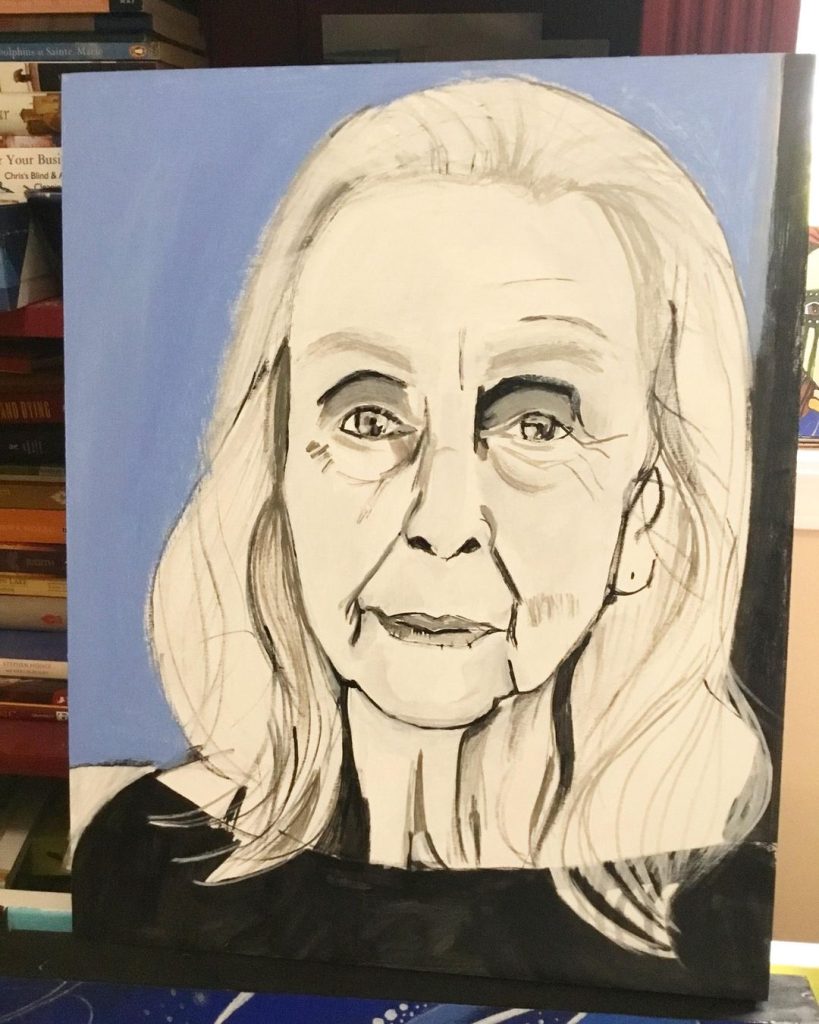
After selling the Inn in 1971, the couple bought a 12-acre property on Stamps Road where they hosted conferences, raised animals and children and Woollam honed her gardening skills, yet the property was too manicured for her tastes. Where she fantasized about living was a property in Glenora owned by a painter friend Arnold Burrell, who had let a 38-acre apple orchard from 1906 go wild and had, by the time they met him, sold off all but two acres.
Even though the property was covered in blackberry bushes, on her first visit Woollam immediately felt connected to the land. “I knew this is where I wanted to be,” she recalls. “I hungered to go back to my roots as a child when I lived in the bush.”
During this time she and Ray Woollam decided to end their marriage but remain close friends. Woollam had fallen in love with painter Will Julsing, who was also drawn to Burrell’s property. After a long vacation in Mexico, they returned to the surprising news that Burrell was wanting to sell.
Creating the Hawthorn, training to be an herbalist
On March 1, 1974, Woollam, along with Julsing, her three youngest children and her ex-husband Ray Woollam, moved onto the land and got to work clearing out the 30-foot-high blackberry bushes. She says their intention wasn’t to tame the land, but to understand it, and integrate themselves into it.
Woollam dug vegetable and herb gardens, but most of her efforts were aimed at allowing the land to reveal itself. By removing twigs and branches — but not leaves — along the driveway, she allowed snowdrops to begin flourishing each winter. Clearing out the blackberries uncovered 20 hawthorn trees, a species she recognized but didn’t know for its medicinal benefits at the time.
She and Julsing spent as much time as possible on the property, but when there were expenses such as a new roof, they would take on odd jobs. Sometimes, Woollam went afar to be a cook in tree-planting bush camps, other times she did local carpentry jobs or worked seeding trees at night for a forestry nursery.

But by the early 1990s, Woollam had become restless. Her children were all off on their own and she was ready for a new challenge. One day, Julsing handed her a pamphlet for a three-month herbal medicine intensive with Self-Heal Herbs in Victoria. Even though they couldn’t afford the $2,000 course, it sounded like something she was destined to do, Woollam recalls.
The next day, they went to Victoria to introduce themselves to herbalist Don Ollsin and find out more about the course. They hit it off, and when Ollsin learned that Julsing was a painter, he offered to accept a painting as payment for the course, even though he had never seen Julsing’s work.
Woollam quickly discovered she had found her calling. She says the course was amazing, as Ollsin brought in leading herbalists such as Ellen White, Rosemary Gladstar and Ryan Drum as guest teachers. She appreciated that the course wasn’t about “taking this to fix that,” but about integrating emotions, spirits and Indigenous teachings along with all the facts.
“All that I had felt and experienced for 50-something years of my life, it was all coming together in a way that blossomed and held the fruits and seeds of further generations,” Woollam recalls.
Not long after she completed the intensive, Ollsin asked Woollam if she would co-teach herbal medicine weekends with him on her land. By then, Woollam and Julsing had turned a storage shed into a beautiful home, and the heritage house on the property (also called The Hawthorn because it’s where a lot of the hawthorn trees are) could house workshop participants.
The retreats were a hit and within a few years, acclaimed artist Anna Rhodes was leading art retreats at The Hawthorn three times a year. By then, with a growing reputation in the herbal community, Woollam had started treating patients and taking on her own students, often with medical backgrounds such as nursing.
The overall property got officially named The Hawthorn when The Herbal Collective magazine did a cover story in the mid-1990s about the retreats being offered there, and the reporter wanted to know if the property had a name. Woollam agreed to call it The Hawthorn not just because there are so many hawthorn trees but because of what they signify.
“The hawthorn is a herb of the heart, and the reason I came here was for the reason of the heart, not ‘how do I make a living,’” Woollam says.
When Julsing was diagnosed with a serious heart condition, she says his doctor was so impressed by the effectiveness of Woollam’s hawthorn-based treatments that said he would incorporate what she had done into his treatments for other patients. Julsing died in 2006 and there are still some strips of cloth from his celebration of life that can be seen hanging from trees along the driveway.

A mentor and role model for many
Recently, Kelly Johnson, a retired registered massage therapist on Salt Spring Island, was in a workshop where participants were asked to write about the most influential person in their life. Without hesitation, Johnson chose Woollam.
“It’s like no other relationship I have with anybody else,” Johnson says. She describes Woollam as her mentor, teacher and most of all, her friend, who has been a source of “consistent support” over the years.
They met 26 years ago while taking a year-long herbal medicine course with Ollsin, half of which was held at The Hawthorn. Johnson says it was a magical experience, with great food, piano playing and outdoor drumming circles in addition to the teachings “all enveloped in the mysticism of The Hawthorn.”
Johnson developed a deep friendship with Woollam, and sometimes she and some of her friends would ask Woollam to teach them for informal weekend workshops at The Hawthorn.
It was special to wake up and go out to collect herbs and process them fresh from the garden into medicine, Johnson recalls. “We nurture the plants and then we harvest them with the sensitivity that Bernice has taught us, talking to the plants and all of that good energy goes into the medicine. That’s why it’s so, so potent,” she says, adding that the person she is today has been largely shaped by the teachings, experiences and relationships facilitated by Woollam.
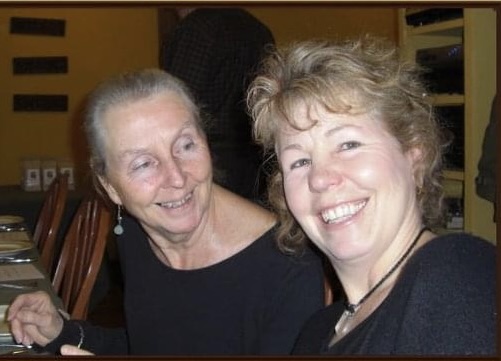
When Kori Kelloway, a social worker who works in health, first came to The Hawthorn in 2005, she says it felt “like coming home.” The Duncan resident bonded immediately with Woollam and went on to cook for some of the retreats, and even lived at The Hawthorn for a couple of brief spells.
Kelloway considers Woollam a role model for always staying true to her values and passions.
“It is her way of being that has been able to create such magic around her, because she’s not settled for what society says. She has followed her heart and followed her dreams,” Kelloway says. “Bernice has definitely modeled for me thinking outside the box, that there’s always an alternative … just dream it and you can make it happen.“
Kelloway says Woollam is the most giving person she has ever met. When people call on her, no matter what is going on in her own life, Woollam is there for those in need, Kelloway says.
She notes how, in addition to helping people with her plant knowledge, Woollam has been a leading voice in local issues, including a lengthy and ultimately successful battle to protect lands adjacent to The Hawthorn from becoming a gravel pit. Kelloway says, “What she’s brought to community is just huge.”
The land provides strength and guidance

About five years ago, an ancient apple tree on the property collapsed, with part of it forming an upside down heart. It has become one of Woollam’s cherished places to go on the property, particularly when she is overwhelmed by grief. She has suffered a lot of loss — her three husbands are now dead, as are two of her children and most recently her partner, medical herbalist Rowan Hamilton.
Hamilton had been one of Woollam’s teachers back when she started studying herbalism and they became friends. He moved to The Hawthorn in 2014, and together they taught their final cohort of students for a couple of years until Woollam’s health issues meant that she could only get around with the use of electric stair chairs or a walker.
She says Hamilton was “indomitable” in providing 24-7 care, using his vast Chinese medicine and medical herbalist knowledge to help her back to strength. Woollam says that her recovery was “profoundly facilitated by his wisdom, his depth of compassionate attention.”
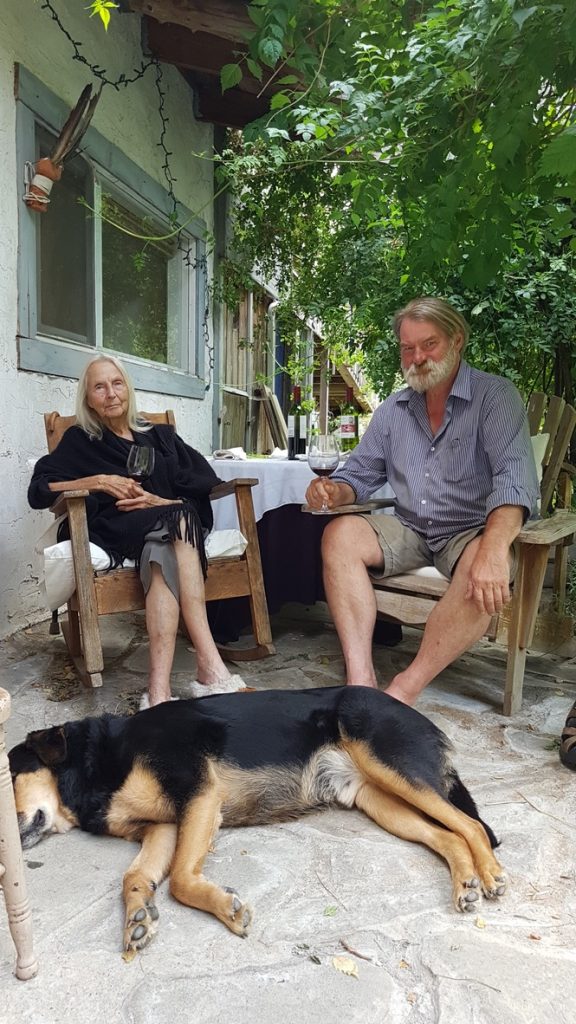
Sadly, the tables turned when Hamilton, 15 years Woollam’s junior, was diagnosed with a brain tumour last year, and she had to care for him. While he outlived his prognosis by many months thanks to herbal remedies and his strong constitution, Hamilton died in March 2023 at age 71. At his memorial service in June, many people remarked how Hamilton had found love and peace at The Hawthorn.
Every day, Woollam says she gives thanks to the land for supporting her spiritually and physiologically, giving her the strength and guidance to carry on amid such sorrow.
It’s hard to imagine The Hawthorn without Woollam, whose essence feels intertwined with every part of the property. She has some wishes for whoever has the good fortune of living at The Hawthorn after her.
“My hope is that those people who continue to be able to live here will begin to comprehend the depths of the spiritual place that this land holds — it offers, it chooses to be embraced at that level. So that is my hope, that it not be lived in by people who want to use it for their own ends, but rather that they are here and learn to understand that they are eternally connected to every blade of grass,” she says.
“I am hopeful that the land will begin to teach them and that they will be able to hear and then find a deeper meaningful contribution to all that is by being here.”