
Council decision puts logging back on the table for North Cowichan’s municipal forest reserve
Critics warn the move could undermine years of work toward a forest co-management framework with the Quw’utsun Nation.
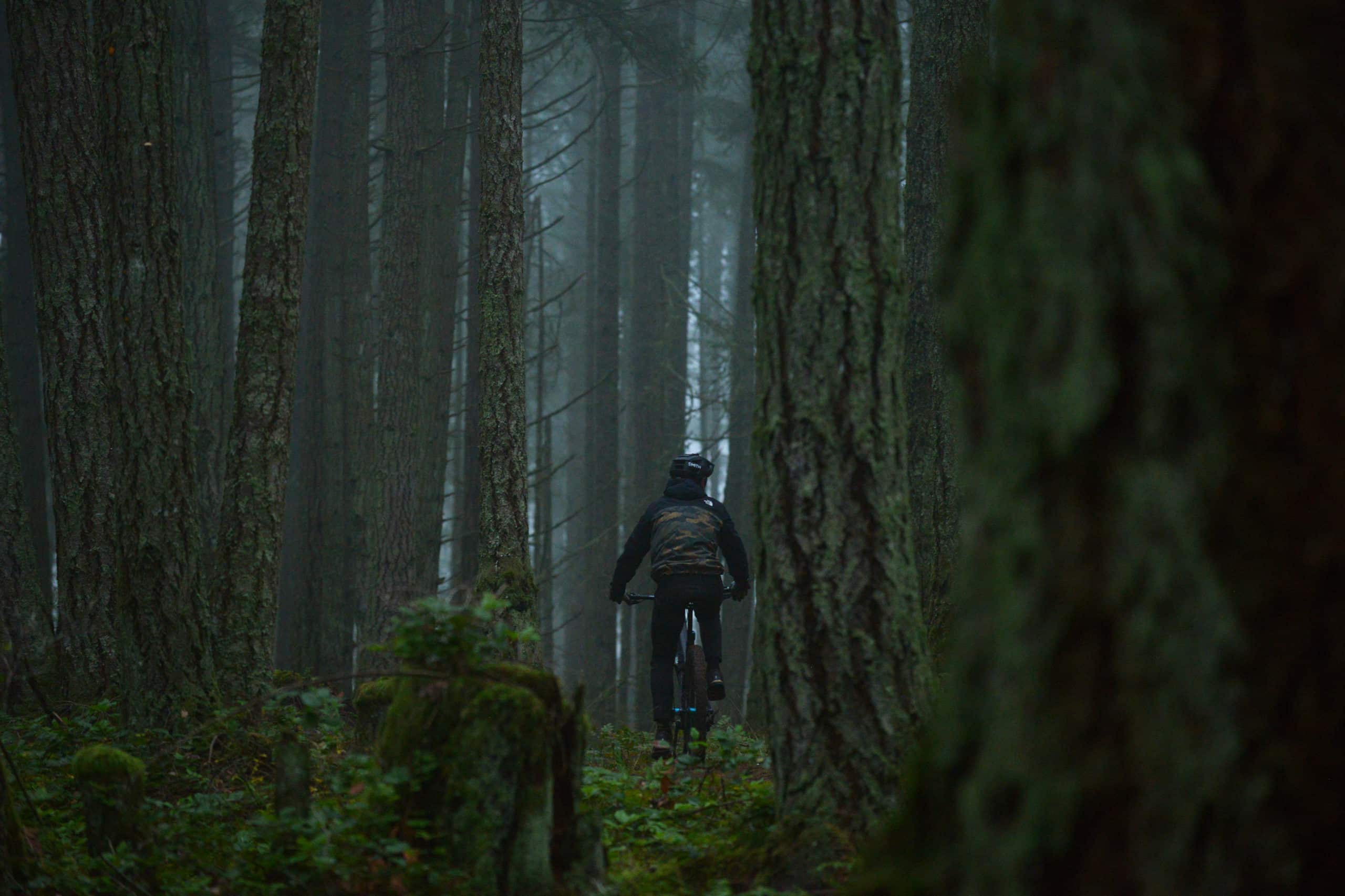
North Cowichan council has voted to make logging in the municipal forest reserve a strategic priority, despite warnings from some councillors and staff that the move could jeopardize years of work with the Quw’utsun Nation on a forest co-management framework.
Timber harvesting in the roughly 5,000-hectare public forest has been on pause since 2019 to allow for public engagement, consultation with local First Nations and advice from experts on how to manage the publicly-owned woodland. Surveys conducted during that process found a majority of residents preferred conservation over harvesting — with 67 per cent of telephone respondents and 76 per cent of online respondents supporting either limiting timber harvesting to areas where it could protect or enhance the ecosystem, or not harvesting timber at all.
In 2021, North Cowichan signed a memorandum of understanding with the Quw’utsun Nation — which includes Cowichan Tribes, Halalt First Nation, Lyackson First Nation, Penelakut Tribe, and Stz’uminus First Nation. Since then, staff have been working to incorporate both the Nation’s and municipality’s interests into the forest’s future.

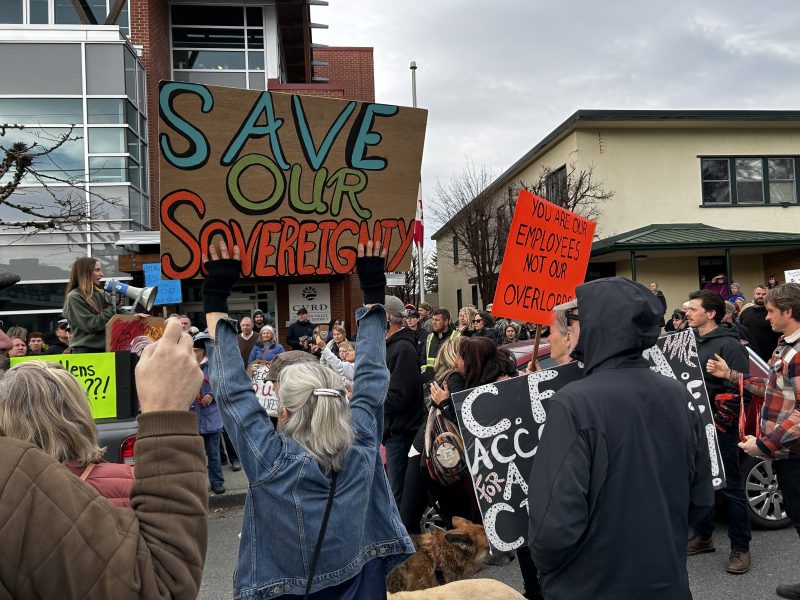
The Aug. 20 decision to prioritize timber harvesting in the forest came after a five-hour council meeting where members of the public voiced opposition to revisiting the question of logging in the municipal forest.
“I have never felt so emotional,” resident Sandy McPherson said during the public input period. “I am really angry that some of this is even coming to the council table. There is not a price to be put on the forest reserve that can be monetary.”
The motion passed 4-3, with councillors Christopher Justice and Chris Istace and Mayor Rob Douglas opposed.
While it could take years before harvesting resumes, some around the council table warned that exploring harvesting options could negatively impact progress made towards a co-management framework with the Quw’utsun Nation.
“We should not even be having this discussion,” Istace said at the meeting. “It’s disrespectful, and it goes against what this council voted on together as a group prior and we have a commitment to stand behind that in a spirit of reconciliation.”
Speaking on behalf of Cowichan Tribes, a member of the Quw’utsun Nation, Chief Cindy Daniels said in a statement the Nation has a responsibility to protect culturally significant sites and a right to be consulted when it comes to resource development in their territory.
“Seeking to move ahead with logging in the Municipal Forest Reserve before the co-management framework and plan are complete undermines the collaborative nature of this work to date,” she said.
Managing stolen land
In 2018, a group of community members organized a grassroots effort urging the municipality to pause logging and hold consultations with First Nations, experts and the public to determine how the municipal forest should be managed.
The lands were originally privatized as part of the E&N land grants of the 1880s, which saw around 85 per cent of Hul’qumi’num member nations’ traditional territories taken by both the federal and provincial governments without any compensation or treaty negotiations. The lands were granted to the E&N railway and its owner, coal baron Robert Dunsmuir.
The Hul’qumi’num Treaty Group calls this deal “a clear act of colonial theft,” and continues to dispute its validity.
As part of the more recent municipal forest reserve consultation process, North Cowichan hired forestry experts from the University of British Columbia to develop four scenarios for the forest based on community feedback:
- Status Quo — Continue timber harvesting as it has been done in the past
- Reduced Harvesting — Cut the timber harvest to 40 per cent of historic levels, with a focus on minimizing negative environmental and social impacts
- Active Conservation — Timber harvesting is limited to areas where cutting trees can help to protect or enhance rare ecosystems
- Passive Conservation — No timber is harvested, with exceptions for cutting trees that pose a fire risk or safety hazard
The consultants said moving away from status-quo logging could bring a range of benefits, including improved water quality, better habitat for plants and animals, reduced fire risk, improved viewscapes and increased wilderness recreation.
However, an April 2024 report to council noted that the working group between the municipality and Quw’utsun Nation also identified that the initial UBC analysis did not take into account culturally sensitive areas.
“More discussion will be required to develop strategies to identify, map and incorporate culturally sensitive areas into future management planning,” the report reads.

Council considers logging amid co-managent talks
For the past six years, the North Cowichan has largely followed a passive conservation approach, aside from limited FireSmart operations and removal of dangerous trees.
“The issue I have is we have a memorandum of understanding with Quw’utsun Nation. But that doesn’t limit us from still monetizing the asset that we own in fee simple title,” Coun. Bruce Findlay said at the Aug. 20 meeting.
“We’re not saying, ‘Hey, you know what? We’re throwing this in the face of any sort of discussion with you as a nation.’ It’s more of a, ‘While the discussion is going on, can we look at alternatives to securing some monetization,’” Findlay said.
Douglas argued the decision leaves little doubt that North Cowichan is preparing to restart logging, pointing to its inclusion in the strategic plan as evidence.
“If you’re working towards a co-management framework and then one party decides to make a pretty drastic change in their approach with forest management, I really don’t see how one can argue that’s consistent with working towards co-management,” Douglas told The Discourse.
“This definitely breaks the spirit of the [memorandum of understanding]. Co-management isn’t just one party unilaterally deciding to change course.”
Douglas added that the municipality has also made other public commitments to work towards co-management of the forest reserve with the Quw’utsun Nation.
“I want to emphasize that we pursued the development of a co-management framework and plan with the Municipality of North Cowichan to ensure we are at the decision-making table when it comes to the Municipal Forest Reserve,” Cowichan Tribes Chief Daniels said in a statement.
Municipal forest reserve logging profits are uncertain
Findlay is one of the councillors who voted in favour of adding forest harvesting to the strategic plan, arguing the municipality is missing out on revenue from logging in the municipal forest reserve. He said in the Aug. 20 meeting as much as $12 million could have been added to the municipality’s revenue over the past six years, which, in turn, could be used to lower taxes for residents if historic maximums of timber were harvested.
However, Douglas (who previously served on the Forest Advisory Committee) said even if the municipality could turn a profit from logging, the current projections Findlay was pointing to don’t include staffing costs and the cost of building infrastructure to support logging, such as roads.
“That’s the challenge with projecting the profits from harvesting,” he said. “Maybe it’s $100,000, maybe it’s $400,000, but there is some risk involved.”

In a July 15 memorandum to council, staff projected that logging could generate $640,000 of annual revenue for 40 hectares logged under conventional harvesting practices. But those figures did not include wages for forestry staff, road building or safety upgrades.
For the year 2018, administration costs related to forest harvesting were $339,196 while road construction cost $155,687, according to the municipality’s annual harvesting report.
Douglas told The Discourse that while some years were more profitable than others, the average annual profit after expenses going back to 1987 was $132,739.
Another possible source of revenue is a carbon offset program. If the trees are left to grow, they capture and store carbon that would otherwise contribute to climate change. Through carbon offset programs, that benefit is quantified and then sold as credits to governments, businesses or individuals who wish to offset their carbon emissions. A feasibility study on the option was conducted by an environmental consulting group and reviewed by audit, tax and advisory company KPMG.
While this would be a bonus revenue source for North Cowichan, Douglas stressed that residents who responded to the survey in 2023 said they were motivated by the ecological benefits of conserving the forest rather than financial benefits.
“The overwhelming majority that picked the conservation focus scenarios, they gave the reasons why and it wasn’t about revenue, it wasn’t about economics,” he said. “They saw intrinsic value in the forest.”
Exploring the idea of carbon credits has been on hold while the municipality works with the Quw’utsun Nation on the co-management framework, according to Douglas.
An April 2024 report to council outlined staff findings over multiple meetings with the Quw’utsun Nation. Staff found the Nation’s interests “go beyond traditional forest management practices” and include aspects of future trail development, a forest carbon credit program, revenue sharing, culturally sensitive areas and biodiversity.
Will of the people
Residents of North Cowichan had the chance to tell the municipality what they thought should be done with the forest reserve during two rounds of public engagement.
To gauge public opinion, the municipality ran two surveys — one conducted by phone and the other online with an open link. The phone survey was considered statistically valid because it used a randomly selected group of 215 North Cowichan residents, was weighted to match Statistics Canada Census data and was of a sufficient sample size.
In both surveys respondents were asked to rank the four scenarios for the municipal forest from most preferred to least preferred. The phone survey found 38 per cent of respondents ranked active conservation as their first choice, while 29 per cent selected passive conservation as their preferred second choice. Status quo harvesting was the top choice for 20 per cent and reduced harvesting was ranked first by 12 per cent.
The online survey showed similar results. Forty-one per cent of respondents ranked active conservation first, and 35 per cent chose passive conservation as their top choice. Status quo harvesting was ranked first by 17 per cent and reduced harvesting was ranked first by seven per cent.
In an interview with the Discourse, Findlay said he believed the online survey results were skewed.
“It had an outcome they wanted to get to as far as the actual survey went. It was not limited to North Cowichan residents, which I think is flawed, since it is a North Cowichan asset,” he said. “I don’t really care what someone in Campbell River thinks about our forests. It’s got nothing to do with them.”
While the online survey was open to anyone with the link, a demographic profile of the 1,922 online respondents found that 63 per cent were from North Cowichan, seven per cent were from Duncan and 16 per cent lived elsewhere in the Cowichan Valley Regional District. Eleven per cent of online respondents lived elsewhere on Vancouver Island.
The results of the online and phone survey were compared and it was found that both highlighted consistent preference among respondents. Scenario three, active conservation, was ranked the highest option in both while scenario four, passive conservation, ranked a close second in both and scenario one, status quo, was the least preferred across both.

“I think it would just be completely arrogant of us — after spending many tens of thousands of dollars of taxpayers’ money to learn what the community really wants — to now think we know better and throw it all away … and return to harvesting,” Coun. Christopher Justice said at the Aug. 20 North Cowichan council meeting.
Findlay told The Discourse he believes all of the council members exist in “echo chambers” of people with differing political views and opinions on resource development.
“I hear from a lot of people, and a lot of people are telling me that they want to see forestry reenacted,” Findlay said. “They’re quite happy to see the potential of a forestry restart.”
Asked about those “echo chambers,” Douglas said he didn’t share Findlay’s perspective.
“Most of the people I run into have strong views on increasing the conservation focus on the municipal forest because they’re spending time out there,” he said. “These folks live in this community. They love this place because of its natural beauty, and the municipal forest reserve is a great example of that.”
Now that the motion has passed, staff will compile a report outlining the potential options for resuming harvesting in the forest reserve and council will decide if logging will start again at a future meeting.
At the meeting, chief administrative officer Ted Swabey said he expects restarting harvesting operations could take a long time and likely wouldn’t happen before the end of this council’s term next year. He added that while logging might be a priority for council, any harvesting would need to be planned carefully.
“If the electorate doesn’t like the decision we’ve made, then they may vote me out,” Findlay said. “If I’m reading the room wrong — and I don’t believe I am from what people tell me — and if the entire community is against me and I get voted out, then I obviously read the room wrong, but I don’t believe I am.”
What did you think of this story?
Your feedback after we publish a story helps ensure we're always improving our reporting to better serve you
Author

Related Articles
What to do and who to call when juvenile salmon are in danger
Officials say Cowichan Valley residents should call experts to move salmon in isolated pools because of risks associated with relocation.
How is The Discourse’s journalism funded?
And what does it cost to produce The Discourse’s in-depth, independent journalism?
Behind the backlash to the Cowichan Valley’s comprehensive zoning bylaw
The campaign against Bylaw 4710 was fuelled, in part, by misinformation and an organized group of advocates. What could this mean for the future of local politics?