
North Cowichan denies tax break for House of Grace Pregnancy Centre
The council also flipped a previous vote, approving continued tax breaks for Camp Qwanoes.
After two contentious meetings this month, North Cowichan’s municipal council voted against a property tax break for the House of Grace Pregnancy Centre, a faith-based service provider.
House of Grace opened its doors in Duncan in 2022, and is affiliated with the Pregnancy Care Canada network of Chrisitan crisis pregnancy centres. Advocates raised concerns that the centre might cause harm by seeking to dissuade people from seeking abortions.
Debate at the recent council meetings focused not only on House of Grace, but also on Camp Qwanoes, located in Crofton. The Christian camp received significant media attention recently, after The Discourse reported that staff must sign an agreement declaring that homosexuality and premarital sex, among other things,are sinful.
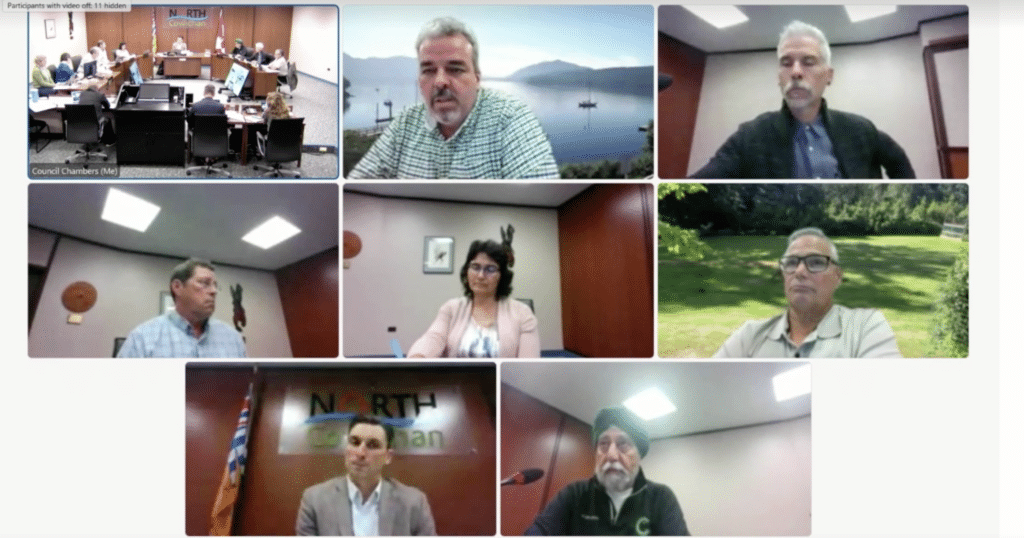
The Committee of the Whole provides recommendations, but final decisions on bylaws must be made in full council meetings. Although a majority of the councillors voted to exclude Camp Qwanoes at the Committee of the Whole meeting on Sept. 12, some flipped their votes and the tax break was approved during a Sept. 26 council meeting — with the caveat that the decision would be reviewed again in a year.
The debate also led council to decide to review and clarify its policies around choosing which groups should receive property tax breaks.
Every year, the Municipality of North Cowichan gives hundreds of thousands of dollars in tax breaks to churches and other organizations that provide public spaces and services to the community. The municipality’s permissive tax exemption policy asks councillors to primarily consider the “benefit that the organization offers to the community.”
Coun. Christopher Justice proposed that the policy be reviewed over the next year. “I find it’s just a little too ambiguous and I think to make good decisions we need to have some substantial analysis and recommendations based on a council policy that has some criteria for decision making,” he said. Those criteria might consider how an organization aligns with municipal values.
“This is about a lot of money — $627,000 — money that has to be made up by other taxpayers. I think it’s necessary to do this systematically and fairly,” Justice said. “It seems to me we need to think through and develop some sort of a beefed up policy with evaluation criteria which we can use to make better and more systematic decisions in future.”
Council voted to approve the proposal. Normally, council would pass its tax-exemption bylaw for a ten-year span. Instead, all groups will need to reapply next year and possibly face new criteria to be considered for the tax exemption.
Council denies tax exemption for House of Grace
At both meetings, members of the public spoke against granting permissive tax exemptions to House of Grace.
In July of last year, abortion rights advocates in the Cowichan Valley raised concerns around House of Grace’s opening in the community. The Discourse revealed that House of Grace aims to reach “the abortion vulnerable” and is “committed to assisting individuals [to] carry to term by providing emotional and spiritual support, practical assistance and community referrals.”

The documents also said the centre is committed to treating all of its clients with compassion and respect, and its executive director, Corina Finlay, said in an interview with The Discourse that House of Grace does not try to influence its clients decisions and does not pose as a medical or counselling centre.
At the committee of the whole meeting, Rhoda Taylor said that while she doesn’t contest that House of Grace can exist in the community, she “vigorously [opposes] the use of taxpayer dollars to support an organization which provides misinformation.” She also noted that resources to support people who are pregnant already exist in the community, naming the Margaret Moss Health Unit and the Healthiest Babies Possible program.
“This is a misuse of taxpayer dollars,” Taylor said. “Those citizens who wish to support House of Grace may do so but my money should not be allocated to House of Grace.”
Another community member, Mary Annis, also spoke out against providing tax exemptions to House of Grace. Annis alleged that counsellors at House of Grace misrepresent the organization by appearing to be a medical centre despite not having appropriately trained staff. Annis also alleged that it is aligned with a “fundamentalist religion with a view that abortion should not be an option for women or girls under any condition.”
Annis said House of Grace does not improve quality of life in the community — one of the main criteria for providing tax exemptions — and alleges it instead shares misinformation and uses scare tactics to deter people from having an abortion.
North Cowichan councillors didn’t spend much time discussing the House of Grace application at Committee of the Whole, but voted quickly to exclude House of Grace from the tax exemption bylaw. Councillors Bruce Findlay, Tek Manhas and Mike Caljouw voted to support the application, but were outvoted.
Coun. Bruce Findlay noted at the Sept. 12 meeting that House of Grace is not asking for much in terms of tax exemptions. A 50 per cent exemption would total $761 and a full exemption would total $1,522.
House of Grace executive director Finlay spoke to council on Sept. 26 and vehemently opposed comments made by Taylor and Annis at the previous meeting.
“We do not use the word ‘counsellors’ anywhere in our literature, and do not advertise as a medical clinic,” Finlay said. “We are transparent about who we are and what we offer. We love the woman in front of us and find it reprehensible to think that we could be accused of doing harm to women, and might use fear tactics to produce a desired outcome.”
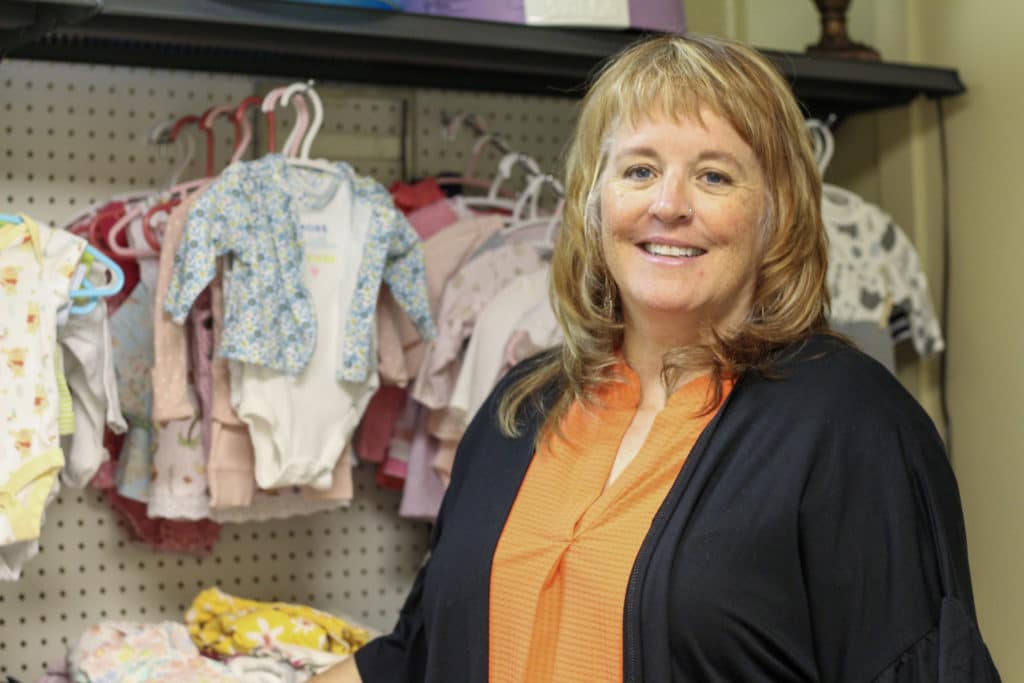
In a phone interview with The Discourse, Finlay said House of Grace spends equal time discussing three different options with its clients: abortion, adoption and parenting. She said clients aren’t referred for abortion by House of Grace because that falls under the purview of a family doctor.
At the council meeting, Finlay said that primary care providers in the community often don’t have time to help people make informed decisions about pregnancy options. She said House of Grace fills the gap of primary care providers by supporting people to make fully informed decisions so they can be sure about their next steps.
Coun. Chris Istace asked Finlay what House of Grace’s stance on abortion is, and she referred him to the organization’s sanctity of life statement, which says they “believe in life from conception to natural death.” When asked by Istace if and how this view is shared with clients, Finlay said they don’t speak with clients about any faith-related matters unless the client indicates they would like to talk about these things.
Speaking with The Discourse, Finlay said House of Grace has “made every effort to make sure [its] literature and website is very clear” about the organization’s sanctity of life statement.
The homepage of the House of Grace website includes one mention of “God’s grace” and its “About” page indicates that it is “a faith-based, Christian organization.” However, the centre’s position that life begins and must be protected from conception is not made clear. A search of the website for the words “sanctity” or “conception” return no results.
When asked what other ways House of Grace makes its position clear to clients, Finlay asserted that they follow a client-led approach, and don’t bring it up unless the client shares information about their faith or background.
When asked if the organization is anti-abortion, Finlay said that’s a political issue. She instead noted that abortion is a right in Canada and that House of Grace does not dissuade people from having an abortion.
At the council table, Justice said House of Grace applied for a grant in aid in January 2023 and at the time, several residents spoke up with concerns about granting funding to the organization. He said he hasn’t been convinced to change his views, and opposed granting a tax exemption to House of Grace.
“I think that the main thing for me is … that this organization does not provide a service that is not otherwise available through the public health system or otherwise,” Justice said.
Mayor Rob Douglas and councillors Debra Toporowski, Chris Istace and Christopher Justice all opposed the tax exemption, while councillors Findlay, Manhas and Caljouw voted again in favour.
Both Manhas and Caljouw have toured the House of Grace facility in the past year, Finlay said in an interview with The Discourse, and Bruce Findlay inquired about the facility as well to learn more.
“As I said at the Committee the Whole, if there wasn’t the need for this facility, it wouldn’t exist,” Findlay said at council. “And so it does exist and if one young girl can be assisted through an extremely difficult choice that the five of us at this table today will never have to make — I think it’s worth every single penny we can throw at it.”
Finlay said House of Grace believes it should have received the tax exemption because it is a registered non-profit organization in B.C. that provides a service to the community.
“If community members are not supporting us in what we do, it’s actually to the detriment of the community members who need our service,” Finlay says, noting that differences of opinion are harming people who need support. “If we talked about the heart of the matter together — about the woman in front of us — if we really care about the person, then we are so close together in what we really want. And that common ground needs to be paramount for the sake of those who need our services.”
Camp Qwanoes receives tax exemption
Members of the public also spoke about Crofton-based Camp Qwanoes in regards to the tax exemption at both the Committee of the Whole and council meetings.
At the committee meeting, Joanne Hughes, who also spoke against providing a tax exemption to House of Grace, said she was concerned about giving a tax exemption to Camp Qwanoes. She noted that the camp was “recently deemed an inappropriate environment for public school children.”
In April, The Discourse reported on a Duncan family who alleged that an agreement Camp Qwanoes staff have to sign discriminates against the 2SLGBTQIA+ community. The agreement requires staff to believe that homosexuality, abortion and premarital sex, among other things, are sinful or condemned by God.
Since then, the Nanaimo Ladysmith Public Schools district, Cowichan Valley School District and Sooke School District announced that they have cut ties with the camp and will no longer hold programming there for students because the camp’s policies don’t align with district values.
The issue has received widespread attention in local media, which North Cowichan councillors spoke to at Committee of the Whole.
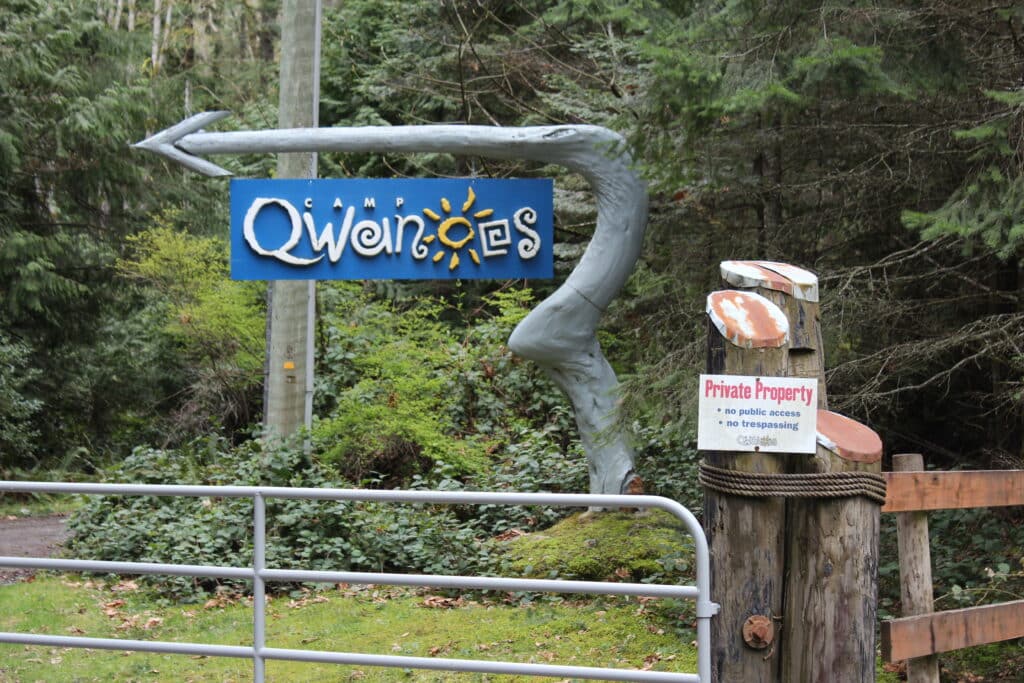
Justice said he wouldn’t support a tax exemption for Camp Qwanoes, taking into consideration that three school boards have cut ties with the camp.
“I think given municipal policies related to inclusion, equity and social justice, this certainly raises some red flags for me and without more information refuting these issues I would not be able to support granting this organization permissive tax exemption at this time,” Justice said.
Coun. Mike Caljouw said that his own kids have attended Camp Qwanoes previously and he called it an “amazing place,” but he also said he didn’t think it was right for North Cowichan to support or contribute to an organization that has hiring practices that aren’t supported by the municipality.
“I’m in no way against churches or any kind of faith-based groups. They have the right to their beliefs,” Caljouw said. “I have no problem with any church or organization in this community but I do have a problem with a group [in which] certain people can’t be hired based on their beliefs.”
Meanwhile Manhas said he supported the tax exemption, calling the decision to deny it an “attack on religion.”
“What’s going to be next, Sikh temples?” Manhas said.
At the Committee of the Whole meeting, the only councillors supporting Camp Qwanoes’ tax exemption application were Findlay and Manhas, but that changed after the camp’s executive director Scott Bayley spoke at the Sept. 26 council meeting.
Bayley told council the camp has met criteria for property tax exemption for the past decade, and seeing as both the criteria and camp haven’t changed, he argued they still do.
Bayley then listed off specific criteria in the permissive tax exemption policy and provided extensive examples of how the camp meets that criteria, including its leadership program for high school students, community open houses, hiring a support staff member for campers with special needs, work with local churches and families and more.

“It seemed the reason [to deny the tax exemption] had to do with our approach to staffing, and not if we met the eligibility requirements at Qwanoes,” Bayley said.
With regards to staffing policies, Bayley said that Camp Qwanoes is a Christian camp that seeks to hire staff who share the camp’s beliefs — including that the camp “looks to the Bible as a source of truth.” One core belief, he said, is that they love everyone.
“Our current staff agreement has been in place for over 25 years without any challenge or changes,” Bayley said, noting that the camp, being a faith-based organization, is legally allowed to seek out staff who align with the faith.
Bayley, and other members of the public who spoke at the meeting in favour of Camp Qwanoes, noted that campers — including those who identify as 2SLGBTQIA+ — have felt welcome, accepted and safe at the camp.
In an email to The Discourse, Bayley again asserted that all campers — regardless of background or beliefs — are welcome and treated as equal. He also said the camp has been very open about being owned and operated by a group of churches since 1966.
The Discourse asked if the camp welcomes 2SLGBTQIA+ staff, or staff members who have had premarital sex or abortions.
Bayley did not directly answer the question, and responded that, “We seek staff who share our beliefs. We hire staff who are willing to sign, support and live by our staff agreement. This is a very normal and accepted approach in BC and Canada. For us at Qwanoes, seeking staff who share our beliefs is vital for us to carry out our purpose and mission.”
When pushed on how the camp might seek to verify if staff conform with the camp’s beliefs, he added, “And for example, we have never asked anyone if they have had an abortion.”
The Discourse asked Bayley about what Camp Qwanoes is doing to address concerns of campers or individuals who say they had negative experiences at the camp due to a difference in beliefs. He said the camp takes “every complaint seriously and seeks to respond accordingly.”
“We’re always learning,” he said.
After hearing from Bayley and the public at the meeting, councillors Justice, Caljouw and Toporowski changed their stance on granting the tax break to Camp Qwanoes.
Justice said that while he did not hear a direct refutation of things that have been said about the camp and people’s experiences there, he did learn new things about what the camp has done in the community.
“This makes me feel that there’s a greater amount of good being done there, despite the complexities related to our municipal policies related to inclusion, equity and social justice,” Justice said. He added that he is comfortable providing a tax exemption to the camp for one more year as council re-examines its permissive tax exemption policy.
Toporowski also said that she would vote in favour of granting a tax exemption for one more year since a review process of the policy will be taking place.
Coun. Istace, who remained opposed to granting the tax exemption to Camp Qwanoes, said that while it’s clear the camp is a welcoming space for all campers, it seems it isn’t for all employees.
“That’s the trouble where I’m conflicted right now,” Istace said. “It’s a mixed message when we say we welcome you with open arms and we’ll support you and give you a good experience but in the same turn, we won’t employ you.”
Istace said that when it comes to public funds being given to an organization, it needs to be fully inclusive.
“That’s enshrined in our OCP and our beliefs that we take actions for all and where we can where we are using our funding to support that.”
In the end, council voted in favour of granting the exemption to Camp Qwanoes, with Istace opposed.
What did you think of this story?
Your feedback after we publish a story helps ensure we're always improving our reporting to better serve you
Author

Related Articles

Voting in the 2026 Cowichan Valley local elections? Here’s what you need to know
Where, when and how to cast your ballot in North Cowichan, Duncan, Ladysmith, Lake Cowichan and the Cowichan Valley Regional District for the 2026 local elections.

Cowichan Valley candidates on protecting the community from climate change
Candidates in Duncan, North Cowichan, Ladysmith and Lake Cowichan share the steps they’d take to protect the community from the impacts of climate change.
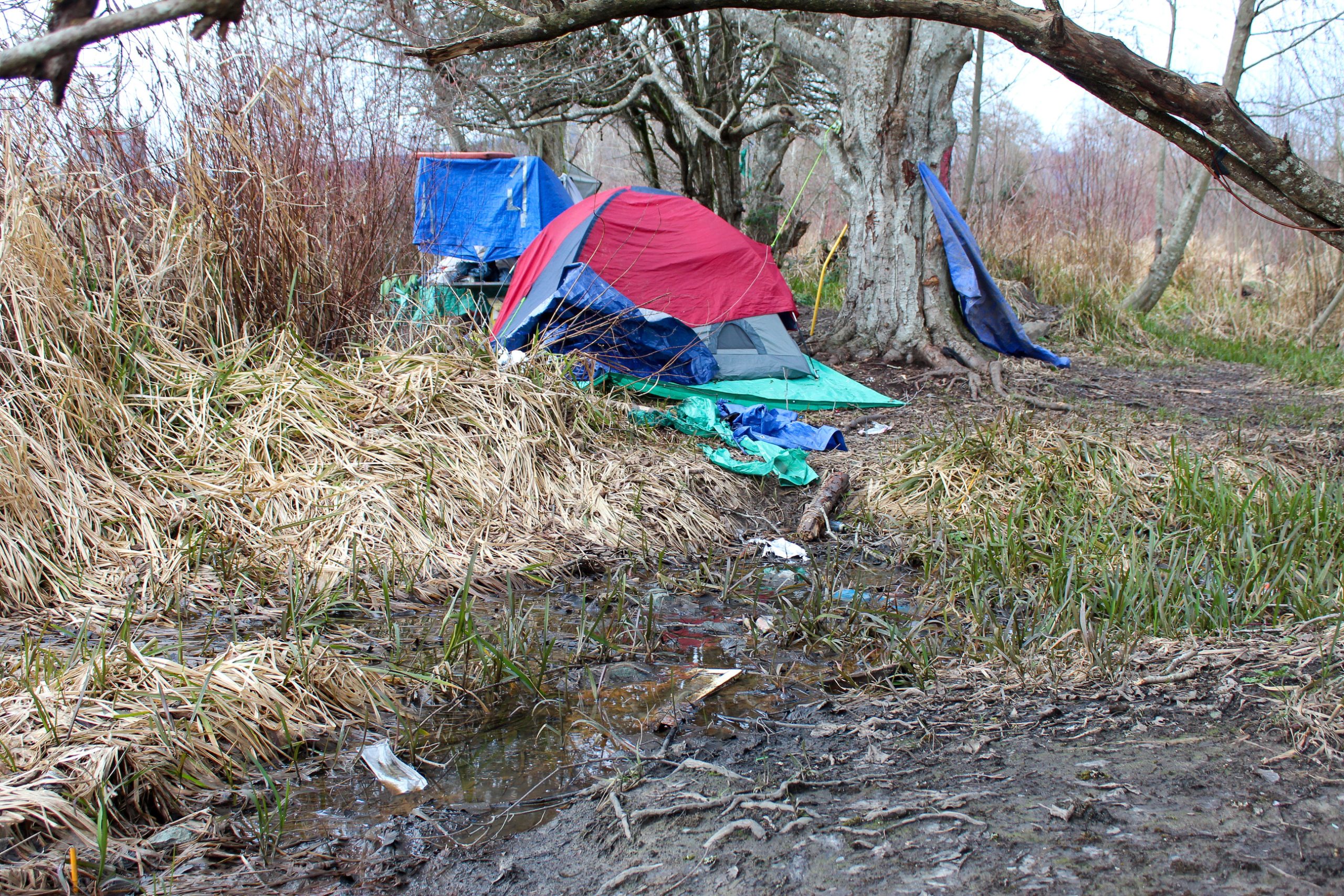
Here’s how Cowichan Valley’s municipal candidates will respond to the homelessness and mental health crises
Cowichan Valley’s 2026 candidates share how they’d respond to issues related to homelessness, mental health and addiction.