
A crowd of people gathered on the bank of the Quw’utsun Sta’lo’ (Cowichan River) on the morning of Sept. 22 to celebrate and honour the river and learn about how to take care of it.
The gathering was for Quw’utsun Sta’lo’ Skweyul (Cowichan River Day), which took place on World Rivers Day — a day to celebrate waterways around the world and encourage the ongoing stewardship of them.
Despite the threat of rain, community members of all ages made their way to the river, near the Black Bridge on Cowichan Tribes land, for the day. Dozens of tents were set up by organizations, community groups, Quw’utsun Elders and Knowledge Holders for visitors to learn from. Each tent offered a different activity or learning opportunity, from arts and crafts to the chance to learn about traditional medicines and carving.

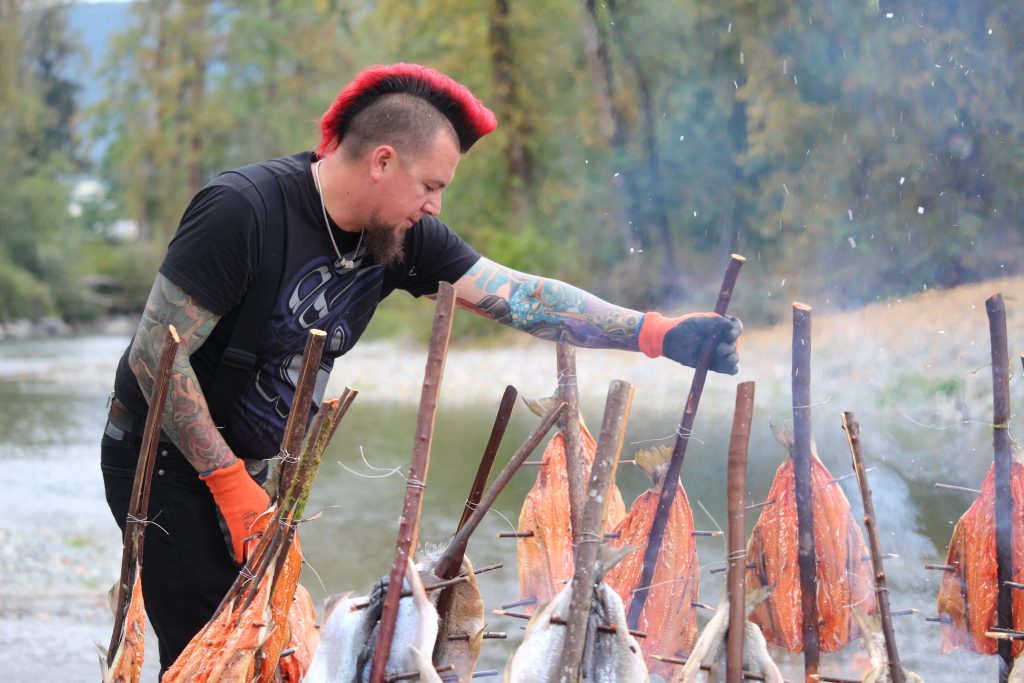
A roaring fire on the river’s edge, surrounded by bright salmon being cooked by Coast Salish chef, traditional food educator and storyteller Jared Qwustenuxun Williams, caught the attention of many — usually by the familiar smell of a fire first. Children and adults watched on as Qwustenuxun fed the fire and adjusted the salmon throughout the morning in preparation for lunch. He cooked enough to feed 250 people.

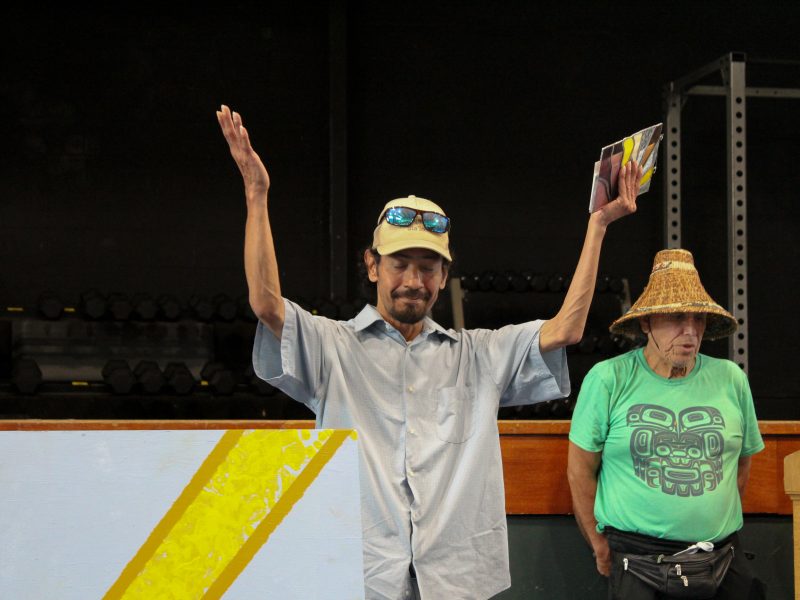
Before the opening by Quw’utsun Elder John George, Quw’utsun Knowledge Keeper and Medicine Woman Hyamicié Della Rice Sylvester and Coast Salish artist and carver Herb Rice called everyone together.
Quw’utsun People once cooked salmon in the same way Qwustenuxun was “all the time,” Rice said.
“It was a beautiful thing. The berries would be ready and they’d be sitting there waiting and the wild plants,” Rice said. “Our people never needed anything. None of our people went hungry because we looked after [the river].”
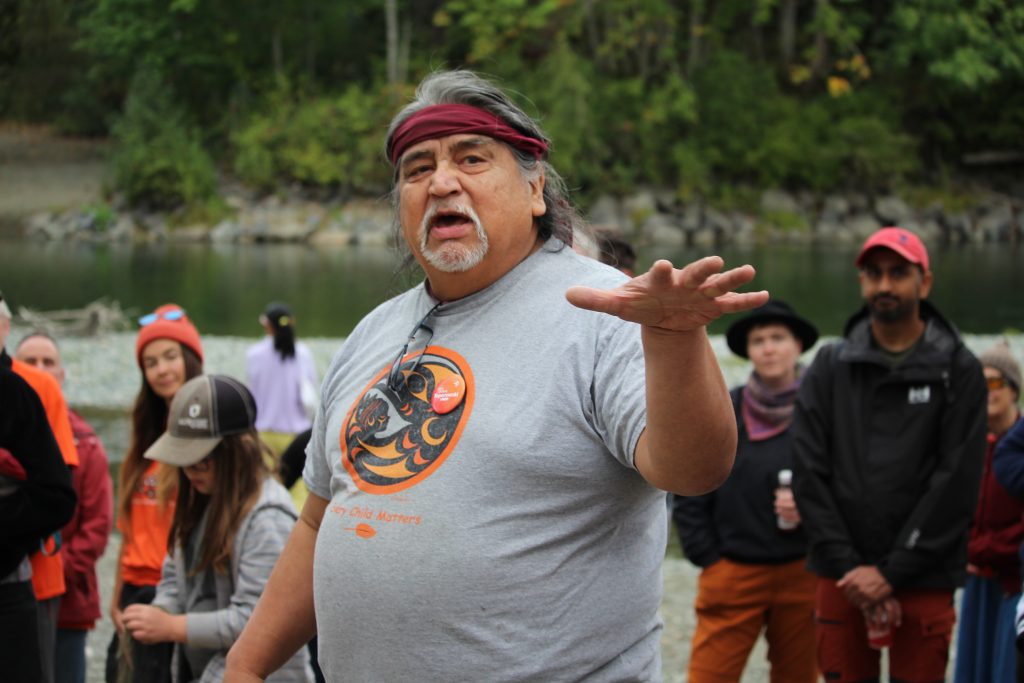
Then, acknowledging the many people who set up tents at the river that day, Rice said those were the people looking after forests, waters, animals and people today.
To open the day, Elder John George called upon people to be witnesses and remember the day — as per protocol. He then spoke about how Quw’utsun Sta’lo’ Skweyul began, acknowledging the work of Genevieve Singleton, co-chair of the Cowichan Stewardship Roundtable.
“Our good friend here, she started something really nice. It was small when we first started — we didn’t have this many people under the tents — but as years went by it started to grow and grow,” George said.

He also spoke of the way the river — and the salmon that move through it — has changed.
“In the past … around this time, there would be so much salmon in our river. You could walk from one side to the other stepping on the salmon as you cross over to the other side of the river,” George recalled.
When fishing became an industry for profit, with boats and fishing nets catching salmon in the ocean, the numbers in the river decreased, he said.
We were taught by our Elders, you only take what you need, and so that way the rest will come up and do the spawning,” George said. “When we take out the salmon from our river, we use that for food. That was our food during this time of the season, we were only taking what we needed. We never overtook anything because we were taught by our elders.”
After George spoke, Qwiyahwultuhw, Elder Robert George, led the Tzinquaw Dancers to open the day as well.


He also passed along some words for Jennifer Shepherd — community researcher with the Xwulqw’selu Connections project — to share. Shepherd collaborated and helped lead Project 84,000, a community art project to honour the 84,000 juvenile steelhead trout and other fish that died in the Quw’utsun Sta’lo’ last summer due to drought and poor environmental conditions.
“I asked Elder Qwiyahwultuhw what words to share with you as we honor our love and this loss at this time. He said to speak of the importance of sustainability and taking care of the earth,” Shepherd said. “However, we can do that as leaders in government — tribal, federal, provincial, regional, municipal — as leaders in corporations, as student leaders, as neighbors and as nature lovers. Let’s take care of the earth together.”
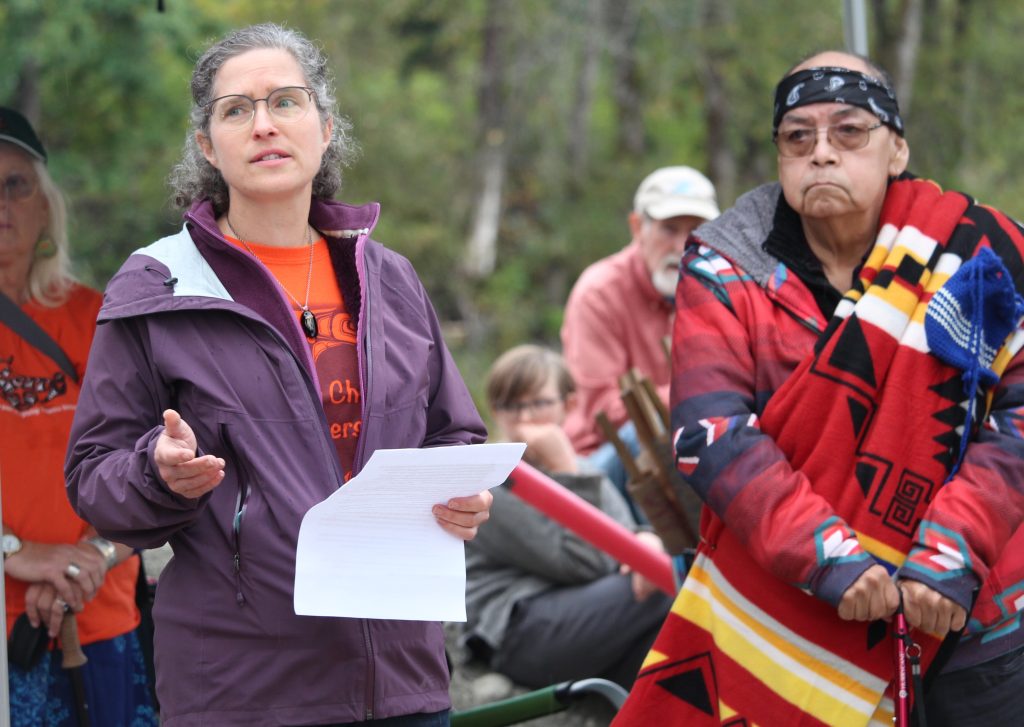
One way Shepherd said she likes to care for the earth is to invite people to come together to create, learn, share, listen and bear witness.
Since January, community members from across the Cowichan Valley have come together to participate in Project 84,000. The collaborative work — in which more than 1,250 participated — resulted in 84,000 fish rubbings, done by hand with crayon, along long sheets of paper that were unravelled along the river at Quw’utsun Sta’lo’ Skweyul.
Community members lined up, side-by-side, to hold the paper and hold the fish that died in their hearts as they offered prayers to the water for healing and to support the many water stewards in their work.


“When the paper comes to you, hold it next to your body, open your heart, open your hands and hold the fish,” Shepherd said.
The sight of all the long pieces of paper with 84,000 fish rubbings on them, standing next to the river in which the loss took place, moved many. It was a way to visualize 84,000, and make space for the many emotions that came with the loss of those fish.
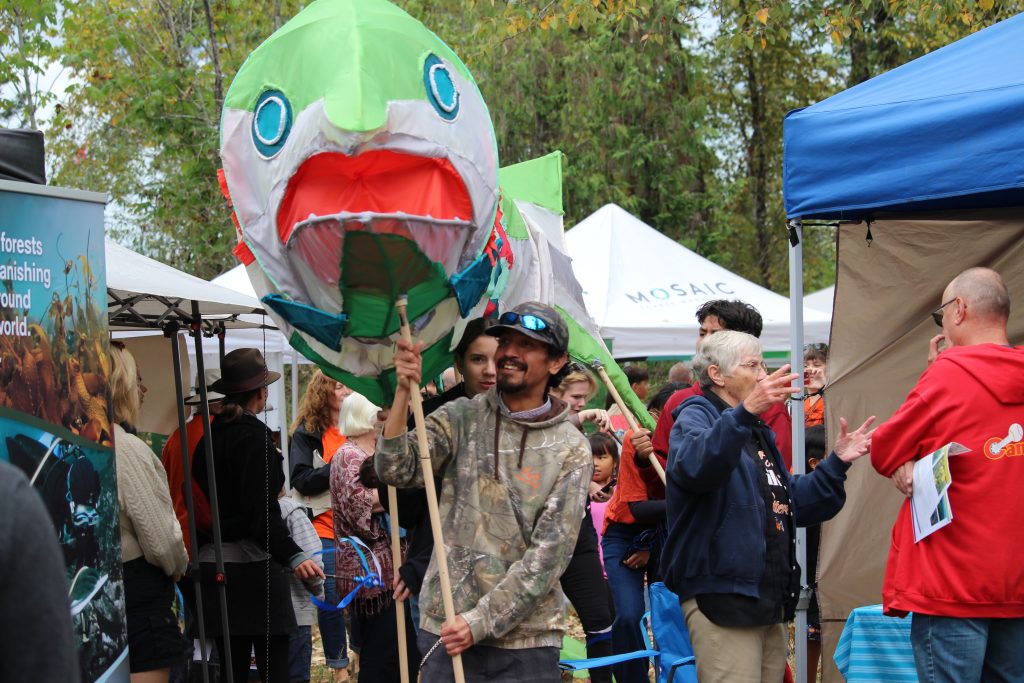
But there was a lot of joy present alongside the grief as well. Children learned about salmon and different plants on the lands and along the river. A large salmon puppet and mascots — a giant fish, an otter and a Garry oak tree — wove between the tents, catching the attention of many and bringing smiles to people’s faces.


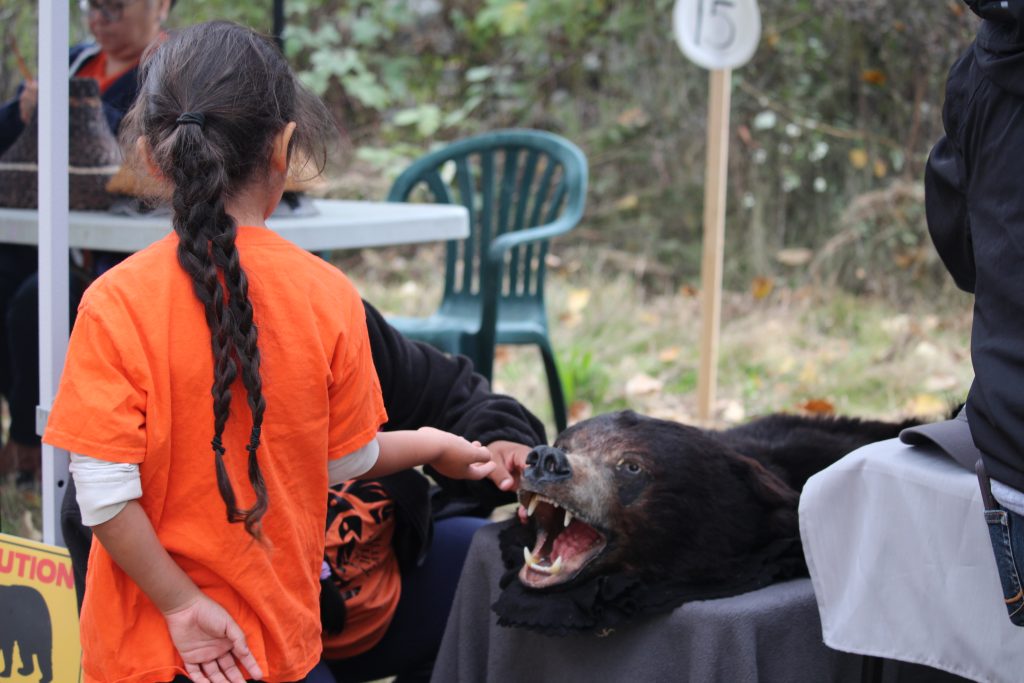
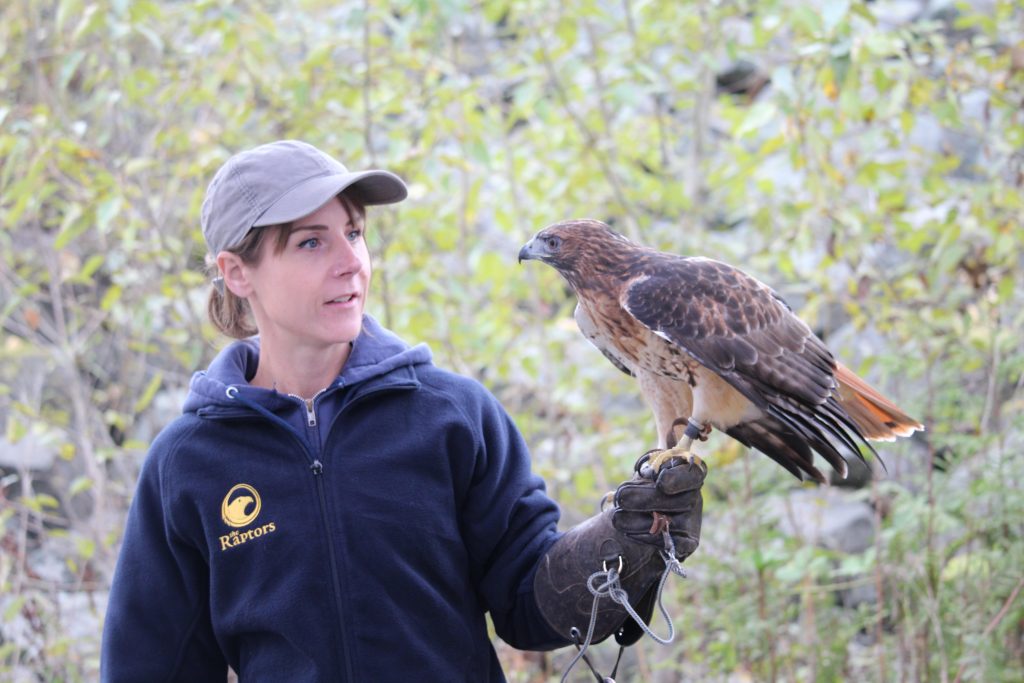
Visitors were able to learn about raptors and get close to Talyn, a red-tailed hawk. Others painted models of salmon and stamped them onto paper. Folks were also able to learn about the Cowichan Weir Project, and get up close and personal with the head of a bear at the WildSafe BC tent.
The day was full of learning, love and laughter and brought people from all walks of life together for the Quw’utsun Sta’lo’ and the environment.
What did you think of this story?
Your feedback after we publish a story helps ensure we're always improving our reporting to better serve you