
Ten years in, Cow-op is at a crossroads
The co-operative online market for Cowichan farmers and food producers is trying to work its way out of debt.

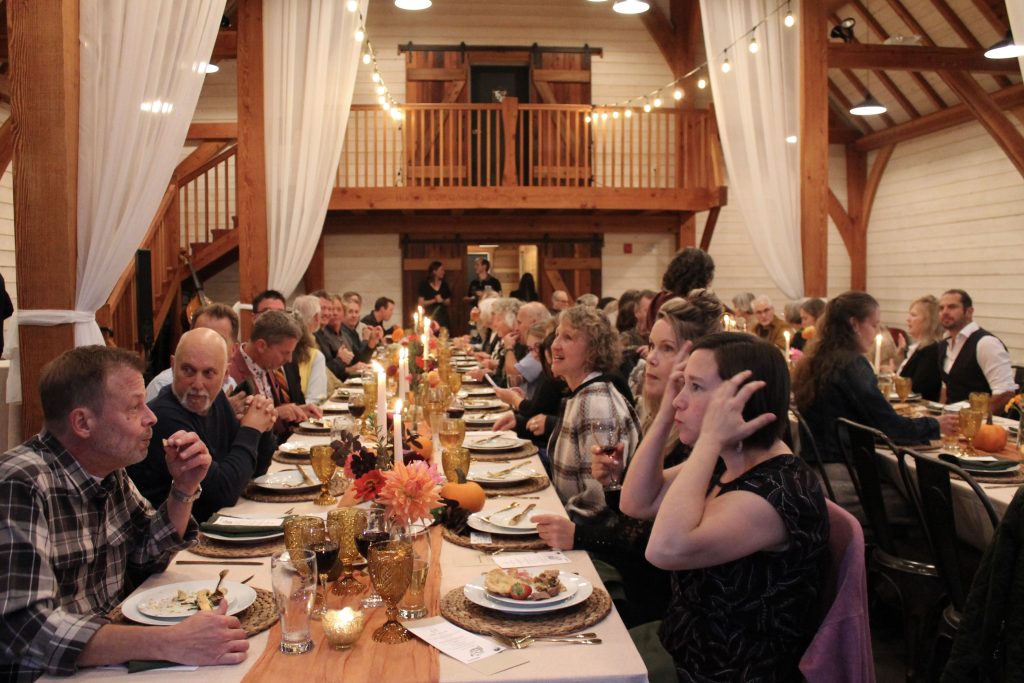
Earlier this month, the Cow-op celebrated its 10th anniversary as a co-operative online market for Cowichan farmers and food producers with a harvest feast at Bird’s Eye Cove farm. The event, however, was more than a celebration that brought together customers, food producers and local politicians; it was also a much-needed fundraiser to help the Cow-op get out of debt.
Four years ago, when The Discourse last profiled the Cow-op, it was riding a wave of momentum as one of those services that became much more valuable during the COVID-19 pandemic. The Cow-op made a laudable commitment at the time to reduce its product markup in the name of food security and supporting farmers, yet it increased the reliance on grant money, much of which has dried up in recent years.
The harvest feast raised about $23,000, knocking off almost half of the $47,000 debt, says Cow-op board president Danielle Bellefleur. But she notes that more is needed, and soon.
“We’re at a real crossroads,” Bellefleur says.
Cow-op saves farmers time on marketing and distribution
Bellefleur started Fruit Forest Farm in Cobble Hill 11 years ago. She soon determined that selling at farmer’s markets was not going to work for her farm, in part because U-pick — which invites people to pick their own fruit — is a big part of her business model and it didn’t seem feasible to do both. But she was intrigued by the Cow-op concept.
“I thought it was a brilliant idea and if it worked, it would be amazing,” Bellefleur says. “Like most farmers, I didn’t have the time to do a lot of marketing and distribution.”
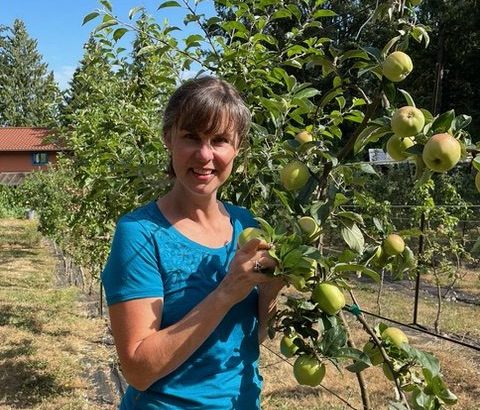
So, eight years ago she tried listing her apples and other fruit on the Cow-op online market. The first week, there were no sales. She was excited the second week when she learned someone bought a bag of her apples, until she discovered the purchaser was a Cow-op employee. Still, she says she stuck with the service because she believed in the concept and understood that for the Cow-op to grow a client base there needed to be a wide variety of high-quality items listed.
By her second year, Bellefleur started seeing good sales and it has gradually grown to the point where today, about 50 per cent of her sales are through the Cow-op — the rest is U-pick and private sales. While most of her commercial focus is on growing fruit, she appreciates the flexibility of being able to list other items such as herbs or vegetables from her winter garden. Recent products listed by Fruit Forest Farm include celery, squash, hot peppers, various greens and six different fresh herbs as well as figs, quince, several varieties of apples, apple juice and apple cider vinegar.
“I grow more because I already know that I have an automatic outlet for it,” she explains.
Bellefleur, who became the Cow-op board president two years ago, says at least six local farmers have told her that the income generated for their farms through the Cow-op is what is keeping their farms in operation.
More than 100 local food producers list products with the Cow-op
Founded as a non-profit in 2014 in partnership with Cowichan Green Community, the Cow-op has been offering an online marketplace since August 2015. There are now a little more than 100 local food producers active with Cow-op, with about 60 of them listing products in any given week, says interim general manager Kyle Campbell. For example, last week, Cow-op customers were able to order everything from carrots to charcuterie, from gelato to granola.
The way it works is that customers place Cow-op orders by midnight each Monday, then farmers and food producers harvest and prepare what’s been ordered on Tuesday and Wednesday, bringing their products to the Cow-op’s food hub at Providence Farm where everything gets organized into orders. On Thursday, customers either pick up their orders at one of six locations (five in the Cowichan Valley and one in Victoria) or choose a home delivery option. The geographic range for home delivery extends north to Yellowpoint/Cedar, south to Shawnigan/Malahat and west to Youbou/Honeymoon Bay.
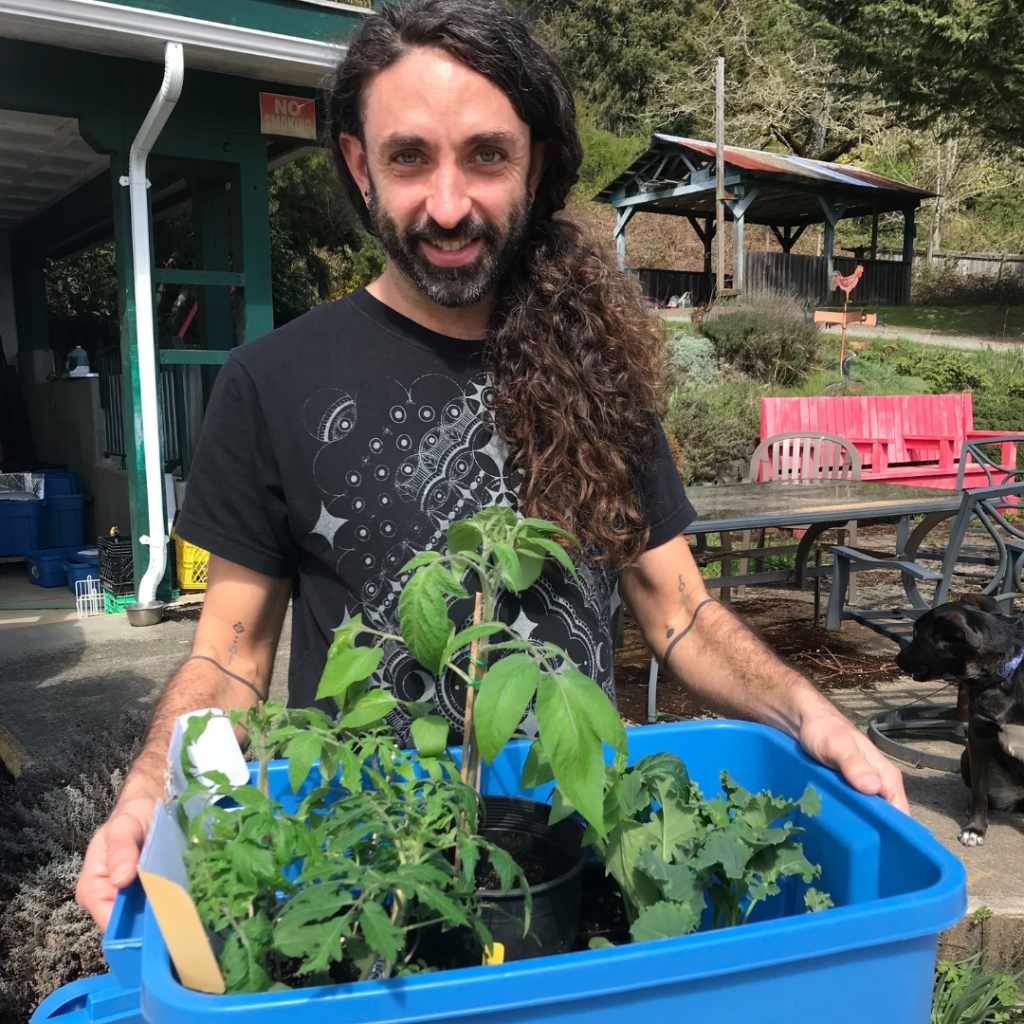
This fall, an average of 80 customers have been placing orders each week with the Cow-op, Campbell says. This is well up from pre-pandemic numbers, but far below the ten-fold increase in orders that occurred in 2020 in the early days of the pandemic.
At the time, with farmer’s markets shut down, the Cow-op was a godsend for people who wanted fresh produce. Contactless home delivery was quickly set up, and the number of weekly orders soared to as high as 240, and the size of the typical order doubled. This meant that instead of $1,000 to -$2,000 in weekly revenues, the Cow-op was bringing in between $15,000 to $20,000 or more, says Campbell, who started with the Cow-op in 2020 as operations manager.
Cow-op reduced markup on products to help farmers and customers during the pandemic
The revenue could have been even higher, but because the pandemic was such a fraught situation for food producers and consumers, the Cow-op decided to drop its 25 per cent markup on products down to only 15 per cent.
“Cow-op reduced margins so much even though we had tons of sales because we wanted to make sure that everybody gets food and the farmers were supported,” Bellefleur says. “Although we had our best year, we were in debt that year because we had lowered our margins so much.”
After another strong year of customer orders in 2021, the Cow-op has seen increasingly lower sales in recent years. The first six months of 2024 were particularly bad, as the Cow-op experienced a 30 per cent reduction in sales. Orders have picked up over the past few months, Bellefleur says.
Part of the challenge, as Campbell explains, is that the Cow-op clientele is like an inverted pyramid, with a lot of long-time customers at the top who order every week. This means that whenever one of those customers stops ordering it has a significant impact on their bottom line, he says.
But an even bigger part of the problem is that the Cow-op is only receiving about one third as much grant money as it did a few years ago, according to Bellefleur. She says she doesn’t know exactly why this has happened, although she notes with frustration that grants are often given as seed money for new projects, while current models with proven success don’t receive the support they need to keep going.
Recent funders for the Cow-op include: The Co-operators, United Way, Government of Canada, BC Ministry for Social Development and Poverty Reduction, Second Harvest, Community Foundations of Canada and Community Evolutions, which matched up to $10,000 worth of donations at the recent Harvest Feast fundraiser.
Cow-op is trying to come out from under crushing debt
In response, the Cow-op has scaled back operations and reduced staff expenses, including blending the operations manager role into the general manager position, Campbell explains. It has also increased its markup on products from 25 per cent to an average of 30 per cent, which is still well below the 42 per cent figure that Campbell says he has been told is the minimal profitable margin for grocery stores.
As a result of these measures, the Cow-op is running fairly sustainably now, according to Bellefleur, but still must find a way to service its debt. The Cow-op is continuing to offer educational workshops on things such as irrigation and raising backyard chickens, and would like to do even more, “but when you’re under crushing debt it’s difficult to dream big,” Bellefleur says.
She acknowledges the debt may require the Cow-op explore alternative models to being a cooperative. However, she remains optimistic that the Cow-op in its current configuration will be able to continue playing a vital role in the viability of many local farms.
“We’re having our hardest moment right now for sure, but we have turned it around before,” Bellefleur says. “I believe that something is going to happen, some kind of grant. Something is going to finally come.”
What did you think of this story?
Your feedback after we publish a story helps ensure we're always improving our reporting to better serve you
Author

Related Articles
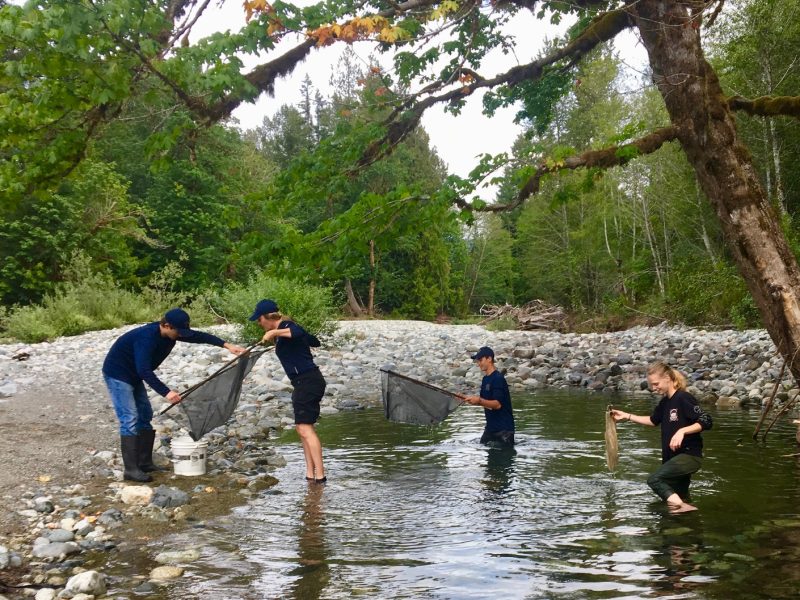
What to do and who to call when juvenile salmon are in danger
Officials say Cowichan Valley residents should call experts to move salmon in isolated pools because of risks associated with relocation.

How is The Discourse’s journalism funded?
And what does it cost to produce The Discourse’s in-depth, independent journalism?
Behind the backlash to the Cowichan Valley’s comprehensive zoning bylaw
The campaign against Bylaw 4710 was fuelled, in part, by misinformation and an organized group of advocates. What could this mean for the future of local politics?