
Q&A: How loss and love led Zena Sharman to write her debut memoir
Sharman reflects on grief, queer kinship, family and inheritance in Staying Power.
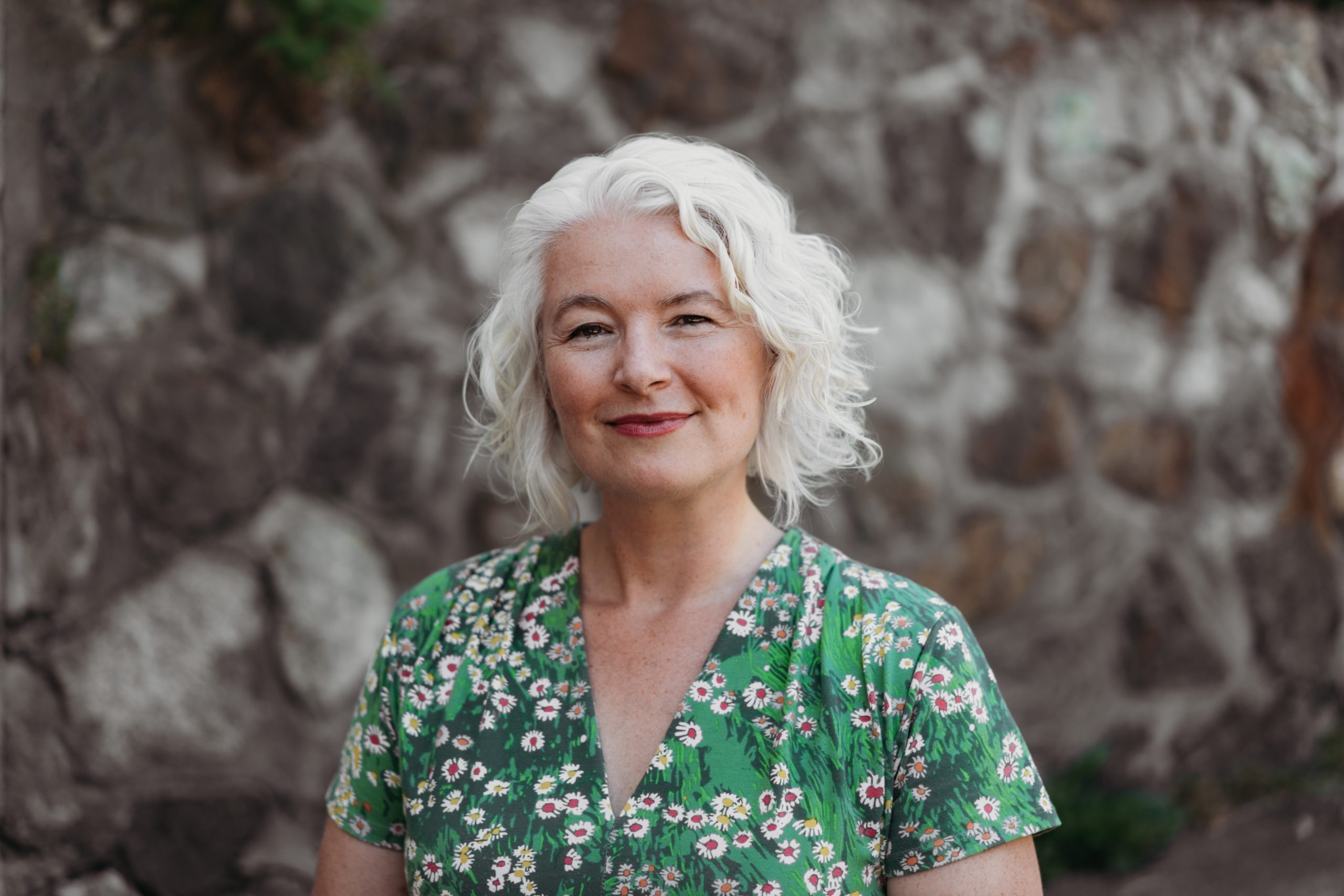
After the death of her mother and the end of her marriage — all within six months of each other — writer Zena Sharman’s life flipped upside down. The Cowichan Valley-based writer grappled with grief, loss and uncertainty before falling in love again and finding her way into a four-parent family.
Now, Sharman is launching her debut memoir, Staying Power: On Queerness, Inheritances and the Family we Choose, with a free community celebration at The HUB at Cowichan Station on March 12.
Staying Power explores the experience of raising three children in a four-parent queer family and draws from Sharman’s personal life. It also reflects on care work, grief, intergenerational trauma and “challenges the notion that one must be healed in order to parent well.”
Sharman has a PhD from the University of British Columbia and has done extensive research on inclusive care and care work. Her writing touches on themes of community, identity and 2SLGBTQIA+ health.
The Discourse’s Eric Richards caught up with Sharman to learn more about her book and her work.
Note: Responses have been lightly edited for grammar and concision.
Eric Richards, The Discourse: Staying Power is a deeply personal work. Could you share some of the core life experiences — perhaps regarding your own upbringing or your journey into parenthood — that served as the foundation for these essays?
The seeds for Staying Power were planted in a 2021 essay I published on queer collective parenting, but in many ways it’s a book about how I, and my life, were transformed by going through a grief portal.
My mother died and my marriage ended within six months of each other in 2014. I was a thirty-four-year-old queer woman wholly unprepared for this magnitude of loss. I very quickly went from feeling as if I had my whole future mapped out to needing to start over. As anyone who has gone through this kind of experience knows, grief can profoundly transform us and our outlook on the future.
The fortuitous experience of falling in love with my partner, whom I call Riley in the book, unexpectedly brought me into a four-parent family. Ten years later, the four of us are raising three kids together in the Cowichan Valley. Staying Power tells the story of how this happened, as well as the profound influence my mother — a single parent, activist, and trauma survivor — had and still has on my life.
You chose the memoir-in-essays format for this book. What was it about this specific structure that allowed you to explore the complexities of queer inheritance and family-making better than a traditional memoir?
I chose to write a memoir-in-essays for several reasons. First, is that I love what a varied form the essay can be. There’s so much more to them than the five paragraph structure I remember learning in high school! This gave me room to play and explore as I chose the style of essay best suited to telling each part of my story.
Writing a memoir-in-essays allowed me to tell my story in a less linear way, which I think is more reflective of the realities of queerness, family-making and grieving. It also gave me more control over how much I revealed to readers about my life and the lives of my loved ones, which is important to me as an author writing about my young children.
Your previous work, like The Care We Dream Of, focuses heavily on 2SLGBTQIA+ health care and systems of care. How does Staying Power build on those themes, and where does it sit within your broader evolution as a writer and advocate?
Staying Power is my fourth book and first memoir. My other three books are anthologies that I edited and contributed to. With them, I was always conscious of taking up a right-sized amount of space in the narrative — especially with works focused on 2SLGBTQIA+ health care, where I believe it’s important to centre the stories of Black, Indigenous and people of colour, trans and gender-diverse people and those who bear the brunt of health inequities and systemic oppression.
My first book was published in 2011, so it took me four books and fifteen years to feel ready to put myself at the centre of the story. I did it because I wanted to show readers more of who I am, and because I knew I had a unique story to tell. Like my other works, Staying Power reflects my desire to create more liberatory possibilities for how we care for each other, ourselves and our communities.
What was the specific catalyst or “aha!” moment that made you realize these stories needed to be told right now?
There’s a growing body of contemporary writing on care work, alternative forms of kinship and our hunger for family, friendship and community, alongside works critiquing the institution of marriage and the nuclear family. There’s also been a recent boom in divorce memoirs, which I find fascinating.
I was interested in contributing to this conversation by offering a vantage point from within an ongoing experiment in alternative kinship. I wanted to tell a queer story that might offer others a reflection of their own, or perhaps a more tangible vision of the kinds of possibilities they’re hoping to create in their own lives.
My goal was never to position myself as someone who has it all figured out, but rather to write from inside the love, messiness, ambivalence and forever-in-process realities of what it’s like to form and sustain caring relationships with many others.
In our current sociopolitical climate, why do you feel it is essential to create space for unabashedly queer stories that focus on “staying” and building long-term community?
We are living in a moment of rising fascism in which some people believe they can intimidate — and legislate — trans and queer people out of existence, with immensely harmful consequences both domestically and internationally.
Yet trans and queer people have always been here and will always be here. We are a vital part of the fabric of every community.
I feel a responsibility as a writer to create works that uplift queer stories with brazenness and courage. Both as a way of honouring the elders and ancestors who made it possible for me to live as openly and proudly as I do today, and out of solidarity with younger 2SLGBTQIA+ people — and indeed, all 2SLGBTQIA+ people — who need us to fiercely defend their right to live fully in the present and in the future.
What can attendees expect from your upcoming event at The HUB at Cowichan Station?
I wrote my memoir in the Cowichan Valley and parts of it are set here, so I’m excited to celebrate Staying Power with the local friends and community who were with me every step of the way and who might recognize familiar settings in the book.
My beloved friend — the writer, academic and podcaster Hannah McGregor who is co-host of the Material Girls podcast and recent author of Clever Girl: Jurassic Park — will join me at the launch for a memoir-inspired conversation about queer kinship, grief, interdependence and maybe even dinosaurs. Expect laughter, tears and two Gemini writers enthusiastically nerding out with each other.
We’ll also have books for sale from Volume One Bookstore. We’re lucky to have a fantastic local independent bookstore in Duncan and I’m glad to partner with them. Independent booksellers like Volume One are a vital link between writers and readers and we should all make an effort to support them!
What did you think of this story?
Your feedback after we publish a story helps ensure we're always improving our reporting to better serve you
Author

Related Articles
DRIPA debated in B.C. election on Vancouver Island
The Conservative party of B.C. is promising to repeal the Declaration on the Rights of Indigenous Peoples Act (DRIPA), while other parties argue that would set back relations with First Nations and create economic uncertainty.
Where Cowichan region MLA candidates stand on water, old growth and reconciliation
MLA candidates in the three ridings that cover the Cowichan region answered questions from Discourse readers ahead of the Oct. 24 B.C. election.
Cowichan Valley’s guide to the 2026 B.C. election
What riding am I in? Who are the candidates? When do I vote? The B.C. election basics for Cowichan Valley residents.