
What Ye’yumnuts teaches us about ongoing efforts to protect ancient sites
Historical records show that for 150 years, First Nations have called on colonial governments to protect ancient sites as they do their own.
Content Warning: This story contains details regarding the desecration of First Nations burial sites. Please read with care.
Kelly Black is a researcher, writer, historian and collector of books and has taught B.C. and Canadian history at Vancouver Island University. What questions do you have about Cowichan Valley history? Send us an email and we’ll do our best to tackle them.
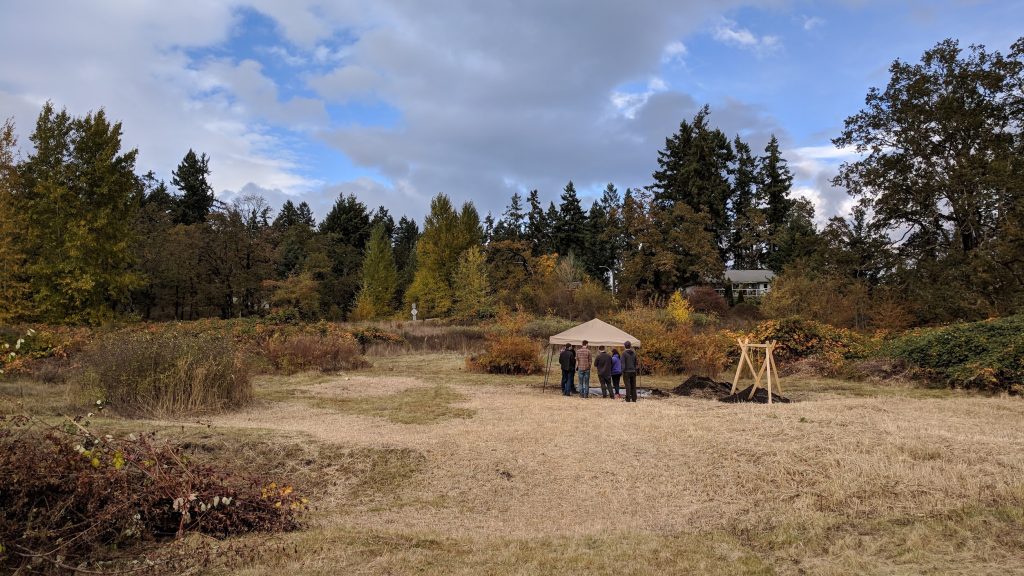
Along the banks of Somenos Creek, just beyond the noise of a busy road, the 2,000-year-old sacred site of Ye’yumnuts looks peaceful and quiet. Beneath the earth, obsidian micro-blades and jade celts hold stories of a place where Elders shared teachings and youth practiced coming-of-age ceremonies.
Once threatened by a housing development, generations of Quw’utsun Mustimuhw (People) worked to protect the site and their loved ones buried there. Today, Cowichan Tribes is continuing this work with construction of an outdoor classroom and learning pavillion at Ye’yumnuts.
“When (non-Indigenous) new sites are a few years old they’re called heritage. Our sites have been here thousands of years,” Quw’utsun Elder Arvid Charlie explained in 2004.
“They say it’s old, but to us that was yesterday. Our ancient sites – since time immemorial…To us, our old, much older sites are very important to us. Many of these places have our old people buried in them. So it’s not only a heritage site, it’s a graveyard,” he continued.
“Why can’t we say our places are important to us? Because they are our culture, our heritage. It’s about our past and it’s our future.”
The Heritage Conservation Act is the provincial legislation intended to protect and conserve an estimated 62,000 protected heritage sites across B.C., of which 90 per cent are of First Nations origin.
Despite such protections, Ye’yumnuts was nearly lost. More than 150 years after colonial governments first attempted to protect such sites, First Nations are again calling for meaningful and culturally appropriate heritage protections that are informed by their traditions and beliefs.
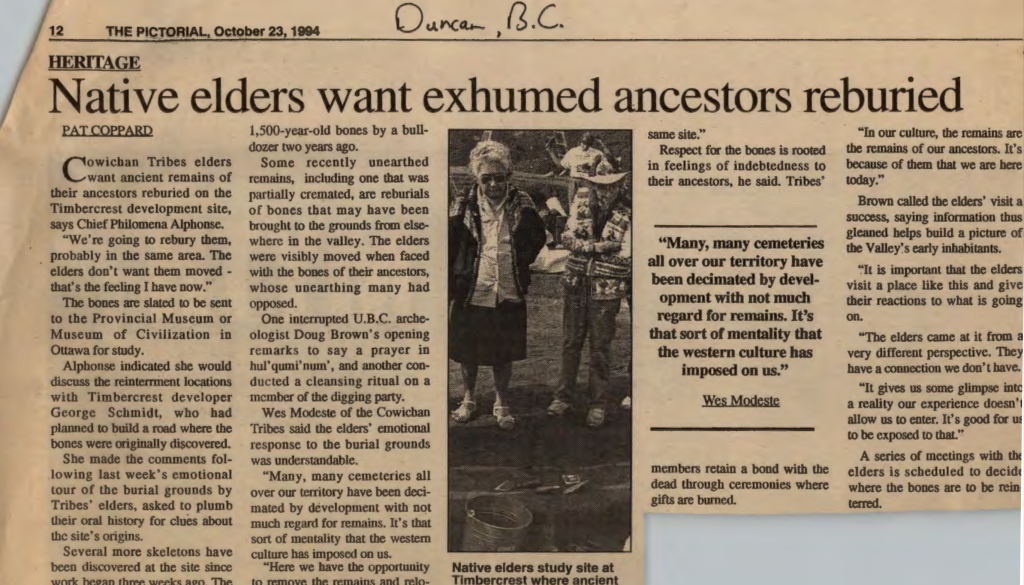
“Many, many cemeteries all over our territory have been decimated by development with not much regard for remains. It’s that sort of mentality that the western culture has imposed on us,” the late Wes Modeste (Qwustenuxun) told a reporter at The Pictorial in 1994. “In our culture, the remains are the remains of our ancestors. It’s because of them we are here today.”
When were burial sites first protected?
As non-Indigenous settlement increased on Vancouver Island during the 1860s, so did threats to sacred sites. This became such a problem that in 1867, B.C.’s colonial government ordered fines and imprisonment for anyone found to be interfering with First Nations burials.
Unfortunately, colonial administrators often disregarded these laws and instead prioritized settlement and access to resources.
In 1876 the provincial and federal governments set up a commission to identify and survey land to be set aside as First Nations reserves, including burial sites.
“The Government consider it [of] paramount importance that in the settlement of the land question, nothing should be done to militate against the maintenance of friendly relations,” the federal Superintendent of Indian Affairs wrote to reserve commissioner Peter O’Reilly in 1880.
“You should therefore interfere as little as possible with any fur trading posts, settlements, clearings, burial places and fishing stations occupied by them and to which they may be specially attached.”
First Nations identified lands to the reserve commissioners, but settler claims frequently won out. Many potential reserves containing burials and sacred sites were never confirmed by the province and these omissions left many cultural heritage sites vulnerable to settler interference.
Pseudoscience and anthropology
Back in the 1880s, existing laws and reserves did not prevent Will and James Sutton from committing violence against Quw’utsun Ancestors. When not overseeing their father’s sawmill and timber lease in the Cowichan Valley, the brothers considered themselves experts in the pseudoscience of phrenology — the reading of skulls to determine character traits and intelligence. Will and James gave several presentations on the subject in 1886 and 1887.
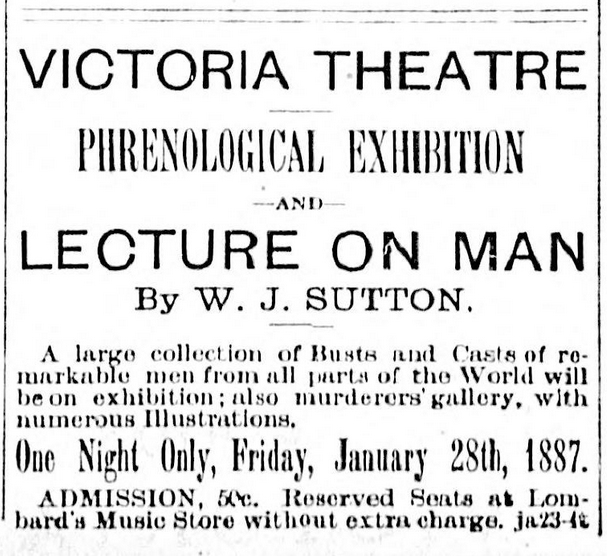
By the 1850s, most scientists agreed phrenology was not sound science. However, phrenology gained a popular following later in the nineteenth century, around the time when museums and universities sought to document, record and collect information about Indigenous peoples.
The theft of First Nations Ancestors and cultural belongings was central to the scientific study of human development (anthropology) at the time and phrenologists supplied academics with evidence for their theories.
In 1888, American anthropologist Franz Boas heard about the Sutton’s phrenology work.
In the book Captured Heritage: The Scramble for Northwest Coast Artifacts, Douglas Cole explains that Boas paid the Sutton brothers to collect remains from across Vancouver Island, including from the Xwulqw’selu Sta’lo’ (Koksilah River) area.
When First Nations found their burial sites were disturbed they contacted provincial authorities who searched the Sutton sawmill at Genoa Bay; apparently no evidence was found.
Perhaps the Ancestors were already on their way to Boas at the American Museum of Natural History in New York. Letters to Boas from William Sutton hint that the brothers were no longer welcome in Quw’utsun territory. They evaded prosecution for their crimes and left for Ucluelet in 1891.
Read more: Thanks to the Washington Post, I found my ancestor’s remains at the Smithsonian
Desecration and legal failures
Today, an estimated 1,200 ancestral burial sites are in Hul’qumi’num-speaking territories with more revealed each year.
The Heritage Conservation Act protects all archaeological sites from before 1846, including burial grounds, whether or not they are registered with the province. This, however, has not prevented private landowners from attempting to develop ancestral sites. Landowners and developers are expected to consult with the First Nations to whom these sacred sites belong and conduct heritage inspections before breaking ground, but many don’t.
As a result, examples of disturbed cultural heritage sites can be found more recently.
In preparation for Canada Day celebrations in 1997, the Crofton pulp mill hired a contractor to work at a popular picnic site for its employees. The contractor cleared part of the site, unaware that it was a Halalt First Nation burial mound and a registered archaeological site under the provincial Heritage Conservation Act.
Just four years later, in August 2001, the site was again disturbed by workers in a backhoe repairing a water main. Following a ceremony with First Nation leaders and elders, the Halalt Ancestors were reburied at the site.
The ongoing threat to First Nations loved ones made headlines again in 2014 when construction for a new house began at Grace Islet, a small island off the ancestral village of Shiya’hwt (Ganges, Salt Spring Island).
With permits in place, the property owner began building on top of a registered archaeological site. Protests and activism led the province to partner with the Nature Conservancy of Canada to buy the islet in 2015. The purchase price of $5.45 million included $4.6 million for “losses suffered” by the owner.
It was a housing development proposed by North Cowichan Timbercrest Estates that threatened the sacred site of Ye’yumnuts in the early 1990s.
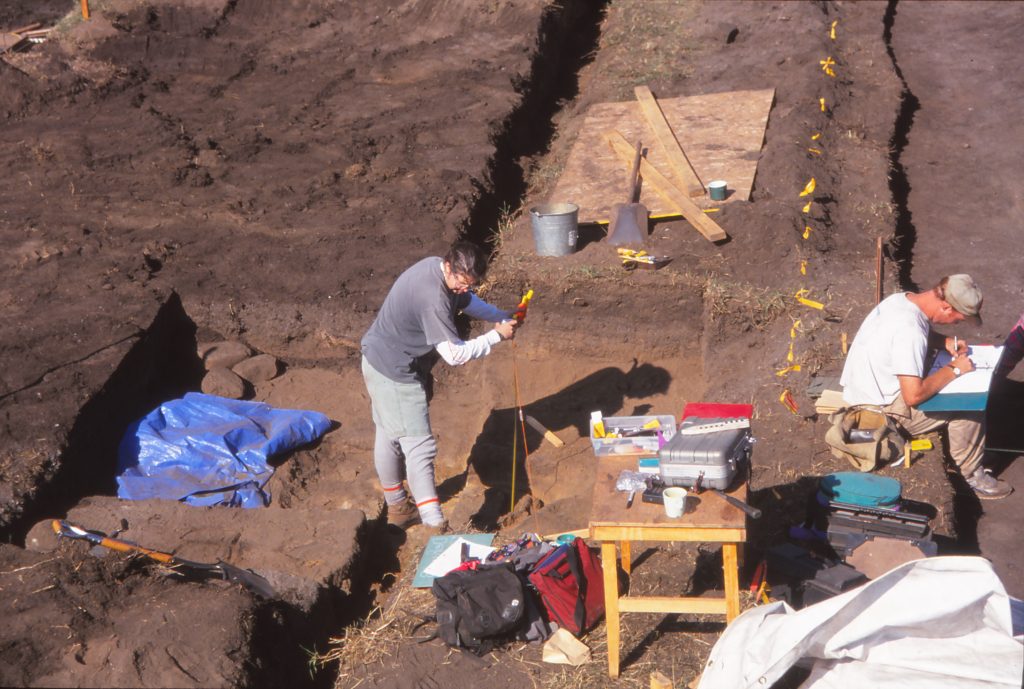
University of Victoria anthropologist Brian Thom served as a member of the original excavation team and still serves as an academic partner on Cowichan Tribes’s Commemorating Ye’yumnuts project.
He recalls Cowichan Tribes’ struggles with local and provincial governments to protect the burial site from development. It wasn’t until 2011 when a red-listed endangered species was found on the property that the federal government provided funding for the province to purchase the site from the private land owner.
Thom says this case exemplifies the many challenges with protecting sacred sites under the current Heritage Conservation Act.
Transforming the Heritage Conservation Act
Historically, the recognition that First Nations heritage sites require protection rarely translated into actions to halt desecration or prosecute offenders. The lack of respect shown to Ancestors at Grace Islet and other places reminded many people that a colonial approach to protecting Indigenous Cultural Heritage will not work.
The First People’s Cultural Council argued that events at Grace Islet point to the Heritage Conservation Act’s many flaws: “The property owner had satisfied all requirements of heritage legislation, despite 16 burial cairns that remained on the land. That alone speaks to some fundamental problems with how that legislation is acted on.”
In 2022, the province launched the Heritage Conservation Act (HCA) Transformation Project to reform the act and align it with the UN Declaration on the Rights of Indigenous Peoples.
In March 2024, the Chiefs Assembly of the BC Assembly of First Nations passed a resolution affirming rights and sovereignty in heritage matters. “The regulatory framework provided for in the HCA prevents First Nations from protecting our sacred sites, the sanctity of our belongings and the remains of our Ancestors in accordance with our traditional laws and customs,” noted the Chief’s resolution.
The province paused legislative updates to the act in January 2024, suggesting changes would come in future legislative sessions.
However, in his January 2025 mandate letters to cabinet ministers responsible for the act, Premier David Eby makes no mention of the Heritage Conservation Act Transformation Project.
“While it may not be in the January 2025 mandate letters, the transformation of BC’s Heritage Conservation Act is an important area,” explains Thom.
“We know where we need to go, we have some strong ideas on how to get there,” he continues. “The key to success will be attending to the aspiration of grounding decisions in Indigenous jurisdictions…Such a vision gives me hope for the future, and I hope that transformation of the Heritage Conservation Act does not fall from view from this government entirely.”
What did you think of this story?
Your feedback after we publish a story helps ensure we're always improving our reporting to better serve you
Related Articles
Voting in the 2026 Cowichan Valley local elections? Here’s what you need to know
Where, when and how to cast your ballot in North Cowichan, Duncan, Ladysmith, Lake Cowichan and the Cowichan Valley Regional District for the 2026 local elections.

Cowichan Valley candidates on protecting the community from climate change
Candidates in Duncan, North Cowichan, Ladysmith and Lake Cowichan share the steps they’d take to protect the community from the impacts of climate change.
Here’s how Cowichan Valley’s municipal candidates will respond to the homelessness and mental health crises
Cowichan Valley’s 2026 candidates share how they’d respond to issues related to homelessness, mental health and addiction.