
Alternative Approval Process: How does it work?
The city intends to move forward with borrowing $48.5 million, but residents say concerns remain about the city’s use of an alternative approval process.
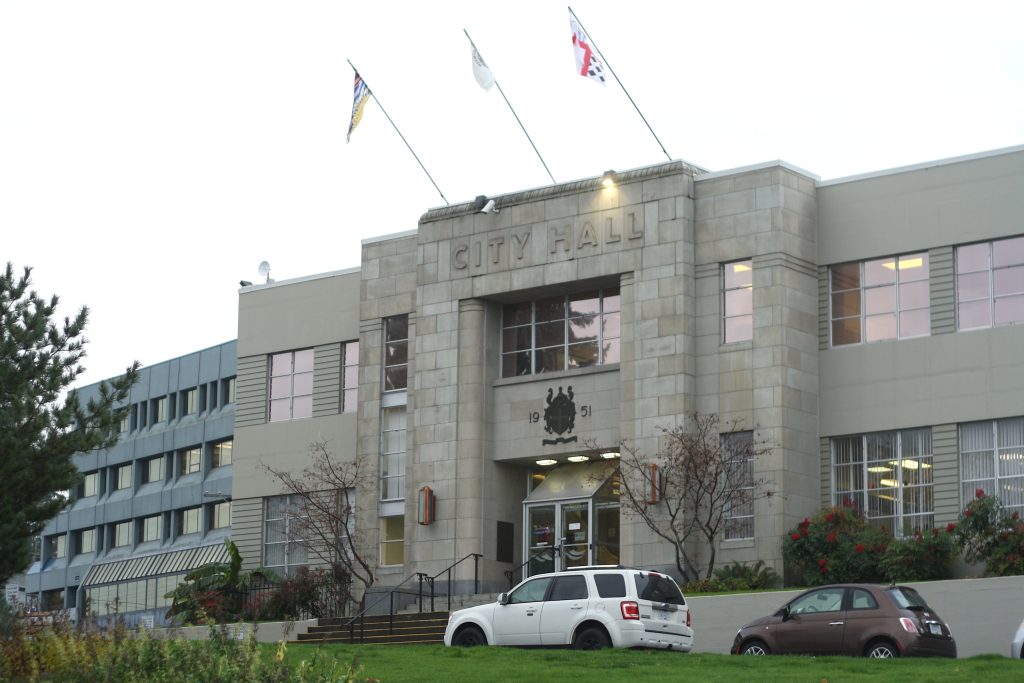
As the City of Nanaimo announced Thursday that its alternative approval process (AAP) to borrow $48.5 million to rebuild its public works yard on Labieux Road has received elector approval, some residents say they take issue with the city’s use of an AAP to approve the funds instead of a referendum.
The proposed new operations centre would replace 60-year-old facilities that the city says have surpassed their useful life.
Its public works and parks operations employees have also “reached a time when their work needs to be supported or delivering those services is going to be more difficult,” according to a city explainer on the project.
The first phase of the project is aimed at building a new fleet maintenance building, as many of the city’s fire and garbage trucks don’t fit in the current service bays. Other items include building stormwater management infrastructure, converting the fire training tower fuel from wood burning to gas and creating a new trail at Beban Park.
Some residents expressed disapproval at the project’s estimated $164.5 million project price tag and the associated tax increase at a time of personal financial strain for many.
Others said that they thought the AAP process itself was flawed, not advertised enough, that the city should have used a referendum and that residents should have been permitted to object via email instead of only by mail or in-person.
The city has estimated that the cost per household will work out to $9 per $100,000 of assessed home value, so for a house that is worth about $800,000 their share of the borrowing for this project would be about $76 per year. However, that is just for the first of four phases, the next of which is likely to come up in late 2027 or 2028.
“I don’t like that these municipal projects always assume that the necessary capital for these multimillion dollar projects can readily be extracted from taxpayers and not the city just saving up for these projects in a reasonable manner,” says resident Frederik Collin via direct message, who is part of a group called Nanaimo City Council Accountability & Oversight Hub, who actively campaigned against the borrowing.
Council voted to hold an AAP instead of a referendum, citing the cost — estimated at $297,000 — and the resources involved in staffing, training and hiring of approximately 200 workers in 12 locations. City staff also say they endeavoured to provide adequate education and information to the public, and allotted 37 days for responses — a week more than the required 30 days.

What is an alternative approval process?
In cases of long-term capital borrowing like for the Nanaimo Operations Centre, municipalities must get elector approval to move forward with the project, according to the Alternative Approvals Process: A Guide for Local Governments in B.C., a guide put out by the provincial government which was updated in July.
This is one of the instances “where provincial legislation requires local governments to directly consult citizens in its decision-making,” it states.
This approval can take place via referendum (also called assent voting) or through an alternative approval process.
In this case, the city chose to hold an AAP, which means that 10 per cent of eligible voters — or 7,799 Nanaimo residents — needed to submit an official objection to the project within 30 days. In Thursday’s announcement, the city said that it had received 3,035 elector response forms by the Nov. 3 deadline, so the borrowing is considered to be approved.
Some previous examples of AAPs utilized by the city include one in October to remove the park status at 502 Howard Ave. to make way for the Te’tuxwtun housing development, and one in 2018 to borrow $17 million to reconstruct the fire station on Fitzwilliam Street.
How well do people understand the AAP?
Noni Bartlett is also part of the accountability group that campaigned against the AAP, and used her husband’s law firm office as a site to collect opposition forms.
Bartlett says that even after the deadline closed on Nov. 3, people were still dropping off forms, which she thinks is an indication that residents were not properly informed about the process in advance.
Nanaimo resident and long-time city watchdog Ron Bolin agrees.
“That’s generally the case with all of these AAPs. They aren’t well advertised, they sort of appear and nobody knows about them. If you look at a lot of the old ones you’ll find only one person signed it, and in a city this size that doesn’t make sense,” he says.
Bartlett also takes issue with the AAP process itself.
“It’s the city that wants to borrow this massive amount of money, and then they are the ones taking the forms, and they are the ones counting the forms. And there’s no scrutineers or other independent party involved in making sure this process is up-front,” she says, and adds that she doesn’t understand why the submission of opposition forms by email is not permitted.
Formal objections submitted by residents can only be reviewed by the city’s corporate officer, according to the city’s website, and local governments must follow requirements established in the Freedom of Information and Protection of Privacy Act.
“I know I can fill out my homeowner’s grant online, I can email my payments online for my property taxes,” she says. “But I can’t fill out this form and submit it by email, and I think that’s also a problem with the system.”
The city’s AAP response form states that it can only be returned in-person at City Hall or by mail, not by fax or email because “original signatures are required.”
When the City of Burnaby sought approval to remove 21 acres of parkland and sensitive wetland habitat to make way for a green waste processing plant in March, email submissions were also not accepted to “ensure the integrity of the vote,” city spokesman Chris Bryan told Burnaby Now.
However both the cities of Courtenay and Prince George, which were in AAPs around the same time, did allow for email submissions of opposition forms (Prince George also permitted it by fax).
Same goes for the town of Ladysmith when it sought approval to borrow $2.1 million for a new fire and rescue truck last April — residents were allowed to submit opposition forms via email.
The City of Kelowna, with a population of 132,000, allowed electors to submit scanned opposition forms by email when they passed an AAP on Oct. 13 to borrow $241 million for a new recreation centre — the largest amount of money the city had ever borrowed.
“We heard consistently from council that they really want to lower barriers to participation in civic processes. We heard that before the election and before the AAP, that they wanted to make sure that people can participate if they want to,” says Adriana Proton, manager of legislative services for the City of Courtenay.
This is also in line with the province’s AAP guide, which states in its frequently asked questions section, that “local governments can allow elector response forms to be submitted by electronic means, such as by fax or email.”
The guide also recommends that those requirements be set out in a policy document and that the information be included on the response form. Municipalities may also require the submission of the original hardcopy forms, the guide states.
“Historically, Nanaimo hasn’t allowed for electronic signatures. In fact we never have,” says Sheila Gurrie, director of legislative services for the City of Nanaimo. “However, it is something we are considering for any future AAP’s, based on feedback and research.”
Electronic signatures would not be available in an election or referendum, but legislation recently changed for allowing electronic bills as proof of address at a polling station, adds Gurrie.
“It used to be just hard copies. So the law is catching up,” she says.
Future phases of the NOC project will likely move into detailed design in 2027 and 2028, and the content of the second phase of the project is not yet finalized. The final cost of the four-phase project is also subject to change.
What did you think of this story?
Your feedback after we publish a story helps ensure we're always improving our reporting to better serve you
Author

Related Articles
Voting in the 2026 Nanaimo-area local elections? Here’s what you need to know
Where, when and how to cast your ballot in Nanaimo and the Regional District of Nanaimo for the 2026 local elections.
Here’s what Nanaimo local election candidates have to say about data centres
City of Nanaimo’s 2026 candidates share their position on allowing data centres in the region

Here’s how Nanaimo local election candidates will respond to homelessness and mental health issues
City of Nanaimo’s 2026 candidates share how they’d respond to homelessness, mental health issues and addiction.