
Free speech, the Online News Act, and how it affects Canadian media
Commentator Jen Gerson speaks at Vancouver Island University about ‘free speech in the digital age’ to a packed crowd
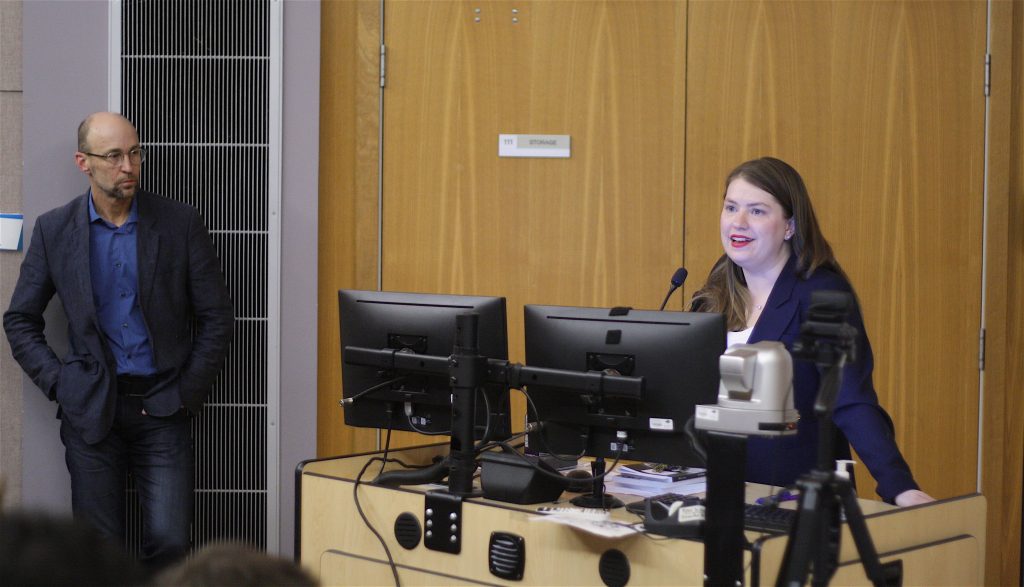
National commentator and Calgary-based journalist Jen Gerson spoke to a packed crowd at Vancouver Island University on Wednesday night to address what she says are pressing issues facing the media in Canada at present: free speech, freedom of the press and how they are affected by government regulation like the Online News Act.
After getting her start with the Calgary Herald in 2010, Gerson became the Calgary correspondent reporting on Alberta politics for the National Post just prior to Rachel Notley’s historic win for the NDP.
By 2018 Gerson had gone freelance and seemed to be everywhere: racking up bylines in The Walrus, Maclean’s and the CBC, to name a few. Most recently, she runs The Line, a Substack-based commentary website with journalist Matt Gurney.
Entitled Free Speech in the Digital Age: The problems of censorship and the perils of regulation, Gerson spoke about the struggle for traditional news outlets to remain viable, and analyzed whether government regulation was harming or helping the problem.
Ending with a heated question and answer session, audience members asked Gerson pointedly about her own writing, citing a particular an op-ed piece she penned for The Line in October, which made a number of claims about pro-Palestinian activists and their motivations.

Beginning with a lengthy nod to the ideas of late author and journalist Christopher Hitchens, primarily that when it came to freedom of speech, Gerson said the question Hitchens often asked audiences was, who exactly should be tasked with the job of being a censor? What individual or government body should decide which speech is too dangerous for people to hear?
As a principle, freedom of speech disproportionately protects the voices “that are most minority, most fringe, most challenging to the status quo. The people who have positions and views that are deeply controversial, and outside mainstream viewpoints,.” she said.
The disintegration of legacy media in recent decades, along with more accessible technology and distribution channels, offers an unprecedented opportunity to elevate these diverse and marginal voices, she adds, but is not without its challenges.
Last month, the Canadian government rolled out the Online News Act, also known as Bill C-18, which intended for platforms like Google and Meta — which owns Facebook and Instagram — to financially compensate news businesses for the content that is shared through their services.
However Meta responded by blocking Canadian news content across its social media sites and when it looked possible that Google might follow suit, the Canadian government struck a $100 million deal with the tech giant that would see the money distributed annually to news companies, though it’s still unclear how it will all play out.
Gerson attributes the roots of Bill C-18 to the lobbying efforts of News Media Canada, the national association of the Canadian news media industry, who she says spent years pushing for a law “that would allow them to shake down big tech,” she said.
“If you wanted to use taxpayer [money] to fund the flailing journalism industry, there are easier ways to go about it. But this particular law managed to combine the worst of every world by undermining journalistic credibility, by turning the journalism industry to a regulatory capture scheme and by undermining their own credibility in the sense of even how they covered it.”
In the end, Gerson asserts that though it was largely legacy media pushing for Bill C-18, they weren’t the ones most hurt by Meta’s decision to take their ball and go home, but rather independent and small news outlets, who relied on social media to generate and create audiences for themselves.
“The whole thing has been a hilarious and shambolic example of sheer government incompetence,” she said.
How this relates to free speech and freedom of the press — aside from the smaller or more marginalized publications and voices that have ended up worse off as a result of Meta’s response to Bill C-18 — is that it raises fundamental questions about the government’s role in deciding not only where journalism funding is allocated, but who is a journalist and who is not, she said.
That said, in an earlier interview with CHLY, Gerson also acknowledged that Meta’s blocking of news is causing confusion among those who are reliant on social media and causing many to access community news from sources that are not credible, because they appear reliable.
“Once we cede to a code of conduct, and once we conform to the government standards of journalism, once we sacrifice our right to misbehave and still demand answers, we’re never going to get these powers back, and for what?” she said. “There’s no guarantee that future governments will even continue to cut that check, much less that they will maintain a journalistic licensing scheme clearly and objectively.”
She said she supports a vision for government funding of institutions like the CBC if they pivoted to supporting widespread local coverage and, rather than competing with outlets like CTV, functioned as more of a training ground and repository of journalistic institutional knowledge.
Organized by David Livingstone, chair of Liberal Studies at Vancouver Island University, Gerson’s talk was sponsored by the Alexandro Malaspina Research Centre’s Malaspina Fellowship Program with financial support from The Institute for Liberal Studies.
The fellowship, which he started in 2015, is intended to encourage interfaculty discussion and develop students’ capacities for close reading and analysis “so frequently neglected in today’s fast-paced media-rich environment,” said Livingstone. “It is also intended to cultivate the skills of polite, though earnest discussion and dialogue, even about topics that divide us deeply.”
The latter was a nod to members of the audience who, during the question and answer period, brought out signs noting the murder of journalists by Israeli forces in Gaza, now estimated at more than 100, while others asked questions about Gerson’s article, which described of a “big chunk” of pro-Palestinian activists as Hamas supporters or apologists for rape and “baby-beheading.”

“Child murder is not what sane lefties agreed to when they went gung ho for Equity, Diversity, and Inclusion seminars,” wrote Gerson in the piece, while critiquing a tweet from McMaster University professor Ameil Joseph.
It’s a sentiment that has aged badly, particularly in light of UN estimates that more than 10,000 children have been killed in the assault on Gaza, with many thousands more maimed and buried under rubble, all of whom are denied access to adequate humanitarian assistance.
As time ran out, Gerson thanked those who came to ask questions and critique her piece, and urged those with further questions or issues to send her an email or find her online.
Editor’s note: The Discourse has received funding from the federal government to support its journalism and as with any partnership, this funding does not shape or influence what stories we cover or how we hold the government to account.
What did you think of this story?
Your feedback after we publish a story helps ensure we're always improving our reporting to better serve you
Author

Related Articles
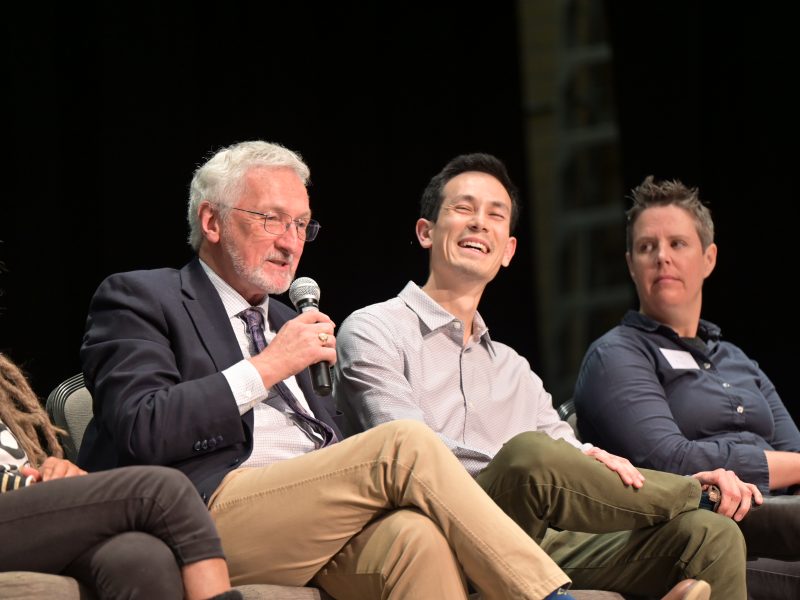
What are Nanaimo election candidates saying about the climate emergency?
All-candidates forum puts climate questions to Nanaimo election candidates.
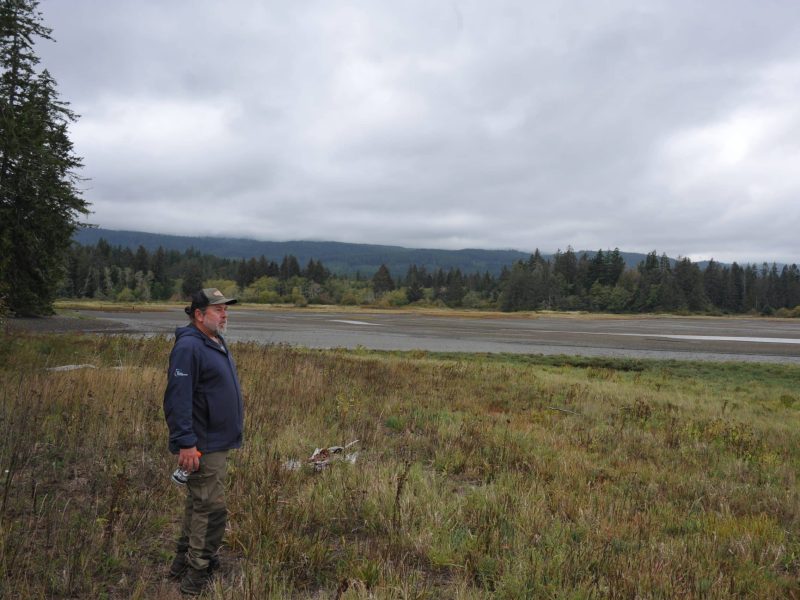
Comox Valley, Nanaimo land trusts raising funds to support Deep Bay land conservation purchase
In a partnership with the Comox Valley and Nanaimo Area land trusts, BC Parks Foundation is fundraising to protect 50 hectares of pristine shoreline in Deep Bay and make it accessible to the public.

Nanaimo Jazz Festival celebrates 10 years with more than a dozen shows in September
Local and international artists to perform on multiple stages in the city at this year’s Nanaimo Jazz Festival.