
How Nanaimo schools prepare for emergencies
‘Being safe at schools has a lot to do with knowing your neighbours and supporting them,’ says local parent.
Content warning: This story discusses the mass shooting incident in Tumbler Ridge, B.C., including its children victims. Please read with care.
As the country reels from last week’s mass shooting in Tumbler Ridge, B.C. — which left nine people dead, including the shooter, and two seriously injured — Nanaimo-Ladysmith school officials and parent leaders believe local schools are safe.
They point to schools’ detailed emergency plans and procedures for the worst-case scenarios that many parents may fear.
“Are schools safe?” asked Sean Reid, president of the Nanaimo District Parent Advisory Council. “Yes, I believe that they are.
“However, I also believe that safety is something that comes from a community.”
Reid remembers the shock he felt hearing about the deaths and injuries in Tumbler Ridge on Feb. 10, many of them children in a local school.
“It was a shock, just that sensation of feeling gutted,” he told The Discourse.
Reid hasn’t had the opportunity to debrief the events with his seven-year-old son, he said, because he’s been out of town for work.
But he said his wife Amanda, who works as an elementary school teacher herself, has spent time with their son having age-appropriate conversations “through a lens of care and compassion.”
While their son’s school has never experienced anything like the traumatizing events of the past week, it has seen its own local emergency protocols put to the test before.
For example, school staff had to bring children inside and lock all doors when a cougar was spotted in the area.
Reid credits both the school’s quick response and its informal network of parents — a group that keep each other informed about things happening in the neighbourhood.
District responds to Tumbler Ridge shootings
The morning after the shootings in Tumbler Ridge, the school district called a meeting of all principals at 7:30 a.m.
District officials shared wellness resources for staff meetings before the start of classes that day, according to Gillian Robinson, executive director of communications for Nanaimo Ladysmith Public Schools (School District 68).
Teachers and education assistants have answered students’ questions about the shooting, and counselors in local schools offered additional support for students who need it, Robinson added.
The school district also emailed parents resources from Safer Schools Together about how they can support their children, what resources are available in local schools, and a list of mental health resources for youth.
The district also shared its own online wellness portal for parents, students and educators.
That website offers resources on a range of topics, including contact information for the Kids Help Phone and its webpage dedicated to anyone affected by the events in Tumbler Ridge.
The service also has information on how to cope with upsetting news stories.
On Wednesday, the school district and local education unions released a joint statement on the Tumbler Ridge shootings.
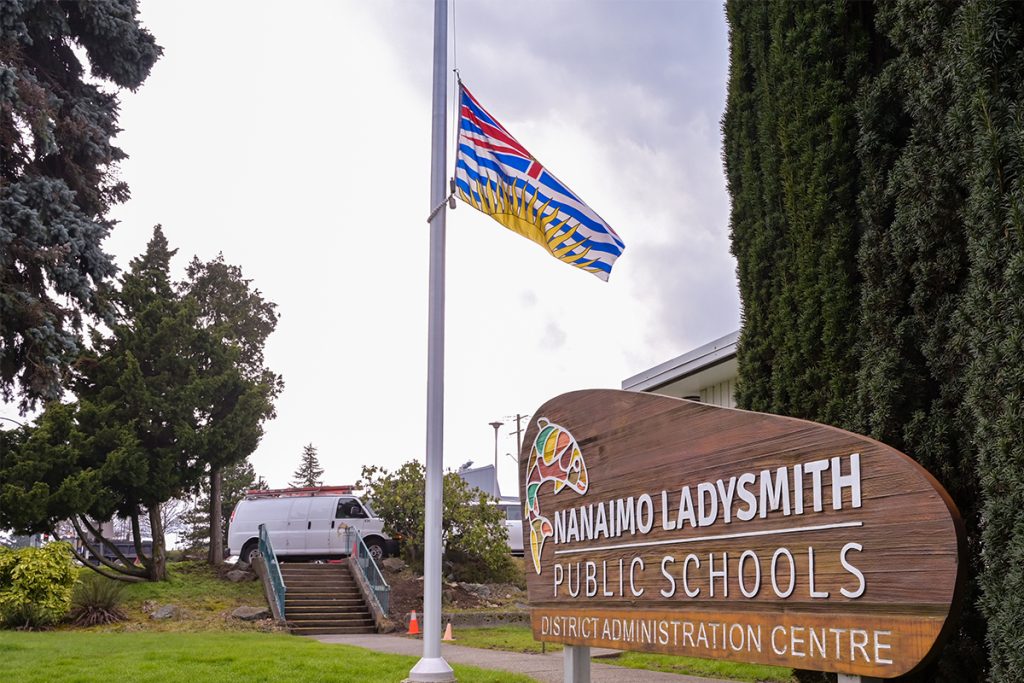
In it, the district said it lowered flags to half-mast at all schools and district buildings, to mourn the lives lost in Tumbler Ridge.
“This event is particularly troubling for school communities,” the joint statement read.
“Our focus will be on the mental health and wellbeing of our students and staff in the coming days and weeks,”
The organizations added that support teams will remain available for students who need additional support in the coming weeks.
“We will continue to keep Tumbler Ridge in our hearts and thoughts,” the statement continued, “and we send them strength as they work towards healing.”
On top of her school district role, Robinson is also mother to two high school students.
“What I always say is: ‘If it wasn’t safe for you to be in school today, our schools would not be open,’” she told The Discourse. “And that’s how I reassure them.
“If our schools are open, it’s because we feel it is safe for students to be there.”
‘Brings on feelings of anxiety’
While the school district has contingency plans for many emergencies, some say more needs to be done to reassure parents and staff.
Megan Simmer, acting president of the Nanaimo District Teachers Association, told The Discourse her union has raised concerns about a lack of spare keys for some staff in schools.
Some substitute teachers, for example, may not have access to door keys to lock their classroom doors if there were a lockdown, she warned.
Simmer said in some cases, local schools have not appeared to have enough spare keys available for all teachers-on-call.
“They might have five sets of substitute teacher keys,” she said.
“But if you’re the sixth substitute teacher who walks in that day, you don’t get a key.”

Simmer told The Discourse she isn’t aware of a situation where a teacher was unable to secure their classroom during a lockdown in Nanaimo.
But she cautioned that even if unlikely, “the consequences are pretty high were something like that to happen.”
The union has raised the issue with the school district for the past three years, according to Simmer.
“Despite repeatedly bringing this up, the response from the school district feels a little bit like they’re dragging their feet,” Simmer alleged.
“It exacerbates a serious concern, and brings on feelings of anxiety with respect to teachers’ ability to look out for their own safety and the safety of kids in the school.”
Simmer is also concerned that students and teachers who work in noisy areas — such as the gym, home economics or shop classes — could have trouble hearing essential safety information over the public address systems, for instance about a lockdown or what are known as “hold-and-secure” alerts.
Hold-and-secure is when school doors are locked to prevent entry — but school activities otherwise continue.
“When an announcement comes … sometimes those students and teachers in those spaces can’t hear that,” she said.
The union has advocated for alternative ways to communicate a lockdown beyond public address systems, she said.
“We’ve offered some possible solutions like a flashing light, a siren, an air horn, walkie talkies,” Simmer said, “something else that doesn’t rely on sound.”
Asked directly about these concerns, Robinson told The Discourse the district “knows that RCMP and the province will be looking extremely closely at what happened in Tumbler Ridge in the days and months to come,” she said in an email.
“The district will implement any recommendations or practices that come from that.”
Emergency responses at local schools ‘not uncommon’: official
Robinson said emergency responses at local schools are “not uncommon,” but the reasons for such incidents can vary widely.
High-profile incidents in Nanaimo schools include a masked teenager brandishing a large knife in Nanaimo District Secondary School three years ago. (The teen was not a student at the school).
And in 2020, John Barsby Secondary and Georgia Avenue Community School were the subjects of a hold-and-secure alert, after a report someone approached the high school who may have been armed.
Last December, another incident saw Nanaimo District Secondary School locked down for 30 minutes, after officials determined there was a “credible threat” made against a student there.
Robinson does not believe anybody has so far been seriously injured by a weapon at a local school — but it’s a risk the district takes seriously.
Schools have procedures for multiple different types of emergencies.
They use specific terms depending on the type of threat:
Evacuate means everyone is moved outside of the school building in the case of fire, a gas leak or flooding in the school.
Drop, cover and hold is what students should do in the event of an earthquake, to find stable shelter under a sturdy desk, table or other furniture.
Room clear is when everyone is moved out of a room in the event of a dysregulated student.
Shelter in place is when everyone is moved inside the school due to environmental or wildlife hazards near the school.
Hold-and-secure is when everyone is moved inside the school, its exterior doors are locked and blinds closed due to a safety concern in the area.
A lockdown is when an armed or dangerous person is inside the school. During a lockdown everyone should quickly go to a secure room, lock the doors, and hide by turning off the lights and taking cover behind heavy furniture, and stay silent until an all-clear is given by police or the principal.
Robinson said schools in Nanaimo regularly practice for emergencies; every year, schools in the district undertake six fire drills, three earthquake drills and two lockdown drills.
According to the school district’s Critical Incident Management and Emergency Response policy, school administrators are expected to take action immediately after learning of a potential threat.
Each school must have a customized site emergency plan that must be followed in the event of an emergency.
“If a major incident occurs, it is highly unlikely the RCMP will be in the school or worksite at the outset of the incident,” the policy states.
“The entire school or worksite community must be prepared to implement this plan quickly and effectively.”
If police respond to a violent incident at the school, the principal will be the primary contact with officers, and will ensure staff follow police instructions and co-operate with them.
Once an incident is over, the school will send information about what happened to parents as soon as possible, or at latest by the end of the school day.
Robinson said the district would avoid impacting any individual’s privacy, and wouldn’t share any details about an emergency if the RCMP is responsible for sharing such information.
However, if an emergency happens at a school, parents are often likely to hear about it before official communication is sent from the school — since many students will text or call their parents.
If such an emergency is still in progress, officials ask parents not call or go to the school, because staff would be focused on managing the emergency, and ensuring the safety of students.
“Having to respond to a parent on a phone or in person can absolutely take away from that,” Robinson said.
Strong communities are safer communities, says parent
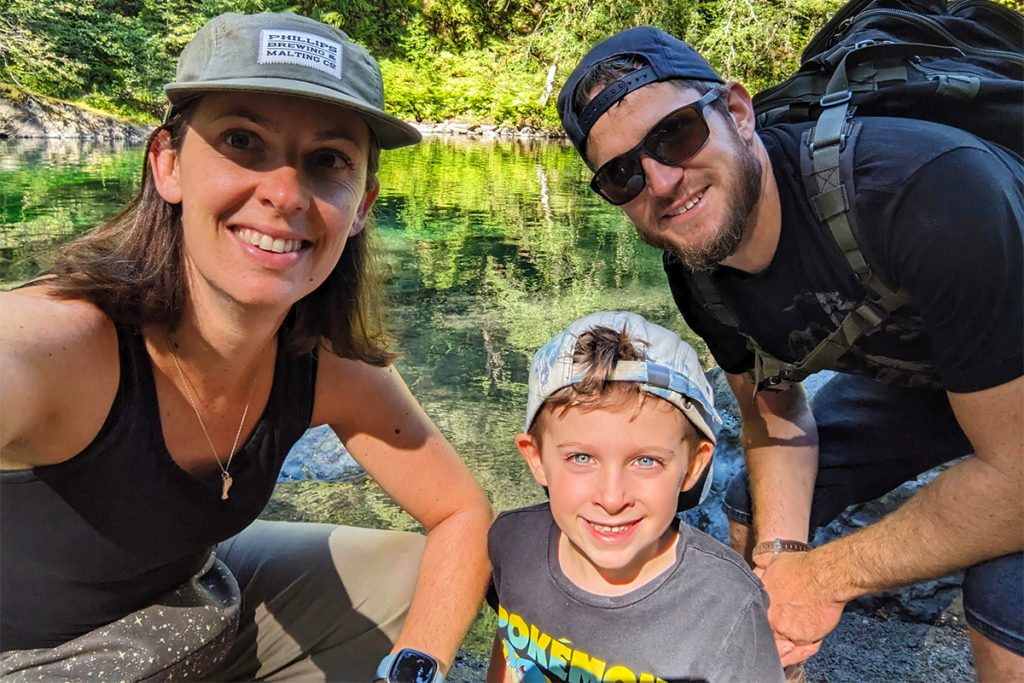
Reid believes strong and connected communities are the bedrock of school safety.
He would like to see more parents able to connect with one another.
“Just take part in the community events,” he said. “Be a part of your school, be a part of the community.
“Have block parties, bring the community back — that’s what we need more of right now.”
Reid said building community is why he has become involved in his local Parent Advisory Council, as well as the District Parent Advisory Council.
He encourages other parents to get more involved if they can find time in their busy schedules.
“I know it’s hard because we’re all just so busy these days,” he acknowledged. “It’s really important that parents do that more.”
“It’s all connected, and being safe at schools has a lot to do with knowing your neighbours and supporting them.”
And that community support can even extend far beyond families’ own local school catchments.
Reid said he knows Nanaimo’s parents feel a strong sense of solidarity with parents in Tumbler Ridge, as they grieve and cope with the aftermath of tragedy.
Many locals are helping donate to various online fundraisers for the families of several victims, for instance.
Another benefit of a strong community when emergency strikes is to help combat fear and misinformation that can easily spread on social media or through gossip during an incident.
“There’s nothing better than getting it directly from the source — and that’s the people who are our neighbours and community,” Reid said.
“That’s what’s most important right now.”
For Robinson, the tragedy in Tumbler Ridge has seen her careful to limit how much news media her children are exposed to, for instance when she’s driving with her kids and listening to the radio.
“I say to my child, ‘Why don’t you put your playlist on now?’” she explained, when the subject of the shootings pops up.
But with her children in high school, she also knows that they will find out what happened on their own, through social media or peers, and may ask her questions about it.
“I try to provide very factual responses,” she said. “Yes, here’s what happened, and here’s what we know.”
Editor’s Note: A previous version of this story had an incorrect date for the Tumbler Ridge shooting. We regret the error.
What did you think of this story?
Your feedback after we publish a story helps ensure we're always improving our reporting to better serve you
Author

Related Articles
Comox Valley, Nanaimo land trusts raising funds to support Deep Bay land conservation purchase
In a partnership with the Comox Valley and Nanaimo Area land trusts, BC Parks Foundation is fundraising to protect 50 hectares of pristine shoreline in Deep Bay and make it accessible to the public.

Nanaimo Jazz Festival celebrates 10 years with more than a dozen shows in September
Local and international artists to perform on multiple stages in the city at this year’s Nanaimo Jazz Festival.

Snuneymuxw Elder C’tasi:a shares traditional plant knowledge in new book
‘Plant Teachings from my Auntie’ by Snuneymuxw Elder C’tasi:a and ethnobotanist Nancy Turner delves into traditional plants and plant medicine.