
In photos: Hundreds march to honour MMIWG2S+ and bring justice for harms that ‘never, ever should have happened’
Nanaimo march brought the community together for missing and murdered Indigenous women, girls and two-spirit people.
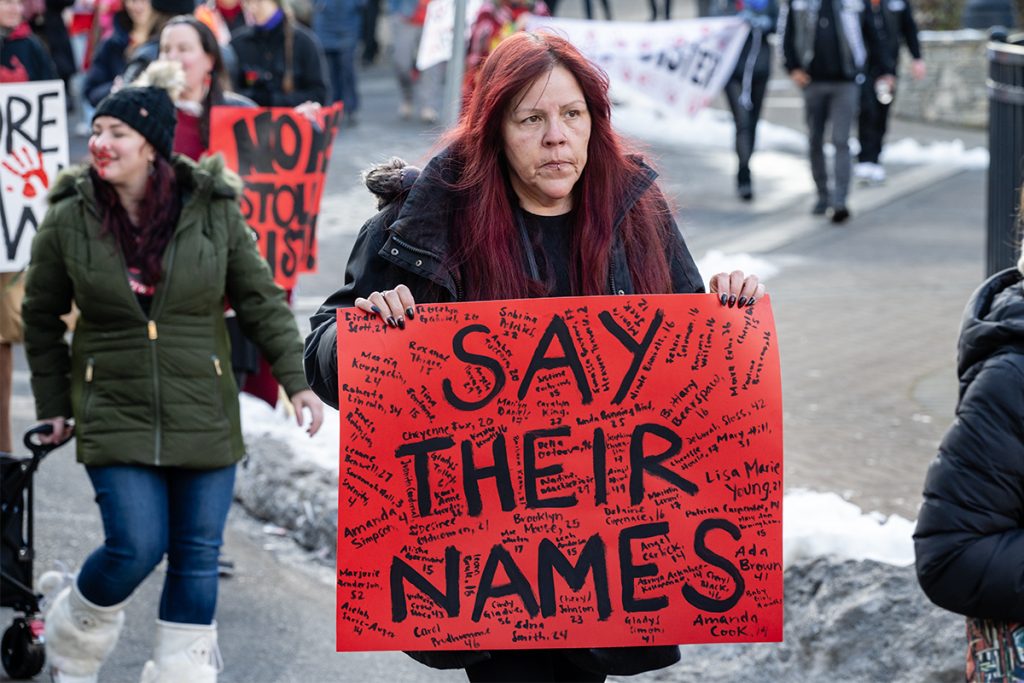
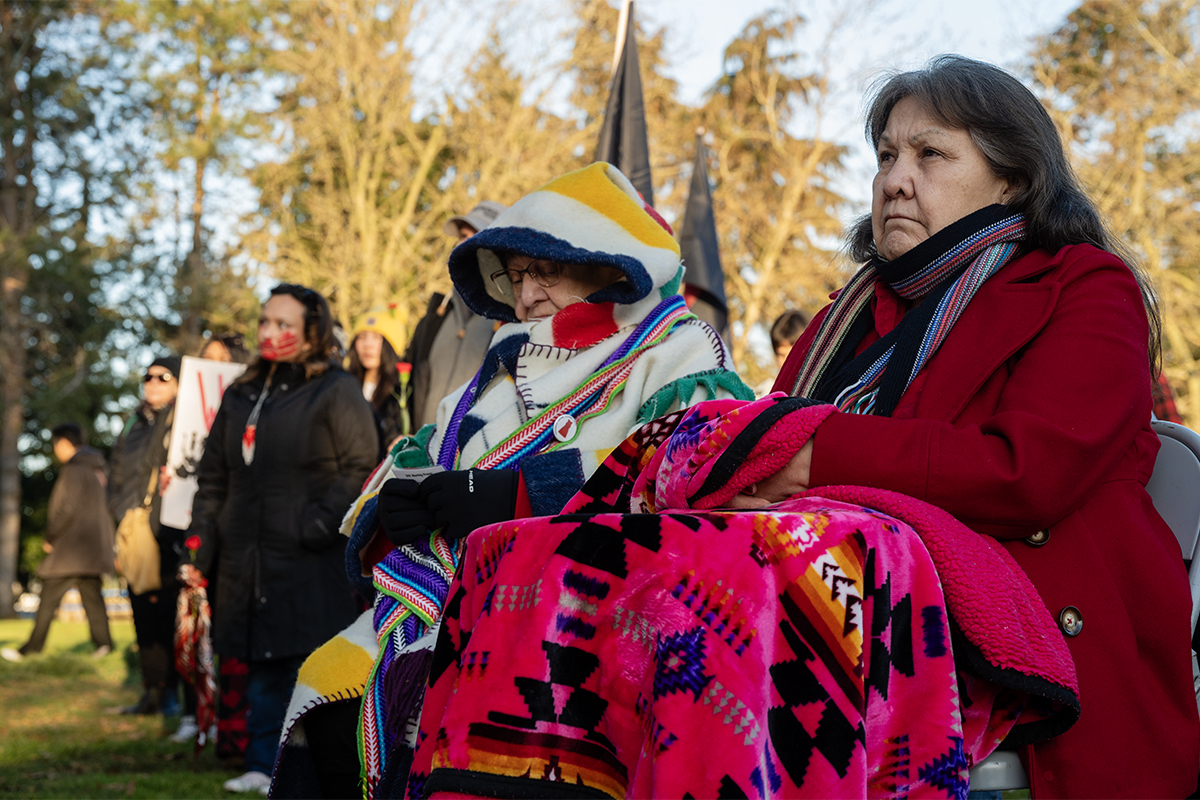
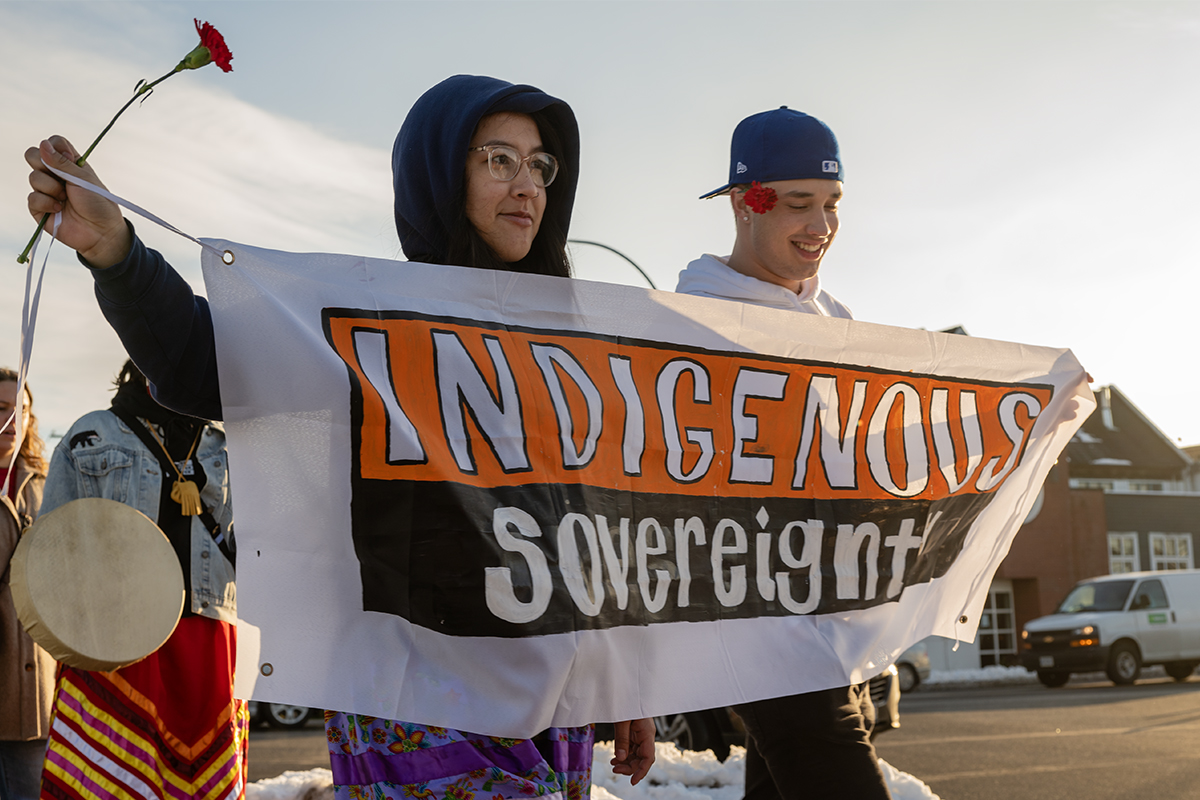
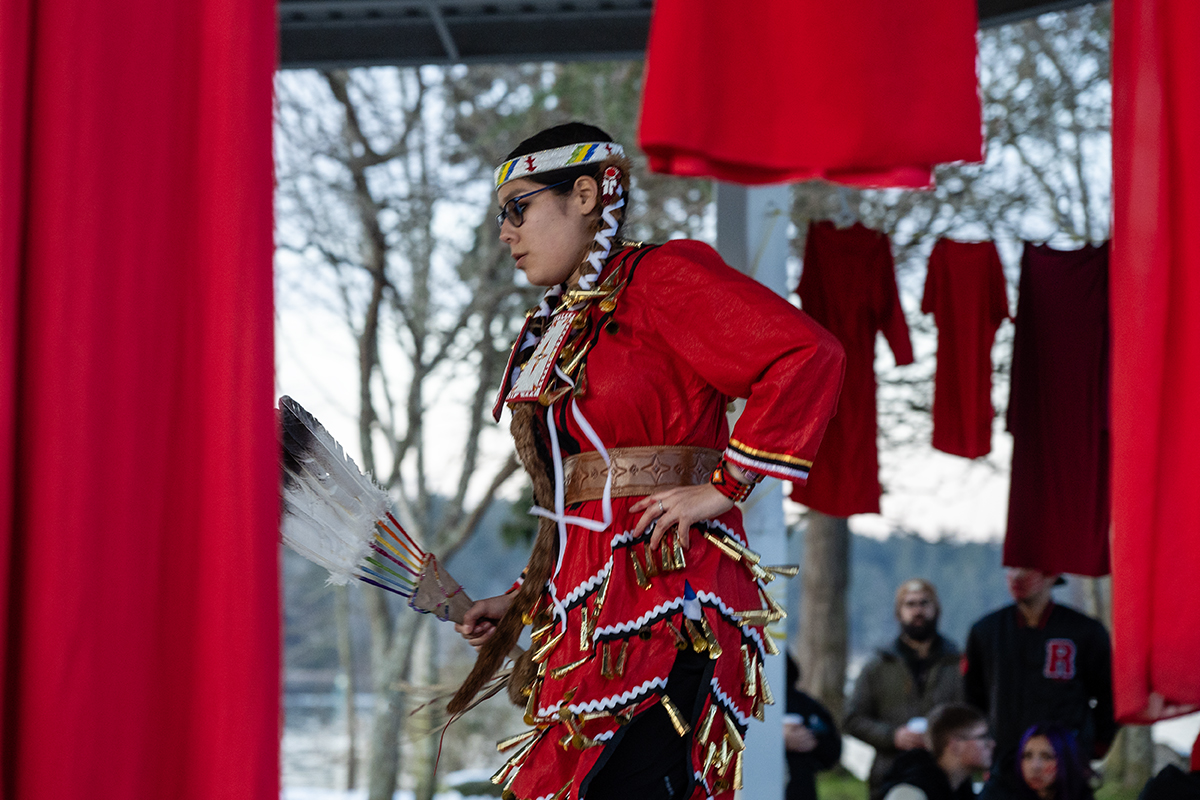
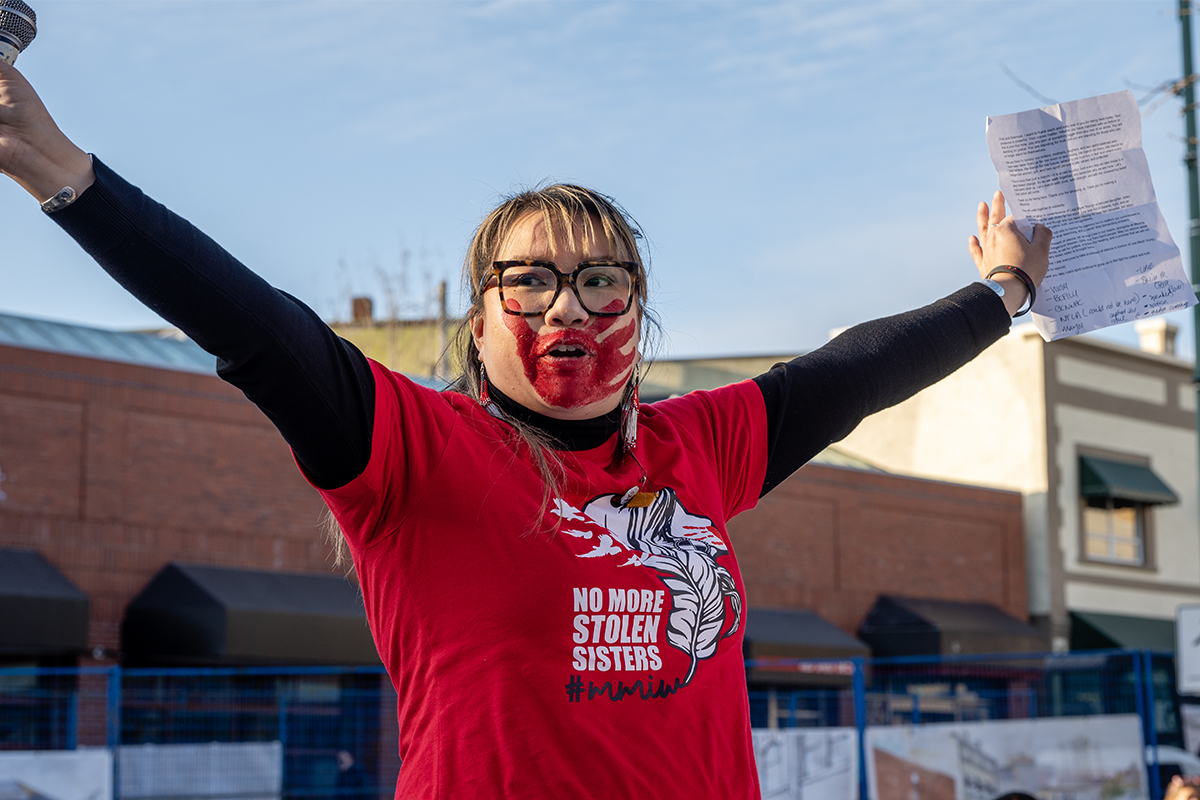
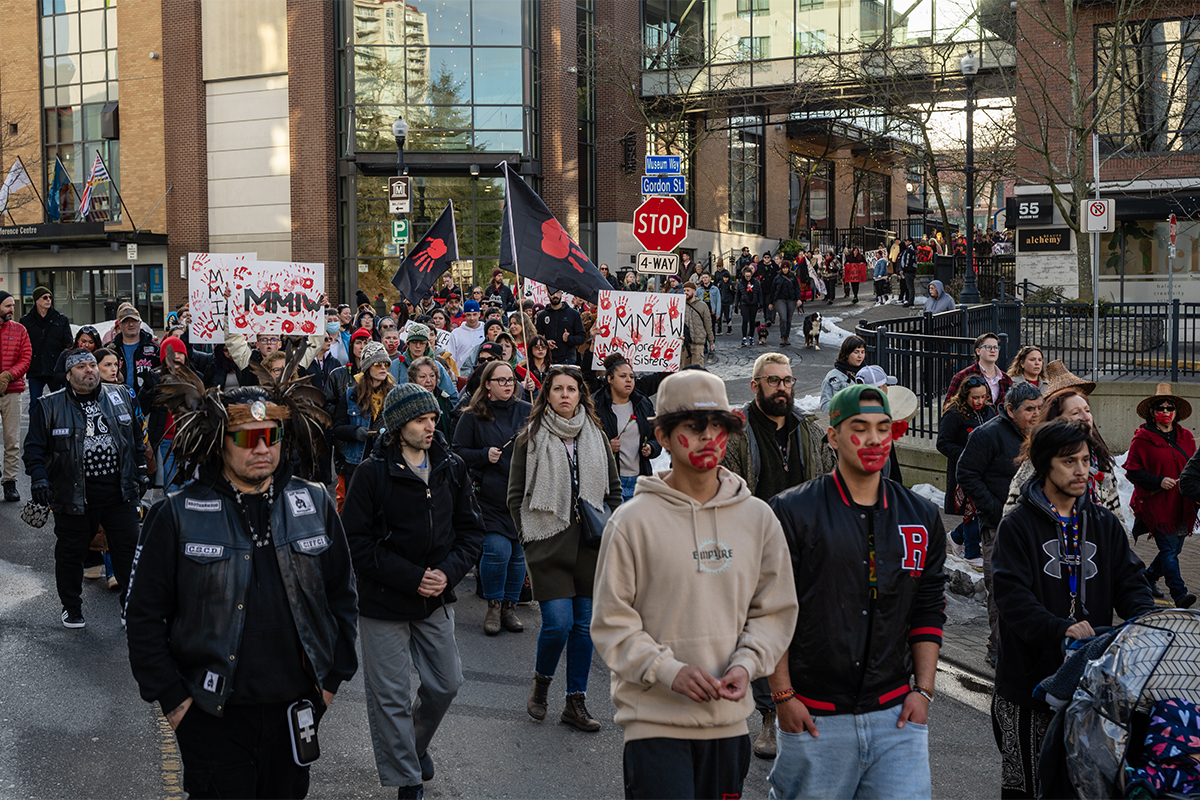
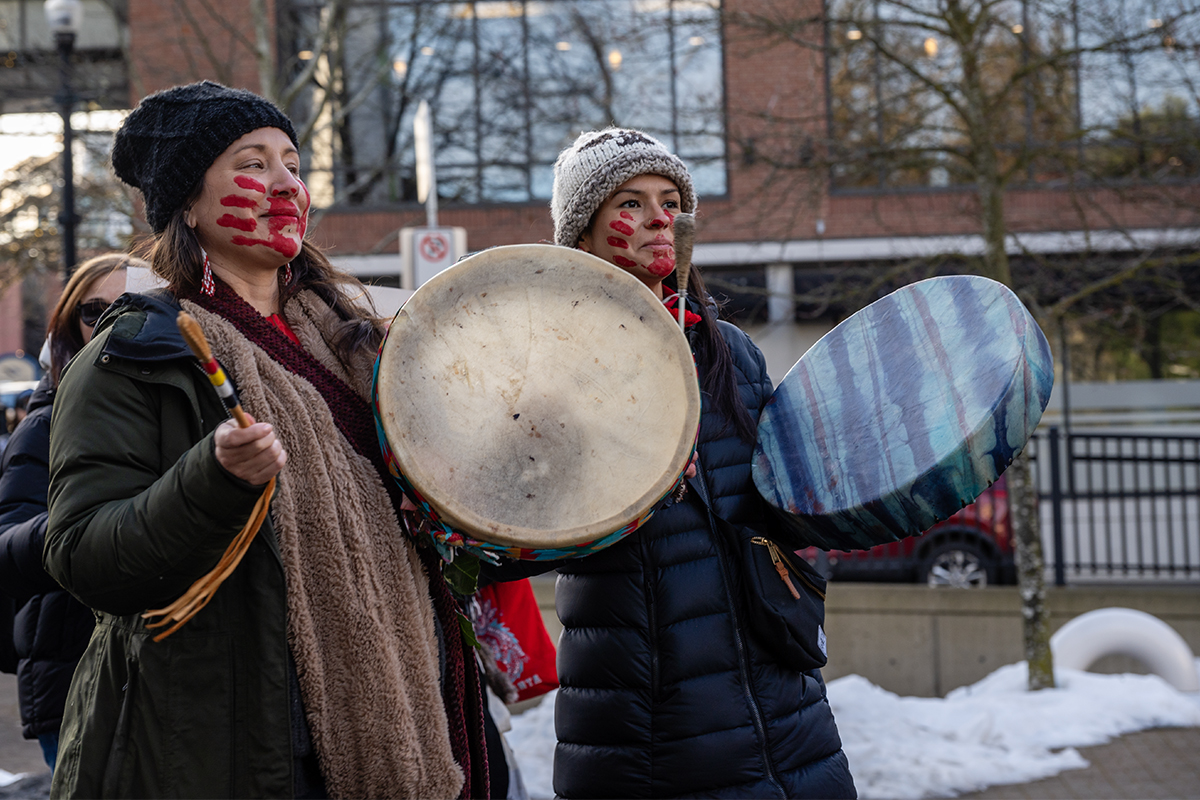
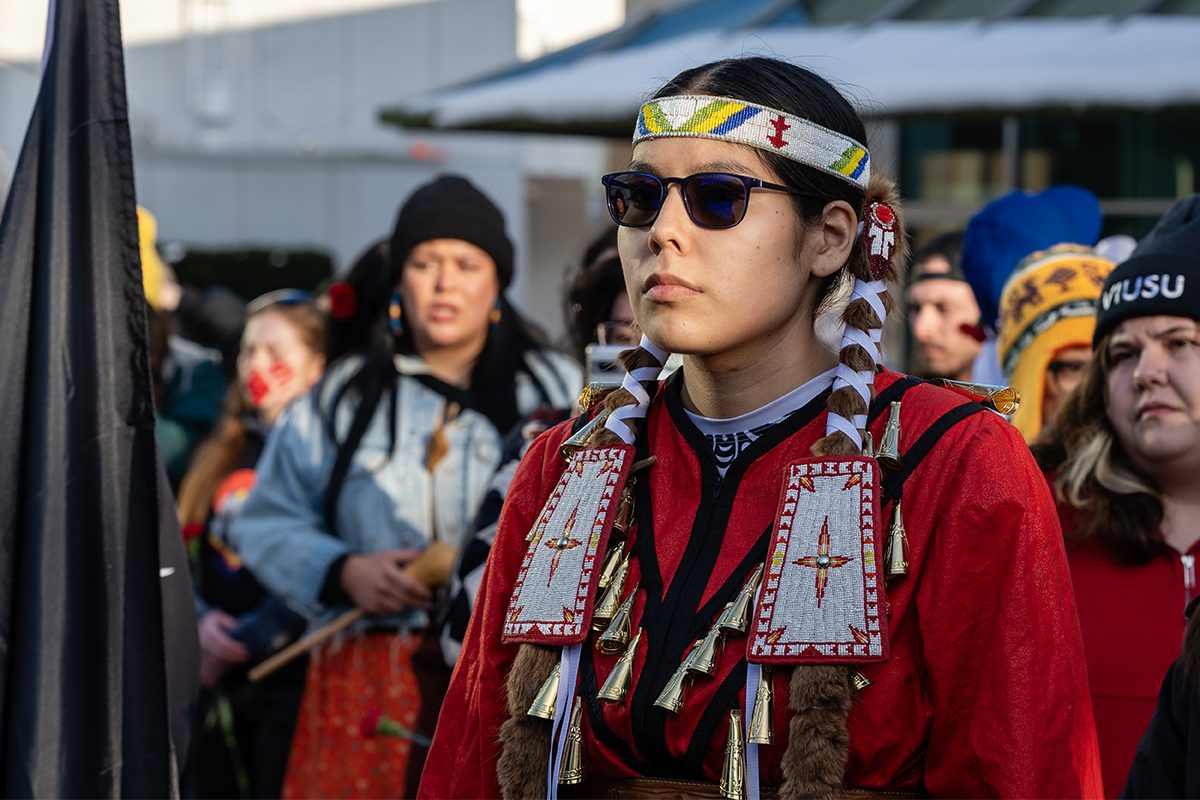
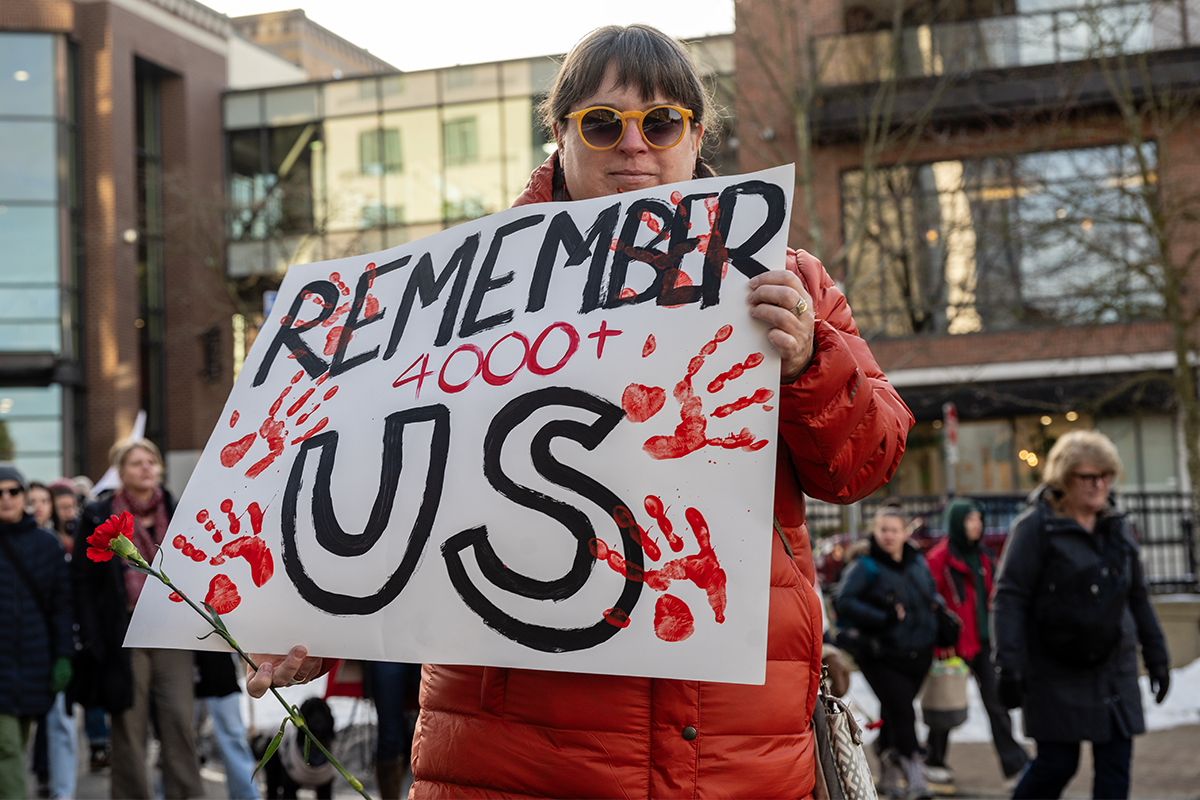
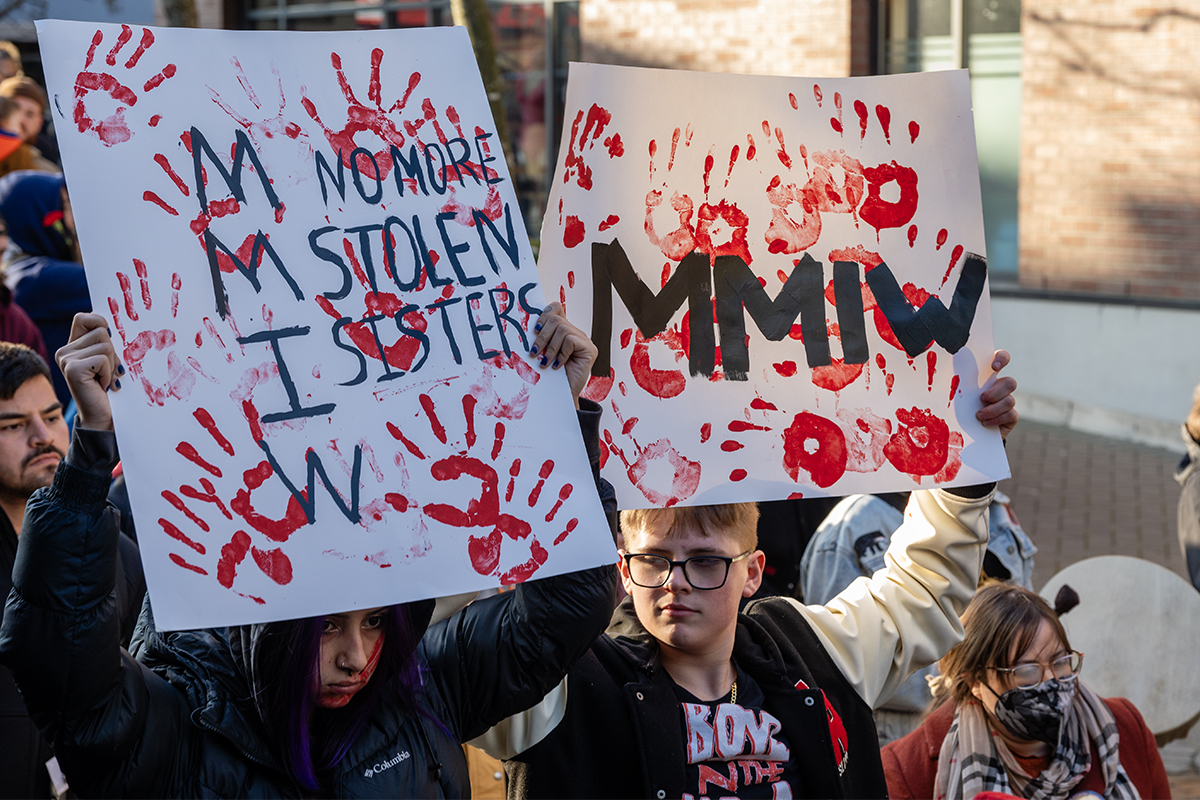
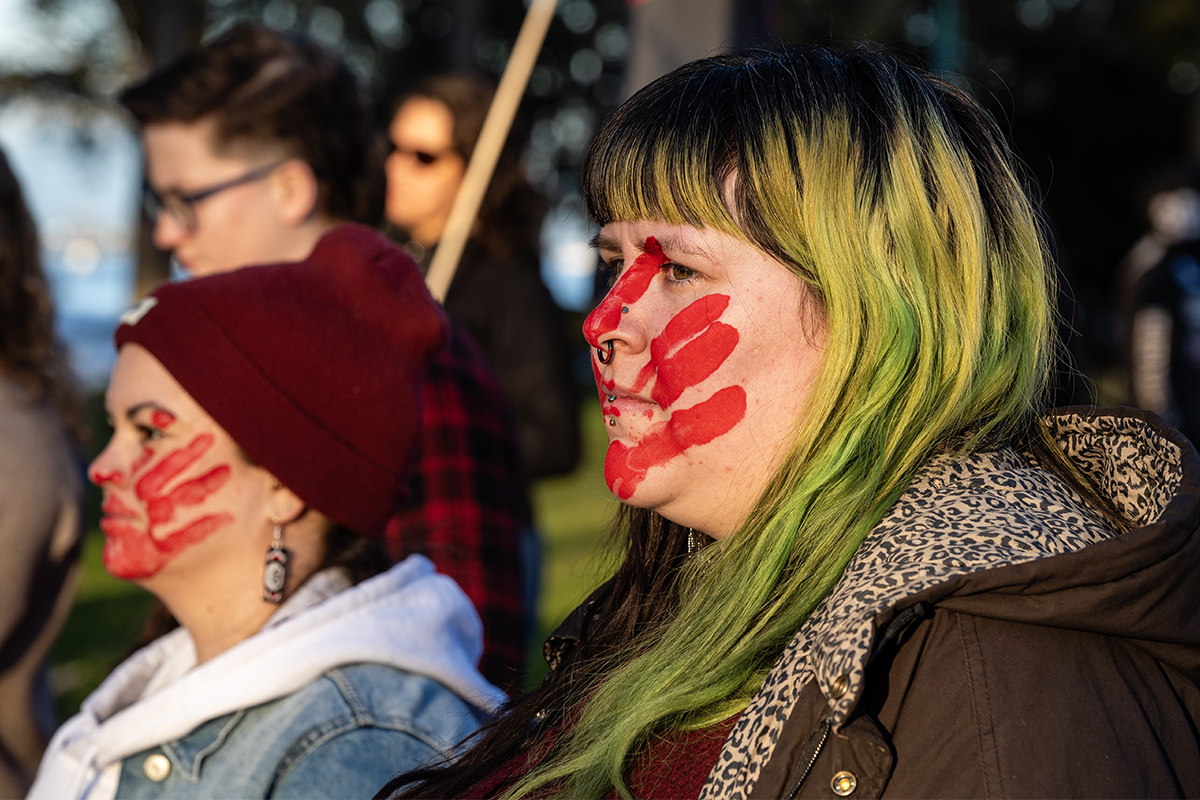
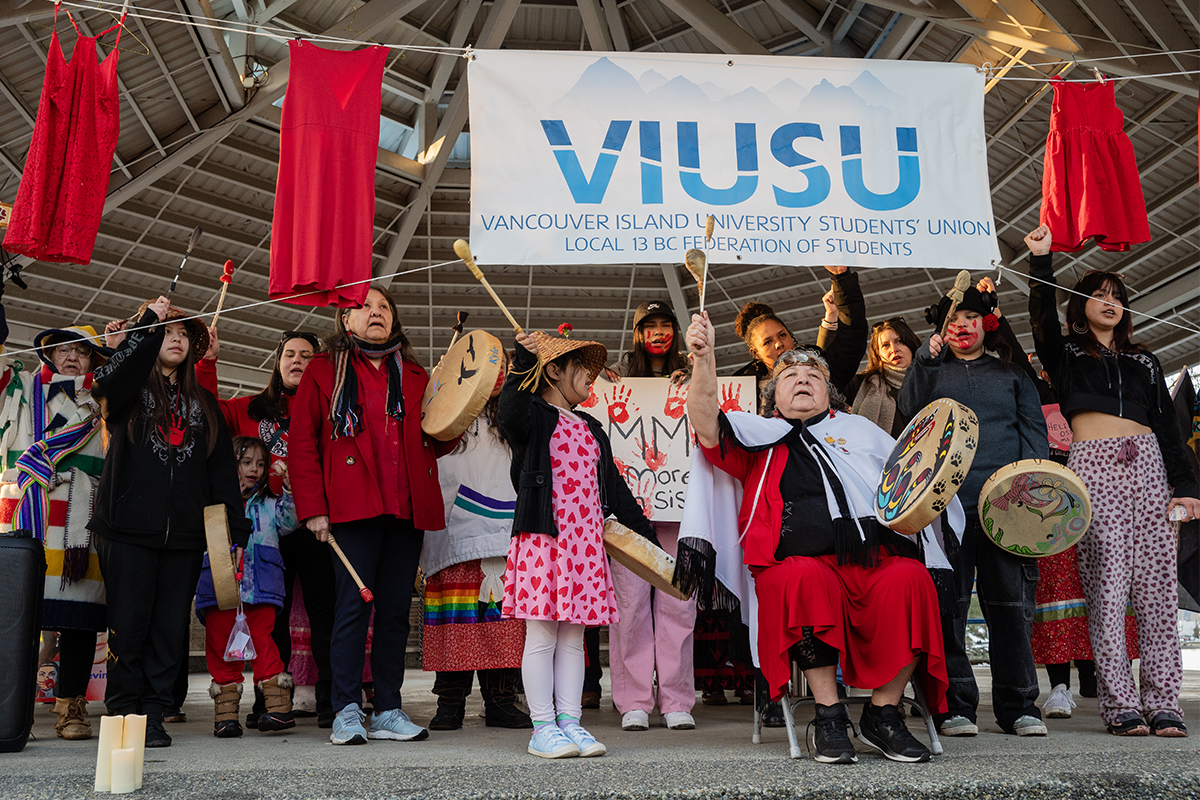
Hundreds of people marched through downtown Nanaimo on Feb. 14 remembering missing and murdered Indigenous women and girls and 2SLGBTQQIA people (MMIWG2S+).
This year’s Nanaimo march for MMIWG2S+ was organized by the Vancouver Island University Student Union and spearheaded by its Indigenous representative Leah Vaisanen, who is from the Łı́ı́dlı̨ı̨ Kų́ę́ First Nation near Fort Simpson in the Northwest Territories and is of Dene and Vietnamese descent.
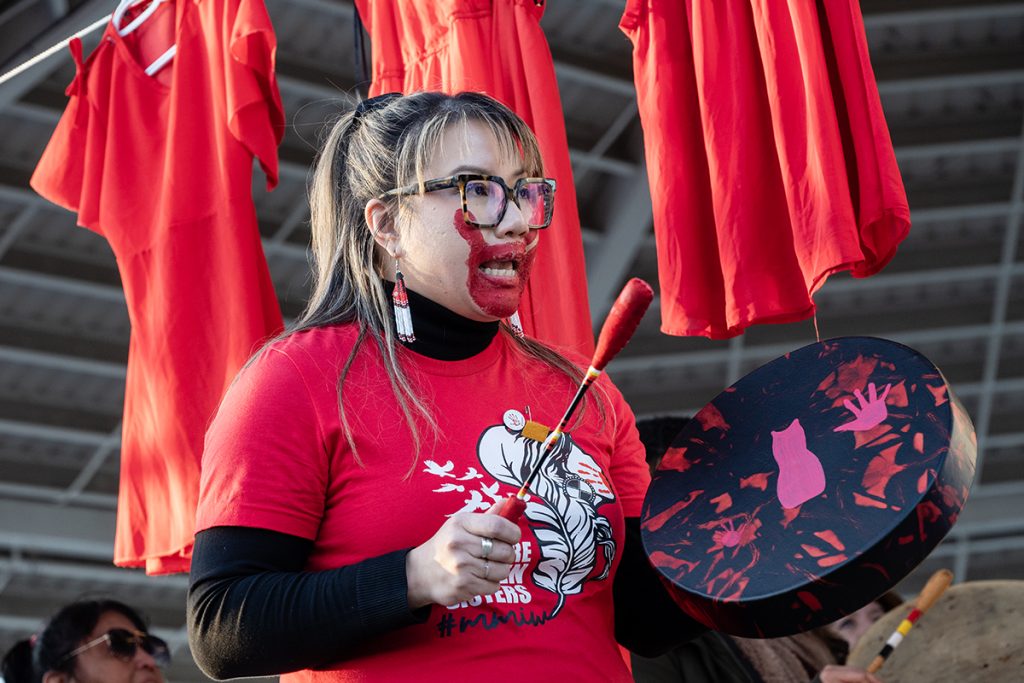
“It’s a way for Nanaimo to really get the awareness and the attention on this genocide that’s happening in our country,” she told The Discourse. “And to come together as a community to use our voices, bring action, bring justice and bring accountability to those involved.”.
The term genocide is used in the final report from the National Inquiry into Missing and Murdered Indigenous Women and Girls to describe the ongoing intergenerational harms faced by Indigenous women, girls, and 2SLGBTQQIA people as a result of settler colonial policies and actions.
Vaisanen said she would like to see the federal government increase funding for Indigenous Peoples and implement the 231 calls for justice resulting from the inquiry.
As a policy lead for missing and murdered Indigenous women and girls at the Native Women’s Association of Canada, Vaisanen said that she has personally been abused and assaulted and is now working to address human trafficking and on the Red Dress Alert system, which would send emergency notifications to the public when an Indigenous woman, girl or two-spirit person goes missing.
In 2023, CBC released a “report card” on the Calls For Justice to track which ones have been completed by various levels of government in Canada. Of the 231 calls, only two were completed at the time of publishing, and more than half weren’t started yet.
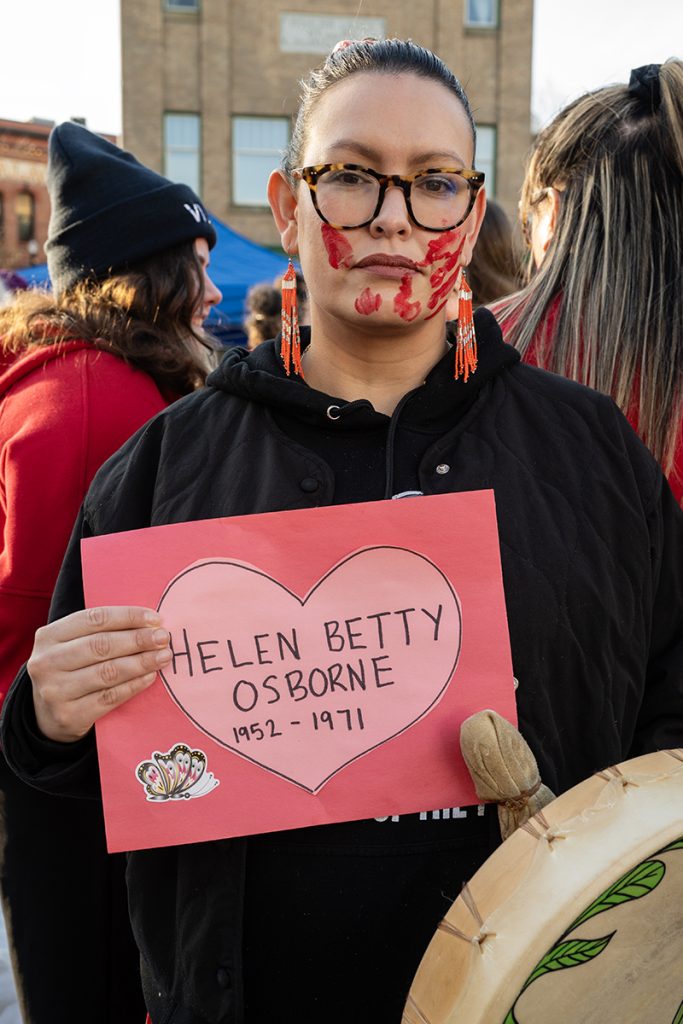
Anna Mckenzie, a former reporter and now board member of IndigiNews who works as a policy writer, was at the march holding a sign for Helen Betty Osborne.
“She was a kin to my family in The Pas, Manitoba, and was murdered on her pathway to attain further education, leaving her home territory of Norway House Cree Nation,” said Mckenzie, who is a member of the Opaskwayak Cree Nation and has a Snunyemuxw daughter.
“My dad wanted to be here in support, but it’s still too painful for him and for our family. So I’m here honouring Helen Betty Osborne and all the other missing and murdered Indigenous people in so-called Canada.”
Lily Thomas, who is 18 and from Cowichan Tribes, was at the march to both remember women and girls from her community and work to protect girls younger than her.
“There’s been lots of instances where people have come up in sketchy situations, and I just want to make sure that younger kids don’t have to experience that,” she said.
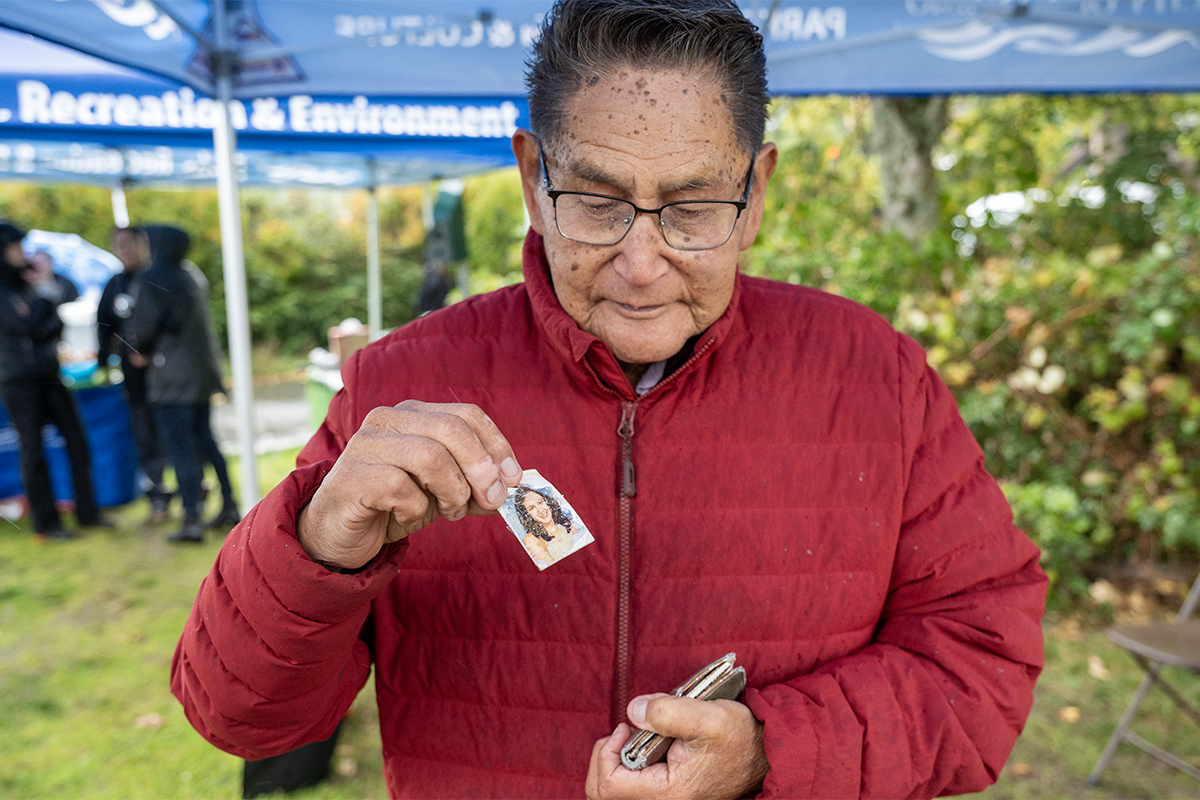
Jalisa Moody, member of the Nuxalk Nation near Bella Coola, was with her cousin Francine Gascoyne carrying a photo of her grandmother Livena Moody who was murdered in 1969 near Williams Lake.

“I may not have known her, but her impact has held strong on our family through the generations. So being able to come together as a family, like with Francine and with our broader community and our broader relatives, is great to come together and stand strong here as Indigenous women.”
Gascoyne said that there was enough evidence in the case that they know the identities of the three men who murdered Livena, but there is no justice as they are all deceased. She would like that recognized by the RCMP.
Gascoyne said she was also marching for two young men from her community who are missing.
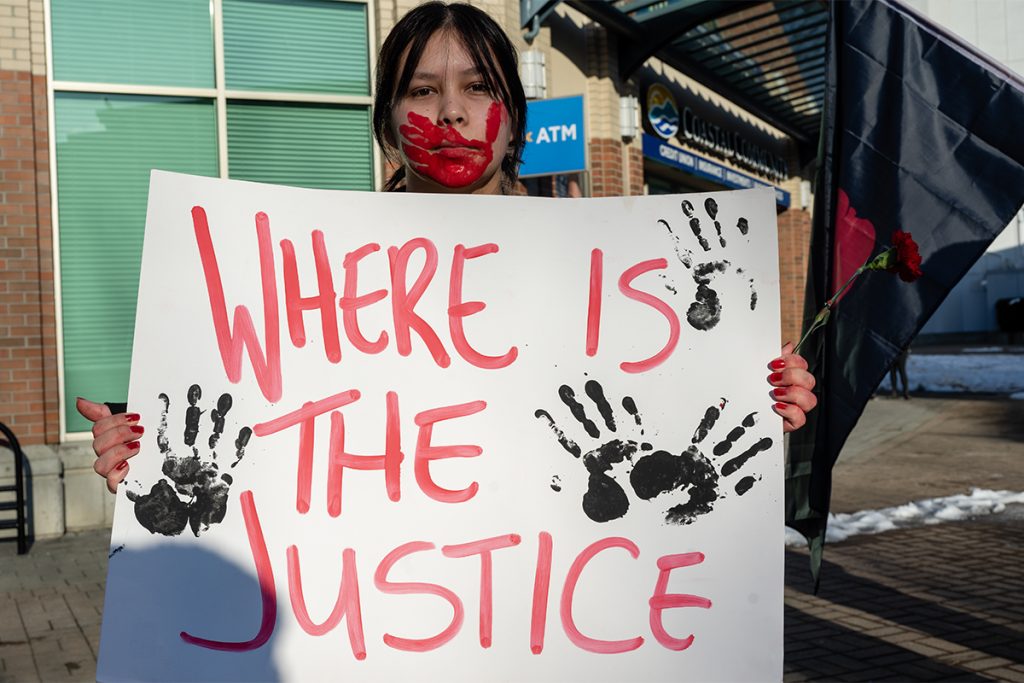
“We’re here to bring awareness to the racism that is still threaded throughout society that impacts us as First Nations people, putting us at higher risk to go missing or to be murdered.
“And really, when you see all these people here, and for us standing here for our relative, we’re here to be her voice and to bring justice to something that never, ever should have happened.”
Rates of violence against Indigenous women are significantly higher than for non-Indigenous women in Canada, according to the inquiry’s final report, and due to various forces of oppression the inquiry was not able to uncover the exact number of MMIWG2S+ people in Canada.

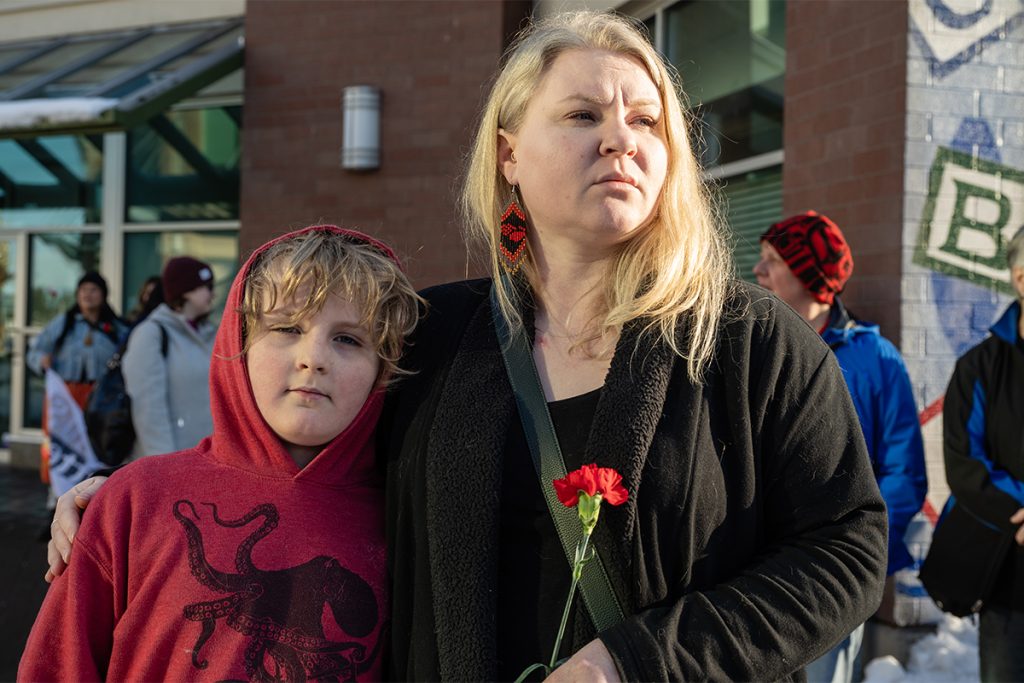
Erica Low was at the march with her son Ryder to support missing and murdered Indigenous women and girls.
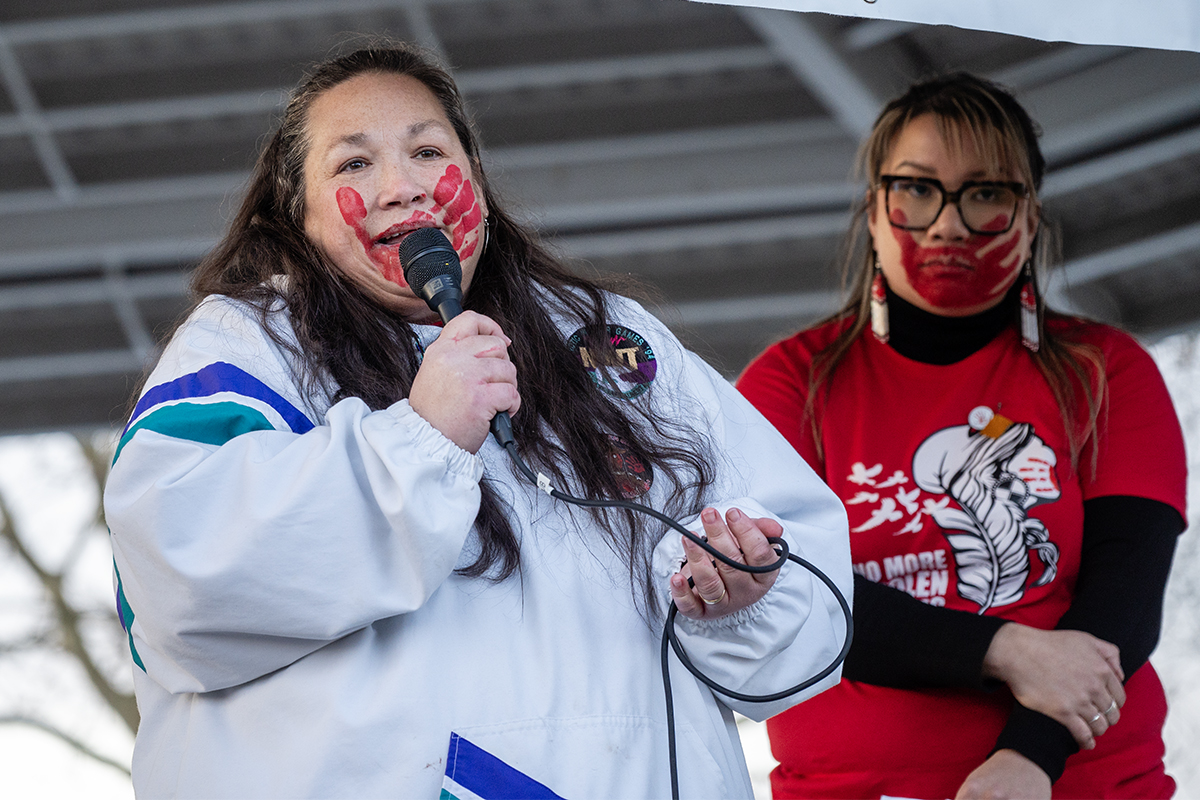
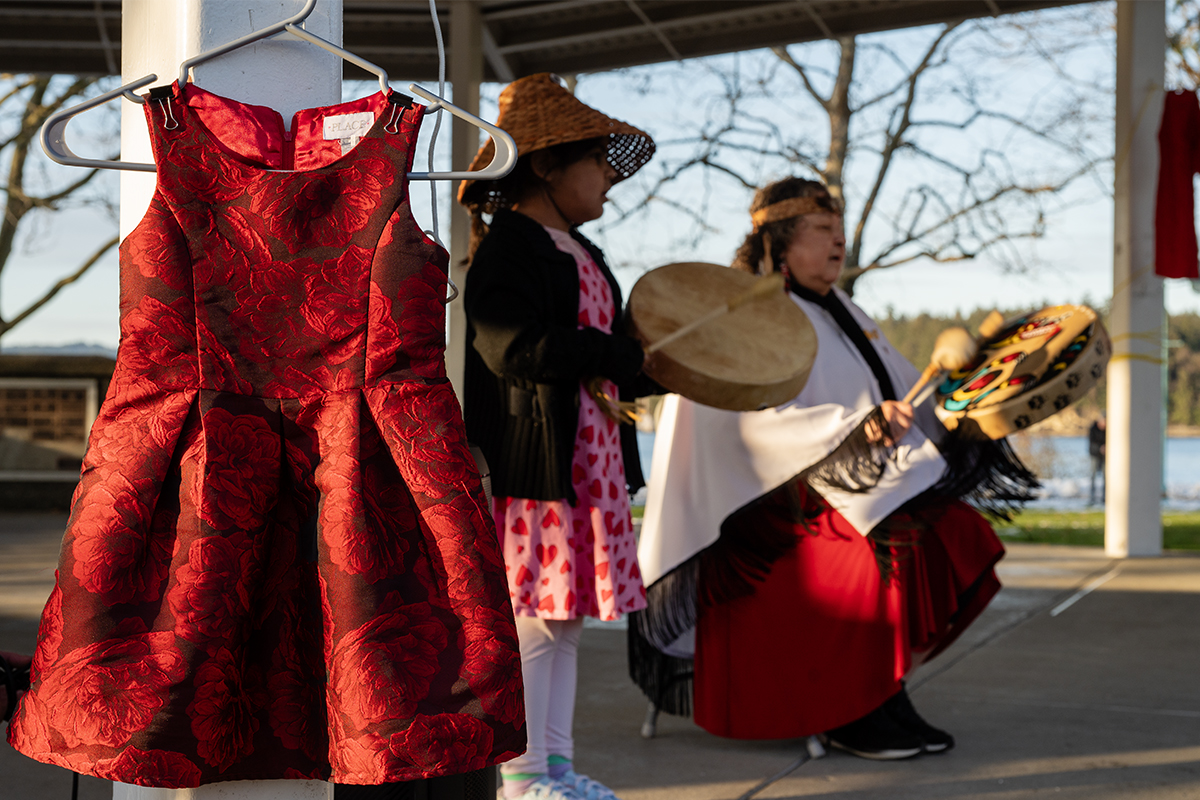
Nanaimo-Ladysmith Member of Parliament Lisa Marie Baron spoke at Swy-a-Lana Lagoon, also known as Maffeo Sutton Park, after marching with the families.
“Today, we are here, of course, to remember all the women, girls and Two Spirit people who have been lost, and of course, to honour all of their families, loved ones, and communities who are not only mourning their loss,” she said.
”But so many are also left without the answers that they need and deserve. It was so moving to march with all of you today to be able to participate in the women’s warrior song.”
Baron also spoke about the case of Lisa Marie Young who went missing over 20 years ago from Nanaimo.
“Lisa Marie was a friend of mine, and when we were both in our early twenties, on a weekend when I was not out with her, she went missing,” Barron said. “So on all of these marches, I always think of her and think of her family. That is another example of loved ones who have not received the answers that they need and deserve.”
Nanaimo Mayor Leonard Krog and city councillors Hilary Eastmure, Erin Hemmens and Paul Manly also attended the march.
Photography by Mick Sweetman / The Discourse

What did you think of this story?
Your feedback after we publish a story helps ensure we're always improving our reporting to better serve you
Author
Related Articles
What are Nanaimo election candidates saying about the climate emergency?
All-candidates forum puts climate questions to Nanaimo election candidates.
Comox Valley, Nanaimo land trusts raising funds to support Deep Bay land conservation purchase
In a partnership with the Comox Valley and Nanaimo Area land trusts, BC Parks Foundation is fundraising to protect 50 hectares of pristine shoreline in Deep Bay and make it accessible to the public.

Nanaimo Jazz Festival celebrates 10 years with more than a dozen shows in September
Local and international artists to perform on multiple stages in the city at this year’s Nanaimo Jazz Festival.