
Japanese internment explored in new exhibit, From ‘Herring Capital’ to Seven Potatoes
Nanaimo Museum exhibit traces the experiences of three local families, including the Yoshidas, who started The Grotto restaurant.

At the centre of the Nanaimo Museum’s new permanent exhibit, From “Herring Capital” to Seven Potatoes stands a striking photo of a young woman in a kimono.
The exhibit explores the story of Japanese Canadians in Nanaimo through three stages — a pre-1942 thriving community of herring salteries and [other businesses], the exile and dispossession of Japanese Canadian residents as they were uprooted during the Second World War and sent to internment camps, and the resilience and rebuilding efforts of local Japanese Canadians from the 1950s onwards.
It’s the first time the museum has looked at this part of local history, and each section of the exhibit traces the experiences of three local families: the Shimozawas, Yoshidas and Uyeyamas, using personal stories, photos and research in partnership with the Central Vancouver Island Japanese Canadian Society, known as Seven Potatoes Society — named after the Japanese translation of nana (seven) and imo (potato).
In addition to the permanent exhibit, the museum hosts a traveling exhibit, Broken Promises, from the Nikkei National Museum in Burnaby, which more broadly explores the dispossession and displacement of Japanese Canadians in the 1940s and is informed by research from Landscapes of Injustice, a seven-year project that spans multiple disciplines and institutions.
Among other family and historical photos in the permanent exhibit is the picture, taken of Nanaimo resident Tokuko “Toke” Yoshida as a child, wearing an ornate and expensive kimono.
The details of the story behind the photo are still not fully known, but it is believed the kimono she is wearing is likely one that Tokuko’s mother Hisae Yoshida had specially made for her in Japan.

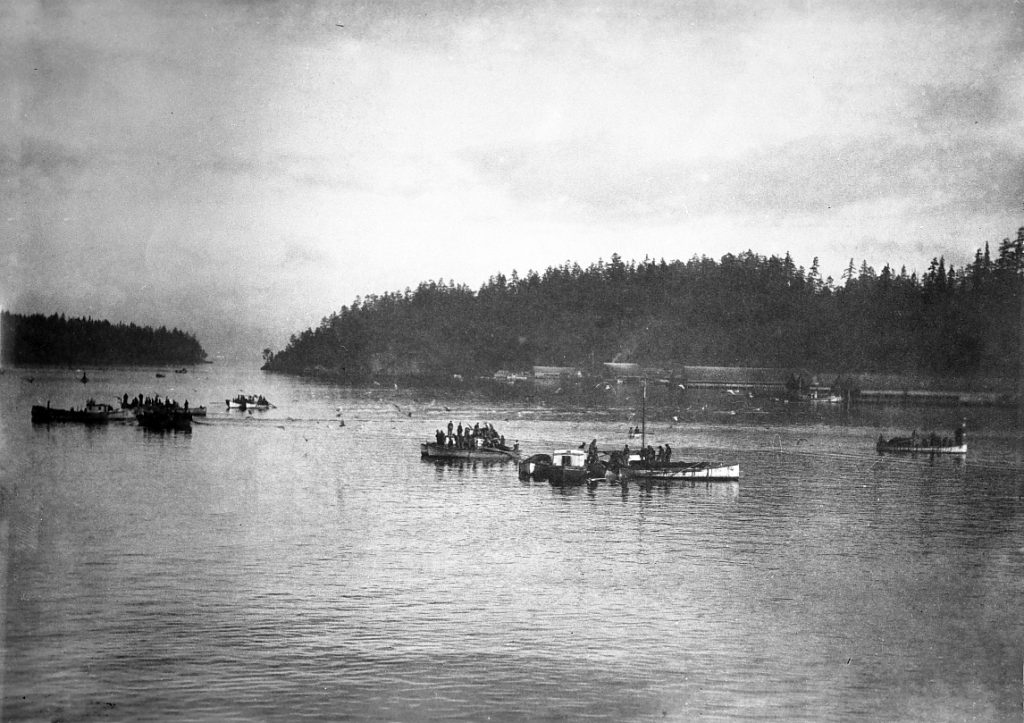
After Japan’s bombing of Pearl Harbour, the lives of Japanese Canadians completely changed. In 1942 the Canadian Government detained and then interned 21,460 citizens of Japanese descent and moved them from coastal B.C. to camps in the Interior. It also permanently confiscated their fishing boats and gear, possessions, land and houses, which were then sold off.
When the Yoshida family were sent to the camp in Greenwood, Hisae stored a sewing machine and some kimonos at her friend Margaret Neave’s house.
“They could only take basically two suitcases with them when they were interned,” says Brenda Yoshida, Tokuko’s daughter-in-law. “Of course if you’re going into something that is unknown you’re going to take warm clothing and practical things, not some beautiful kimono that you [got from] Japan for your daughter.
“After they were settled in the internment camps, Toke’s dad [Iwataro] wrote asking for his wife’s sewing machine, which was shipped to him, and for Toke’s kimono.”
The kimono never arrived, and when Iwataro’s letter reached Neave, she responded that the kimono and all of their other possessions had been taken by J.W. James, the custodian agent for Nanaimo.
“I did not wish to give them up but he threatened me with a heavy fine if I didn’t,” she wrote, according to the museum exhibit.
“They had taken [the items] and put them in a Japanese school, which was above Stewart Avenue, and lo and behold, it got broken into and all of the things were mixed up,” says Brenda. Many if not most of the items were also miscategorized or not properly inventoried, if at all, according to Nanaimo Museum curator Aimee Greenaway.
“After the war ended, my mother-in-law’s father was sent a compensation cheque, which was about 10 per cent of what he’d asked for and what the kimono was valued at,” adds Brenda. “He never cashed it. It was his way of course, of saying ‘No, I don’t accept this.’”

Nanaimo City Council voted unanimously to petition Ottawa for the internment of Japanese residents “for the duration of the war,” according to a Jan. 6, 1942 article in the Nanaimo Free Press.
Mayor V.B. Harrison joined other Island mayors in sending a telegram to Prime Minister MacKenzie King “because he felt that action ought to be taken, and that immediately,” states the article.
This was despite the opposition of people like Major-General Kenneth Stuart, who in 1941 said that “from the army point of view, I cannot see that Japanese Canadians constitute the slightest menace to national security.”
Within 24 hours of Japan’s bombing of Pearl Harbour, all boats owned by Japanese Canadians were ordered into the nearest port and at least 66 of the 1,137 ships confiscated were owned by Japanese Canadian fishers living in Nanaimo, according to Masako Fukawa, primary researcher and writer of the Nanaimo Museum’s exhibit.
“Nanaimo MP Alan Chambers demanded that the government ‘keep men of Japanese origin out of fisheries forever,’ revealing a disturbing race hatred that would propel further measures amounting to ethnic cleansing,” wrote Fukawa in her article, “Lifting the Veil on Nanaimo’s Nikkei Community: From Settlement to Return” printed in BC Studies’ Winter 2019/2020 edition.
“This history also reveals an ugly side of Nanaimo: like other communities in British Columbia, its residents called for the expulsion of Japanese Canadians. Because few Japanese Canadians returned to Nanaimo after the Second World War, the stories of those who did are even more significant with regard to ending the silencing of this past.”
The Yoshida family was one of those that returned in 1959, and by the following year Tokuko, along with her husband Akira and brother Mike, started a Nanaimo institution: The Grotto restaurant — one of the city’s best-known and most beloved — which ran until 2009.
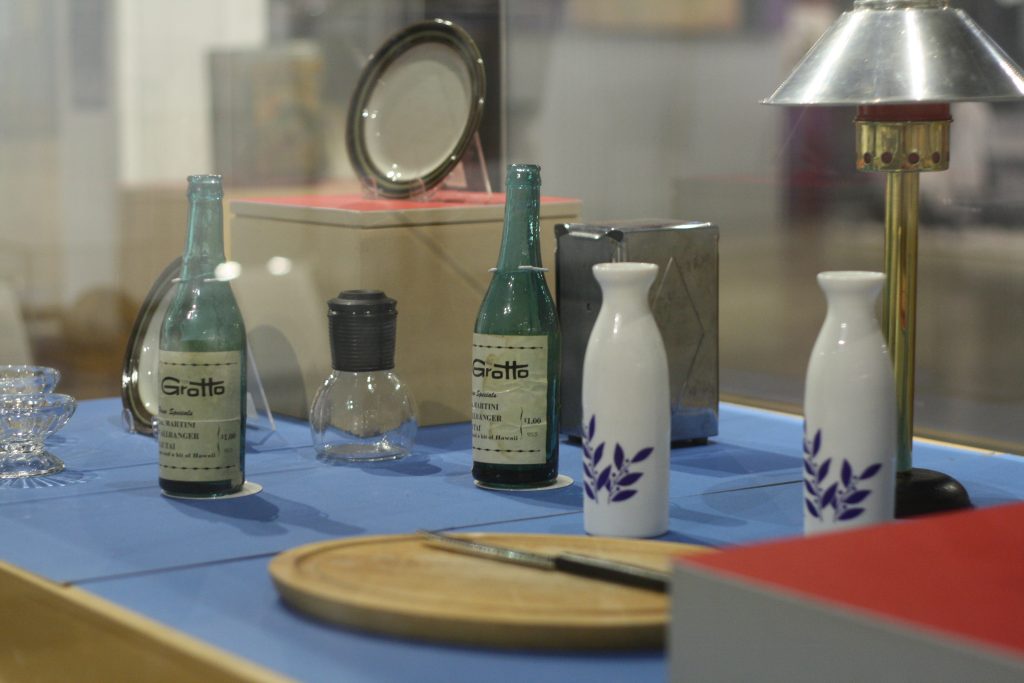
The restaurant was decorated in a style reminiscent of Japanese fishing vessels, and featured numerous glass fishing floats and ropes. Some of the restaurant’s dining items have been donated to the museum’s exhibit by Brenda and her late husband Vern Yoshida.
The Broken Promises feature exhibit runs until Sept. 2 and entry to the Nanaimo Museum is by donation.
What did you think of this story?
Your feedback after we publish a story helps ensure we're always improving our reporting to better serve you
Author

Related Articles
Nanaimo Blues Festival brings international headliners and local talent to Maffeo Sutton Park
‘Blues is for everyone,’ says Nanaimo Blues Society president
What to do and where to go during extreme heat events in Nanaimo, the Comox Valley and the Cowichan Valley
A guide to prepare for extreme heat events on Vancouver Island
Snuneymuxw Days shares culture with Nanaimo community
Health and wellness event features sport, traditional games and a feast.