
Meet one of the U.S. health-care workers moving to Nanaimo
Why a nurse from California, and other U.S. health-care workers, will be calling Nanaimo home this year.
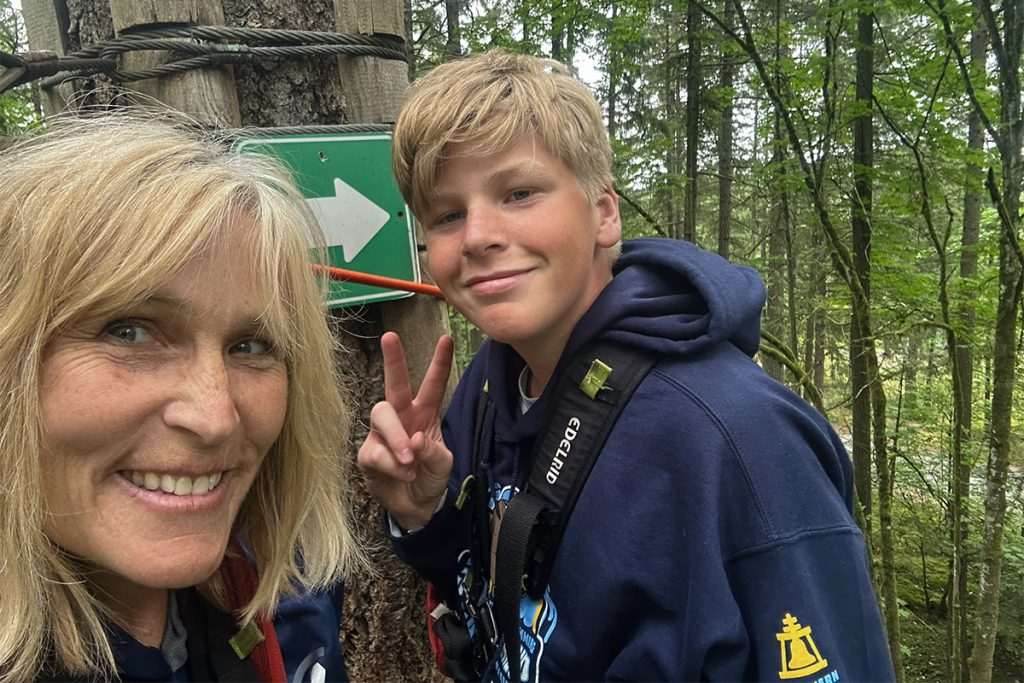
U.S. health-care workers are flocking to Nanaimo, and at least one told The Discourse their move is a direct spin-off from the Nanaimo Infusion event that welcomed hundreds of American visitors to the city this spring.
Brandy Frye is a registered nurse from Califorina who was in Nanaimo this week with her 13-year-old son Bruce to meet her new boss at the Nanaimo Regional General Hospital — where she’ll be working in the emergency department.
Frye said the reason she’s moving to Nanaimo is because she doesn’t see a future for her son in the U.S. under the Trump administration.
“I’m not proud to be American anymore,” she said. “I just can’t believe this is happening. But it is, so I’m making calculated steps to ensure that my son has a future, because I really don’t see a future there.”
Frye has seen raids and deportations of people without status in Los Angeles, including attempts of ICE agents to enter her hospital there, but they were turned away at the hospital doors by security.
As a nurse educator, Frye developed materials for nurses on what to do if ICE raided the hospital, and nurses’ obligations to patients.
“But that being said, there’s tons of nurses that voted for this,” she said, referring to President Donald Trump.
When Frye and her son were recently driving through Los Angeles to attend her niece’s graduation ceremony at University of California, L.A., her son Bruce asked her why there were troops on the streets.
“‘That’s why we’ve got to go,’” she replied. “The country is moving in a very bad direction and I don’t think people understand how bad it’s going to get. I hate to be a fearmonger, but every day there’s something new, and I just feel like it really mirrors what happened in Germany,” she said, referring to the Nazi dictatorship and the Holocaust.
Frye started looking at immigrating to Canada in February, shortly after Trump’s inauguration. A friend of hers told her about the Nanaimo Infusion inviting Americans to visit the city from April 25-27.
“I thought that was really cool,” she said.
A colleague of hers put her in touch with Laurie Kersten, who helped run an information table matching visiting Americans with locals at the “family photo” meet-up in Maffeo Sutton Park; Kersten is an immigrant from the United States herself.
Kersten helped connect Frye with a recruiter from Island Health, and Frye landed an interview at the hospital’s emergency department.
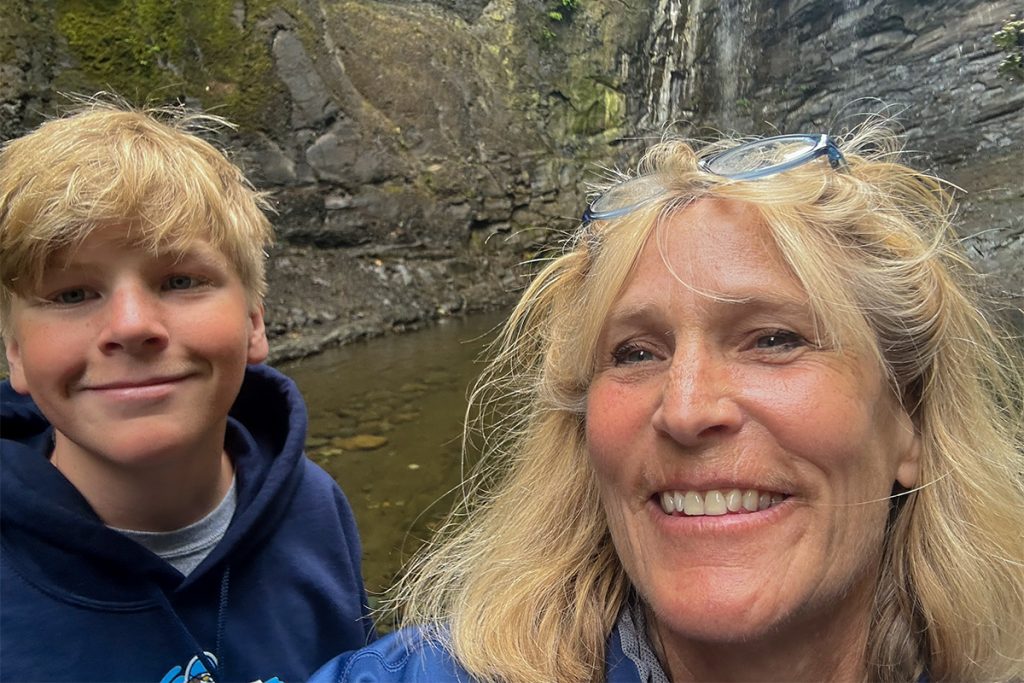
Aside from meeting her new boss and signing a rental agreement for an apartment, Frye and her son Bruce also took some time to check out the attractions in the area — including walking at Neck Point Park, and doing the extreme rope course at WildPlay.
“I thought I was gonna die,” joked Frye, who said her legs were already sore from hiking to Ammonite Falls the day before.
Tod’s Nanaimo Infusion becomes Tod’s Healthcare Infusion
Tod Maffin, who sparked the idea for the Nanaimo Infusion gathering, said that a lot of the people who visited Nanaimo in April were health-care workers, including one couple who were registered nurses from Texas.
“They loved it and decided to move,” Maffin told The Discourse. “They’ve accepted job offers and are currently in the process of packing to arrive in November.”
Maffin said that made him think about how to change the Nanaimo Infusion website to add resources for people interested in moving to Vancouver Island and working in the health-care system.
He said the website has had roughly 50,000 visits so far.
“Like all poor decisions, it kind of grew beyond my means,” he said laughing.
While Maffin admits he doesn’t have any expertise about Canada’s immigration process, he wanted to try to bring together in one place as many different resources a healthcare worker will need to know.
He said he’s heard “frustrations” from a number of U.S. health-care workers about the number of agencies they would need to contact to move to Vancouver Island for work — such as regulatory colleges, language testing programs, and the provincial nominee program for immigrants.
“Those websites only talk about their piece of the puzzle and the puzzle is about 10 pieces, right?” he told The Discourse. “There didn’t seem to be — as far as I could tell — any single simple resource that said, ‘Here’s how all the pieces connect to each other, and here are the links to all of the pieces.’”
The website offers a step-by-step flow chart, with videos about topics from getting a job offer to Canada’s immigration process, and tips on moving to Vancouver Island.
His message?
“We want you on Vancouver Island. We’re willing to do what it takes to do that. And here’s the first steps you need to get started.”
The differences between the U.S. and Canadian health-care systems
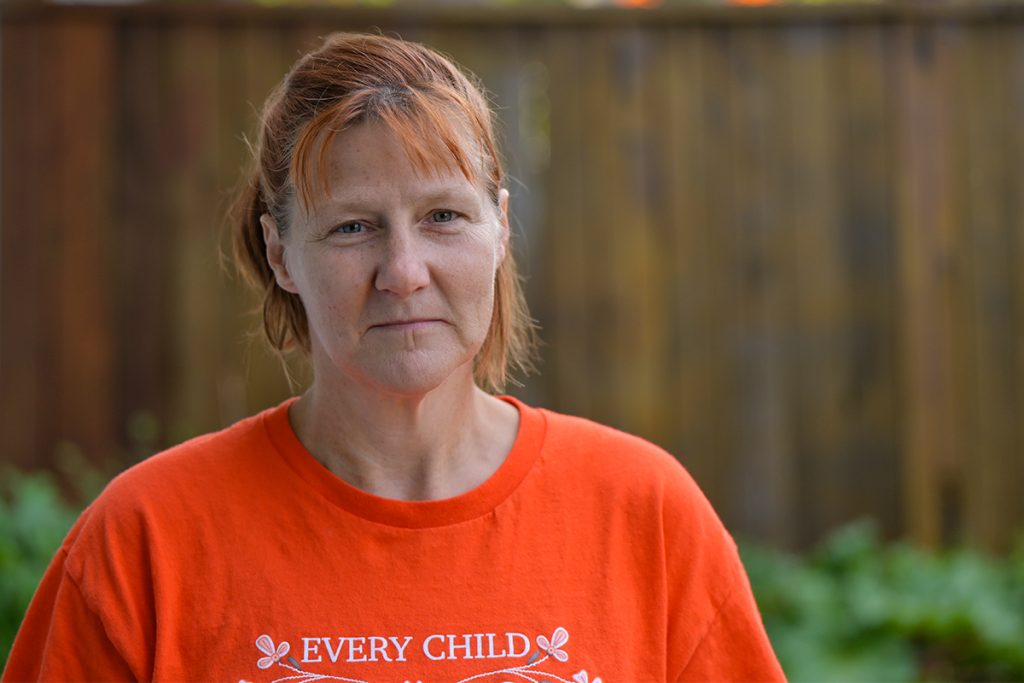
Lori Nichols was born and raised in Texas before becoming a nurse. She’s lived and worked in Canada since 1990, first in Toronto. Six years ago, she moved to Nanaimo.
“We were planning on going back to the States,” she told The Discourse, “but really liked Toronto and Canada a lot, so we stayed.”
Nichols and her husband Jeff attended the Nanaimo Infusion event, where they spoke with visitors including several nurses and a physiotherapist.
She said the U.S. healthcare workers she talked with were “fed up with the U.S. system” — or at least saw its downsides.
“As a nurse, what I like about Canada is I know what I can do,” she explained. “Here’s the services we have. I can treat people, I’m concerned about what people need.”
In contrast, she said, in U.S. health-care, the first question for patients is often, “What is your insurance? Let’s see what you can cover.”
The thing she said surprises many Americans the most here was that people in Canada can choose their doctor — as opposed to being restricted to doctors listed by their health insurance company.
South of the border, she added, there’s a common misperception that health-care is more restrictive in Canada rather than less restrictive.”
While Nichols would prefer the heat of Arizona, where she was teaching as a nursing professor before moving to Nanaimo, what brought her back to Canada was what she called the “Canadian attitude.”
“You can talk to a doctor and say, ‘This is going on, should I worry about it?’” she explained. “In the States, people are crowdsourcing their friends [saying], ‘Do you think this is worrisome enough for me to go and pay for a doctor?’”
Nichols said another big difference between working in Canada and the U.S. is she’s more focused on treating patients here.
“There’s less administration and less hassle,” she said.
But the real reason Nichols moved to Nanaimo? Her husband heard there were otters in the harbour, she quipped.
“He then convinced me, with all the other things that Nanaimo has around it — the vast amount of nature,” she said. “If you’re working as a nurse in Nanaimo, you can go to the beach, you can kayak, you can walk in the mountains on your days off or even after work.”
Provincial recruiting campaign ramps up
The province recently launched a recruitment campaign targeting U.S. doctors, nurses and allied health professionals with ads “encouraging them to follow their hearts to B.C.”
“There has never been a better time to come to British Columbia, and for Canadian health professionals currently living and working in the U.S., now is the time to come home,” said health minister Josie Osborne in a press release.
“With the chaos and uncertainty happening in the U.S., we are seizing the opportunity to attract the talent we need to join and strengthen our public, universal health-care system in British Columbia.”
The campaign is targeting health-care professionals in Washington, Oregon and California, and directs people to B.C.’s recruitment website.
Nearly 1,600 people have already expressed interest in moving from the U.S. to B.C. since March, the province states, including 704 doctors and 525 nurses.
What did you think of this story?
Your feedback after we publish a story helps ensure we're always improving our reporting to better serve you
Author

Related Articles
Comox Valley, Nanaimo land trusts raising funds to support Deep Bay land conservation purchase
In a partnership with the Comox Valley and Nanaimo Area land trusts, BC Parks Foundation is fundraising to protect 50 hectares of pristine shoreline in Deep Bay and make it accessible to the public.

Nanaimo Jazz Festival celebrates 10 years with more than a dozen shows in September
Local and international artists to perform on multiple stages in the city at this year’s Nanaimo Jazz Festival.
Snuneymuxw Elder C’tasi:a shares traditional plant knowledge in new book
‘Plant Teachings from my Auntie’ by Snuneymuxw Elder C’tasi:a and ethnobotanist Nancy Turner delves into traditional plants and plant medicine.