A man died of a toxic drug overdose inside a washroom in the Nanaimo Regional General Hospital (NRGH) emergency department early on Tuesday morning after a pop-up overdose prevention site (OPS) across the street had closed for the night.
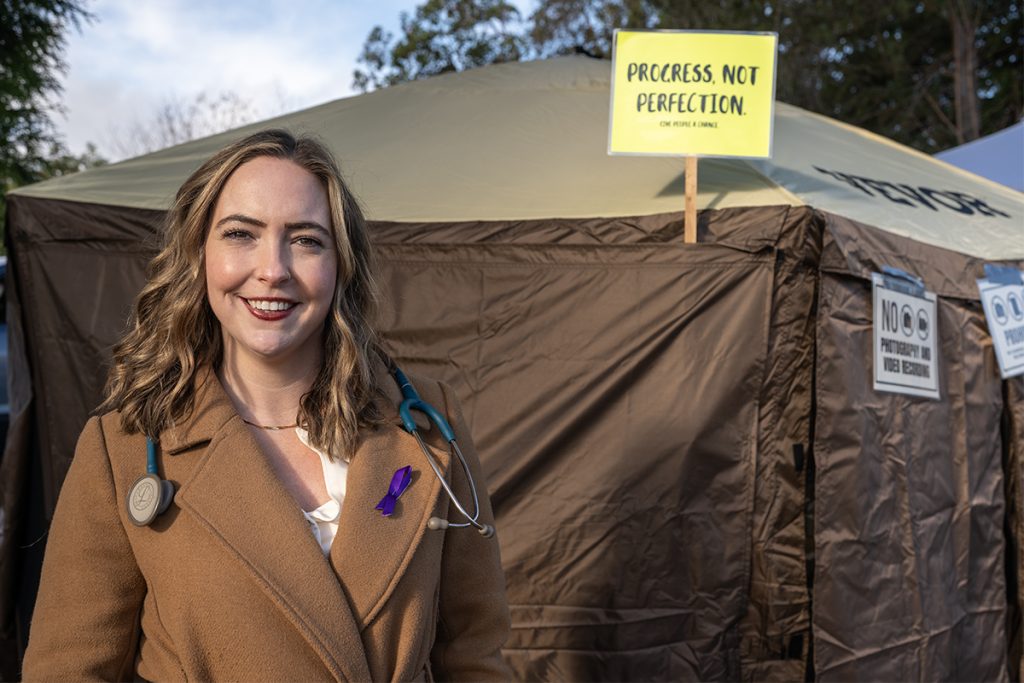
Dr. Jess Wilder, a family and addictions medicine physician, said the man was well known to her and other health-care workers and his death was preventable. As a member of Doctors for Safer Drug Policy, she is calling on the province to uphold its previous commitments to providing permanent, 24/7 staffed overdose prevention sites at hospitals across British Columbia.
Dr. Wilder said the man was sick enough to be admitted to the hospital, but with support of nurses in the ER, was able to make his way to the unsanctioned OPS tent set up across the street to use the unregulated substances he was physically dependent on. NRGH does not allow the use of illicit substances, and use of them in hospitals and other public spaces was re-criminalized by the province in April.
The OPS was set up and funded by Doctors for Safer Drug Policy — with the support of doctors, nurses, support workers, students and mothers — on Monday, Nov. 18 on a narrow strip of grass between a sidewalk and a parking lot consisting of simple tents where people can use drugs under the supervision of trained volunteers. Sanctioned and unsanctioned OPS have existed in B.C. for decades as they have proven to lower the risk of disease and save lives.
Originally, the plan was to set up the OPS tent on hospital property but an attempt to do so on Monday morning was met by hospital security telling them that was not permitted.
Dr. Wilder said that after the man used the pop-up OPS tent on Monday afternoon he was escorted back to the ER so he could continue to receive care overnight, as the OPS closed at 6 p.m.
Around 4 a.m. that night the man locked himself in an emergency department washroom.
When the man was found, staff administered naloxone (which can reverse the effects of an opioid overdose), Dr. Wilder said, but attempts to resuscitate him for 20 minutes were unsuccessful.
“This is somebody who has been surviving this for years,” Dr. Wilder told The Discourse on Wednesday morning outside of the pop-up OPS. “And we showed that if this was accessible to him, he would have used it because he would prefer to have a safe [supervised] space.”
Dr. Wilder said that the death was devastating for both the volunteers at the OPS as well as the nurses in the hospital emergency department
“They were very close with this patient,” she told The Discourse. “He had formed a lot of good relationships with a lot of our health-care workers at NRGH. So they extended their gratitude to us for providing that safe space for him to use during the day, and they shared that they wished the hours were longer, and that this was something that was permanent, so that something like that didn’t have to happen to him.”
It is not known if the man’s family has been notified and Dr. Wilder said she was not able to provide any more information about the man to respect patient privacy.
A statement from Island Health said it could not provide specifics on the death due to privacy laws but extended their “deepest condolences to the family and friends of this person for their heartbreaking loss.” It also said that there is a process for all unexpected deaths to be reviewed so practices at the hospital can be improved.
“We all shared a good cry yesterday morning and decided that we were going to use this to fuel us further with providing this service and with reaching out to patients in the hospital and patients who are on the streets here in the community to help to provide them a safe space to stay well,” said Dr. Wilder. “This is fuel for our fire. His death was tragic and devastating, and it was absolutely unnecessary.”
In the absence of action from the province, doctors on Vancouver Island have created unsanctioned sites near hospitals in Nanaimo and Victoria this week that will remain open until Friday evening.
In a statement on Thursday, the union said that it was “disturbing” that doctors at NRGH and Royal Jubilee Hospital in Victoria “have had to resort to establishing safe consumption sites for people struggling with substance use disorders.” The union said the services should be provided by Island Health.
The union said that health authorities have the responsibility to implement harm-reduction measures while ensuring the safety of nurses, health-care staff and patients. The union says it “fully endorses harm reduction measures meant to support and assist those who experience substance use disorders.”
In the spring, the province committed to creating a task force to develop one set of rules for all health authorities to respond to the issue. After initially stating B.C. would require designated spaces for illicit substances at all hospitals, the government backtracked.
In a email to The Discourse, the Ministry of Health said that “work continues to be underway to ensure existing OPS sites are working for people and that any new sites or services planned meets the needs of the patient population in the region.”
“Our focus is on continuing to expand access to addiction treatment services, so people can get the care they need, when they need it. We’re going to keep building more services, including detox, treatment, and aftercare services.”

OPS was not permitted on hospital grounds due to safety concerns says Island Health
A statement from Dr. Réka Gustafson, Island Health’s chief medical health officer, on Monday said that the group was not allowed to set up an “unapproved clinical service” on Island Health property to ensure that they “adhere to regulatory, safety, and clinical standards.”
Gustafson also stated that there are addictions medicine teams at the hospitals that work with patients who use substances to provide care that manages withdrawal symptoms and “reduce the need to use substances while admitted to hospital.”
Currently there is an OPS at St. Paul’s hospital in Vancouver, which is operated by Providence Health Care.
According to Providence Health Care, the St. Paul’s OPS has responded to 19 overdoses with zero deaths in almost 6,900 visits between May and November 2024.
As an OPS that is used exclusively by hospital patients, 63 per cent of users were from inpatient units, 30 per cent from outpatient units and seven per cent from the emergency department. Not a single patient who has used the service has had to be transferred to the ER or ICU in the same time period.
Overdose death at NRGH wasn’t the first
During the summer, Vancouver Island University nursing professor Sarah Lovegrove had arrived at the NRGH to teach a clinical class when she noticed a man by the front doors who was not breathing, had blue lips and was unresponsive.
“Multiple people were walking by me, and no one was stopping,” she told The Discourse. “Then a student of mine stopped, and I asked her to run in and call for help. So she did. Security came out at an unfortunately slow pace, without any urgency.”
Lovegrove said that security administered nasal naloxone and a medical team from the hospital responded, who she said were “very disorganized and did not know what to do.”
“They were talking about calling 911 for help, even though we were on hospital property,” she said. “They didn’t know how often to administer naloxone. They weren’t focusing on breathing and oxygen, which is standard protocol as a medical responder.”
After administering several vials of naloxone, the team put him on the stretcher to bring him inside the building so they could call a code blue because the man still was not breathing.
“Luckily, he regained consciousness, started breathing independently, and was able to return to his unit,” Lovegrove said. “But it was not ideal, and in my opinion, the lack of response was rooted in stigma and apathy. People don’t understand how to treat people who use drugs, how to respond to these toxic drug overdoses in a compassionate, trauma-informed way.”
This isn’t the first time Lovegrove has seen the results of a lack of overdose services when working at a hospital. Once when working in Duncan she had a patient leave the hospital with an IV in their arm to use drugs who then died of an overdose off hospital property.
Dr. Wilder told The Discourse that there have been other drug-related deaths in the NRGH, or on hospital grounds, in the past year.
“We’ve had a number of deaths that have been multifactorial,” she said. “But the fact that patients were not able to be in hospital and receive the care that they need, because we could not keep them stable with regards to their substance use disorder, has meant that they have been discharged from the hospital sometimes.”
Wilder said that in health-care circles, these patients are often referred to as leaving “against medical advice.”
“But the reality is, this isn’t against medical advice,” she said. “These are people who are trying their best to stay in the hospital in a system that cannot meet their needs.”
An Island Health spokesperson told The Discourse that a van was available at the hospital on Monday to take people to Nanaimo’s only sanctioned OPS, which is located downtown and closes at 9 p.m. each day. The Discourse asked Island Health if any patients used the van, but this was not answered.
VIU student in recovery says OPS is needed at hospital
Qui Sepulveda is a social work student at Vancouver Island University who is part of the VIU harm reduction alliance and was at the OPS when it opened on Monday.
Sepulveda has been in and out of the hospital for the past couple of months and says that it has been hard, as someone who is in recovery, to not have a safe space if they need one.
Pointing to sometimes long wait times at the ER, Sepulveda said that their friends have had to leave the hospital when they needed care because there was no place they could use drugs at the hospital.
“[It] has been hard for me, as a person who is in recovery, to not have access to safe sites if I need them, to not have access to safe sites for my friends, if they’re with me and they need them.”
Family members call for depoliticization of overdose crisis
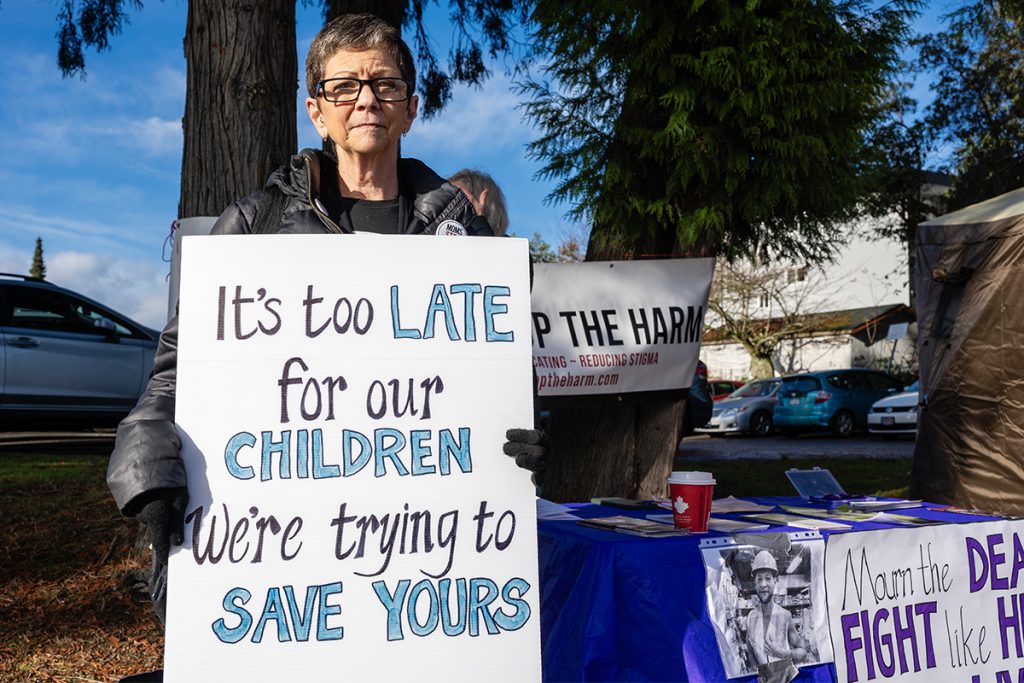
Sue Fichtler lost her son Evan Cue, 37, to a fatal overdose on Remembrance Day in 2022, and was at the pop-up OPS in Nanaimo as it opened on Monday with Moms Stop the Harm.
Fichtler said that her son had detoxed and was working as a peer support worker at a shelter when he relapsed and died with a toxic mix of drugs in his system.
Fichtler herself works in supportive housing, mental health and addiction.
“We have a lot of people who need to go to the hospital,” Fichtler said. “They won’t come to the hospital because they’re using [drugs] daily so that they don’t get sick [from withdrawal].”
She added that people who use drugs would be more likely to get the care they need at a hospital if there was an OPS on site.
“I feel like people are more likely to go and get the attention they need, do it safely and survive,” she said.
She also said that she would like to see an end to the politicization of the toxic drug crisis.
“Honestly, get the politicians out of this health-care crisis,” she said, adding that the health authorities, first responders and coroners know what works in other countries like Portugal.
“Nobody’s doing anything, and it’s been eight years since it’s been declared a public health crisis.”
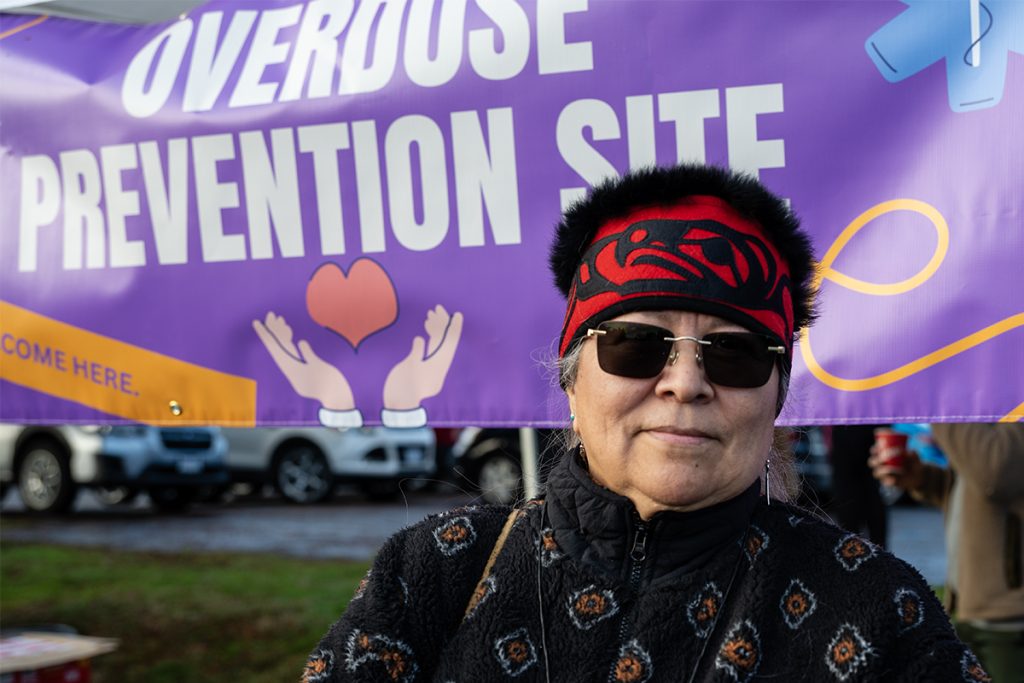
Yetta says she has “buried two nieces” in the past two years from the toxic drug crisis, one was 26 and the other was just 16.
“It’s not right for grandparents, for my brother’s family, for any of us, to bury our nieces,” she said outside the OPS on Monday. “It’s tragic, and we’re losing the lives of our young people to this opioid crisis.”
Yetta said she would like to see OPS services at the hospital as one pathway for people but also says there needs to be more access to housing, medical detox and treatment.
“It’s far more complex than just taking one aspect of care and looking at it. I think you have to look at the whole entire problem,” she said.
Pop-up OPS connecting people with treatment
According to Dr. Wilder, as of Thursday morning volunteers have supervised people using drugs at the OPS a total of 16 times since it was established on Monday.
Two people who used the site also received wound care and one was diverted from needing to use the busy ER. Wilder was also able to provide a referral to psychiatry for another person and got started on a referral to a treatment centre for them.
“She really wanted to connect with treatment, and had not been able to get access to do that,” Dr. Wilder said. “She was accessing our site here because she recognizes that her addiction is something that has control over her life, but she does not want to die, and she’s working really hard to try to make changes.”
The OPS has also handed out harm reduction supplies and naloxone kits, connected one person with housing support and given two people warm clothing. Dr. Wilder said OPS volunteers have had “countless curious, open-minded community citizens” stop by to learn more about what they are doing.
Wilder told The Discourse that Doctors for Safer Drug Policy would like to work with Island Health and the provincial government to stand up overdose prevention services at hospitals “immediately and permanently.”
The pop-up OPS across from the Nanaimo hospital will be open until Friday, Nov. 22 from 10 a.m. to 6 p.m.
What did you think of this story?
Your feedback after we publish a story helps ensure we're always improving our reporting to better serve you