
Tiny homes and RVs help ease the housing crisis. So why is the Regional District of Nanaimo cracking down on them?
Nanoose Bay Regional District of Nanaimo director called bylaw on a tiny home in his neighbourhood within hours of moving in.

When Zoe Todd finally got her tiny home settled onto a new property with her father and sister in Nanoose, she breathed a sigh of relief.
It had been quite the journey from where they had all lived in Errington. With her dad on a fixed income and a COVID-related health scare that had her feeling vulnerable, they all had a vision of trying to find somewhere big enough where they could live in community and look after each other.
Having a place that was closer to her job as an associate professor of Indigenous studies at Simon Fraser University was also crucial, says Todd.
This property seemed perfect — a 1,400 square metre lot (just over a third of an acre) with a large house and space for a 34-foot tiny home she had bought from Mint Tiny House in Delta.
On moving day, Todd was busy managing the multiple move sites in Errington as movers towed the tiny home to the new property with a truck.
Not long after arriving, a man showed up at the property. According to Todd, after introducing himself he commented, “I’m not sure we allow these here,” and pulled out his phone to take photos.
Though other neighbours had started to pop by and were warm and friendly, something about this interaction in particular struck Todd as strange.
“I just had this sinking feeling,” she says. “Like… that’s a weird way to be welcomed to the neighbourhood.”
That man turned out to be the Regional District of Nanaimo’s (RDN) Nanoose Bay director Bob Rogers, and within a matter of weeks, Todd received a letter from the RDN stating that she had to cease living in her tiny home and that the dwelling must be removed within 90 days.
New rules affecting tiny homes and RVs: ‘It’s going to be a war zone’
Though sometimes described as “missing middle” housing, tiny home living is effectively illegal in many regions, including Nanaimo.
Years after first investigating the possibility of permitting tiny homes as a solution to the housing crisis, and even advocating for their use at the 2022 Union of BC Municipalities convention, the RDN appears to be backtracking — cracking down on residents like Todd and more clearly defining a six-month limit on those living in RVs in parks and campgrounds.
Tiny homes can be legally bought as permanent dwellings but do not have a specific building code in B.C. Built both on and off wheels, sometimes on foundations and sometimes not, they’re often lumped in with recreational vehicles (RVs). In Todd’s case, her home is actually a “tiny home RV” — technically classified as a CSA Z240 recreational vehicle. But as it stands, these RVs are not permitted for residential use outside of RV parks or campgrounds.
For a couple of years, the RDN has been working on amending its current zoning bylaw with a stated aim to deal with the lack of clarity on issues like RVs and tiny homes and make the bylaws easier to administer and enforce.
During the process of community engagement around these amendments, “significant concerns” were raised by residents living in or planning to live in RVs, and who want the bylaw amendment to permit them to do that.
“It is acknowledged that we are in the midst of a housing crisis and that RV’s have become an important form of housing for some of the region’s most vulnerable citizens,” states a draft version of the update to the existing Bylaw 500 called Bylaw 2500, which was presented to the RDN board by senior planner Greg Keller on May 9. This bylaw regulates the use of land, buildings and structures in five of the region’s seven electoral areas.
At issue was a shift in language around exactly how long people are allowed to live in RVs. In the original Bylaw 500, passed in 1987, there were two categories that allowed RV living — one in recreational parks, which limited stays to six months in a calendar year, and one in resort parks, which was more vaguely defined as “seasonal or periodic” stays. The latter category, which the RDN aims to get rid of in Bylaw 2500, had created a loophole of sorts as it did not give an exact time limit.
Enforcing this time limit makes little sense to Heather MacDonald, who owns Riverbend Cottages and RV Resort in Parksville. She wrote in to the RDN when she heard about the proposed changes, and that people were not allowed to live in RVs because they are not designed to be a permanent dwelling unit.
“When a person moves off their RV site because their six months in one location is up, a new person can move in the same day. The RV site is allowed to be continuously occupied, but not with the same person. Does this have anything to do with the RV being a dwelling unit or not?” she asks. “The person is still living in their RV, just not in the same location.”

Other letters and emails poured into the RDN board from residents and resort and campground owners with long-term tenants living in RVs.
“If this bylaw passes I will be homeless, as I would not be able to afford to move every six months,” writes Jeanette Nadeau, who lives at Cedar Grove RV Park and Campground. “You will only add to the public housing crises that would affect not only me but countless other seniors and families who reside at Cedar Grove and other parks.”
Expecting older tenants and families with children to pick up and move every six months is a “deplorable notion,” writes Roland Clark, a senior on a fixed income. Roland and his wife Olivia were evicted in 2020 when the unit they were renting in a house was purchased by owners who did not want tenants.
“In desperation, we took our life savings and bought an RV… and we are just one of hundreds of others,” he writes. Where he lives at Cedar Grove, there are more than 30 sites “where individuals have built themselves homes and spaces which are affordable, doable, based on their incomes.
“I expect that living permanently in an RV was not something they always planned on doing, but as survivors who don’t want to live on the street, they do what they must and make the best of it.”
Paul Yun manages Riverside Resort in Qualicum Beach and has been in the business of campground and resort management for more than 30 years. At his resort alone, he says approximately 40 long-term residents would be affected by the bylaw changes, and up to 75 per cent of those are older residents.
In total, he estimates there are somewhere in the range of 4 to 5,000 people living in RV parks, campgrounds and resorts throughout the RDN that would be affected by the requirement to move every six months. This doesn’t include the tiny home and RV dwellers like Todd, who are living on residential properties or hidden away in rural areas.
If the six-month limit is enforced “it’s going to be a war zone,” says Yun. “Our cities and town halls and RDN — are they going to come up with housing or a place for them to be?”
During the May 9 RDN meeting, these concerns were discussed among board members and staff.
Given the feedback, it’s clear that living in RVs has become a form of affordable housing, acknowledged Lisa Grant, the RDN’s general manager of development and emergency services. However, she added that there are challenges to regulation as many are not constructed for the purpose of permanent living (though clearly that is happening anyway.)
Tackling the issue of affordable housing is also not necessarily the focus of the project at hand, which is to update and modernize the zoning bylaw, she continued.
“From a bylaw enforcement perspective, we have not been going in and enforcing length of stay for people living full time in RVs, recognizing that we do have a housing crisis,” said Grant. “We are not anticipating going in and taking action or enforcement against people that are residing in those places.”
Coombs-Hilliers-Errington-Whiskey Creek director Leanne Salter took it one step further and suggested a motion to adopt policy allowing people currently living in RVs to continue to do so, which might “help them sleep at night,” she said.
Grant countered that staff should prepare a report around what a motion could look like and then report back.
This proposal was endorsed, with director Bob Rogers opposed.
Nanoose Bay tiny home ‘runs the risk of setting a precedent’
According to the letter sent to Todd from the RDN, her home is considered an illegal dwelling that was constructed without the required building permit and also may be “in the property’s setback.”
As her home is technically certified as an RV, Todd was confused by the directive to remove the dwelling from the property within 90 days. Surely it is at least allowed to be parked in her driveway, she wondered, like a number of other RVs she has seen in the neighbourhood?
Given the comments the RDN has made around non-enforcement — though during the May 9 meeting directors specifically referred to those living in parks and campgrounds — Todd says she still doesn’t understand why bylaw officers would be so motivated to come down on her home, and so swiftly after moving in.
“What became clear from our conversation [with the bylaw officers] was that they had started their investigation within 10 or 11 days of us arriving,” she says.
The RDN has stated that as secondary suites “contribute significantly towards providing affordable housing in the region,” enforcement will only be taken on a complaint-driven basis. Wouldn’t that also apply in her situation? asks Todd.
After reading RDN policy, Todd says she got the impression that enforcement started with a conversation before escalating to a formal investigation and issuing of sanctions.
“None of that happened in our case. Obviously, the complaints must have gone in almost immediately,” she says.
According to documents obtained by The Discourse, Todd’s tiny home was flagged by Nanoose Bay director Bob Rogers to bylaw within hours of its arrival onto her property.
At 2:54 p.m. on Todd’s moving day of Friday, March 15, Rogers sent an email with attached iPhone photos that described the home as a “secondary suite on wheels” to Lexie Boekenkruger, the RDN’s manager of building inspection services. At some point in the evening, Rogers also called and left Boekenkruger a voicemail.
Boekenkruger then emailed RDN land use planner Kristy Marks, who confirmed within hours that the property is zoned RS1, which only permits one dwelling and a secondary suite that must be located within the primary dwelling.
The property is also not zoned for temporary use of RVs as it is not a campground or designated park.

By 7:40 p.m. that same evening, Boekenkruger emailed Rogers to say she’d received his photos and voicemail and would look into it.
On Monday afternoon, all of the information from Marks was passed on to Rogers, with a bylaw complaint form attached and instructions that once a complaint was filed, the bylaw officer could make a visit. RDN’s acting manager of bylaw services Dion Klassen was also copied on the email chain.
In less than two hours, a complaint was then filed against the tiny home, citing the RS1 zoning, and stating that “the house is incredibly cute, but it runs the risk of setting a precedent in the neighbourhood.”
According to RDN bylaw enforcement policy, to maintain a fair and unbiased system it is “paramount” that there be a distinct separation between elected officials like Rogers, who set policy, and the role of bylaw enforcement staff to execute that policy.
Directors are “to remain uninvolved in specific bylaw enforcement decisions until the matter is put onto the agenda for the entire board to consider,” the RDN policy states, and if a director has an inquiry regarding bylaw enforcement matters, it needs to be directed to the RDN’s general manager of strategic and community development.
That title no longer exists, but a communications coordinator with the RDN confirmed that would fall under Lisa Grant’s responsibilities. When contacted, Grant stated that she was “unable to speak to specific details of active bylaw cases.”
Because elected officials are often the main point of contact for residents, it can be challenging “to remain at arms-length,” but members of the public with a complaint should be told to contact bylaw enforcement directly.
In the days and months that followed, Rogers actively kept involved in the enforcement of Todd’s tiny home. On March 25 at 3:24 p.m., he forwarded the entire email chain of photos and clarifications about the property to two redacted addresses and 33 minutes later, another complaint was sent in to bylaw stating, “if this is allowed under the RDN regulations we will have a neighbourhood of people living in such structures as well as RVs.”
By March 27, bylaw officer Chris Basara emailed RDN’s planning department that he was ready to “drop the hammer” and the letter instructing Todd to remove the home was drafted.
Bylaw manager Klassen later emailed director Rogers to let him know he’d checked the file and the letter had been sent.
Though Rogers does not live on the same street as Todd, he acknowledged he does live “nearby” when reached for comment by The Discourse. He denied being the person who filed the initial complaint and declined to speak about this specific case or his involvement in it.
Could governments make tiny home living legal?
The RDN has been looking into what it would take to clarify the status of tiny home and RV living for years. In response to challenges with affordable housing, in 2021 the RDN instructed staff to prepare a report on the current legalities of people living in tiny homes, other governments’ approaches and what could be done to facilitate the process of making tiny home living legal.
Among the findings and recommendations were considering utilizing temporary use permits as a tool to allow tiny homes or cabins that didn’t meet current building code standards as residential dwellings or secondary suites, and amending existing policies and bylaws “to support alternative forms of housing, either on a permanent or temporary basis.”
The report also referenced other governments throughout the province like Grand Forks, Ucluelet and Squamish that are taking a variety of approaches to permit tiny homes, which include developing guidelines and development permit areas specific to tiny homes, allowing for the permanent residential occupancy of RVs within parks and supporting the development of a tiny home village.
“Any actions local governments can take to support tiny homes, whether through advocacy, acknowledging barriers and identifying opportunities, or making policy or regulatory changes, will assist in recognizing that tiny homes on wheels could become a safe, affordable, and viable housing option,” the report concludes, in an attachment specific to how tiny homes could be supported in the RDN.

During the May 9 meeting, RDN board chair Vanessa Craig — who is the director of Gabriola, DeCourcy and Mudge Islands — pointed out that Gabriola Island currently has a policy of non-enforcement on all existing non-compliant dwellings.
According to the local trust committee, enforcement is to be deferred in cases where the dwelling is used as a residence, is not located in an environmentally sensitive area and does not pose a health or safety risk, among other considerations.
In doing her research prior to the move, Todd says she knew there were some challenges to tiny home living within the RDN but when she saw the report it commissioned, it made her think there was some room for negotiation.
“It made me think okay, well they seem to be open to it. So getting the bylaw letter and then having bylaw arrive about eight or 10 days later, really drove home for me that no, they’re very adamant that an RV or tiny home is not a dwelling. And they’re not entertaining any kind of temporary use permit or anything,” she says.
“What happened between 2021 and now, that they went from commissioning reports on tiny homes, to incorporating what I think can be interpreted as anti-RV and anti-tiny home language into the new bylaw review? It makes me nervous that those will be used in an even more punitive fashion for folks who, like me, have chosen to live in RVs. Because in this market, it does make sense as a dwelling.”
Todd also references Bill 44 — the provincial bill that requires local governments to facilitate zoning for townhomes, multiplexes and laneway houses — and the overall push to increase housing supply, saying that it “feels like there’s a mismatch happening” policy-wise.
“Knowing that there are contexts where the RDN’s bylaws are out of step with provincial approaches — that’s motivating me to try to say something before they pass the bylaw,” she says.
“The housing crisis is just so intense, and I’m on these Facebook groups where people are sharing these heartbreaking stories, where a bylaw complaint came and they had to move their RV, and it just it feels like we’re spending tax dollars on enforcing a bylaw that is punitive towards people who are the most precarious.”
Looking back, Todd says her approach may have been a bit naïve about it all, but her sense of confidence was due to the fact that in Errington, she had parked her tiny home on a main street next to the community hall without issue, and where hundreds of people had passed it every day.
She remembers thinking, Nanoose is only about 20 kilometres down the road from Errington, how different could it be?
“In my area, we’re not pushing people out of their RVs,” says Leanne Salter, RDN director for the Coombs-Hilliers-Errington-Whiskey Creek, which falls under a different bylaw than the rest of the RDN’s electoral areas. “You’ve got a couple of RVs on your property, no one’s getting excited about that.”
She proposed the motion of non-enforcement as a policy during the May 9 RDN board meeting after reading the palpable fear and concern in residents’ emails and feeling like something needed to be done, she says.
“By stomping our feet and saying ‘we have rules’ — rules that don’t work — we’re just going to have people who are otherwise honest being dishonest, because that’s the only way they can make it,” she says.
“We can’t say, ‘no you can’t live there,’ when that’s where they’re living. How is that helping anything? All that does is put people living on the street, or with their parents, or couchsurfing, or nothing… That is where people are living, that’s what they can afford, and we need to get on board with that and help them.”
Editor’s note, June 17: The story has been edited to reflect that there were two complaints against Todd’s tiny home, not three as previously stated.
What did you think of this story?
Your feedback after we publish a story helps ensure we're always improving our reporting to better serve you
Author

Related Articles

DRIPA debated in B.C. election on Vancouver Island
The Conservative party of B.C. is promising to repeal the Declaration on the Rights of Indigenous Peoples Act (DRIPA), while other parties argue that would set back relations with First Nations and create economic uncertainty.

Where Nanaimo’s MLA candidates stand on addictions care, family doctors and Island rail
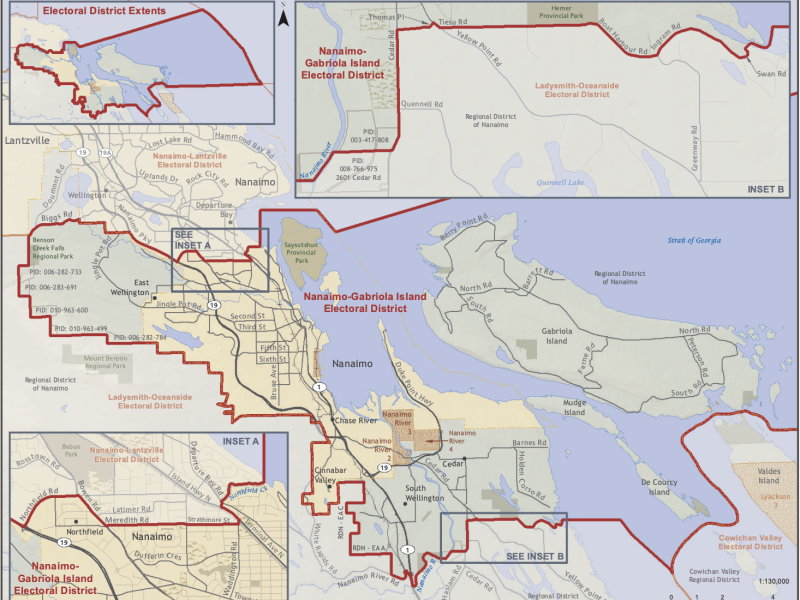
Candidates in Nanaimo-Gabriola and Nanaimo-Lantzville answered three questions from Discourse readers ahead of the Oct. 24 B.C. election.
Nanaimo’s guide to the 2026 B.C. election
What riding am I in? Who are the candidates? When do I vote? B.C. election basics for Nanaimo voters.