
Snuneymuxw Elder C’tasi:a shares traditional plant knowledge in new book
‘Plant Teachings from my Auntie’ by Snuneymuxw Elder C’tasi:a and ethnobotanist Nancy Turner delves into traditional plants and plant medicine.
Editor’s note: As a member of Discourse Community Publishing, The Discourse uses quotation marks around the word “school” because the Truth and Reconciliation Commission found residential “schools” were “an education system in name only for much of its existence.”
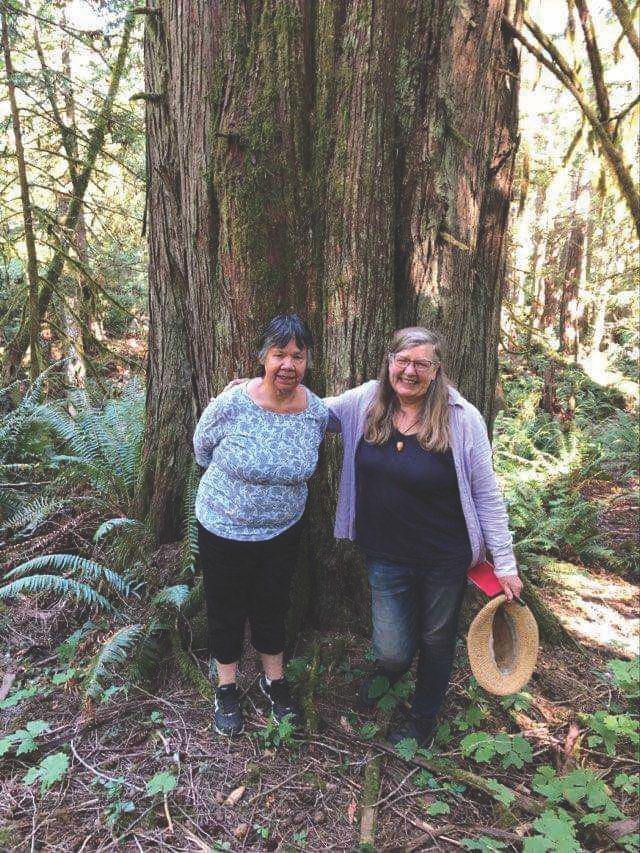
Snuneymuxw Elder and Knowledge Keeper C’tasi:a (Geraldine Manson) has dedicated much of her life to learning and sharing traditional knowledge with community members.
A residential “school” and Sixties Scoop survivor, C’tasi:a told The Discourse she was mentored by Snuneymuxw Elders who “felt that they wanted to take the wild stallion out of [her] and replace it with culture and a life of traditional values.”
She spent her time shadowing her Elders, travelling with them and sitting by their side in meetings. She wasn’t allowed to take notes and instead learned through repetition about the land, resources and the history of her people.
In 2008 her auntie, the late Ellen White, Kwulasulwut, retired from her role as Elder in Residence at Vancouver Island University and selected C’tasi:a to replace her. It’s there that C’tasi:a shared her knowledge with students and faculty for 17 years.
She retired from her Elder in Residence role in April 2025 but felt she had another calling.
“I had to come back into the community to begin reviving and bringing out all these teachings again,” C’tasi:a said. “Whether that’s through ceremony, workshops or one-on-one with individuals.”
Currently, she supports youth as an Elder at the Orca Lelum Youth Wellness Centre and also works with The Healing Institute on Gabriola Island. She is part of the Elders and Knowledge Keepers Council with the BC First Nations Justice Council and has published two books on Snuneymuxw history and Snuneymuxw place names, origin stories and sites of significance.
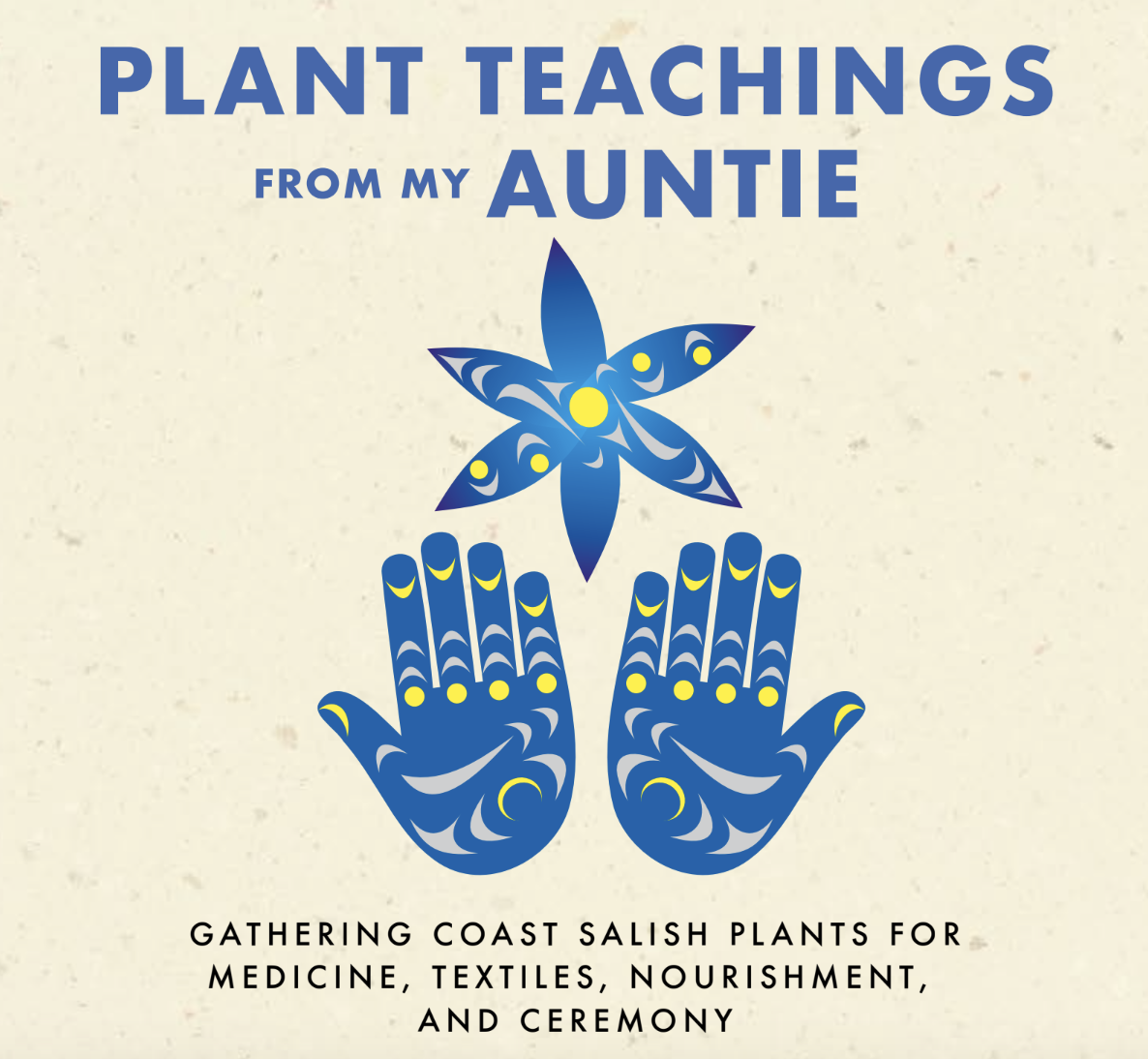
In her latest book, co-written with ethnobotanist Nancy Turner, C’tasi:a shares plant knowledge passed down from her family to help people understand local plants and their uses as well as the importance of good harvesting practices.
The book, Plant Teachings from my Auntie, is dedicated to her auntie Ellen White, Kwulasulwut, who C’tasi:a studied under for decades. According to C’tasi:a, her auntie is who taught her the “origin story” of plants.
“The plants, the animals, the salmon, they all came together to talk about the importance of life and the nourishment they held and they knew that the new people coming didn’t have any of that. Each one said they would give up from themselves to nourish the people who were coming,” C’tasi:a said.
“In their time, [the plants and animals] had traditional names so to introduce them and remember them is how we bring back places that are at risk like the estuary and the wetlands. How do we preserve and protect them? By educating those who are now coming up as the next generation. So that is my new role.”
The Discourse reporter Shalu Mehta spoke with C’tasi:a to learn more about her new book and what motivated her to share plant knowledge with others.
Note: Responses have been lightly edited for grammar and concision.
Shalu Mehta, The Discourse: What can you tell me about your auntie Ellen?
Elder C’tasi:a, Geraldine Manson: I’ll go back [in time] because that’s when she began walking with me. The year 1990 was when I got initiated into the longhouse and became a Spirit Dancer. Her mate, Uncle Doug, looked at her and said, “Now you take her under your wing and you show her and give her all you hold. Teach her because she’s one as you are.”
And so auntie Ellen said, “Okay.”
I traveled with her from the states, to the mainland, to Victoria and all over where she did lectures or talks. We walked the mountain and she showed me plants that were there and that will not be there later in life. I got to witness her making medicine — how to prepare medicine, how to collect medicine, the protocols and the values of connecting and making medicine for other people. You never make medicine for yourself. You go and seek out a person who is like you to make your medicine that you need for your own body. She taught me that.
I started [this] book because when she was getting up there [in age] she said, “I really want to do my plant book.” She never got to that point.
So I thought of her and I said, “Auntie, we’re gonna do the book together.”
I put a picture on my wall and I would talk to her and ask, “Am I doing the right thing, auntie?” It was like she was just sitting there with me.
What prompted you to want to share plant teachings with others?
I was in awe of what auntie knew about these plants and how powerful and beneficial they are, whether they are for nourishment, textile, food or medicine. We walk by some of these plants without even knowing it. The value of plants is so powerful.
I do a lot of plant walks, whether it’s myself or whether I take Nancy Turner on a walk. We’ll go for a walk and explore the plants in an area. This isn’t something you just write and put on a shelf. You must open [the book] and use it.
What can people expect to learn from your book?
The value of each plant and what it holds, down to a dandelion. Everybody thinks it’s just a nasty old plant that has no value but they can learn what each plant offers, from the roots to the stems to the leaves.
If someone is seeking to go the traditional way of medicine, rather than going and taking Tylenol or something, you can learn how to go and make medicine with a plant and learn about it, or find someone to make your medicine with it.
I noticed that there were a lot of recipes in the book that can treat common medical conditions such as upset stomach, allergies or colds. Why is it important to learn about traditional medicine and keep knowledge about traditional plant medicine alive?
It’s very important, especially for the new generations that are coming up, to know that there are alternatives.
My Elders, they knew where to search for medicine and what to use when. They knew how beneficial a plant is to get rid of a bee sting, or how it can help with an open sore to heal it faster than Polysporin.
The old people used the medicines in the forest to benefit them in some way, whether that was for constipation or diarrhea, or whether that was for a young woman to give birth or how sports-minded people would go and make this brew to cleanse out their body.
The recipes in the book are just an introduction. There are so many plants out there that didn’t get used in the book because you really have to know how to harvest them, where to harvest them and how to make your medicine and your teas.
In the book, you mention proper protocol for harvesting. What does that protocol look like for you and what should people keep in mind when they’re thinking of harvesting?
To prepare yourself at least the day before. When you’re thinking, “Oh I need to go into the forest,” you have to cleanse your mind and your body to be focused on what you’re doing first.
You have to do your morning ritual of cleansing. You have to pray to the Creator to clear the path, the obstacles. When you get to the mountain, you do another sacred prayer and a song, asking the grandmother and grandfather cedar tree to welcome you and to let the plants know what we’re seeking and to be visible enough for us to see where they are, and also to thank them in the end.
We don’t announce to anyone, even to a family member, that we’re going out tomorrow and harvesting. You and whoever you’re going with is all that needs to know because if you talk too much about it, you’re not going to find what you’re looking for.
Why was it important to acknowledge invasive plants in your book?
They have medicine within. They have medicine that the old people knew to go and get and to harvest those ones.
Like Scotch broom. Even though Scotch broom was introduced, the old people found something in it.
Why is it important to you to incorporate respect into harvesting?
I’m going to give you a scenario.
Let’s just say you’re going to go rent a house. That house belongs to somebody and you have to respect its ground and its structure and keep it like when you first walked in.
This is similar to the plants. During a certain season the old people used to go and do a controlled burn to clear the land so the camas will continue to grow. It’s about nurturing, but it’s also about where the plants are going to recognize you and understand that you are someone that’s protecting and preserving the value of each.
You talk about some of the sites that you visited on Snuneymuxw lands, including some that are impacted by humans and development such as Harewood Plains. Why are these sites so significant? What does it feel like to see the development around some of these areas?
Like auntie would say, if we don’t take care of the plants, some plants cannot be replaced. So when development comes along, they don’t realize they’re destroying something that’s been there for a long time and used by others over the years for medicine or nourishment.
It saddens me when sites are looked at for development for the dollar value of what they’re going to get from it, but they don’t know the true value of the land that they’re taking.
Harewood Plains is a site of rare plants, but it’s also a site where our petroglyphs are among the Garry oak and camas. We know our ancestors went there to harvest or hunt because those images are evidence that they were there.
The old people would say, “Don’t hold this knowledge. Pass it on to the next generation. They will be responsible.”
What did you think of this story?
Your feedback after we publish a story helps ensure we're always improving our reporting to better serve you
Author

Related Articles
What are Nanaimo election candidates saying about the climate emergency?
All-candidates forum puts climate questions to Nanaimo election candidates.
Comox Valley, Nanaimo land trusts raising funds to support Deep Bay land conservation purchase
In a partnership with the Comox Valley and Nanaimo Area land trusts, BC Parks Foundation is fundraising to protect 50 hectares of pristine shoreline in Deep Bay and make it accessible to the public.

Nanaimo Jazz Festival celebrates 10 years with more than a dozen shows in September
Local and international artists to perform on multiple stages in the city at this year’s Nanaimo Jazz Festival.