
What’s the deal with the proposed data centre in Nanaimo?
The Discourse found answers to frequently asked questions about a proposed data centre in Nanaimo.
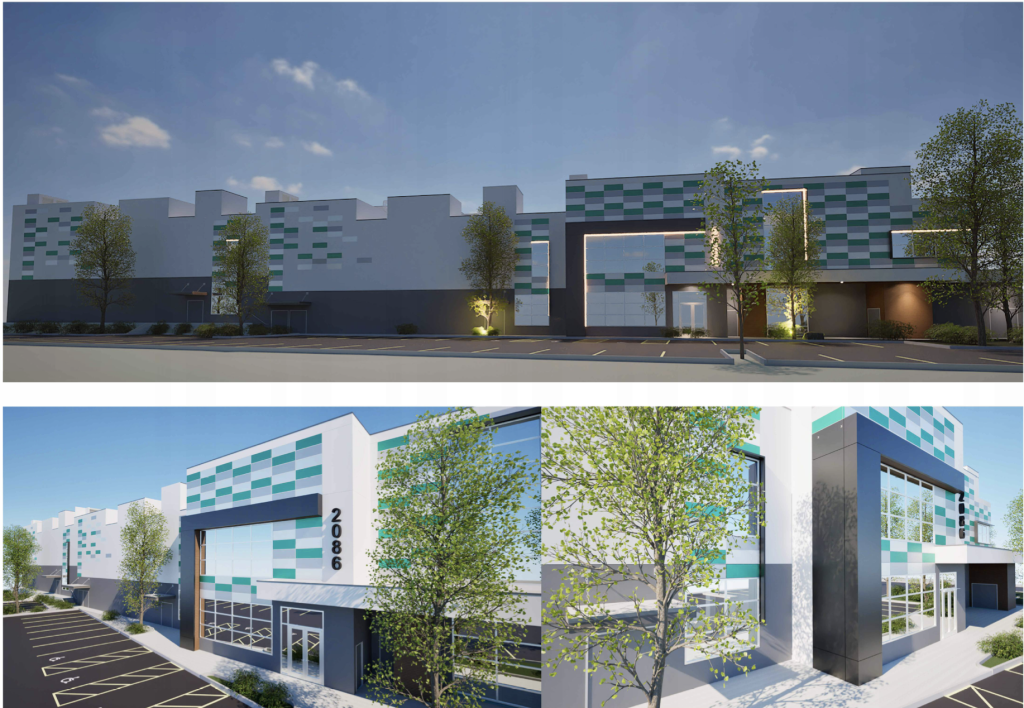
A two-storey data centre on East Wellington Road that will cover up to 18,000 square metres has been the source of concern for some Nanaimo residents since it was first proposed in 2022.
The City of Nanaimo is responsible for determining land uses and during the final meeting of the previous council’s term in 2022, council voted to rezone the property from rural resource to high-tech industrial use.
Last month, the data centre was raised at council again by delegations of residents who wanted answers about how much water the centre will use. This came after CBC News reported about how much water data centres use, especially in relation to AI chatbots.
The Discourse dug into some frequently asked questions about the proposed Nanaimo data centre.
Will the data centre be used for Artificial Intelligence?
In the city’s Zoning Bylaw, a data centre is defined as “a building or buildings used for the storage and operation of networked computers or telecommunications systems and associated components, and may or may not include employees on-site.”
The proposal for the rezoning was made by Townsite Planning Inc. on behalf of the numbered company 2779022 Ontario Inc., doing business as maplecolo.
According to its website, maplecolo “specializes in Quantum-Safe Colocation and Symmetric-Key Distribution via DSKE technology.”
It says its “new facility in Nanaimo enhances protection against quantum threats, combining traditional expertise with innovative solutions to revolutionize data security.”
A quantum threat is the risk that quantum computers could pose to data encryption. Canada’s Communications Security Establishment says quantum computers will use quantum physics to process information and solve problems that are impractical to solve using current technology. In 2020, it said quantum computers were not powerful enough to break cryptography but the technology is advancing quickly and could be available by the 2030s.
According to an email from the city, the proposed data centre will be used for data storage and not Artificial Intelligence.
Coun. Ben Geselbracht noted at a recent city council meeting that the projected use of water for the facility is 25 million litres of water a year. While it’s unknown how much water the centre in Nanaimo would use if it were an AI data centre, other AI data centres have been criticized for their significant water use.
“It is really important that we know the type of data center and the potential size of it because [water use] could be dramatically more if it is an AI data centre,” he said. “It is comforting to know that we have a specific range of water consumption, even at the high end of 70,000 litres per day, which is about 25 million litres per year. That is much different than if it was an AI one.”
Provincial energy rules prevent electricity connections for cryptocurrency mining and proposed changes to regulations would limit energy use to 300 megawatts of power for AI and 100 megawatts for data centres available every two years. Bill 31, Energy Statutes Amendment Act, 2025, passed third reading on Nov. 19 and is awaiting Royal Assent.
How much water will the data centre use?
A City of Nanaimo statement says that according to Townsite Planning Inc., the data centre will use between 55,000 and 69,000 litres of water per day at full build-out. This water would be used for cooling and domestic purposes.
“To put this in perspective, this represents approximately 0.19 per cent of the city’s total daily water use and about 1 per cent of all commercial and industrial water consumption,” the statement says.
The city also listed off other buildings and businesses in the city that use similar amounts of water or more:
- A shopping mall uses approximately 100,000 litres per day.
- A local food processing business uses about 83,000 litres per day.
- A car wash uses roughly 44,000 litres per day.
- BC Ferries terminal uses around 56,000 litres per day.
- The City’s two water fill stations together use 273,000 litres per day.
Dale Linsday, chief administrative officer for the City of Nanaimo, told council the centre will use a “closed loop system” of water to cool the computers.
He also noted that water the property uses will be metered so the city can monitor how much water is actually used.
“This community had a really difficult discussion back in the 1980s about water metering, and a lot of the debate you hear now about data centres or other uses which have high demands for water often are occurring in communities that don’t have that ability to meter,” he told council.
Under the City of Nanaimo’s current commercial water billing rates, the company will have to pay a flat per day fee based on the size of its water meter as well as $0.00877 per gallon of water used. At that rate, if the data centre used 69,000 litres of water a day would cost roughly $160 per day plus the flat fee.
Lindsay said the development permit will include the water consumption for the data centre.
Will the data centre be exempt from water restrictions in a time of drought?
The city’s Waterworks Rate and Regulation Bylaw says commercial enterprises that use water for normal business activities are exempted from watering restrictions during times of drought.
Bill Sims, the city’s general manager of engineering and public works, told council that the city asks everyone to cut back on discretionary water use when there is a Stage Four water restriction, “but the bylaws, as they are now, do not impinge too deeply on any business that consumes water.”
Are there any future steps that the project has to go through with the city?
The location of the data centre has already gone through the city’s rezoning process and Lindsay told council on Nov. 3 that site-specific zoning was approved in 2023 for the data centre. The project is still working its way through the development approval process with staff and the next stage is the approval of a building permit.
“There’s no further discretionary approvals that come before council,” Lindsay said about the data centre project.
How many direct or indirect jobs is the data centre projected to create?
Nanaimo Mayor Leonard Krog told CHLY 101.7FM that the number of jobs created by the data centre depends on how fast the company builds it out in the two proposed stages, the first of which is for a smaller building of 1,800 square metres.
Krog said he couldn’t give a precise number of jobs the data centre will create, noting that it involves economic decisions.
“This will provide employment, I hope, for as many people as it possibly can,” he said.
How does this type of land use fit into Nanaimo’s Official Community plan?
The zoning for East Wellington Road is designated for industrial use in Nanaimo’s Official Community Plan, which was adopted in 2022.
Former Coun. Don Bonner, speaking at a city council meeting in 2022, said the land use was designated for an industrial park, “and it has been that way for many, many years.”
According to the staff report on the project from 2022, the city plan recognizes the need for more industrial land as the city is facing a shortage of industrial land within city limits.
Townsite Planning held a public information meeting at the Cavallotti Lodge on May 4, 2022 that a dozen neighbours attended with comments about the proposed building’s height, the proposed use of the data centre, noise and light impacts and environmental impacts.
A public hearing was held on Sept. 29, 2022. While recordings of public hearings are not available, the meeting’s minutes show that nine residents spoke against the proposal at that meeting, citing concerns around noise, a lack of information at the public information meeting, radiation, the height of the building, its potential impact on wetlands and traffic. Water usage is not mentioned in the minutes of the public hearing.
What did you think of this story?
Your feedback after we publish a story helps ensure we're always improving our reporting to better serve you
Author

Related Articles
Nanaimo mayoral candidates address the homelessness crisis
Homelessness is a key election issue but what can the City of Nanaimo do about it?
How Nanaimo candidates would pay for rising infrastructure costs
City of Nanaimo’s 2026 candidates share how they’d manage the budget to cover rising infrastructure and repair costs without overburdening taxpayers.
Nanaimo candidates on how the city can cut emissions
City of Nanaimo’s 2026 candidates share two actions within city jurisdiction they’d prioritize to reduce emissions, and how they’d know if they were working.