
Toxic tire chemicals are killing salmon. What can be done about it?
Experts are zeroing in on how to control 6PPD-Q via lawsuits, regulation and rain gardens.
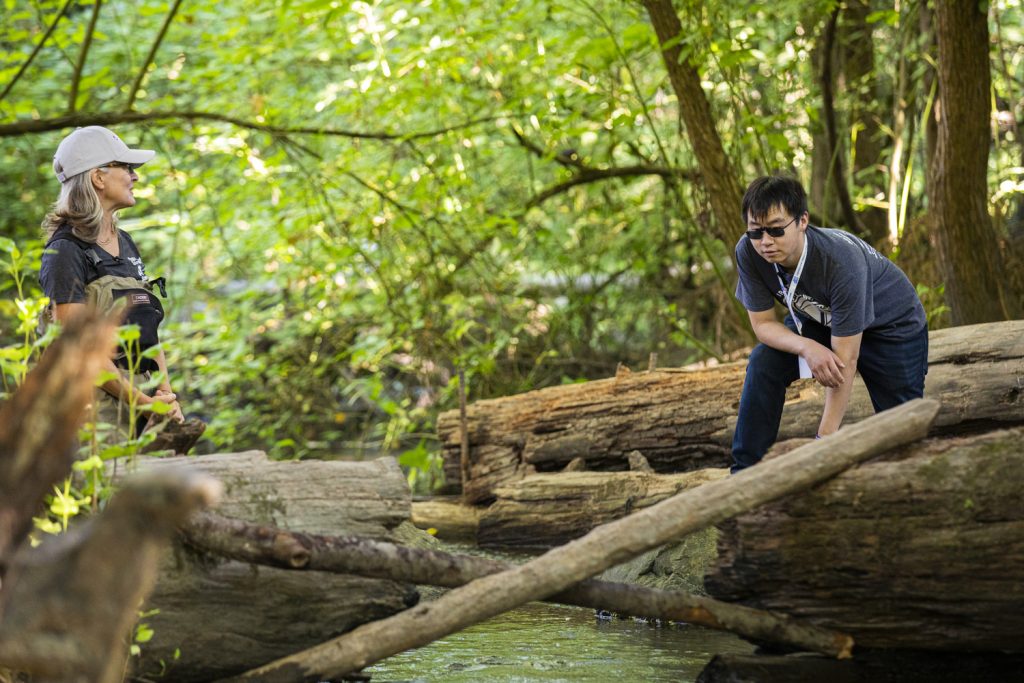
After noticing the correlation between stormwater run-off and the dramatic deaths of coho salmon, researchers scored a major win when they discovered the toxic chemical responsible — 6PPD-Quinone, or 6PPD-Q.
The “coho killer,” as it’s become known, is a byproduct of a chemical added to car tires to prevent wear and cracking and its role in rapid salmon deaths after traveling from roadway runoff into freshwater streams was published in a groundbreaking 2020 paper in Science.
Since then, a coalition of citizen scientists, stream-watchers, First Nations, university researchers and environmentalists in Canada and the U.S. have been busy with the question of what to do about it.
Many of them gathered for a two-day conference in April held by Vancouver Island University (VIU)’s applied environmental research labs (AERL), which they plan to host on a yearly basis in partnership with the BC Conservation Foundation, to facilitate the conversation among these researchers and advocates and make space to present their findings and discuss tactics and solutions.
VIU is also on the forefront of research into understanding where 6PPD-Q is showing up in stormwater and local streams, how much of the toxin is present over time and its effects on salmon.

Through AERL’s method of rapid-testing and mobile sample analysis, researchers can quickly identify these sources and hotspots all over Vancouver Island. They then enter the data into an online, interactive map.
The next step is to work with local and regional governments to advise on remediation efforts, stormwater management and regulatory changes that could stop the chemical from getting into streams in the first place.
To help mitigate 6PPD-Q’s impact, the team is collaborating with other researchers to investigate nature-based solutions and green infrastructure such as rain gardens and bio-retention ponds.
Stopping 6PPD-Q at its source
Most researchers agree that the clearest path to mitigation is to stop the toxins at-source within the tire manufacturing process. That means finding alternatives to 6PPD, the chemical added to tires as a preservative which then breaks down into 6PPD-Q when exposed to sunlight and ozone.
Prior to the widespread introduction of 6PPD in the 1970s, car tires were waxed for protection. Today, the U.S. Tire Manufacturers Association (USTMA) claim that “without 6PPD a tire’s integrity would be severely and quickly compromised, jeopardizing driver and passenger safety.”
They are looking into alternatives, but those must comply with motor vehicle safety standards and other consumer, vehicle and tire manufacturer requirements.
“I worry a little bit that we’re trying to look for a compound that might be as cheap as and effective as 6PPD even though there’s 60 years of industry effort in making it as cheap as possible and to work as well as possible,” says water and ecosystem health researcher Ed Kolodziej, who is also one of the chemists on the research team that discovered 6PPD-Q.
However he adds he’d be surprised if effective, alternate anti-ozonants didn’t exist, and believes a safe replacement could be designed if it was a priority.
Though the USTMA states that the lethal effects of 6PPD-Q were first reported in late 2020, there is evidence that the toxicity of tire leachate was known as far back as the 1990s.
The study Toxicity of Leachate From Automobile Tires to Aquatic Biota, published in 1993, accurately surmised that leachate from used tires was more lethal than new tires (which researchers now know is due to the breakdown of 6PPD into 6PPD-Q).
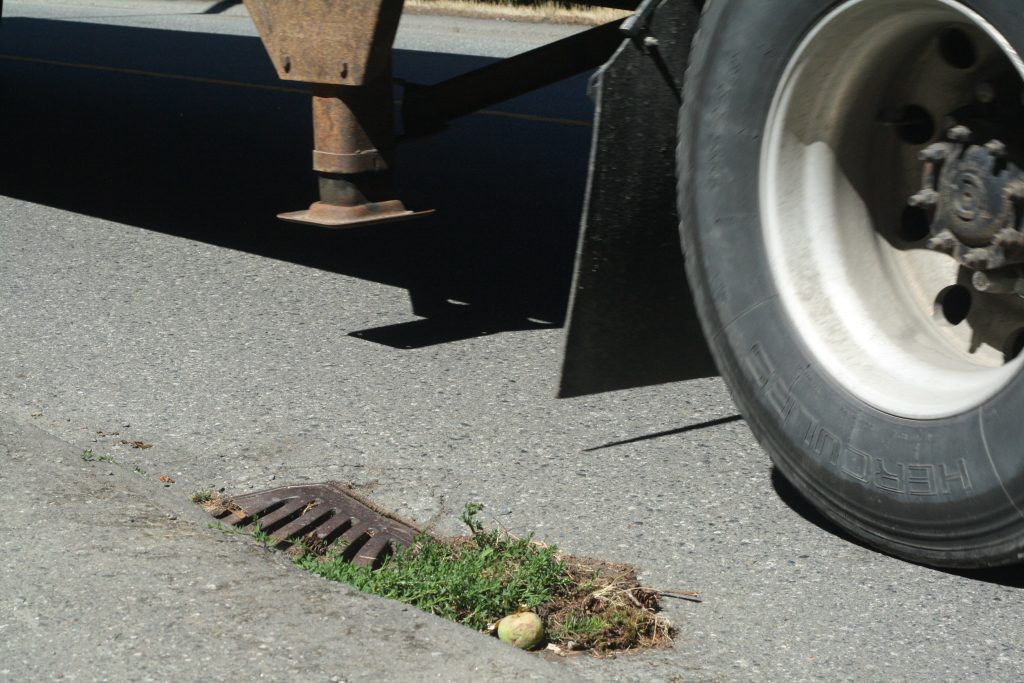
The question of what tire manufacturers knew and when is still unclear, but it’s a point that could prove significant for the future of potential legal action against tire companies.
Pressure is mounting for the Canadian government to regulate the toxic substance, and in February the environmental law charity Ecojustice made a formal request on behalf of Raincoast Conservation Foundation, Watershed Watch Salmon Society and Pacific Salmon Foundation that the federal government prioritize its assessment of 6PPD-Q.
“It’s an important first step to really start scrutinizing what we put into tires and moving beyond tailpipe exhaust as a source of emissions,” says Ecojustice lawyer Daniel Cheater, who presented at VIU’s conference. “But starting to look at vehicles in a broader sense of all these toxic chemicals that are coming off of our cars.”
“What we’re saying is, this chemical is toxic, we know it’s toxic, let’s get it regulated and let’s find alternatives to stop it being put into our environment and affecting coho and other salmon. All of those questions about who knew what and when go beyond the work that we’re doing right now, but it’s definitely an interesting discussion for the future.”
In April, the federal government agreed to grant Ecojustice’s request and is expected to publish its priority plan and timelines for assessments by June of 2025.
Last August, the Yurok Tribe, Port Gamble S’Klallam Tribe and Puyallup Tribe called on the U.S. Environmental Protection Agency (EPA) to prohibit the manufacturing, processing and use of 6PPD in tires.
In November 2023, U.S.-based fishing groups also launched a lawsuit against 13 of the largest tire manufacturers over the impacts of 6PPD-Q on salmon and steelhead trout.
These tire manufacturers, which make up 80 per cent of the U.S. domestic tire market, pushed back against the lawsuit, arguing in March that the EPA was already considering limitations on 6PPD.
The EPA has not yet regulated 6PPD-Q, but in June it set a screening value (or maximum level) for 6PPD-Q in freshwater at 11 nanograms a litre.
Could green infrastructure and rain gardens help filter 6PPDQ out of watersheds?
Though the ubiquity of roads and their proximity to streams and bodies of water means that catching all of the stormwater runoff is a massive project, researchers at a number of Canadian universities have begun to investigate other ways to mitigate 6PPD-Q’s impacts.
Their research has centred on the use of green roofs and what are known as rain gardens — basically patches of organic matter like soil and plants that stormwater can run through — to filter 6PPD-Q out of stormwater before it enters streams.
As a researcher and associate professor at WSU’s School of the Environment, as well as co-senior author on the Science paper, Jenifer McIntyre has long been narrowing in on understanding how stormwater runoff was toxic to fish — due to a variety of contaminants.
In a 2015 paper she showed that if stormwater water was first filtered through rain gardens, coho salmon survived, but if it wasn’t, they died.
One of the interesting things about 6PPD-Q is that it’s hydrophobic and likes dirt, says Angelina Jaeger, a PhD student researcher at VIU’s AERL. This makes rain garden filtration useful as the chemical tends to cling to the soil particles and allow the rest of the water to pass through.
Last summer, researchers at the University of British Columbia built rain gardens — what they call “bioretention cells” — in Vancouver that consisted of a surface layer of mulch, and an underdrain wrapped in clear gravel and geotextile.

After pumping 14,000 litres of water mixed with 6PPD-q through it, they found that these gardens can effectively mitigate and capture approximately 90 per cent of the chemical.
Some of the work UBC is currently exploring are shifting designs of rain gardens and looking at how different types of soil and amendments can really influence how much rainwater they can capture and how much contaminant they retain, says Dr. Rachel Scholes, an assistant professor at UBC’s department of civil engineering who helped build and test the rain gardens and who presented at VIU’s conference in April.
“Part of what we’re trying to test is not just whether the compound sticks in the soil, but if it will actually break down over time,” she says.
“Ultimately we want to get 6PPD out of tires, but we still believe that we’re going to need interventions to protect our waterways. And the best way that we know to do that so far is using some of these green infrastructure systems.”
What did you think of this story?
Your feedback after we publish a story helps ensure we're always improving our reporting to better serve you
Author

Related Articles
The Great Vancouver Island Land Grab exhibit aims to educate
How a 19th century land grant continues to impact First Nations on Vancouver Island.
Flooding, wildfires and earthquakes: Can the Comox Valley better prepare for disasters?
After being in an earthquake, Sue Pyper learned a lot. Now she and other local groups are sharing what they learned with neighbours — so everyone can be better prepared.

Remembrance Day 2025 events on Vancouver Island
Events, ceremonies and information on Remembrance Day 2025 in the Comox Valley, Nanaimo and Cowichan Valley