
From a campus gallery to a community hub, Nanaimo Art Gallery is outgrowing its home
For five decades, the Nanaimo Art Gallery has created spaces for community, curiosity and reflection through art.
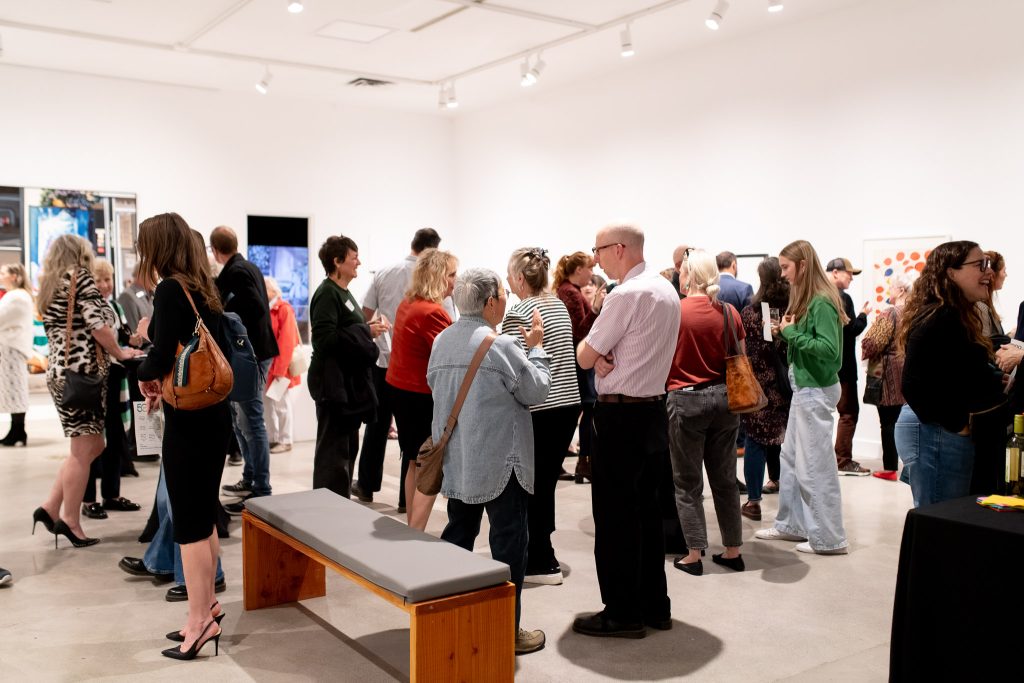
Growing up in Nanaimo, Jesse Birch said one thing he thought the downtown core was missing was a space like the Nanaimo Art Gallery, where people of all ages can create, connect, reflect and learn while exploring the history and stories of the region.
After spending some time away to study, travel and work, Birch returned to Nanaimo a little more than a decade ago with an appetite to explore the region’s industrial history through art. One thing led to another, and he became the first full-time curator at the Nanaimo Art Gallery.
But the gallery’s roots stretch further than that.
Located on Snuneymuxw lands in the heart of downtown Nanaimo, the public art gallery invites local, national and international artists to share their work and engage with the land and people in the region as they create new art.
It has been supporting artists, bringing people together and sharing exhibitions that respond to the land, history and current events since 1976. Now celebrating its 50th anniversary, the gallery is looking ahead to future goals, projects and a larger space that will create even more opportunity for community connection, creativity and art.
“We’re always trying to find different ways of inspiring people to come to the gallery and also showing the diversity of our communities,” Birch said in an interview with The Discourse. “And hopefully there’s larger community building that happens through that.”
From the university to downtown
In the 1970s, the federal government implemented a national policy to strengthen the role of museums across Canada. Grants were provided to set up new museum facilities or add to existing facilities with the goal of establishing a collection of artifacts significant to Canada’s heritage.
The policy change, paired with the will of faculty members at Malaspina College (now known as Vancouver Island University) led to the creation of the Madrona Exposition Centre in 1976, according to Nanaimo Art Gallery executive director Carolyn Holmes. It was renamed to the Nanaimo Art Gallery and Exhibition Centre in 1989 and then shortened to Nanaimo Art Gallery later.
The centre became a dedicated space, based at the university, to share art and ideas amongst the community.
“Often, a professor would be the curator. So instead of teaching a course they’d work in the gallery and that went on for years and years,” Holmes said in an interview with The Discourse. “We had some gallery staff and some university staff, which was a great relationship that remains today.”
In 1981, the gallery began to bring its work into the community and to youth in particular. Artists went directly to local elementary and secondary schools and the program, Artists in Schools, was born. The program is still active today.
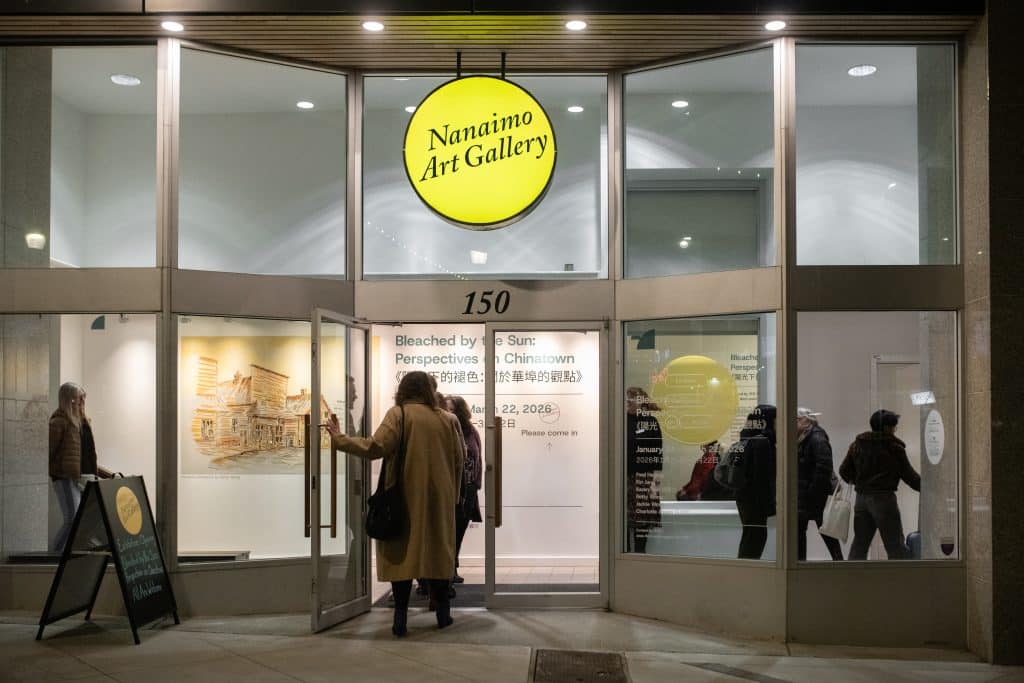
Nearly two decades later, in 1999, the Nanaimo Art Gallery opened a satellite location in downtown Nanaimo at 150 Commercial St., where it remains today.
“The main exhibitions were still set up at the university, and then we had this satellite space that became a place where artists could hang up their work and we’d sell it or rent it out,” Holmes said.
In 2015, the Nanaimo Art Gallery worked with the City of Nanaimo to consolidate its operations downtown.
Three years later, the gallery commissioned “Supernatural Eagle Bringing the Sun Back to the World,” by Snuneymuxw artists William Good and Joel Good. The wood carving is still there today, representing “enlightenment, healing, peace and connection to the heavens.”
Holmes said the gallery entered a co-management agreement with the city allowing the gallery to manage the building, which had been donated to the city years prior.
Volunteers and board members dedicated their energy and ideas to the gallery to bring it to where it is now, Holmes said. And support from the city and community also allowed the gallery to hire a full-time curator and executive director to grow its operations and reach.
“This is the way arts organizations develop in every community,” Holmes said. “There are a few dedicated people that put their all into it. They believe in something bigger, something better, and they work to make it happen.”
A hub for culture and connection
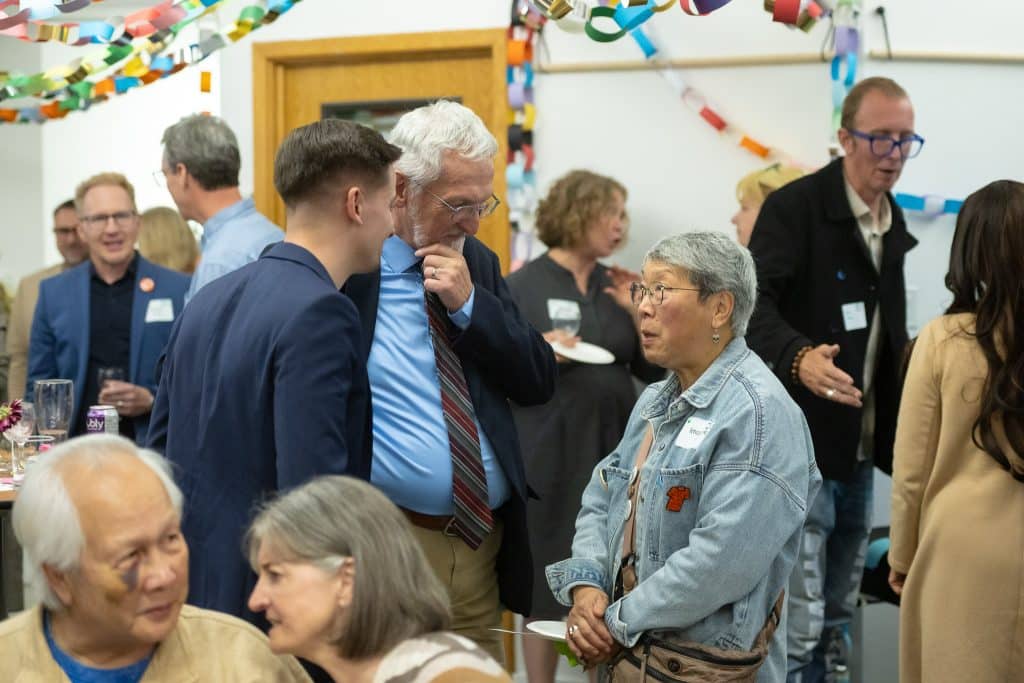
The move downtown has created “what everybody expects for a community of this size,” Holmes said, adding that the art gallery is an attractive feature for people wanting to move to the city. It contributes to tourism and bolstering arts and culture, but it also plays a role in bringing people together.
Curator Jesse Birch said the gallery holds group shows featuring artists who are local and from elsewhere so they can be in conversation with each other and the community.
Artists who aren’t local to the region are given funding and support from the gallery to physically be in Nanaimo so they can create new work that responds to the land and the place.
Birch said the gallery serves as a hub where people can break out of silos and engage in dialogue with each other and the art, regardless of their perspectives and positions.
“I think a space where people can gather and speak one-on-one and communicate in ways where we’re reckoning with our different understandings and beliefs is so valuable,” Birch said.

Museum programming guided by overarching questions
In terms of its overall programming, Holmes said the gallery asks yearly “inquiries” that guide its work and exhibitions. The practice, which has been ongoing for more than a decade, involves questions that gallery staff ask themselves and the community.
For the past three years, Holmes said the gallery’s inquiries have responded to the idea of territory acknowledgements where people often say they’re pleased to live, work and play on Snuneymuxw lands without actually digging into what those phrases mean.
In the first year of this trilogy, the gallery asked, “How can we work together?” followed by, “How can we play together?” and this year’s inquiry, “How can we live together?”
The gallery typically hosts four exhibitions a year that fit into the gallery’s inquiry in some way, and Birch said having an overarching theme or question puts the four exhibitions in conversation with each other and the gallery’s programs.
Birch said having an annual inquiry also helps him, as curator, find creative and different ways to bring community, co-curators and other artists into the work he does. It’s a foundation on which the gallery’s programming can build for the year.
“I think it’s so valuable for spaces like Nanaimo to be seen as important sites for thinking through contemporary ideas because this place is as relevant to the contemporary as any other place,” Birch said. “When I’m talking about Nanaimo being connected with the world, I’m talking about it through art.”
Supporting young artists
Both Holmes and Birch said they’re proud of the amount of programming the Nanaimo Art Gallery has for youth in the community.
The gallery has a weekly Teen Art Drop-in program that provides teens with the ability to use its art lab space and materials. Programming is guided by local artists and aims to build community.
It also offers a Youth Art Collective program that runs through the school year, as well as a Youth Art Immersive that runs in the summer. These programs create a safer space for youth to “explore technical and conceptual art skills” with professional artists.
Holmes said the Edwina and Paul Heller Memorial Fund, held at the Vancouver Foundation, contributes to the gallery’s youth programming to help make it accessible. The fund also allows the gallery to provide teens with stipends so their learning throughout the year is supported.
The teens in these programs are able to work with gallery staff as well as guest artists, and some have gone on to have professional careers in the arts.
“And they come back as exhibiting artists and show their work. So it’s full circle. You can really see the impact of our programs,” Holmes said.
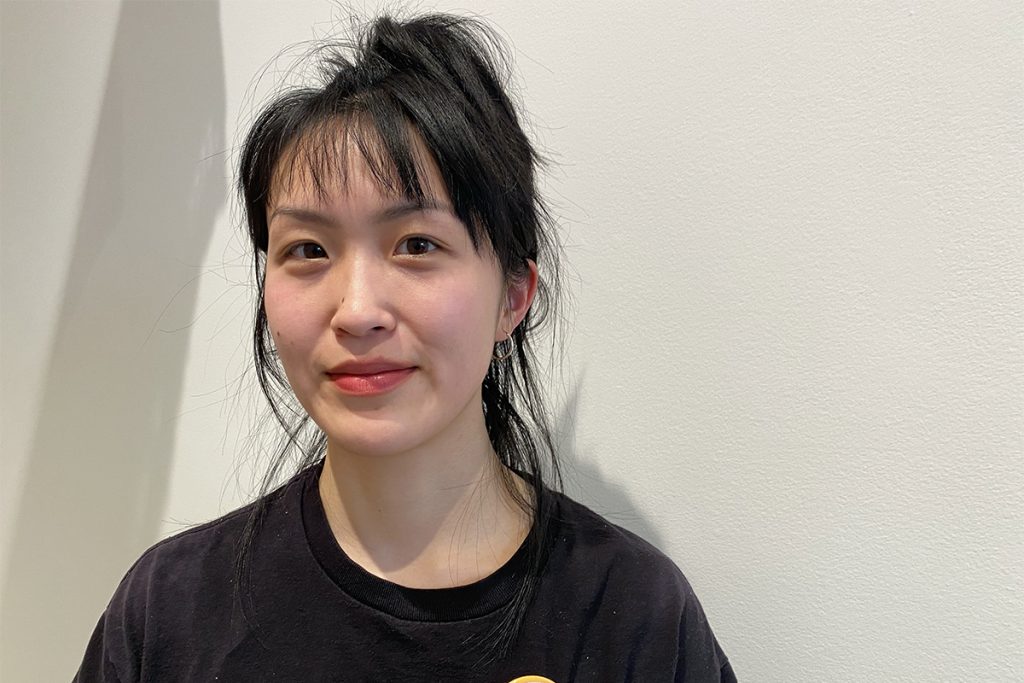
Birch said he’s been able to follow some of the youth in these programs through their careers. He pointed to artist Charlotte Zhang, who participated in Nanaimo Art Gallery’s youth programs and is now a professional and internationally-recognized artist and filmmaker.
Zhang was recently one of the featured artists in the Nanaimo Art Gallery exhibition, Bleached by the Sun: Perspectives on Chinatown with a video called Pine Street Now and Again (2019).
“We’re seeing how young people in our programs find a love for art and carry it with them in whatever path they follow,” Birch said.
Creating more space for art
Holmes said the gallery has a “small but mighty” team that has garnered a good reputation for the work they do.
“But wouldn’t it be great to realize our potential?” Holmes asked. “We have so many great ideas and plans for the future and we’re working really hard to realize them, but it’s always a challenge with the capacity that we have — both in the way of funding and human capacity.”
She said she’s thankful for the support the gallery has received from the City of Nanaimo, volunteers, members, donors and more, especially as they work toward building a new, purpose-built space in Nanaimo’s downtown.
Right now the gallery only has one exhibition space and one studio for programming, making it too small, especially when galleries in similar sized communities have at least four times more space, Holmes said.
Each exhibition lasts about three months but when they are between exhibitions, all of the art must be taken down to prepare the walls and install new art. This can take three weeks to complete, meaning visitors are unable to view any exhibition during this in-between time.
Having a new gallery with a couple of exhibition spaces would mean there’s always something open and available for people to see.
Holmes said the gallery would also like to create a dedicated space for regional artists where they can show their work and build up their exhibition credentials. Doubling the educational programming space is also a goal, especially because many programs currently have waiting lists months in advance.
In 2022, the Nanaimo Art Gallery presented a feasibility study to council that investigated how the gallery could meet community needs and what its future would look like. The gallery and City of Nanaimo then undertook site analysis work and community engagement for a new space, leading to a second report in 2023.
Now, Holmes said the gallery is “exploring potential partnerships for a gallery that might be part of a mixed-use development downtown.” While information on this work is still confidential, Holmes said it is “moving on steadily.”
“I think it’s exciting to have these opportunities to think creatively about what an art gallery on Snuneymuxw Territory can be, and how that’s perhaps different than an art gallery we would have built 10 or 15 years ago,” Holmes said.
Birch said he hopes the Nanaimo Art Gallery can continue to serve the community by providing more opportunities for connection with art.
“When people come from afar, this can be the first place where people take visitors. It can represent the culture of Nanaimo and also represent Nanaimo’s place in the world.”
What did you think of this story?
Your feedback after we publish a story helps ensure we're always improving our reporting to better serve you
Author

Related Articles
DRIPA debated in B.C. election on Vancouver Island
The Conservative party of B.C. is promising to repeal the Declaration on the Rights of Indigenous Peoples Act (DRIPA), while other parties argue that would set back relations with First Nations and create economic uncertainty.
Where Nanaimo’s MLA candidates stand on addictions care, family doctors and Island rail
Candidates in Nanaimo-Gabriola and Nanaimo-Lantzville answered three questions from Discourse readers ahead of the Oct. 24 B.C. election.
Nanaimo’s guide to the 2026 B.C. election
What riding am I in? Who are the candidates? When do I vote? B.C. election basics for Nanaimo voters.