
Comox Valley, Nanaimo land trusts raising funds to support Deep Bay land conservation purchase
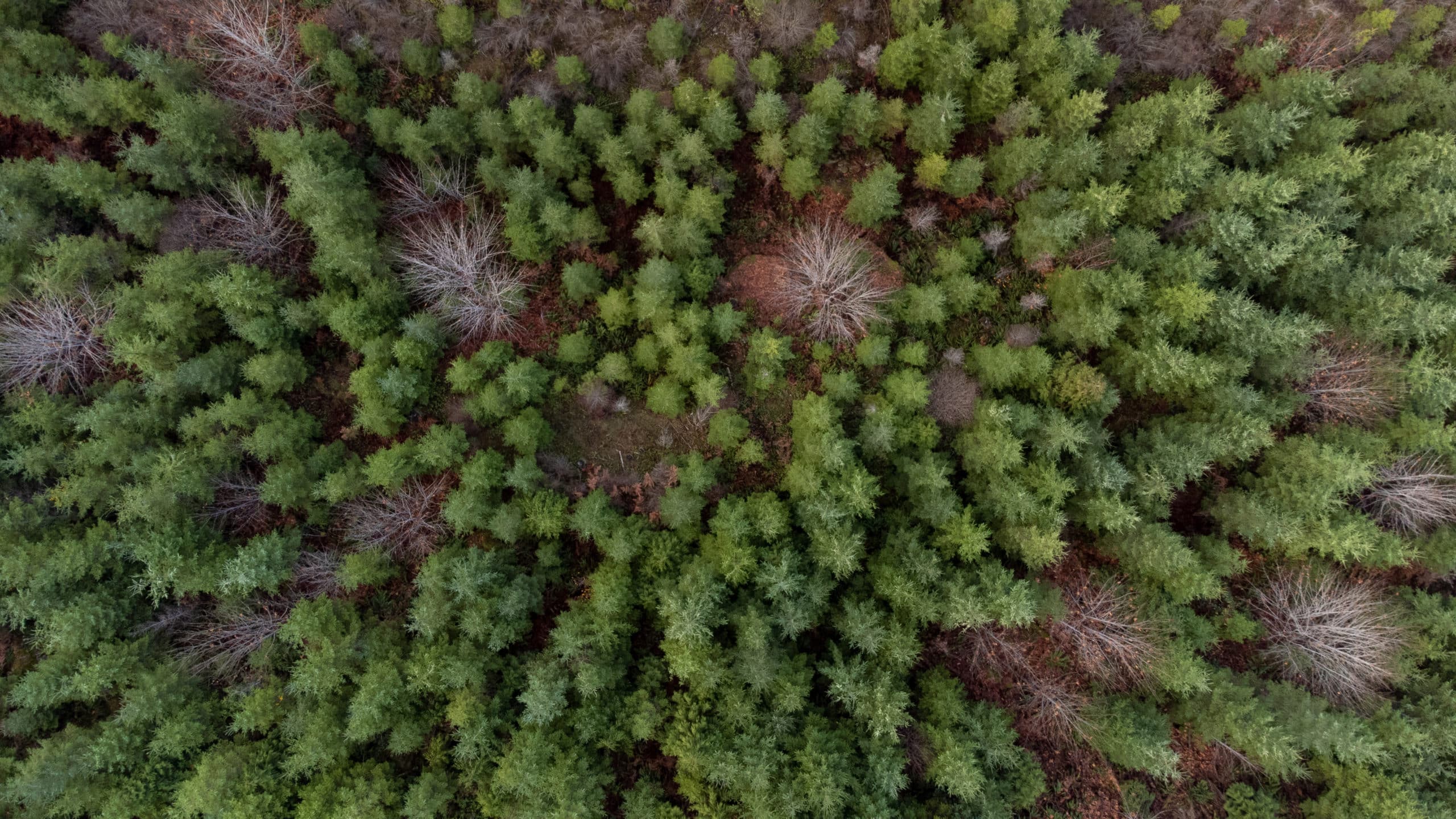
In a partnership with the Comox Valley and Nanaimo Area land trusts, BC Parks Foundation is fundraising to protect 50 hectares of pristine shoreline in Deep Bay and make it accessible to the public.
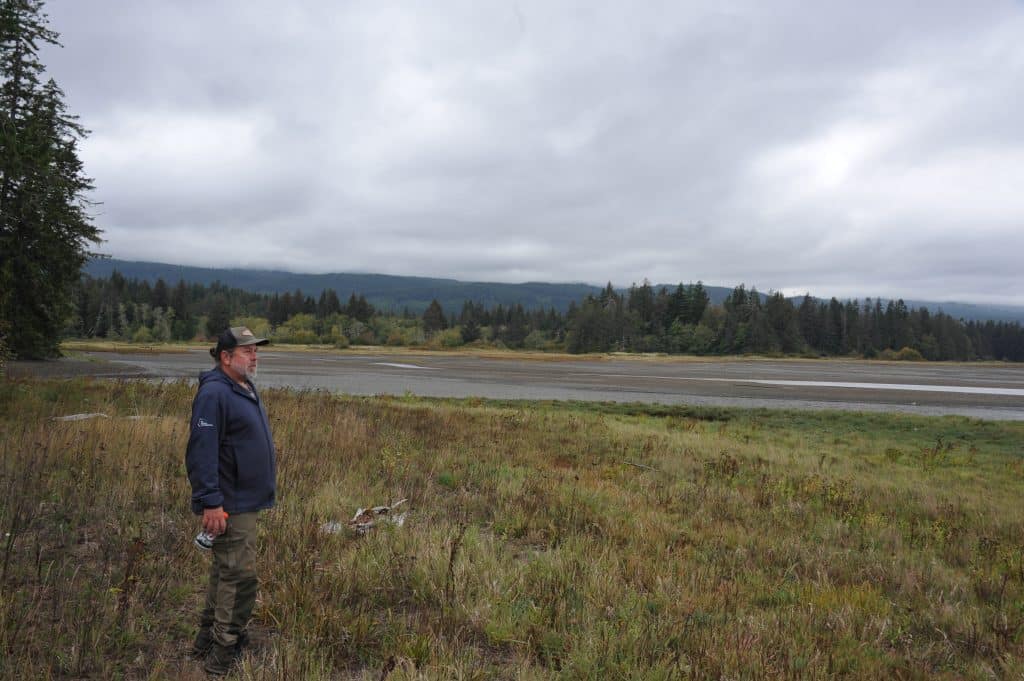
Tim Ennis’s loose-fitting cargo pants are rolled up at the ankles. The tongues on his well-worn hiking boots are hanging out. He wears a faded baseball cap, a ponytail and a short beard.
At first glance, the executive director of the Comox Valley Land Trust, doesn’t look like a typical superhero. But, according to him (and a King Charles III Coronation medal), he sometimes feels like one.
“I’m so blessed to be able to find myself doing this work,” Ennis said speaking with The Discourse. “You pinch yourself sometimes. Someone’s paying me to be some kind of conservation superhero.”
Right now, he’s leading an initiative to raise the remaining $395,000 on a $4 million land purchase to protect some of Vancouver Island’s rarest intact ecosystems.
In partnership with Comox Valley Land Trust and Nanaimo and Area Land Trust, the BC Parks Foundation is fundraising to protect 50 hectares of forest, wetland, estuary and shoreline in Deep Bay with a deadline of Sept. 30 to raise the remaining amount.
The land has a rich history of Indigenous occupation and after more than a century in private hands, it will become accessible to the public if the land purchase is successful.
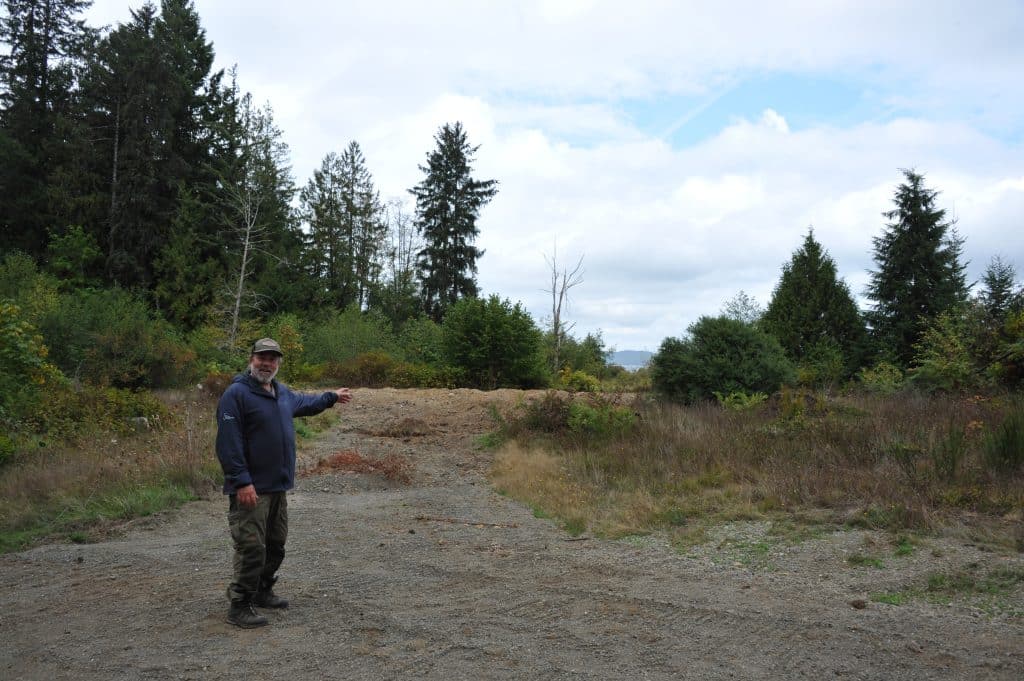
In mid-September, Ennis stood at the site of a former homestead in Deep Bay that was settled by the Cook family. Before the building was removed, the homestead would have overlooked Baynes Sound and an estuary that serves as important overwintering grounds for migratory birds.
“We hunt for places like this,” Ennis said. “They’re not easy to find.”
History of the land in Deep Bay
According to a section of a 2026 archeological report from K’ómoks First Nation that was shared with The Discourse, the parcel and surrounding lands have a rich history “with an occupation record of at least 8,000 years of Indigenous people.”
The area is the traditional territory of the Pentlach People, who amalgamated with other local Indigenous groups after the 1862 smallpox epidemic decimated the Pentlach population. Today they are represented in K’ómoks First Nation and Qualicum First Nation.
“Four distinct groups of the Pentlatch have been identified in ethnographic works,” the report reads. “The Pentlatsch, the Saamen, the Chuachuatl and the S’oksun” whose territories spanned from Cape Lazo in the north to the Little Qualicum and Englishman rivers in the South.
“The Pentlatch thrived in the territory with villages throughout and rich resources aplenty,” the report reads.
Along the property’s shoreline, the soil is black and flecked with white shell fragments. It is “solid midden every step,” Ennis said, referring to discarded shells, bones and other domestic debris accumulated over thousands of years of occupation.
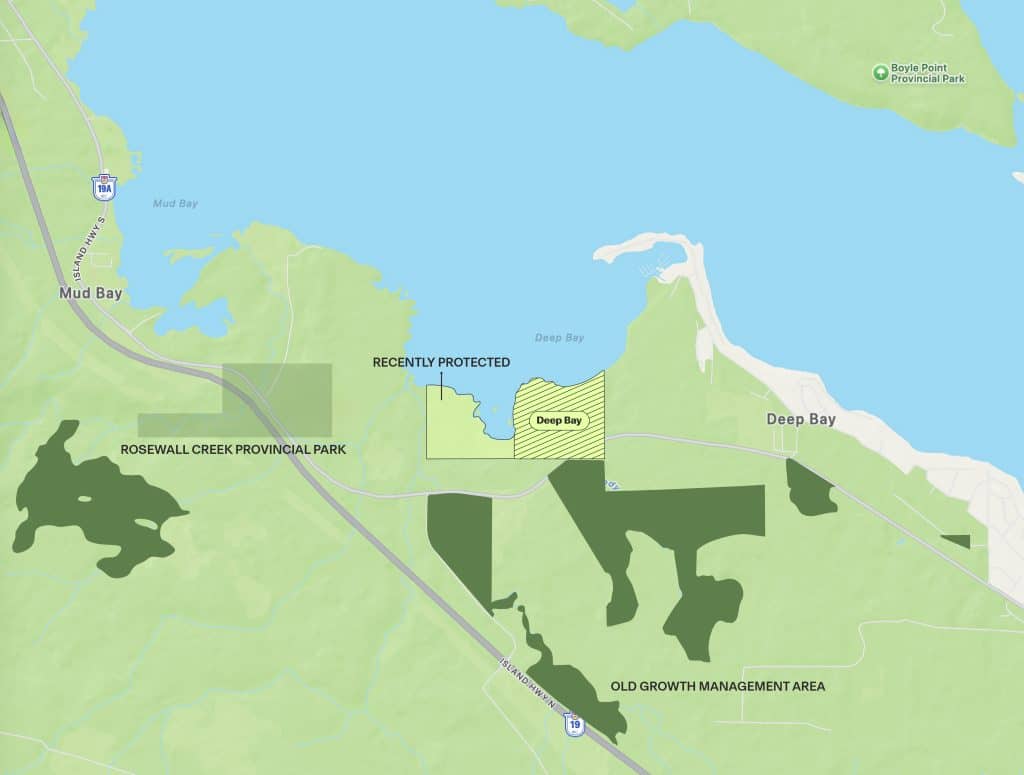
Sometime in the late 19th or early 20th centuries, the property was settled by the Cook family, Ennis said. Logged only once around 100 years ago, the prime second growth forest sits next to another 33.5-hectare parcel in similar condition that was recently protected by the BC Parks Foundation.
From private land to park
Ennis said the properties were on the Comox Valley Land Trust’s highest priority list for purchase because the land connects Baynes Sound to 1,740 hectares of rare, intact forests that are protected in the Bowser Ecological Reserve and crown land and are part of the coastal Douglas-fir bio-geoclimatic zone.
“We’re taking all the upland protected area and bolting it to the ocean in a super productive estuary environment,” Ennis said.
According to the Coastal Douglas-Fir and Associated Ecosystems Conservation Partnership, the bio-geoclimatic zone is a unique set of associated ecosystems that occurs on a narrow strip of south-east Vancouver Island, portions of the Gulf Islands and pockets along the south coast and mainland B.C.
The area lies in a rain shadow, giving a Mediterranean-like climate, “which allows for a rich flora and fauna to thrive.”
Ennis noted that climate models show a warming trend and said these forests are already adapted to dryer and warmer summers. He said giving them space to exist is crucial.
“Those kinds of species may be prolific here in a warming climate decades from now.”
The BC Parks Foundation sought the help of the Comox Valley Land Trust to fundraise a portion of the purchase amount and undertake some restoration of this important ecosystem. But Ennis and the team realized the land is actually the northernmost property in the Regional District of Nanaimo.
“So we thought, let’s see if the Nanaimo and Area Land Trust wants to match us,” Ennis said.
Paul Chapman, executive director of the Nanaimo Area Land Trust, said the Deep Bay property “has been on [their] radar, quietly churning away.”
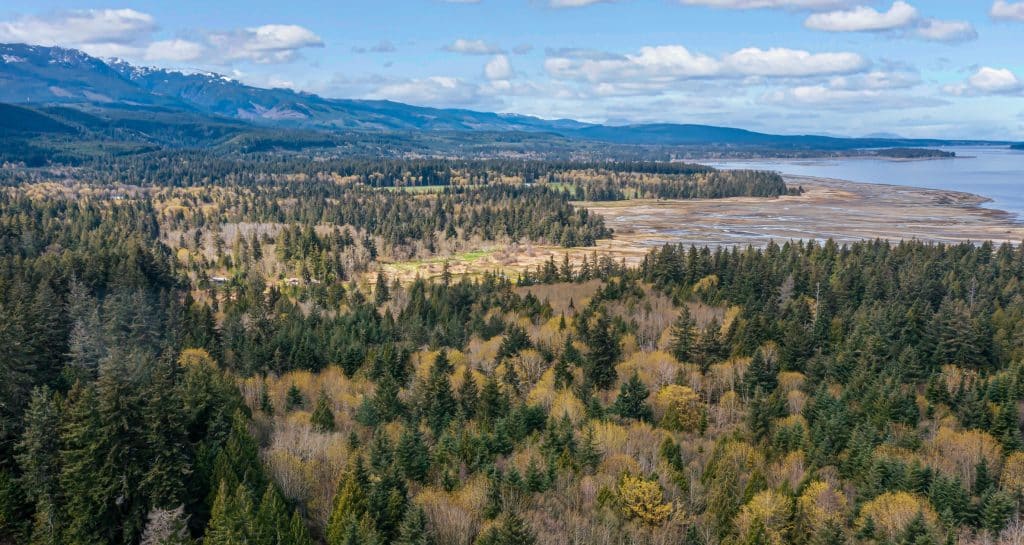
Chapman said the east coast of Vancouver Island has very little crown land because of the E&N land grant privatizing huge swaths of land that belong to Indigenous Peoples. He said the key to protecting this private land now “is acquisition.”
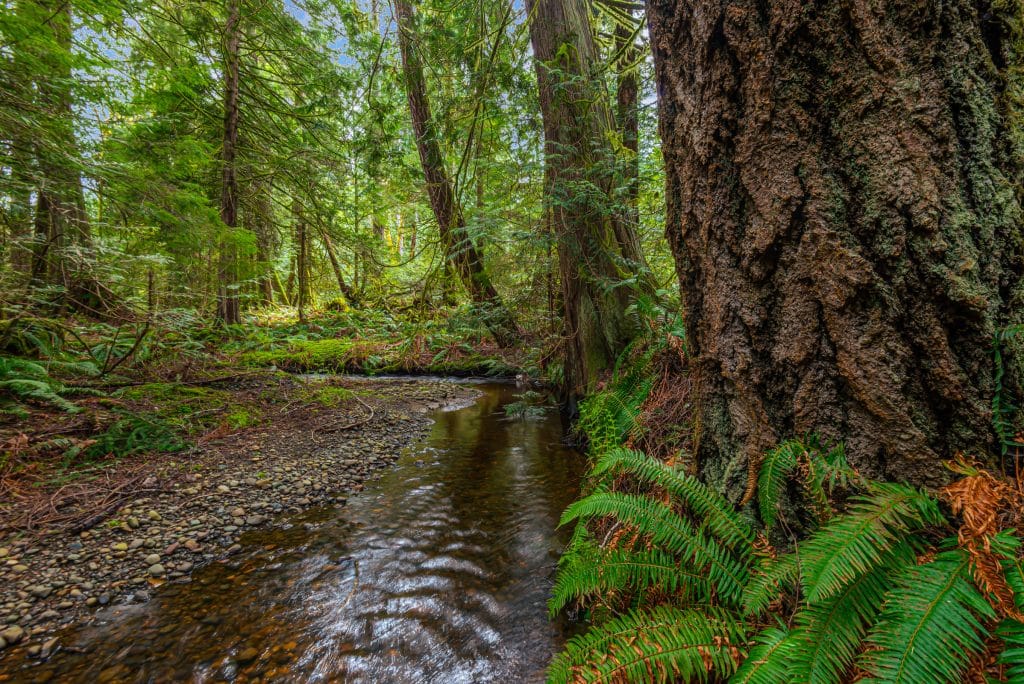
“When you look at all the different values of the coastal Douglas fir forest and the salmon bearing waterways that run through the property, it ticks all the boxes for high value acquisition to protect biodiversity,” Chapman told The Discourse.
He adds that very little shoreline is protected in the Nanaimo Regional District. Most of the beachfront that is protected is rocky outcrops, not mature forests from mountain to sea.
The land’s future
BC Parks Foundation will own the property, Ennis said, but a long-term management partner has yet to be named. The area will be operated “as a conservation-forward but publicly accessible space” with a parking lot adjacent to Highway 19A (the Old Island Highway).
Existing roads will be turned into trails allowing day-use walking along the forested creeks to the shoreline.
Chapman noted that the increased cost of land in recent years means “that these strategic partnerships are going to become more and more prevalent where our interests converge.”
Future projects in Chapman’s sights include adding more protected areas to the south of Nanaimo “and the Harewood Plains and Cable Bay area.”
Both Ennis and Chapman have been instrumental in protecting similar areas around the Comox Valley and Nanaimo, overseeing hundreds of members and volunteers through complex land purchases and restoration initiatives.
“It makes me feel great,” Ennis added, knowing that the public, including his descendants “are going to have this place to come to forever.”
He said those interested in supporting to help raise the remaining $395,000 for the Deep Bay land purchase can do so online.
What did you think of this story?
Your feedback after we publish a story helps ensure we're always improving our reporting to better serve you
Related Articles
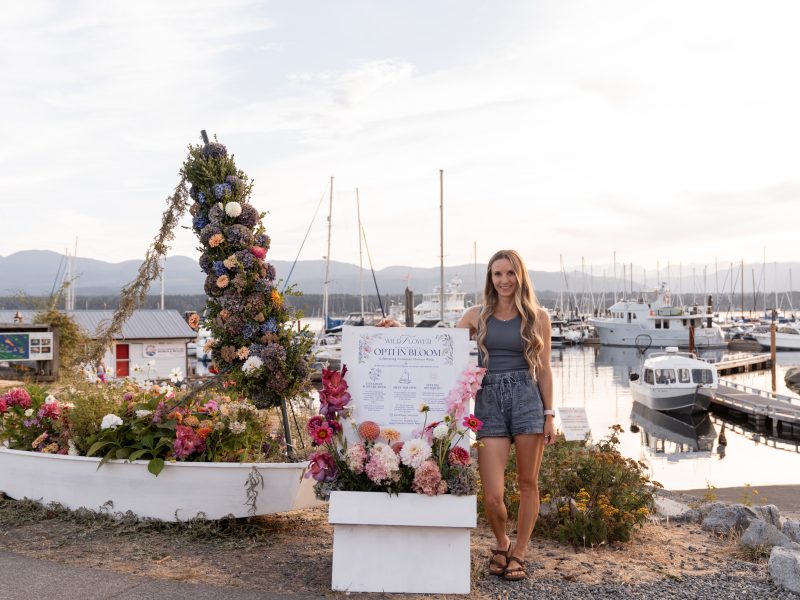
Community collaboration gives second chance to beloved dinghy in Comox
In a race against time to bring a public flower installation to life, Emily Yewchuk leans on support from Comox Valley’s Project Inclusion to make it a reality.
How is The Discourse’s journalism funded?
And what does it cost to produce The Discourse’s in-depth, independent journalism?
How do Comox Valley governments and public organizations use AI?
The Discourse reached out to Comox Valley governments and organizations to find out how they are handling the use of AI.