“Get into it!” is a solutions-focused series highlighting environmental and community groups in the Comox Valley. If you want to nominate a local group, email comox@thediscourse.ca
All schools seek to nurture kids with diverse programs and experiences, but Courtenay’s Lake Trail Community School goes a step further. The goal is to have not just a place of learning, but a community centre where neighbours are invited in as active participants.
Lake Trail Community Education Society (LTCES) was founded in 2010 with a goal to empower local residents to strengthen their neighbourhood, with the local school, then called Lake Trail Middle School, as its hub. “Developing a sense of place and belonging for participants within their community is a defining factor for LTCES,” said Lesia Wick, the chair of the society’s board.
The school was officially designated as a community school in 2019.
Community schools are public schools that go beyond addressing the needs of school-aged kids and extend to provide opportunities for residents of all ages and walks of life to participate in local events.
Community schools typically remain open outside of typical school hours for activities. Lake Trail Community School hosts a community garden, repair cafes, evening activities and various community events.
Community building and food security
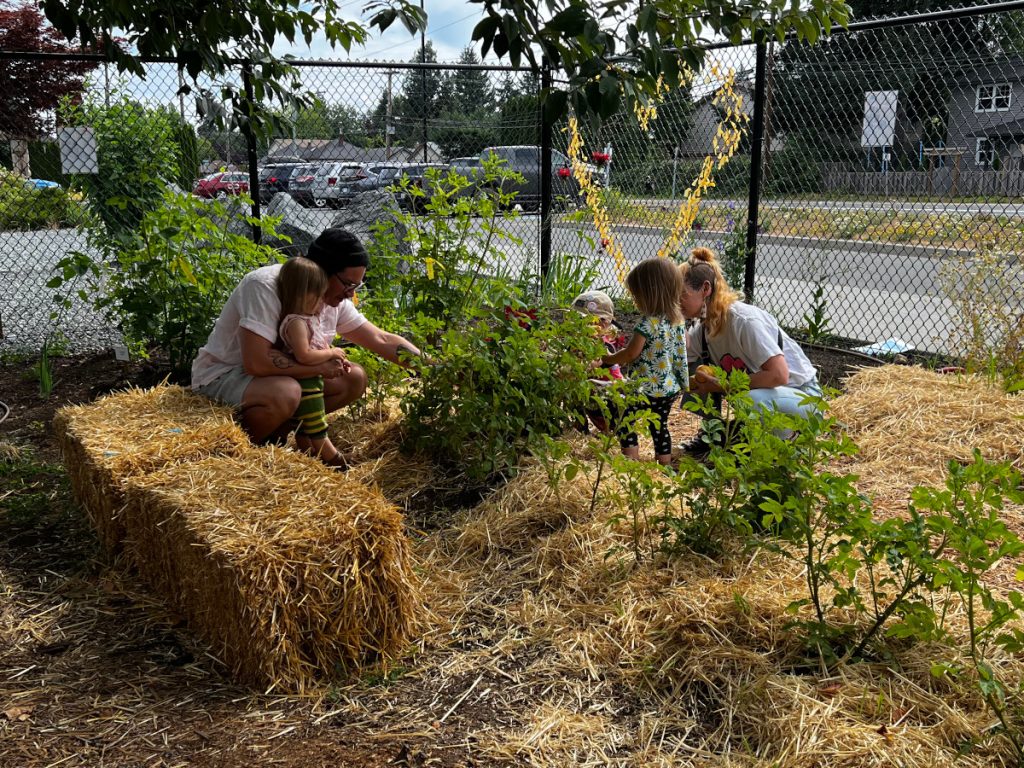
The school grounds is home to a garden that was created over a decade ago through a volunteer effort, offering outdoor community space for residents of west Courtenay.
The original garden was dismantled during construction of a new school building and has since been replaced. It includes garden boxes, in-ground plantings, a greenhouse and irrigation, Wick told The Discourse. The school is hosting potluck dinners again, after a hiatus during the pandemic.
The dinners attract a wide range of people, including elders who are new to the area and youth in the neighbourhood, Wick said.
“These evenings quickly became a significant part of the work we are doing to support intergenerational connections and belonging. Attendees contributed to garden tasks, learned, and shared gardening knowledge.”
The garden also offers community workshops for those who may wish for a deeper look into gardening theory, “including seed starting, soil and compost development, natural pest control, and year-round gardening techniques,” said Wick.

The school’s salad bar program provides a weekly healthy lunch for students, free of charge. The meals help families who may be struggling with grocery bills and food security barriers, Wick said. The program served an average of 175 plates each Wednesday last year, alongside after-school snacks.
“Community gardens and healthy school food programs can build hope and food security in the face of climate change,” said Wick, who underlined the importance of teaching the tools for local food growth and resilient urban communities.
Affordability and waste reduction

LTCES hosted a repair cafe in November, inviting Comox Valley residents to bring in broken or damaged items to repair collaboratively. Repair cafes help to reduce waste and save money.
Over 100 people attended, with 135 items brought in needing repair. Ninety-eight of the items were fixed and saved from the landfill, said Wick.
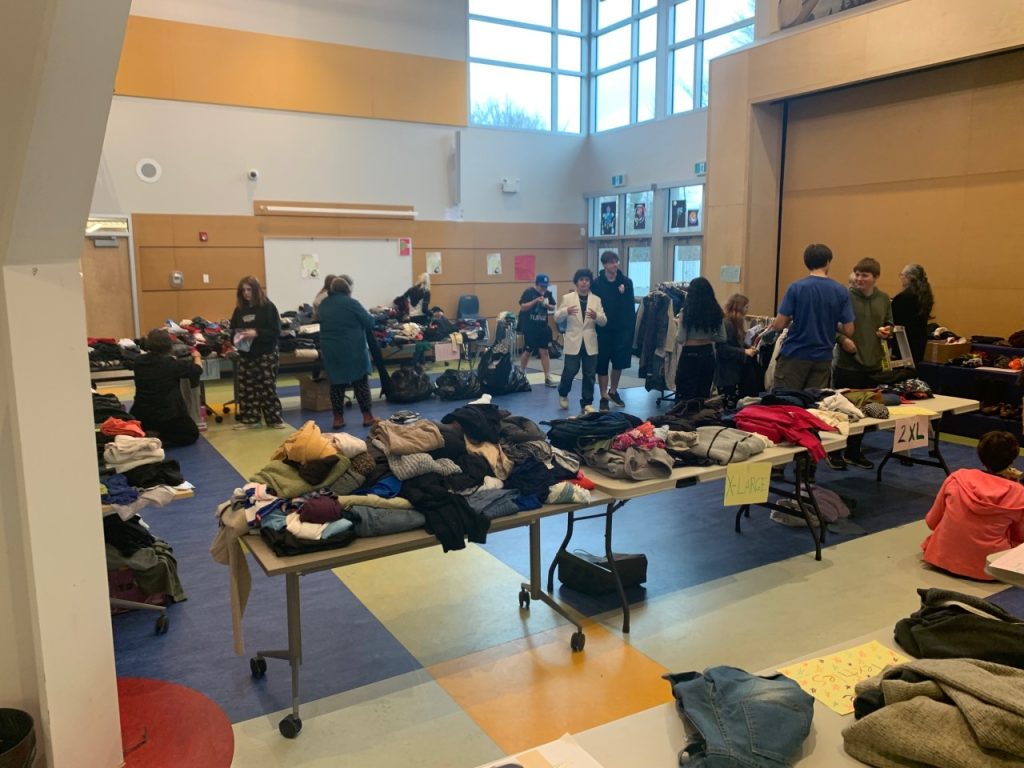
Alongside the repair cafe, LTCES hosts an annual free clothing store on Earth Day, open to youth during the day and for community members in the evening. Both the repair cafe and Earth Day free clothing store are supported by Comox Strathcona Waste Management educators.
LTCES will host its third annual Community Connections Day in June, for community members to come together for workshops, classes, pop-up activities and food sharing.
Get into it
Thursday evenings are busy for community activities at the school. Neighbours of all ages are invited to drop in between 6 and 8 p.m. for arts and crafts, gym activities or board games. The community garden parties and potlucks occur at the same time.
After-school programs for kids include groups focused on reading, cooking, creating sustainable art and spending time in the forest. These programs are open to local youth who do not attend the school, when space allows.
Neighbours are also invited to become members of the society, volunteer or make a donation to support the school and its community programs.
What did you think of this story?
Your feedback after we publish a story helps ensure we're always improving our reporting to better serve you