
‘Hanging on by a thread’: Brooklyn Creek Watershed Society’s return from the brink
When Christine Hodgson became the group’s lone member, she was left with a choice. One that would affect the health of Brooklyn Creek, its salmon and Comox residents for years to come.
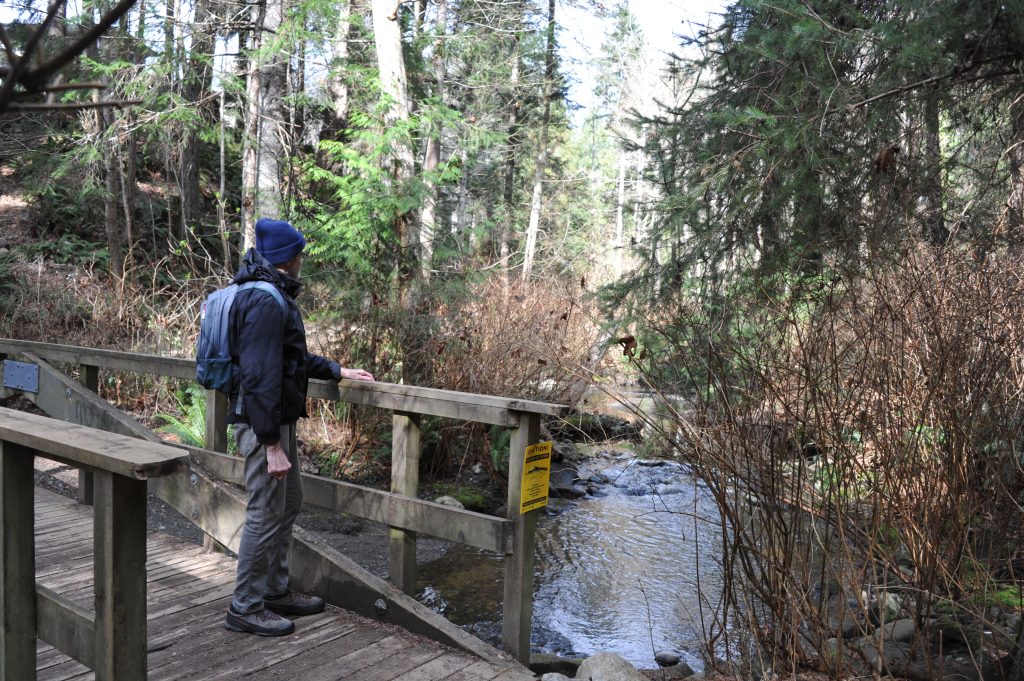
On a brisk February day in 2021 Christine Hodgson, the president of Brooklyn Creek Watershed Society at the time, walked alone along a trail beside the churning creek that gave the group its name.
Hodgson waved or said hello to familiar community members who also frequented the winding gravel paths beside this beloved urban waterway.
Most of the residents likely knew about the watershed society’s decades-long role in protecting the creek. But none would have been aware that this unassuming woman was effectively the only remaining member of the grassroots community group that began in Comox.
“We were aging out,” Hodgson said in an interview with the Discourse. After one member passed away and another moved to Vancouver, “the next thing you know you’re the last person standing.”
The responsibility to continue the society—and protect the creek—hung like a heavy coat on her shoulders. Despite the challenge, Hodgson would pull the society back from near collapse, even when at times its future seemed uncertain.
The society had around six members in normal times, and much like the watershed that they strove to protect, the group was “always hanging on by a thread,” Hodgson said.
That thread became thinner than ever as the retired North Island College science instructor found it taxing to maintain the role of president while also writing grant applications for Project Watershed.
Still, the Comox resident gave her time to send one more grant to the Pacific Salmon Foundation.
The application was based on recommendations by consulting company Current Environmental to combat previous and continuing urban pressures on the watershed. The company outlined the importance of conducting a Level 1 fish habitat assessment of Brooklyn Creek that would evaluate the creek’s health and guide restoration along its course for years to come.
Hodgson had previous success with grant applications during her 10 years as a volunteer, but wins are never certain.
“I was thinking that if we didn’t get that grant, I was going to fold the society,” Hodgson said.
According to Hodgson, the society had been around in different forms since 1986. But she wondered, would decades of conservation and stewardship end with her?
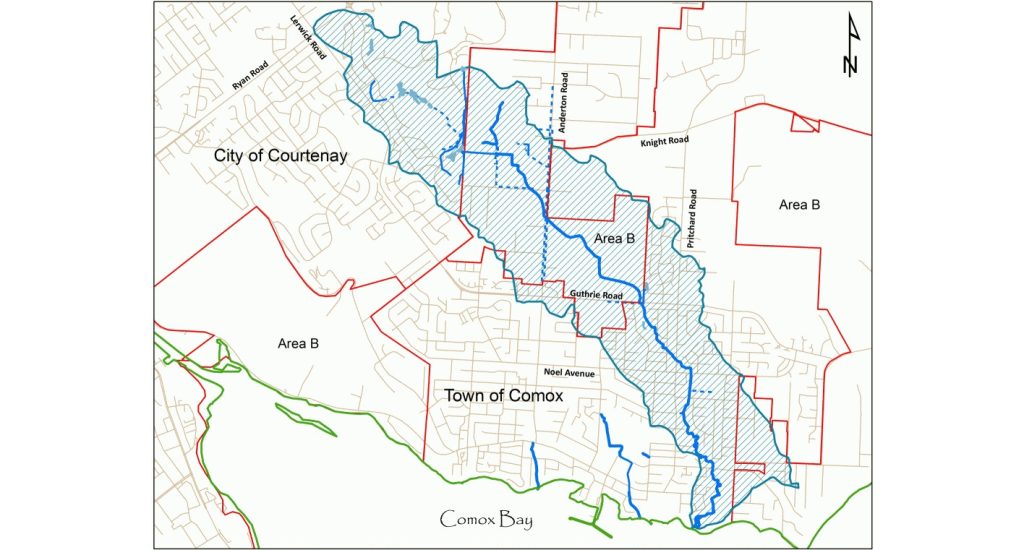
The headwaters of Brooklyn Creek
Stand in the Thrifty Foods parking lot at Lerwick Road on the next rainy day and watch the water slip between the steel bars of the nearest catch basin. This is the headwaters of Brooklyn Creek.
From here, the water travels a roughly 10-kilometer circuit through three jurisdictions, including the City of Courtenay, the Comox Valley Regional District and the Town of Comox who, “all used Brooklyn Creek as storm water management,” Hodgson said.
The watershed has spawning populations of salmon and provides habitat for birds and small animals including otters and beavers, according to the Brooklyn Creek Watershed Society website.
“We’re kind of fish-centric, but we also think of people sometimes,” said John Neilson, the society’s current president.
Mack Laing Park is “the most heavily used nature park and trail in the town [of Comox],” Neilson said. According to Neilson, an annual three-year average of 81,454 visitors entered through the stairway from Balmoral Avenue.
“One month in October [2023], we had a lot of people: 10,100,” Neilson said. That coincided with a large run of pink salmon, and people came “down like crazy to watch it.”
“I think that speaks to how important this area is for people. They like the idea that there’s a salmon run here that’s easily accessible,” Neilson said.
“The bottom reach [of the creek] in Mack Laing Park shows the least amount of disturbance,” Hodgson explained.
According to a Town of Comox urban forest management plan, this section exists in “the early stages of a mature forest” with “several mature Sitka spruce in the 80 to 250 year range.”
Above Mack Laing Park and Brooklyn Creek Park, the watercourse’s history tells a different story.
“In the 60s everything was ditched,” Hodgson explained.
While not ideal for salmon, the coho and pinks who have been using this waterway for millennia adapted to this new environment. But that’s not without help.
The society’s initiatives
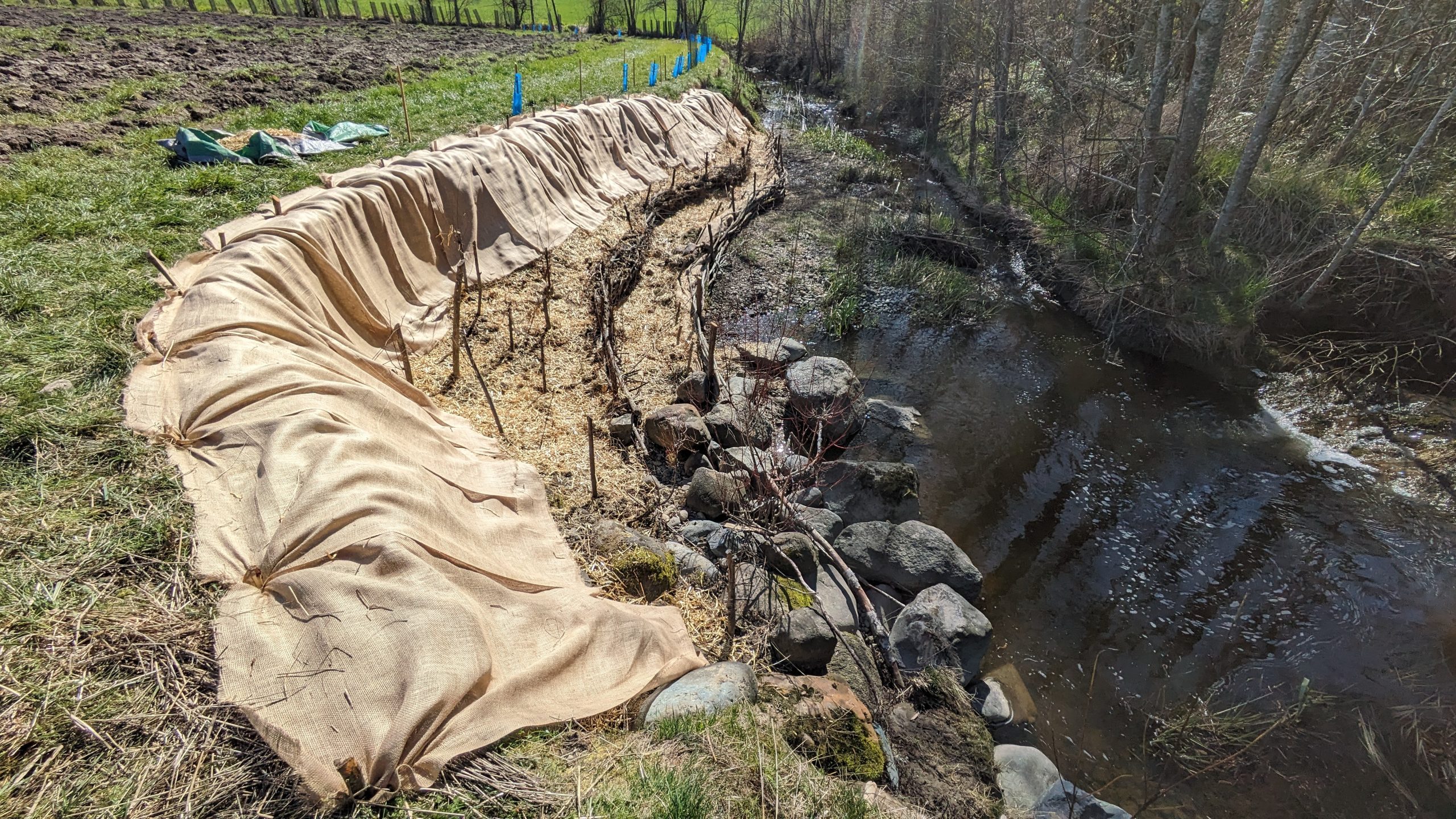
In 2011, when Hodgson first started volunteering with the society, they would undertake coho smolt counts in the creek to record the number of juvenile salmon leaving the stream in spring and write grants to improve spawning habitat by planting native shade trees and bringing in gravel that had previously washed away.
“We had a very good relationship with the Pacific Salmon Foundation,” Hodgson explained. “We would regularly get grants either from them or DFO,” with the Town of Comox “as a 50 percent contributor.”
The society is “quite important” to the health of Brooklyn Creek, said Jacob Melville, a Fisheries and Oceans Canada Salmonid Enhancement Program community advisor.
“These smaller groups like Brooklyn Creek Watershed Society have a good number of volunteers that walk the trails,” Melvile said. “They monitor the watershed itself, [and are] able to be eyes on the ground to see what may or may not be happening in the watershed.”
In the springtime, the society monitors the juvenile salmon trap box, “and they’re out there every day for a couple months,” Melville said. “People walking by are able to ask questions and that’s one of the big points of their education piece: just being a presence on the creek.”
The society’s work, in turn, helped the flora and fauna in the watershed as well.
“A lot of other animals like to use the creek, too,” Melville said.
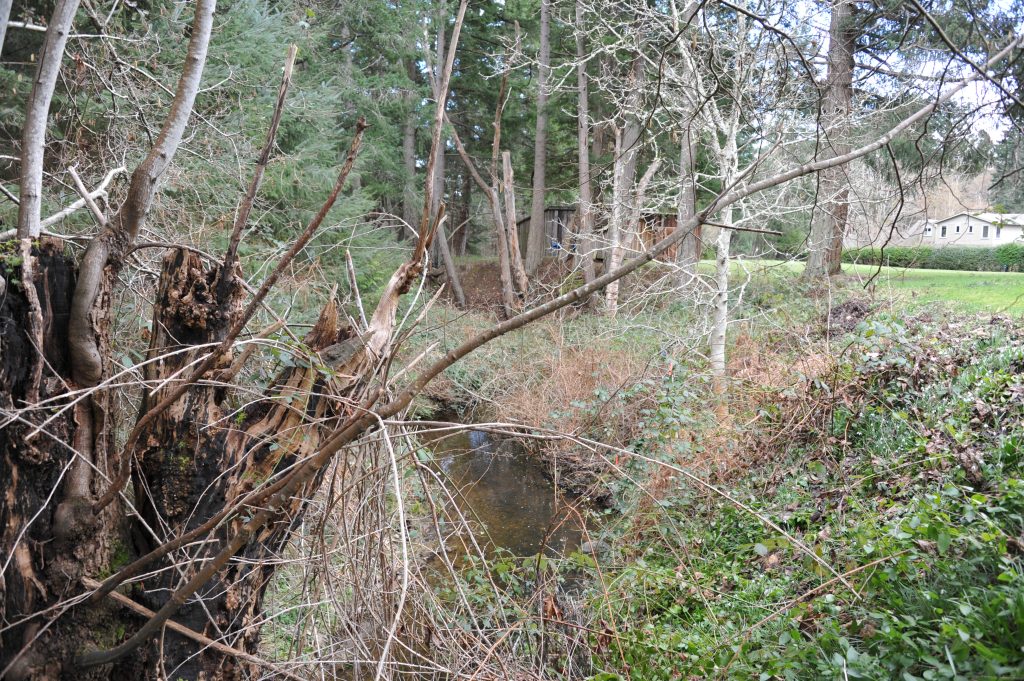
Without people looking out for the fish and wildlife in the creek, human interests take hold. Unless something is instigating conservation, Hodgson adds, “nothing will happen.”
Even Comox residents might be excused for not knowing the name of two creeks that cross Comox Avenue, the town’s main street.
According to Hodgson, Golf Creek and Port Augusta Creek were mostly diverted into underground culverts during past development. A short stretch of Golf Creek is exposed in the Comox Golf Club and part of Port Augusta Creek sees open air in Port Augusta Park before it spills onto the beach of the K’ómoks Estuary.
A new beginning
With all this on Hodgson’s mind in 2021, she waited for a response from the Pacific Salmon Foundation about the grant.
“I put out this hail Mary,” Hodgson said. “And lo and behold, we got that grant application.”
A short time later, Hodgson volunteered with a group to remove invasive plants in Mack Laing Park.
“I was chatting with some of them saying, ‘I think I might just end up closing because it’s just me here left in this group.’”
They were surprised by Hodgson’s news, and “a couple of people ended up joining,” Hodgson said. “We got the numbers back up to four or five.”
Hodgson was relieved she wasn’t alone, “holding this bag.”
“It’s a responsibility to have a society that’s been going on for so long.”
Soon after, Hodgson moved north of Courtenay, leaving the society and the role of president to another member. The society continues to use the Level one assessment to guide its work.
“It’s a great blueprint for future years of habitat restoration,” Hodgson said.
When Hodgson walks along the creek now, she admires “all the handiwork that had been done.”
“Big rivers get all the attention,” Melville noted. But he said groups like the Brooklyn Creek Watershed Society “speak up for the little guys.”
“Without the community groups that work on these creeks, they kind of get forgotten,” Melville said.
“They have healthy populations of fish that are important to the ecosystem as a whole and these volunteer groups are immensely valuable for these watersheds.”
What did you think of this story?
Your feedback after we publish a story helps ensure we're always improving our reporting to better serve you
Related Articles
Comox Valley, Nanaimo land trusts raising funds to support Deep Bay land conservation purchase
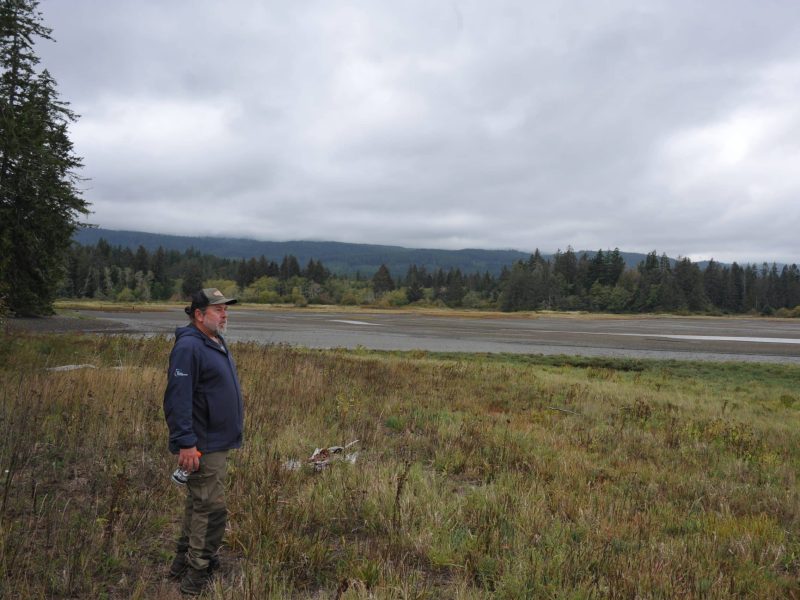
In a partnership with the Comox Valley and Nanaimo Area land trusts, BC Parks Foundation is fundraising to protect 50 hectares of pristine shoreline in Deep Bay and make it accessible to the public.
Community collaboration gives second chance to beloved dinghy in Comox
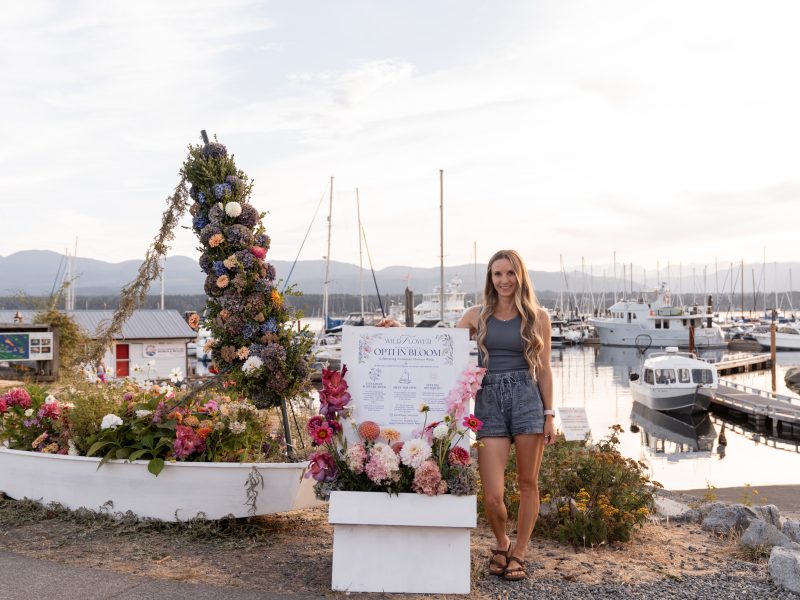
In a race against time to bring a public flower installation to life, Emily Yewchuk leans on support from Comox Valley’s Project Inclusion to make it a reality.
How is The Discourse’s journalism funded?
And what does it cost to produce The Discourse’s in-depth, independent journalism?