
How the Morrison Creek lamprey helped create a refuge for salmon during hot summers
With summer 2026 set to be one of the hottest on record, this spring-fed Comox Valley waterway remains a crucial fish habitat. The little-known story of its protection began with the Morrison Creek lamprey and a taxonomic mystery.
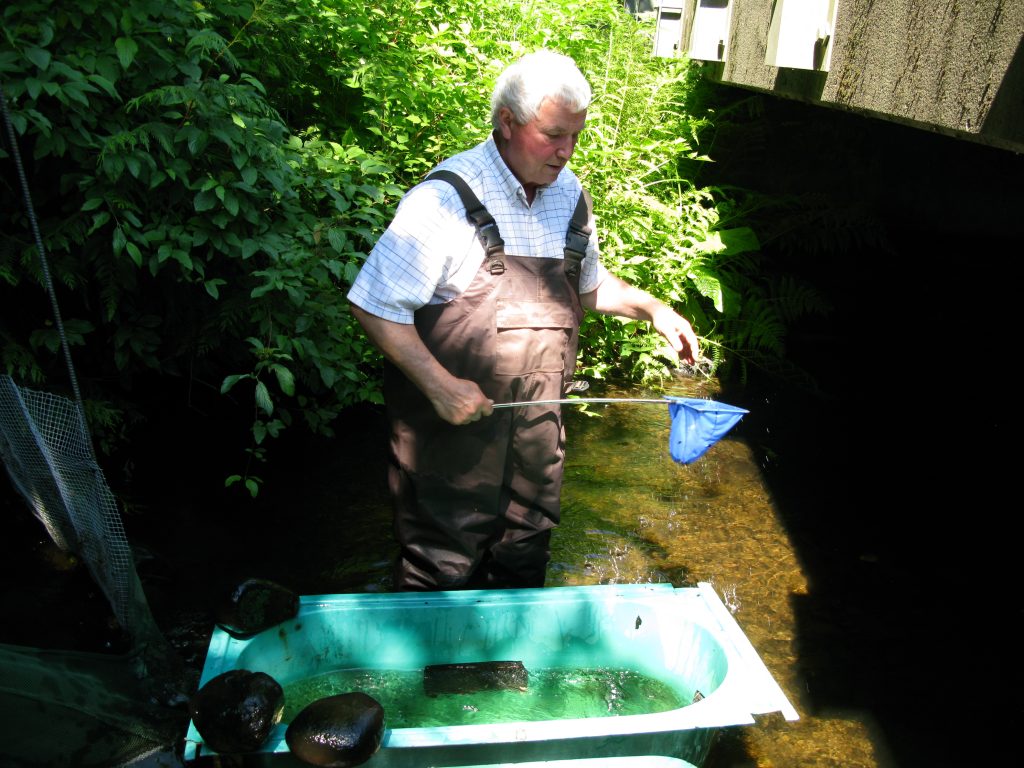
One summer day, sometime around 1975, Dick Beamish drove 100 kilometres from Departure Bay to set a fish trap in Morrison Creek, a small and seemingly unremarkable waterway in Courtenay, B.C.
Days later, two eel-like silver fish wriggled inside the cone-shaped basket. To the research scientist, they looked like the western river lamprey, but this was strange.
“The western river lamprey should not be in a small little creek,” Beamish explains in an interview with The Discourse.
These lampreys are one of the most common fish in the Fraser River, where the parasitic species swims to salt water to latch onto fish with its sucker and, like a big leech, feast on its host alive.
Beamish brought the pencil-length specimens back to the Pacific Biological Station at Departure Bay and introduced them to salt water, where he says “they were supposed to live and they died,” leading him to question why.
This question would take Beamish 20 years to fully answer and would lead him to a surprising and scientifically novel discovery.
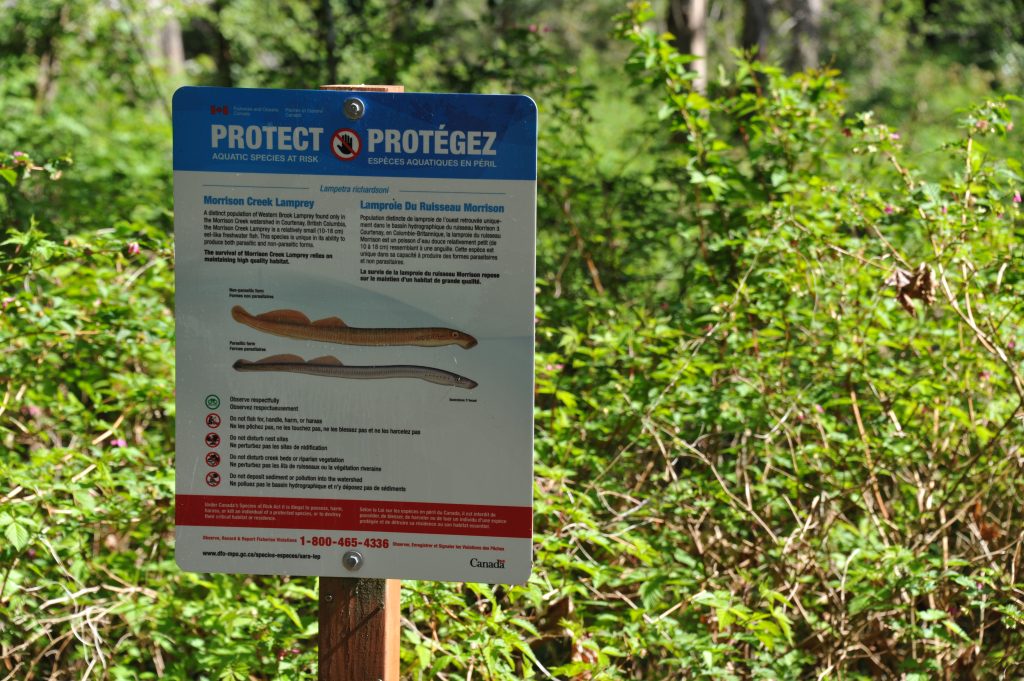
This work would also prompt the protection of the cold, spring-fed Morrison Creek from development, safeguarding not only a unique lamprey but the salmon that share their stream — something of increasing importance as summers get hotter and drier in the face of climate change, according to local experts.
In fact, the fish would turn out to be “something that had never been seen before in the world,” Beamish says.
What is a lamprey?
Beamish knows fish.
The Nanaimo resident has been thinking about and working with these slippery creatures for more than six decades, according to his personal website. The list of his career highlights includes being appointed to the Order of Canada for discovering acid rain and publishing nearly 200 peer reviewed scientific articles.
But meet him and you’d never guess he’s one of Canada’s preeminent fish biologists. With a shock of silver hair and casually dressed in a rugby shirt and blue jeans, Beamish looks like someone who spends more time on the deck of a ship than in an office.
His relaxed, unacademic manner of speech is well suited for long days at sea aboard the Canadian Coast Guard research vessel W.E. Ricker, plying the sea for fish species few have heard of, not to mention seen, such as the northern smooth tongue.
He’s also one of a few researchers in the province interested in Petromyzontidae, the lamprey family.
“There’s just a handful of people that study lamprey,” Beamish says.
He notes that the family is “one of the most common freshwater fishes in all of the rivers and streams in B.C., and nobody pays any attention to it because you don’t see it.”
They spend most of their lives — three to seven years — in mud. These worm-like juveniles, called an ammocoetes, have no eyes or teeth and feed on plankton, according to Beamish’s recent book Fishes of the Strait of Georgia coauthored by Jeff Marliave.
As adults, things get really weird.
Of the 41 species of lamprey worldwide, there are three major life-history types: freshwater and nonparasitic, freshwater and parasitic and another parasitic type that travels between fresh and salt water, Beamish writes.
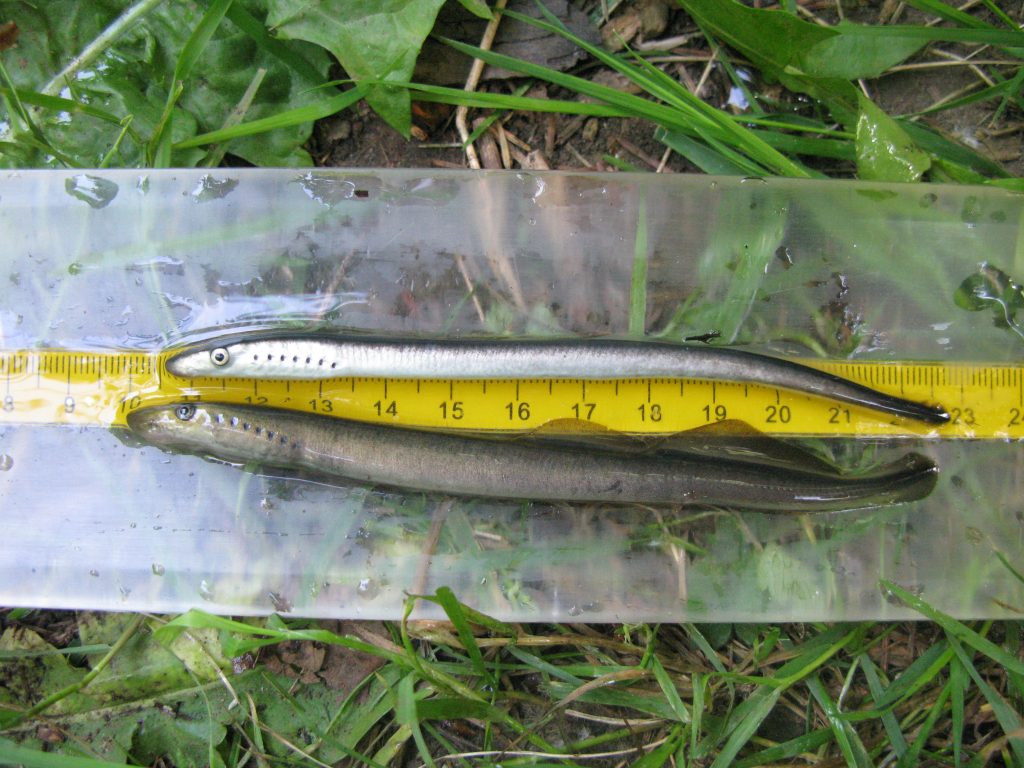
The western river lamprey is the latter type. The silver lampreys Beamish found in Morrison Creek were identical in appearance to the western river lamprey, with eyes and teeth in its adult form. But when they died, and when he dissected the fishes, Beamish knew they were a different type and potentially a new species.He would eventually name this fish the Morrison Creek lamprey.
Morrison Creek lamprey a unique fish
Beamish’s job in the 1970s was studying lingcod and blackcod. His interest in the strange lamprey happened “on the corner of my desk,” Beamish says.
Over a number of years, Beamish trapped more lamprey specimens and ran more experiments. In the traps, he also found the western brook lamprey. Not to be confused with the western river lamprey, the brook lamprey is brown in colour, lives in only freshwater and is nonparasitic.
Beamish wondered if there was a connection between the western brook lamprey and the Morrison Creek lamprey, a puzzle he would soon put together.
“Almost everything that you would hear publicly about the Morrison Creek lamprey isn’t quite right. I’m exaggerating, but the Morrison Creek Lamprey is not a species at all,” Beamish says.
The Morrison Creek lamprey does not fit neatly into a taxonomic chart. As Beamish discovered, the western brook lamprey in Morrison Creek produces two forms, the normal brown form and the silver parasitic form.
Lampreys are truly living fossils, first appearing in the fossil record hundreds of millions of years ago, according to a Committee on the Status of Endangered Wildlife in Canada status report on the lamprey.
“It really looks pretty much the same now as it did that long ago,” Beamish says. And importantly, the Morrison Creek lamprey has this special ability to produce two forms which is only known in this population and is potentially, “the key to understanding how lamprey have survived for 300 million years.”
According to the status report, this fact led the committee designating the endemic lamprey as endangered in May 2000, which included calls to protect its habitat, a watercourse that has some unique attributes of its own.
The protection of the Morrison Creek Headwaters
In 2018, when a for sale sign went up for a 22-hectare parcel of land in the Morrison Creek headwaters, “we panicked,” says Kathryn Clouston, secretary of the Morrison Creek Streamkeepers.
The area for sale was a confluence of the Morrison Creek tributaries, and “if somebody went in there and did damage, they would potentially destroy the entire system because all the water basically flows through that property.”
The group reached out to the Comox Valley Land Trust.
“We yelled for their help, and they were happy to assist us,” Clouston says, noting that the area was “high on their list of places that needed protecting.”
The Morrison Creek Streamkeepers is a group of two-dozen people that live near the creek and are familiar with its nuances. They work to educate the public about the Morrison Creek Watershed, as well as preserve and rehabilitate it.
“If you don’t have a headwater,” Clouston notes, “you don’t have a stream. That’s the source of everything.”
In a partnership with the Comox Valley Regional District, the Comox Valley Land Trust purchased the 22-hectare property “and that was the start of the acquisition of the headwaters,” Clouston explains. The land trust would go on to purchase more land, including another 275-hectare parcel, which “provides almost total protection for the headwaters.”
As for whether the Morrison Creek lamprey had a part in protecting the headwaters, Clouston says the endangered species “was really important.”
A unique creek
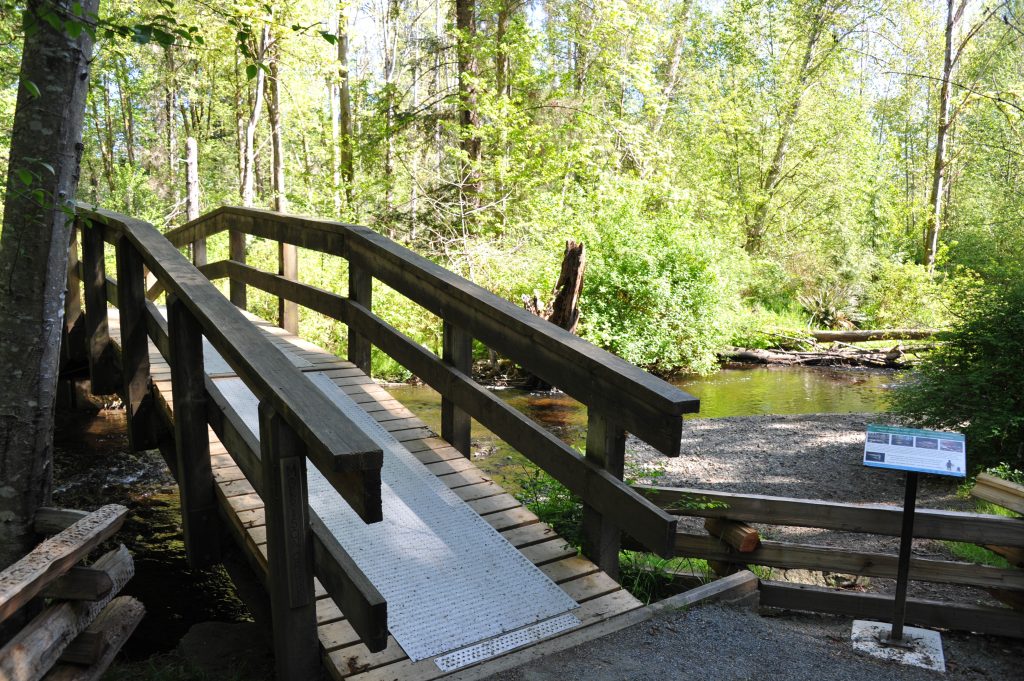
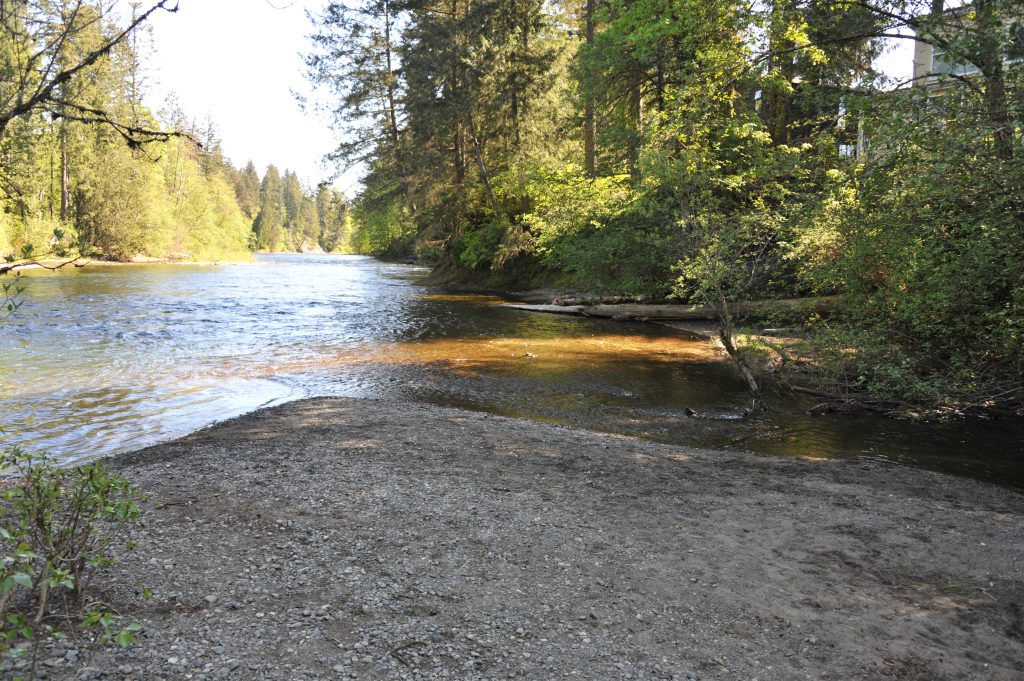
According to Clouston, Morrison creek is fed by springs sourced, it’s thought, from the bottom of the nearby glacier-fed Comox Lake. The water is filtered through gravel and remains at a cool temperature tolerable to salmon, flowing all year round, even in the hottest summers.
“The key to Morrison is cold, clean water,” Clouston adds.
At the confluence of Morrison Creek and the Puntledge River, which is not spring fed and is warmer, spawning salmon crowd the cooler water “in a V coming off Morrison,” Clouston explains, adding “it was wall-to-wall fish.”
With Environment Canada forecasting 2026 to be among the hottest years on record, the creek is a refuge for all of the salmon species in the Comox Valley, Clouston says.
The salmon’s success is directly connected to Beamish’s discovery and research that “took us 20 years to work out,” Beamish notes, adding that the lamprey still remains “a creature we know little about.”
The lamprey and its mysteries continue to take a spotlight in the Comox Valley, often appearing in national news outlets and recently in a CBC Nature of Things documentary.
Beamish’s work – much of it volunteered time – has been integral to the creek’s protection and by extension its shared ecosystem.
As for what to be aware of when visiting the creek, Clouston notes that “there’s something spawning in Morrison Creek pretty much year-round. So, changing the course of the creek, wandering through it, messing around with it, you could be squishing fish eggs or baby fish.”
Beamish agrees. “In order to preserve the scientific integrity of Morrison Creek, you also have to protect the integrity of Morrison Creek, meaning don’t do anything: just leave it the way it is.”
What did you think of this story?
Your feedback after we publish a story helps ensure we're always improving our reporting to better serve you
Related Articles
Courtenay mayoral candidates on water conservation strategies amid worsening drought conditions
For the second time this year, Courtenay residents see Level 3 water restrictions, days before the Oct. 17 municipal election.

Comox Valley local candidates on housing affordability
Candidates in Courtenay, Comox and Cumberland share how they’d support housing affordability and increase the supply of affordable housing.

Comox Valley candidates on supportive housing, second-stage housing and warming centres
Candidates in Courtenay, Comox and Cumberland share how they’d support adding supportive housing beds, second-stage housing and warming centres.