
Grow away! Steps to tackle invasive species ‘fir’ good
How to slow down the spread of invasive plant species on Vancouver Island.
Planting native species can go a long way.
In a recent story with The Discourse, Hunter Jarratt, also known as Invasive Species Guy, said that if Vancouver Island’s invasive plant species were left to take over native plants, other species — such as specialist species — would likely die out.
He shared some of the most notorious invasive species to look out for on Vancouver Island such as Scotch broom, English ivy and Himalayan blackberry.
Jarratt is a restoration consultant at KiKi Nursery in Ladysmith and recently completed his studies at Vancouver Island University in the Natural Resources Protection Program.
He said there were many evolutionary relationships that existed on Vancouver Island which were formed over time. And even though it is normal for new evolutionary relationships to form, colonization, globalization and urbanization have made it so that native plant species simply cannot keep up.
“They can’t really compete in a lot of places. A lot of these [invasive] plants will steal resources … And you think, seven generations from now, what will the world look like? And there [are] probably going to be a lot less species.”
It is pretty tough to predict which plants will be here in the future but currently, invasive plants are being transplanted everywhere, and the pace at which this is happening is the biggest threat to native plant species and ecosystems.
“[Time] is a luxury we don’t really have, especially with climate change,” Jarratt said.
To learn more about what can be done now to mitigate the growth and spread of invasive plant species, The Discourse spoke with Jessica Bayley, executive director of Coastal Invasive Species Committee. She shared some tips on how to mitigate the spread of invasive plant species and encourage native plant species to grow. Here’s what she had to say.
Learn about them
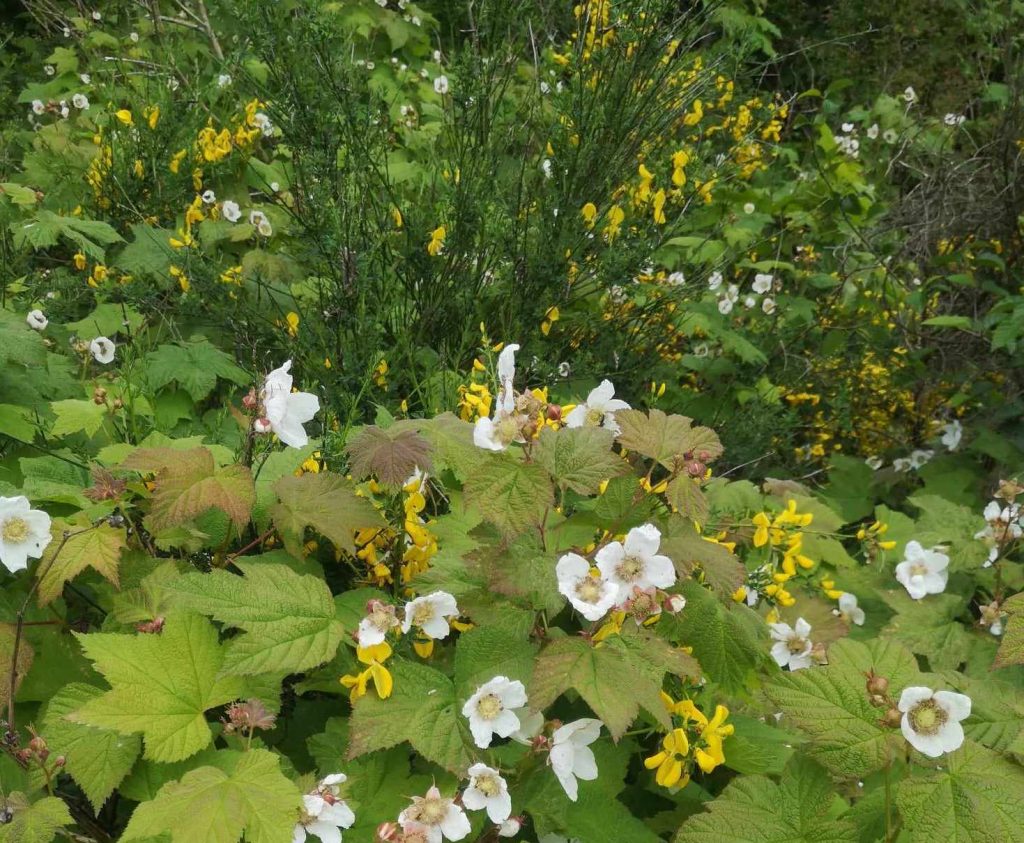
Bayley said a good first step is to learn about the invasive plant species that are a problem in your region.
“Some of the most documented species in the [Comox Valley] region include Scotch broom, Himalayan blackberry, common tansy, Canada thistle and bull thistle,” she said.
“We have a list of priority species on our website as well as information on species documented regionally.”
Read more: Invasive species to look out for on Vancouver Island
Report invasive species
Once familiarized with invasive species in your area, reporting them can be helpful to aid in their removal or stop their spread.
There are various ways to report invasive species and B.C. Coastal Invasive Species Committee has an information page on its website about how to report them. The province also has an online form that people can fill out as well as the Report Invasives BC app for cell phones.
In the Comox Valley, most properties with species of invasive knotweed are eligible for the Coastal Invasive Species Committee’s Knot On My Property program.
“We partner with the Comox Valley Regional District, Town of Comox and City of Courtenay to deliver this program, which covers 100 per cent of the cost of treatment of knotweed species (giant knotweed, Japanese knotweed, Bohemian knotweed and Himalayan knotweed) and giant hogweed on private property,” Bayley said.
Understand that management practices may vary for invasive plant species
Management practices to remove or reduce invasive plant species can be different, Bayley said.
“Depending on the species, pulling might not be the best solution. For example, in the case of knotweed, it can make the infestation worse. Some invasive species such as giant hogweed and poison hemlock are toxic and extra care must be taken when they are removed.”
Bayley said knotweed and giant hogweed are important to look out for because knotweed is an aggressive invader and giant hogweed can cause burns to the skin when touched. French Creek, outside of Parksville, is considered the epicentre of giant hogweed on Vancouver Island.
Both the Coastal Invasive Species Committee (ISC) and province of B.C. say that knotweeds have an extensive root system and grow and reproduce aggressively. They have determined that the best, most cost-effective way to manage knotweeds is with the use of herbicide. The Knot On My Property program is available to private landowners, and Coastal ISC staff monitor and remove knotweeds and giant hogweed either manually or with a herbicide.
But property owners are responsible for managing other invasive plant species.
“We encourage people to manage invasive plants on their own property in accordance with best management practices,” Bayley said.
To learn about best management practices for invasive plant species, it is important to look up each particular plant. For example, for plants such as Scotch broom, it can be quite simple to pull the smaller broom plants. The Coastal ISC says “larger plants must be cut down at the base or just below ground height, preferably between March to June, when the flowers are out but have not yet gone to seed.”
Some plants like Himalayan blackberry are safe to pull, but care must be taken due to their thorns.
It’s also important to replace the plants that you remove.
“In most cases, when we remove an invasive species, we must ask ourselves, ‘What will we put back?’ It is a critical piece that is often forgotten or not included in budgets,” Jarratt said in response to a comment on an Instagram video of him removing Himalayan blackberry.
Information on how to dispose of invasive plants once removed can be found on Coastal ISC’s website. The list includes disposal locations for various Vancouver Island communities.
Try to prevent the spread of future invasive plants
Some invasive plant species are known as problems in other regions, but are not yet well known on Vancouver Island. Bayley said it’s important for people to be aware of species that may pose a threat.
“Early detection of these species can facilitate a rapid response and prevent establishment,” Bayley said. “Prevention is the best and most cost effective way to manage invasive species!”
Tree of heaven, for example, is an invasive species to look out for, according to Bayley.
“We have received isolated reports of species in the area but suspect it is underreported,” Bayley said.
The tree, which is native to Taiwan and China, is the preferred host for the spotted lanternfly — a species that could pose significant risk to fruit producers were it to establish in B.C.
Luckily, spotted lanternfly is not currently established in Canada, but since it feeds often on grapevines and fruit, it especially puts B.C.’s wine industry at risk.
Bayley said she encourages everyone to do their part to prevent the spread of invasive. And she has a few tips that people can remember to do so:
Play, Clean, Go – “After you play out in nature, make sure you and your furry friends are not transporting any seeds, dirt/mud, or plant materials before you go.”
Clean, Drain, Dry – “Clean, drain and dry boats and equipment when moving between water bodies.”
Don’t Let it Loose – “Don’t let your pets loose and don’t dump plants, aquarium water, etc. into the natural environment.”
Buy Local, Burn Local – “Don’t move firewood.”
Be Plant Wise – “Choose non-invasive plants for your garden.”
Plant a variety of native species

“Invasive species are recognized globally as the second greatest threat to biodiversity after direct habitat loss due to humans. Biodiversity is key to healthy and resilient ecosystems,” Bayley said.
She told The Discourse that planting native plant species is one of the best ways to cease the spread of invasive ones.
“Invasive species often like disturbed areas so planting native species, especially in disturbed areas, is a great way to prevent invasive species from establishing,” she said.
In W̱SÁNEĆ territory, Sarah Jim, a W̱SÁNEĆ woman from the village of W̱S͸ḴEM (Place of Clay) told Capital Daily that removing invasive English ivy is an act of decolonization for her.
She founded W̱S͸ḴEM Ivy Project (Healing the Place of Clay) in 2021 and partnered with Habitat Acquisition Trust on projects that involve removing the invasive plant.
She said that since she began the project, she has seen more native plants such as trillium and trailing blackberry in the area.
According to the Coastal ISC, salal and deer fern are great native plant alternatives to the invasive English ivy.
There are also some ornamental plants that are helpful such as purple wintercreeper euonymus, Taiwan creeping raspberry and privet honeysuckle.
“Not all non-native species are invasive,” Bayley said. “Species must be non-native and have some kind of negative impact on the environment, people and/or the economy to be considered invasive.”
More information about these alternatives can be found in Invasive Species Council of BC’s ‘Grow me instead’ booklet.
What does an ecosystem of native species look like?
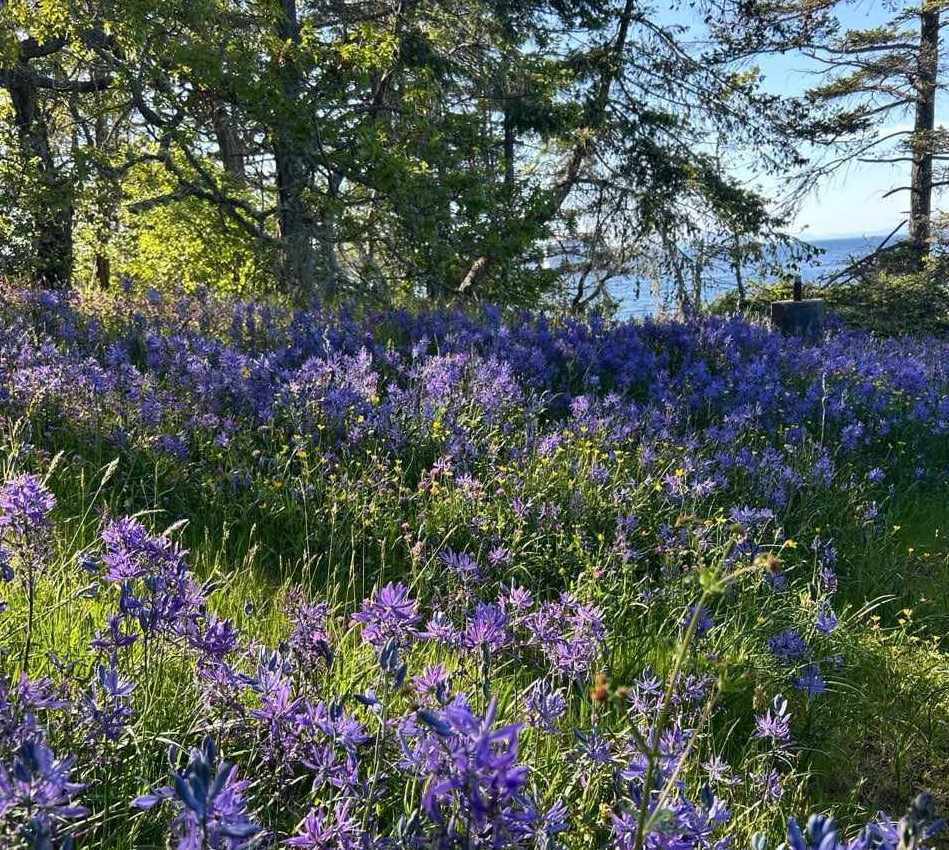
Jarratt agreed that one of the best ways to halt the spread of invasive species is to encourage the planting of beneficial native species.
One of his particular favourite things to do is support the establishment of a Garry oak ecosystem.
“There was a lot historically in Comox [and] there is very little now,” he said, adding that anyone can make room for a Garry oak ecosystem on their property or on the lands around them.
Garry oak is the only species of oak that is native to B.C. According to the Nature Conservancy of Canada, it has a very narrow range that is limited to a small strip on the east coast of Vancouver Island and the Gulf Islands, and extends as far south as the San Joaquin valley in California.
Some species that grow well with Garry oaks are common camas and great camas.
“Those two are probably one of the best things somebody could plant in their garden,” Jarratt said.
He also added that sea blush, yellow monkey flower, wooly sunflower, western buttercup and small flower alum root are also great options.
“Plants that grow together stay together. They are all friends,” he said.
Jarratt said it’s also helpful to provide sources of food for pollinators. For example, a lot of insects use Garry oak trees, but they need other species for other life stages.
“These ecosystems are much more than just the trees,” he said.

Where to learn more
Bayley said one of her favourite resources is Gardening With Native Plants, produced by Habitat Acquisition Trust. It offers planting suggestions based on location and notes additional benefits such as whether it attracts butterflies and/or provides shelter for wildlife.
There are also some native plant nurseries on Vancouver Island. Stewardship Centre of BC has a full list of where to buy native plants on its website.
What did you think of this story?
Your feedback after we publish a story helps ensure we're always improving our reporting to better serve you
Author

Related Articles
DRIPA debated in B.C. election on Vancouver Island
The Conservative party of B.C. is promising to repeal the Declaration on the Rights of Indigenous Peoples Act (DRIPA), while other parties argue that would set back relations with First Nations and create economic uncertainty.
Where Comox Valley MLA candidates stand on housing, harm reduction and watersheds
Four of seven candidates in Courtenay-Comox and Mid Island-Pacific Rim answered three questions from Discourse readers ahead of the Oct. 24 B.C. election.
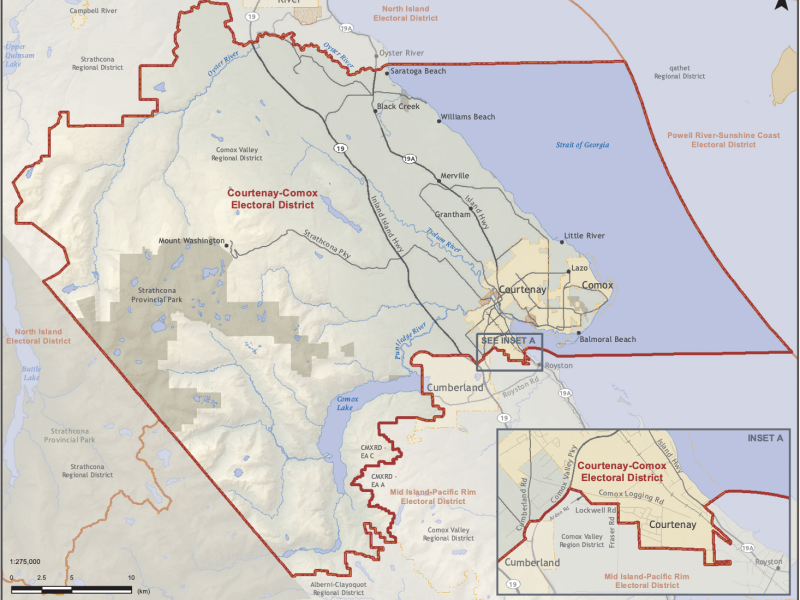
Comox Valley’s guide to the 2026 B.C. election
What riding am I in? Who are the candidates? When do I vote? The B.C. election basics for Comox Valley voters.